Cygnus XL Launch Sunday: Freighter Can Raise Space Station Orbit as It Delivers 11,000 Pounds

November 24, 2026:

Cygnus XL Launch Sunday: Freighter Can Raise Space Station Orbit as It Delivers 11,000 Pounds
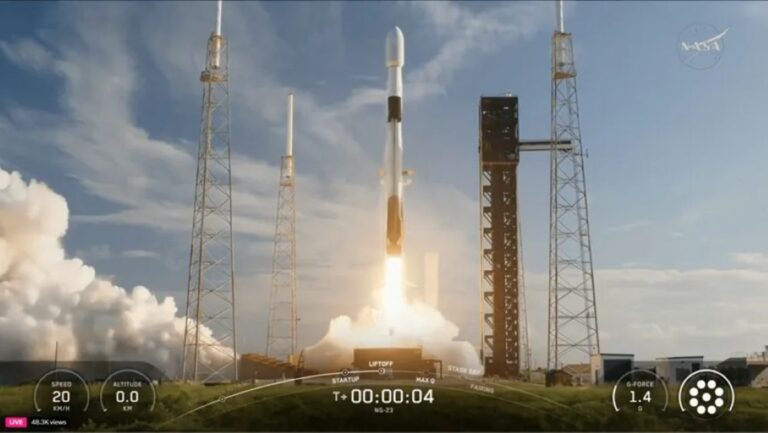
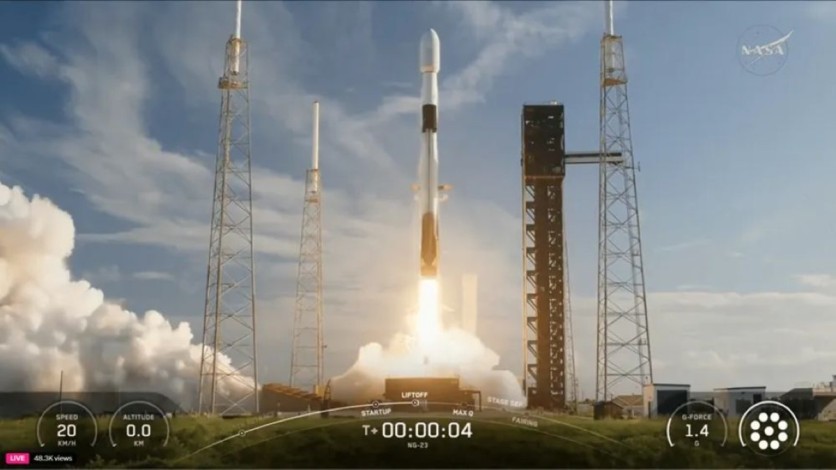
Northrop Grumman’s Cygnus XL cargo craft lifts off atop SpaceX Falcon 9 rocket from Florida’s Cape Canaveral
Northrop Grumman’s Cygnus XL cargo craft lifts off atop SpaceX Falcon 9 rocket from Florida’s Cape Canaveral Space Force Station to the International Space Station.
Nasa.gov

Northrop Grumman’s Cygnus XL cargo ship, named for Apollo 13 commander Jim Lovell, is targeting a Falcon 9 launch from Cape Canaveral Space Force Station in Florida at 10:47 a.m. ET on Sunday, Nov. 29, carrying about 11,000 pounds of science and supplies to the International Space Station. It can also raise the station’s orbit, as the previous Cygnus XL did twice. NASA, Northrop Grumman and SpaceX officials will brief media at noon ET today, Monday, Nov. 23.

That second job matters to anyone who follows station traffic. The previous Cygnus XL, the S.S. Steven R. Nagel, raised the station’s orbit twice since late August to set up Progress 96 launch phasing for a Russian cargo ship and Crew-13 launch phasing for SpaceX. Northrop Grumman’s page for this flight lists precision reboost services, but NASA’s launch advisory never mentions reboost. Today’s call may clarify which role NG-25 will play.

NASA calls the flight Northrop Grumman Commercial Resupply Services 25, or CRS-25, and the company calls it NG-25. Both names describe the third Cygnus XL flight, the larger design Northrop Grumman first flew in September 2025.

When Does Cygnus XL Launch and Reach Space Station?

All times below come from NASA’s advisory, published Nov. 18, and every one is a target that can move.

Event Date Time (ET)
Prelaunch teleconference Mon., Nov. 23 12:00 p.m.
Launch coverage begins Sun., Nov. 29 10:25 a.m.
Launch target (no earlier than) Sun., Nov. 29 10:47 a.m.
Arrival coverage begins Tue., Dec. 1 1:10 a.m.
Canadarm2 capture Tue., Dec. 1 2:35 a.m.

If liftoff holds, capture comes about 40 hours later. Media who want to ask questions must contact the NASA Johnson Space Center newsroom by 11 a.m. ET today for call details and dial in at least 10 minutes before the call starts. Everyone else can stream on NASA’s YouTube channel.

Last Cygnus XL Fired Thrusters for 20 Minutes to Raise Station Orbit

The station does not hold its altitude on its own. Atmospheric drag pulls it down by about 1.2 miles per month. Cygnus XL carries a BT-4 main engine that burns hydrazine and nitrogen tetroxide, and NASA reported on Aug. 27 that the last Cygnus XL fired its thrusters while berthed to the Unity module. The burn lasted 20 minutes and 43 seconds, raised the low point of the station’s orbit by 2.6 miles and the high point by 0.2 miles, and left an orbit of 266.5 by 254.9 miles that set up the Progress 96 launch in early September.

A second burn, announced Sept. 25, ran 18 minutes. It raised the high point by 1.5 miles and the low point by 0.8 miles, producing a 265.5 by 256.8 mile orbit, and NASA said it set up phasing for Crew-13, then targeted for no earlier than Oct. 1. The Crew-13 astronauts include Jessica Watkins and Luke Delaney, the same two NASA astronauts who will run the robotic arm to capture NG-25.

The engine also has a first-flight asterisk. On the debut Cygnus XL flight in September 2025, the main engine shut down early during two rendezvous burns meant to raise the spacecraft’s orbit. NASA said an early warning system triggered the shutdown because of a conservative software safeguard, and that the spacecraft otherwise operated as intended. Arrival slipped from Sept. 17 to Sept. 18. Both reboosts NASA described this fall came on NG-24, which launched April 11, the next Cygnus XL flight after that debut.

Cygnus XL Stretches 26 Feet and Holds 1,300 Cubic Feet of Cargo

The XL stretches the pressurized cargo module. The spacecraft measures about 26 feet and offers roughly 1,300 cubic feet of pressurized volume, compared with about 950 cubic feet on the Enhanced version. Northrop Grumman lists more than 8,200 pounds of cargo on NG-21 in August 2024 and over 11,000 pounds on NG-23.

What Cygnus XL cannot do is bring cargo home. NASA says the spacecraft stays until May 2027, then leaves carrying several thousand pounds of disposal items and unneeded cargo and burns up on re-entry. The program that buys these flights, NASA’s Commercial Resupply Services contracts, covers Northrop Grumman flights through NG-35.

Canadarm2 Grapples Cygnus XL, Then Ground Controllers Bolt It to Unity

Watkins is on her second spaceflight, and Delaney is a first-time flyer with degrees in mechanical and aerospace engineering. They will use the 58-foot Canadarm2 robotic arm, which has seven joints, to grab the spacecraft. Ground controllers then install Cygnus XL on the Earth-facing port of Unity so the crew can unload cargo.

The port is a Common Berthing Mechanism. The arm places the spacecraft with near-zero contact velocity, and 16 powered bolts then pull the two halves together and seal the joint. Docking relies on the visiting vehicle’s own momentum to trigger latches, and this connector’s velocity limits rule that out.

Lovell Namesake Links Cygnus XL to Apollo 13 Lunar Module Lifeboat

Northrop Grumman names each Cygnus after a person who contributed to human spaceflight. This one honors James “Jim” A. Lovell, who flew four missions: Gemini VII, Gemini XII, Apollo 8 and Apollo 13. Lovell died on Aug. 7, 2025, at age 97.

The company’s page points to Apollo 13, where the crew used the lunar module as a lifeboat after an oxygen tank failed. Grumman built that module, which was designed to support two astronauts for 45 hours but sustained three for about 90 hours. Northrop Grumman inherited the Grumman heritage when it bought the company in 1994. After leaving NASA in 1973, Lovell ran Bay-Houston Towing and Fisk Telephone Systems before retiring as a Centel executive vice president in 1991. Northrop Grumman’s previous Cygnus XL honored Steven R. Nagel, who flew four space shuttle missions.

Cargo Targets Cancer Drug Delivery, Muscle Loss and Radiation Sensing

NASA’s advisory lists five research areas, not named experiments: improving drug delivery for cancer and osteoarthritis, predicting how cancer spreads, treatments for muscle loss, radiation sensing, and food production for future long-duration missions. The advisory does not say which investigations fall under each area.

Reboost Plan, Booster and Exact Launch Time Remain Unconfirmed

Three details remain open as of this morning, and today’s call may settle some of them.

The reboost plan is the biggest. Northrop Grumman describes the mission as delivering cargo and precision reboosts, yet NASA’s advisory is silent, and neither document gives a date for a burn.

The booster is next. NASA does not name it. Launch tracker Orbital Radar lists booster B1096 on its ninth flight, landing back at the launch site, but that is a single tracker’s listing that NASA has not confirmed. TechTimes reported B1096 flew its eighth mission on Oct. 13 for SpaceX CRS-35 and returned to Landing Zone 40.

The launch time itself is a target. Orbital Radar puts liftoff at 10:50 a.m. ET and says the schedule has moved before, and an earlier NASA media invitation listed 10:49 a.m. ET, against NASA’s current 10:47 a.m. ET. This story uses NASA’s figure.

How to Watch Cygnus XL Launch and Station Arrival

NASA will stream launch coverage on its website beginning at 10:25 a.m. ET Sunday, and live streaming and blog updates start no earlier than 10 a.m. ET as countdown milestones occur. On-demand video on NASA+ and launch photos follow shortly after liftoff, and arrival coverage starts at 1:10 a.m. ET Tuesday. NASA also runs a virtual guest program through Eventbrite with launch resources and a passport stamp after liftoff, and prelaunch updates will appear on its space station blog.

The takeaway for Sunday: a Lovell-named Cygnus XL is scheduled to deliver 11,000 pounds of cargo and, if NASA assigns it the job, to double as the station’s tug. Watch today’s briefing for whether a reboost burn is planned, and watch Sunday’s countdown for any slip in the 10:47 a.m. ET target.


Frequently Asked Questions

Can Cygnus XL really move the International Space Station?

Yes, in small steps. NASA reported that the last Cygnus XL fired its thrusters for 20 minutes and 43 seconds on Aug. 27 and 18 minutes in a later burn announced Sept. 25, shifting the station’s high and low points by between 0.2 and 2.6 miles. The goal is to hold altitude and set up the timing for arriving spacecraft.

How does Cygnus XL attach to the station?

It does not dock. Canadarm2 grabs the spacecraft while it flies free, and the arm then places it on Unity’s Earth-facing port, where a Common Berthing Mechanism bolts it in place.

Does Cygnus XL bring anything back to Earth?

No. It leaves with trash and unneeded cargo and burns up on re-entry, so research samples that need to come home must ride another vehicle.

Why is this Cygnus XL named S.S. James A. Lovell?

Northrop Grumman names each Cygnus for someone who made significant contributions to crewed spaceflight, and its mission page cites Apollo 13, where the crew used the lunar module as a lifeboat.

Source link