November 22, 2026:


A cluster-randomized trial in Belo Horizonte, Brazil, found about 69% fewer dengue and chikungunya infections in neighborhoods that received Wolbachia-carrying mosquitoes, according to an Associated Press report on Nov. 21. The EVITA Dengue trial results were presented at the annual meeting of the American Society of Tropical Medicine and Hygiene (ASTMH). Researchers tested schoolchildren’s blood for antibodies rather than counting diagnosed cases, and every neighborhood received the same pesticide and control measures, so the result shows what Wolbachia added on top of existing control.
The timing matters for U.S. readers. Florida’s weekly arbovirus report counted 651 locally acquired dengue cases, with 487 of them in Hillsborough County, which includes Tampa.
Counts based on diagnosed cases miss infections that never make anyone sick; the CDC says roughly three in four dengue infections cause no illness. EVITA Dengue instead tested children’s blood for evidence of infection, a primary outcome its protocol calls sero-incidence of dengue, Zika and chikungunya, so it can count infections that never reached a clinic.
That design is why the 69% figure cannot be lined up directly against earlier results. A randomized trial in Yogyakarta, Indonesia, reported a 77% reduction in dengue incidence and 86% fewer hospitalizations, counting laboratory-confirmed dengue among people who had fever. A study of city-wide releases in Niterói, Brazil, reported 89% lower notified dengue incidence compared with the decade before releases and estimated that the program averted roughly three-quarters of the dengue burden expected in the 2024 surge. The Niterói result is observational, not randomized, comparing time periods rather than randomized neighborhoods, and it counts notified cases rather than infections.
Taken together, the three studies measure different outcomes with different designs. EVITA Dengue’s lower headline number counts antibody-detected infections for two viruses at once.
The trial ran for four years and enrolled 5,757 children aged 6 to 11, with areas randomly assigned in two groups of 29 so that half received Wolbachia-carrying Aedes aegypti and the rest served as comparison areas. The published protocol defined 58 school catchment clusters randomized one to one.
Randomizing whole areas rather than individual children suits a mosquito release, which cannot be aimed at selected individuals. The tradeoff is that cluster trials need more participants to reach the same statistical power as trials that randomize individuals.
Brazilian outlet Bori reported a 68.6% overall reduction, with 68.5% for dengue and 73.3% for chikungunya. Bori’s report did not mention confidence intervals, and those per-virus figures come only from that report.
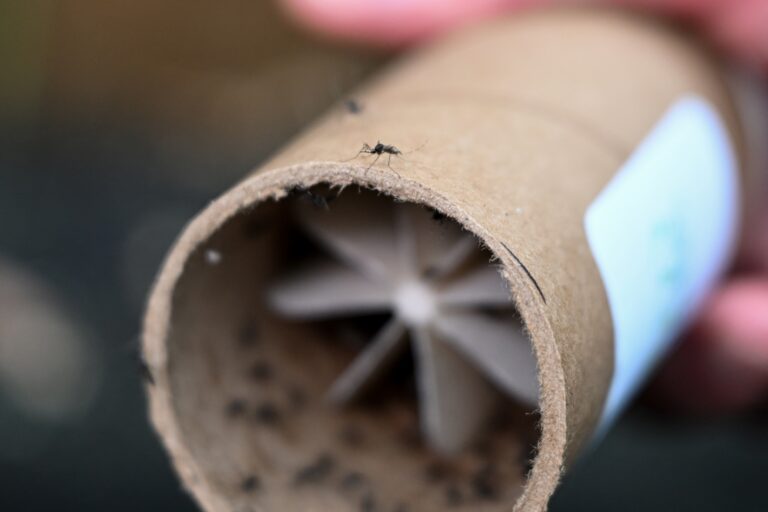
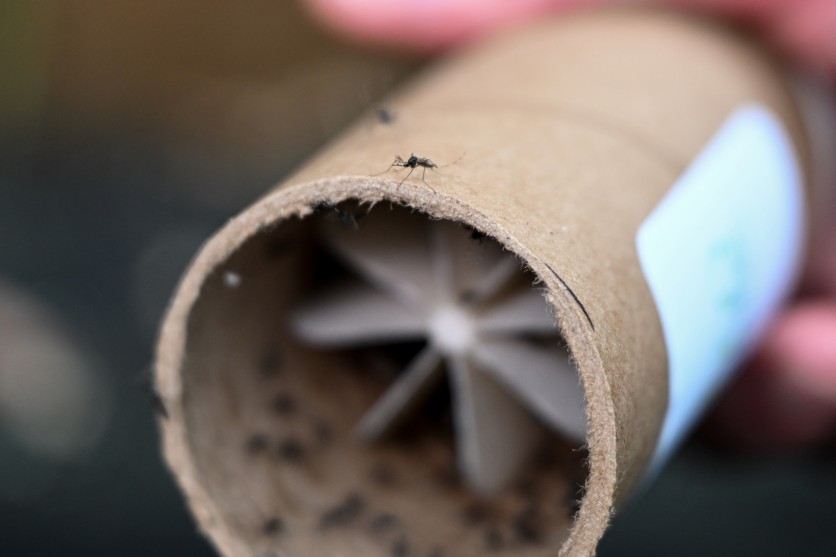
Wolbachia is a common bacterium in many insects, but Aedes aegypti, the species that spreads dengue and chikungunya, does not carry it naturally. Once scientists introduce it, the bacterium reduces the mosquito’s ability to transmit certain viruses; the World Mosquito Program, a nonprofit that pioneered the approach, describes mechanisms that include boosting the insect’s immune response and competing with the virus for cholesterol. The program also says blocking is incomplete, so released mosquitoes can still carry some virus.
The bacterium passes from mother to offspring, so once it is established it persists in the population. Researchers call this population replacement, which relies on releases of infected males and females and can become self-maintaining even after releases cease. The trial’s goal was for 60% of trapped mosquitoes to carry Wolbachia, with remedial releases if a cluster fell short.
One engineering constraint is temperature. The World Mosquito Program says high temperatures reduce Wolbachia density in mosquitoes and reduce maternal transmission, and a University of Melbourne explainer likewise notes that bacterial density can decrease under very hot conditions.
Replacement programs release both sexes so the bacterium becomes established in the local population, which is the World Mosquito Program’s self-sustaining method used in Brazil and Indonesia. Other programs use suppression, releasing only males that carry Wolbachia, which can sterilize wild females they mate with; that shrinks the population but needs sustained effort, as in one study where males were released twice weekly for 24 weeks.
In the United States, the Environmental Protection Agency regulates Wolbachia-carrying males as a pesticide and registered WB1 Males in April 2024, a product it describes as a population suppression tool. Google’s Debug program applied for an EPA experimental use permit covering up to 16 million male mosquitoes per state in each of two years in California and Florida, and EPA accepted public comments through June 5, 2026. The notice names Culex quinquefasciatus males, not Aedes aegypti, the species that spreads dengue.
Dr. David Hamer of Boston University, who was not involved in the trial, called the results “really exciting.” He predicted that wider use of these mosquitoes, combined with existing control steps, could drive dengue to much lower levels in many places. That is a forecast, not a measured result. Dr. Sri Edupuganti of Emory University was part of the international research team.
Four limits apply. The results are preliminary and not yet peer reviewed, having been presented at a conference rather than published in a journal, and Bori’s report gave no confidence intervals. The trial covers one city, and Belo Horizonte’s climate, housing and mosquito ecology may differ from other places. Too few Zika cases occurred to evaluate the effect on that virus. And the roughly 69% figure is a combined dengue and chikungunya result as AP reported it; per-virus figures appear only in Bori’s report.
AP reported that Florida’s outbreak appears biggest in any U.S. state since at least the 1940s, and for decades most cases were in travelers infected abroad. The state’s count of 651 locally acquired cases, about 75% of them in Hillsborough County, comes from its weekly arbovirus report. Hillsborough County aerially treated for adult mosquitoes from Oct. 27 to 30, citing an unusually high number of dengue cases.
Officials weighing releases face questions of cost and scale. A randomized result showing a large drop in infections on top of existing control gives them a firmer evidence base than before-and-after comparisons alone. Readers who want to ask their local mosquito-control district a useful question can ask what it measures, infections or diagnosed cases, and whether its approach spreads on its own or needs repeated releases.
In this randomized trial, neighborhoods with released mosquitoes had about 69% fewer dengue and chikungunya infections than comparison neighborhoods, measured by blood tests, according to the AP. The results were presented at a conference, and Bori reported they are not yet peer reviewed or published in a journal.
Antibody tests can detect infections that never made anyone sick, while case counts cannot, so the figure is not directly comparable with the 77% reduction in Yogyakarta or the 89% notified-incidence drop in Niterói.
Replacement releases both males and females so the bacterium spreads and persists in the local population, while suppression releases only males repeatedly to reduce the population. The EPA registered a suppression product called WB1 Males in April 2024.
No. Too few Zika cases occurred during the trial for researchers to evaluate an effect on that virus.