November 22, 2026:


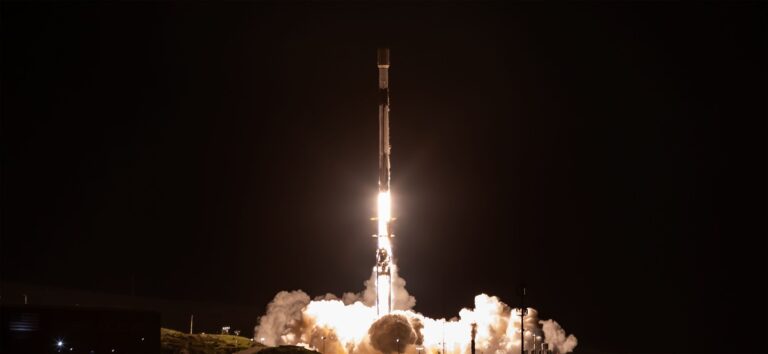
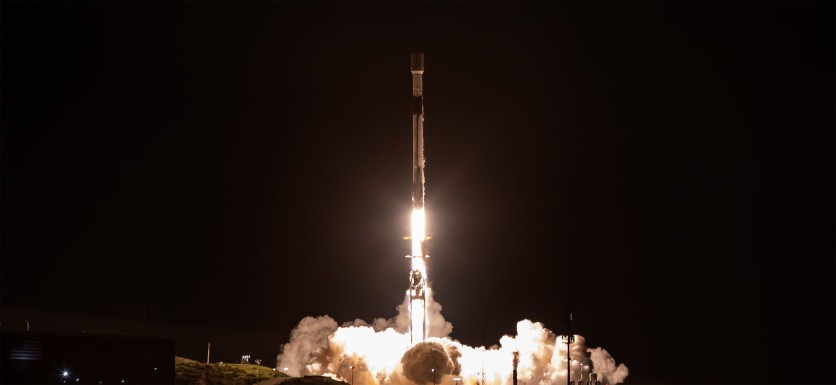
SpaceX launched the classified USSF-317 mission for the U.S. Space Force from Vandenberg Space Force Base in California at 11:20 p.m. EST on Friday, Nov. 20 (8:20 p.m. local time), and the payload remains undisclosed.
The public will learn what it put in orbit from satellite catalog entries, not from officials. Spaceflight Now calls USSF-317 the latest in a series of “R” missions, and the Space Force catalogued 23 satellites after each of the five earlier ones.
About eight and a half minutes after liftoff, the first-stage booster, B1100, landed on the droneship Of Course I Still Love You in the Pacific Ocean. SpaceX ended its webcast shortly after touchdown, so viewers saw neither the upper stage reach orbit nor any payload deployment, which is typical of classified flights.
The launch came a day late. SpaceX scrubbed its Thursday attempt without giving a reason, after Space Launch Delta 30 had already moved the target from Nov. 18 to Nov. 19. Residents of Santa Barbara, San Luis Obispo and Ventura counties were told to expect a moderate chance of sonic booms, depending on weather and other conditions.
B1100 was flying for the 11th time. Its earlier missions were NROL-105, USSF-385 and eight Starlink launches. Because USSF-385 was its 10th flight on Sept. 26, B1100 flew its two Space Force missions back to back, 55 days apart, with no other flight in between.
Spaceflight Now lists the earlier R missions as USSF-366 (R-1, Aug. 16), USSF-153 (R-2, Sept. 10), USSF-385 (R-3, Sept. 26), USSF-432 (R-4, Nov. 6) and USSF-627 (R-5, Nov. 12). It reports that 23 satellites were catalogued after each launch, and that the Space Force has not confirmed details about them or announced whether any deployment succeeded. Its pre-launch coverage gives no count for USSF-317 and says only that SpaceX planned to launch an undisclosed number of satellites.
Independent catalogs agree on the earlier counts. Gunter’s Space Page lists 23 objects for each early R flight it covers, and Orbital Radar’s Starshield table shows 23 satellites for each of the five. Five flights at 23 each is 115 satellites. Wikipedia’s list of Space Force launches labels USSF-317 “SBST R-6.” If USSF-317 matches the pattern, six R flights would total 138 satellites.
A match is not guaranteed. Two other Space Force flights from Vandenberg, USSF-259 on Sept. 16 and USSF-481 on Oct. 15, are listed with 17 satellites each, not 23.
The U.S. Space Surveillance Network, which the Space Force operates, detects, tracks and catalogs satellites, spent rocket bodies and debris in orbit. It typically tracks objects about 10 centimeters (3.9 inches) across or larger. Each confirmed object receives a catalog number in order of discovery.
Classified U.S. military and intelligence satellites are catalogued too. They generally receive a number, a cover name and a launch date, but their records are not updated further.
That is why the public can count these satellites but cannot follow them. Orbital Radar says orbital elements are withheld for 388 of the 394 Starshield satellites it counts in orbit. Its record for USA 627, one R-1 satellite, shows the catalog name “SBST R-1 PL8” and no published orbit. A catalog entry tells observers how many objects flew and what label they carry. It does not say what the satellites do.
Gunter’s Space Page says USSF-366, USSF-153 and USSF-385 are believed to be the first launches in the Space Data Network (SDN) Backbone constellation. Orbital Radar’s catalog record for the R-1 satellite USA 627 lists the operator as USSF SSC, the manufacturer code as SpaceX on a Starshield bus, and the program as SDNB, in a communications category. Wikipedia’s SpaceX Starshield article lists several of the launches as suspected SDN Backbone satellites. These are third-party inferences. The Space Force has not confirmed them.
The SDN Backbone itself is real and official. Space Systems Command awarded SpaceX a $2.29 billion firm-fixed-price agreement for an optically interconnected satellite mesh that serves as the data-transport backhaul for the Space Force’s Space Data Network, with a fully operational prototype due by the end of 2027. Space.com says the network, formerly called MILNET, is meant to move data quickly between missile-warning sensors and interceptors as part of the Golden Dome missile defense plan, and describes Starshield satellites as believed to be based on the Starlink spacecraft bus.
The “SBST” label alone does not settle what a satellite does. The Space Based Sensing and Targeting portfolio includes both the Space-Based Air Moving Target Indication (SB-AMTI) program, which would track airborne objects from space, and the Space Data Network. On July 29, Space Systems Command said $1.6 billion in task orders assure 18 Falcon 9 launches for the portfolio from Vandenberg through the end of 2027. A satellite named SBST could therefore be a radar platform or a data relay, and the catalog tags that point to data relay remain unconfirmed.
Space.com says some experts think USSF-317 may carry a batch of SpaceX Starshield satellites for the Space Based Sensing and Targeting portfolio, and links to NextSpaceflight for the analysis. The Space Launch Schedule page for the mission offers a similar guess that the payload is a Starshield-bus batch and says the stage drop zones match earlier Starlink Group 15 launches. Rocketlaunch.org carries the same wording. Three pages repeating one analysis amount to one data point.
Spaceflight Now said before liftoff that the rocket would fly a south-easterly trajectory after leaving the pad. A matching trajectory shows where a rocket flew. It does not show what the rocket carried.
Catalog entries are not the only public check. In October 2025, NPR reported that Canadian amateur satellite tracker Scott Tilley had detected signals from 170 Starshield satellites in the 2025 to 2110 MHz band, which is normally used for uplinks to satellites. Kevin Gifford, a University of Colorado Boulder computer scientist who studies spacecraft radio interference, told NPR the signals are definitely happening, while whether they disrupt other services remains unresolved. SpaceX and the National Reconnaissance Office did not respond to NPR’s requests for comment.
Counting the R-1 through R-6 flights and the two 17-satellite flights, third-party labels show eight SBST flights since mid-August. If all eight count against the 18, SpaceX has flown them in just over three months and has 10 left for the 13 months through the end of 2027. The Space Force has not published that tally.
SpaceX is scheduled to fly at least two more Space Force missions before the end of November. USSF-317 was the 121st Falcon 9 launch of 2026 and SpaceX’s third Space Force mission of November, following USSF-432 on Nov. 6 and USSF-627 on Nov. 11. USSF-627 lifted off at 8:36 p.m. PT on Nov. 11, which was already Nov. 12 in UTC, so sources that list Nov. 11 and Nov. 12 are both reading the clock correctly.
About 70 percent of this year’s Falcon 9 flights have supported Starlink, which has more than 11,000 satellites, and Falcon 9 flew 165 times in 2025. SpaceX plans to retire Falcon 9 and Falcon Heavy in favor of Starship, and Space.com reports that Starship deployed 26 Starlink V3 satellites on its two most recent test flights. No retirement date has been announced, and the Space Force secured Falcon 9 launches through 2028, according to NPR.
Two checks will show what USSF-317 put in orbit. The first is whether independent trackers catalogue a group of 23 new objects named SBST R-6 in the coming days. A different count, such as the 17 logged for the two other Space Force flights, would suggest a different batch of satellites. The second is whether the Space Force says anything at all, which it has not done after any of the five earlier R flights, according to Spaceflight Now reporting.
A matching count would still leave the main question open. The catalog can show how many satellites flew and what labels they carry. Only the Space Force can say whether the R series is a data relay network, a radar constellation or something else, and until it does, a reader should treat the Starshield link as an informed inference, not a confirmed fact.
Mainly through catalog entries and independent observation. The Space Force assigns each tracked object a catalog number, and trackers count the new entries and read their names. Amateur radio monitoring has also detected Starshield transmissions. Neither method reveals a satellite’s purpose.
That is not publicly known. Trackers label the earlier R flights as Space Data Network Backbone satellites, a data relay network, while the portfolio that funds the launches also includes a separate airborne radar-tracking program.
SpaceX plans to stop flying Falcon 9 as Starship ramps up, but no end date has been announced. The Space Force has secured Falcon 9 launches through 2028, according to NPR.
SpaceX ends webcasts early on classified flights. For the earlier USSF-385 mission, Spaceflight Now reported that SpaceX withheld views of the payload and second stage at the customer’s request.