November 21, 2026:


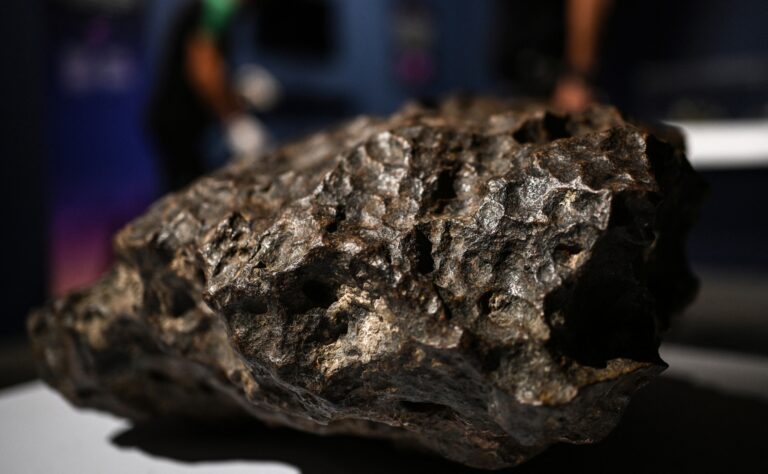
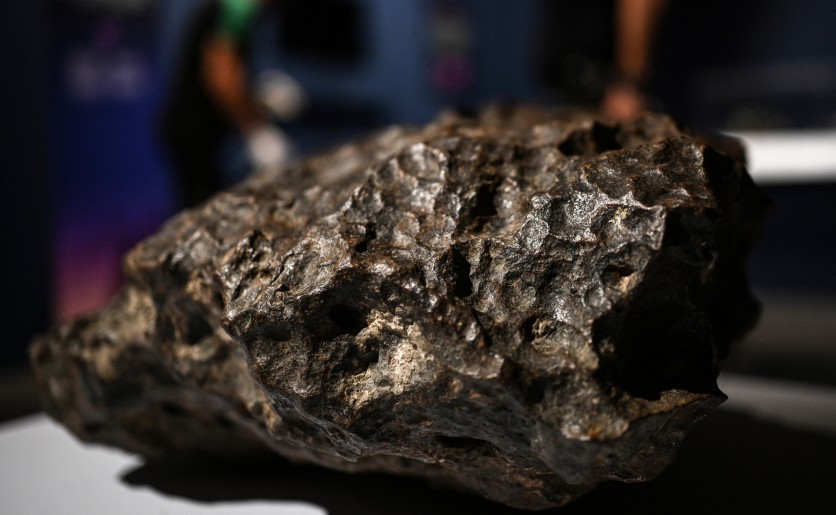
A new electron microscopy study of Oued Chebeika 002, a rare CI chondrite meteorite found in June 2024 in the Moroccan desert, reports that its dolomite formed from precursor minerals and then dissolved and reprecipitated, while its magnetite shows both fast growth and partial dissolution, a record of water that changed over time on the meteorite’s parent body. The paper, posted online November 20 in Geochimica et Cosmochimica Acta as an in-press pre-proof, also finds a clay, sulfide, magnetite and carbonate mix broadly similar to samples returned from asteroids Ryugu and Bennu, which points to similar water alteration on their parent bodies.
The finding matters beyond one rock. It shows how crystal shapes too small for a light microscope can reveal a primitive asteroid’s water history, and why a desert find of about 420 grams (14.8 ounces) is useful as a cross-check for the Ryugu and Bennu sample-return missions.
Roberto Conconi, Corentin Le Guillou, Sophie Meuret, Valentine Megevand, Adrien Teurtrie, Sylvain Laforet, Maya Marinova and Hugues Leroux used transmission electron microscopy (TEM) to resolve mineral variation below one micrometer (about 0.00004 inches), to constrain the conditions of water alteration on the parent body, and to compare the meteorite with other CI chondrites and with Ryugu and Bennu samples. They found phyllosilicates, which are water-bearing clays, closely intermixed with iron sulfides, magnetite and carbonates.
The dolomite is consistent with precipitation from brines. Its zoning and its mottled and ribbon-like textures point to formation from metastable precursors, meaning less stable mineral forms that later convert to more stable ones, followed by dissolution, reprecipitation and re-equilibration.
The magnetite tells a parallel story. Its spherulites, which are round clusters with a radiating internal structure, probably grew by non-classical crystallization from supersaturated solutions, while its spherules carry etch pits that indicate partial dissolution.
Taken together, the authors say the carbonate and magnetite microstructures point to dynamic, non-equilibrium conditions, with aqueous solutions that changed over time on the CI parent body or bodies. In plain terms, the fluid chemistry shifted, and the minerals logged repeated episodes of growth and dissolution rather than a single quiet event.
A TEM sends a beam of electrons through a specimen thin enough for them to pass, typically less than 100 nanometers (about 0.000004 inches). Because electrons have a far shorter wavelength than visible light, the instrument can resolve detail down to single columns of atoms, far below the few hundred nanometers (roughly 0.00001 inches) a light microscope can separate.
The authors have also released supporting data on Zenodo, including scanning TEM (STEM) elemental maps made with energy-dispersive X-ray spectroscopy (EDS) and the HyperSpy notebook used to quantify them. EDS works by knocking inner-shell electrons out of atoms with the beam; the X-rays emitted as outer electrons fall into the gaps carry energies unique to each element, so a spectrometer can identify which elements are present and estimate their relative abundance.
The price of that resolution is a very small field of view. A TEM analyzes tiny regions, so the area examined may not represent the whole sample. CI chondrites are also intrinsically heterogeneous, according to isotope studies of this same meteorite. This makes the paper’s comparison with Ryugu, Bennu and other CI chondrites as important as any single image.
In classical models, a crystal grows by adding single ions or molecules one at a time. Non-classical pathways instead build crystals by attaching particles, from multi-ion complexes up to fully formed nanoparticles.
Magnetite from Ryugu already shows signs of this kind of fast, far-from-equilibrium growth. A TEM study of Ryugu particles by Elena Dobrică and colleagues found spherulitic magnetite of radiating needle-like fibers with evenly spread pores, a structure the team said had not been documented in earlier chondrite studies, and suggested it arose from rapid nucleation and growth in a supersaturated solution. The 2025 characterization of Oued Chebeika 002 by Jérôme Gattacceca and colleagues had already listed spherulites among the meteorite’s magnetite shapes, alongside framboids, platelets and needles, and said they match shapes seen in other CI1 chondrites, Ryugu and Bennu.
The new paper adds a likely growth mechanism for the meteorite’s spherulites: non-classical crystallization from supersaturated solutions. A supersaturated solution holds more dissolved material than it could at equilibrium, and in Ryugu the same radiating shape was read as a sign of rapid growth from such a fluid.
Dolomite is notoriously hard to make: reproducible laboratory synthesis at low temperature has yet to be achieved. A 2023 review in Minerals says the dolomite problem has confused scientists for nearly two centuries, and describes early dolomite forming through unstable intermediate phases that give way to metastable ones and then ordered dolomite, following Ostwald’s step rule. That rule is the observation that a mineral’s less stable form usually crystallizes first.
The pathway the Oued Chebeika 002 authors infer, metastable precursors followed by dissolution and reprecipitation, parallels that route. The study’s abstract does not make this comparison; it is context from earlier dolomite research.
Asteroid samples show dolomite forming at low temperatures. A 2022 Science study of Ryugu found that dolomite and magnetite precipitated together from water at about 37°C (99°F), give or take 10°C (18°F). Bennu samples contain dolomite among 11 minerals that likely formed in liquid water, according to a 2025 Nature study co-led by Tim McCoy of the Smithsonian’s National Museum of Natural History.
The mineral similarity is broad, but other studies show CI-like material is not uniform.
A hydrogen and nitrogen isotope study by Y. Marrocchi and colleagues found similar hydrogen concentrations to those in other CI meteorites and Bennu samples, but lighter hydrogen isotopes and isotopically lighter nitrogen. The authors conclude CI chondrites are intrinsically heterogeneous, so no single representative CI composition can be defined, and they note that estimates of how much CI material contributed to Earth’s surface volatiles could differ by more than a factor of two depending on which CI is used as the reference.
A separate study of potassium, rubidium, germanium and copper isotopes by D.S. Grewal and colleagues found the lightest rubidium isotope ratio measured in any CI chondrite so far, while germanium and copper fell within the range of CI chondrites and Ryugu. Gattacceca’s team also noted subtle differences from other CI1 chondrites that terrestrial weathering of the older samples cannot explain, including the absence of olivine and calcite.
Weathering is a separate caution. Martin Lee and Jasper Glazer examined fragments of 10 to 30 milligrams (about 0.0004 to 0.001 ounces) recovered by September 2024 and found gypsum and calcium carbonate had grown on them within roughly three to four months, between about June and September 2024. They conclude that clay-rich meteorites like this one need prompt recovery and careful curation, even though Gattacceca’s team reported no significant terrestrial alteration in the material it studied.
Megan Broussard and colleagues go further on the family link. Their 2026 study found the meteorite’s mineralogy, oxygen isotopes, potassium isotopes and bulk chemistry overlap with Ryugu and Bennu samples, and they propose that CI chondrites, Ryugu and Bennu may share a common parent body they call Naunet.
CI chondrites are scarce. A 2025 Goldschmidt conference abstract noted that only ten have been found on Earth, and Gattacceca’s team counts Oued Chebeika 002 as one of only six known CI1 chondrites.
Returned samples are small. Hayabusa2 brought back about 5.4 grams (0.19 ounces) from Ryugu in December 2020, and OSIRIS-REx returned about 121.6 grams (4.3 ounces) from Bennu in September 2023. Oued Chebeika 002 is a find, not an observed fall, with a recovered mass of about 420 grams (14.8 ounces), roughly 78 times the Ryugu return and about 3.5 times the Bennu return.
Because the meteorite looks relatively unweathered in some studies and matches the returned samples in mineralogy, researchers can cross-check findings from the two kinds of material and test how well meteorites represent asteroid interiors. CI composition is also the standard benchmark for abundances of non-volatile elements in the solar system.
For readers following sample-return science, the practical takeaways are specific. The paper is an in-press pre-proof and may change before final publication, and the authors’ open data lets other researchers re-examine the nanoscale evidence themselves. Any claim that one meteorite can stand in for all CI material deserves caution, given the isotopic differences already documented, while the textural record in this rock adds nanoscale evidence that water alteration on the CI parent body involved shifting fluids rather than one quiet event.
CI chondrites, also called Ivuna-type carbonaceous chondrites, are a rare group of stony meteorites named after the Ivuna meteorite that fell in Tanzania. Water alteration largely erased the round chondrules typical of other chondrites, and their composition matches the Sun’s closely for most non-volatile elements.
No evidence says it came from either asteroid. Broussard and colleagues instead propose that CI chondrites, Ryugu and Bennu descend from a shared parent body, Naunet, that formed in the outer solar system, was altered by water and later broke apart in the main asteroid belt.
Gattacceca’s team found no significant terrestrial alteration in the material it studied, making it more pristine in that respect than the long-known CI1 meteorites Alais, Orgueil and Ivuna. Lee and Glazer, however, documented gypsum and carbonate growing on small early fragments within months, so pristine status depends on which fragment and how quickly it was recovered.
No. The abstract reports dolomite textures consistent with metastable precursors followed by dissolution and reprecipitation, a route that earlier dolomite research proposes for ordered dolomite on Earth, but it does not claim to explain how dolomite forms at low temperature. Reference sources still note that low-temperature dolomite synthesis remains undone.