H3 Rocket: Mitsubishi Heavy Becomes Legal Launch Operator for 22 Version From January 10 Flight

November 21, 2026:

H3 Rocket: Mitsubishi Heavy Becomes Legal Launch Operator for 22 Version From January 10 Flight
Masashi Okada project manager H3 Project Team
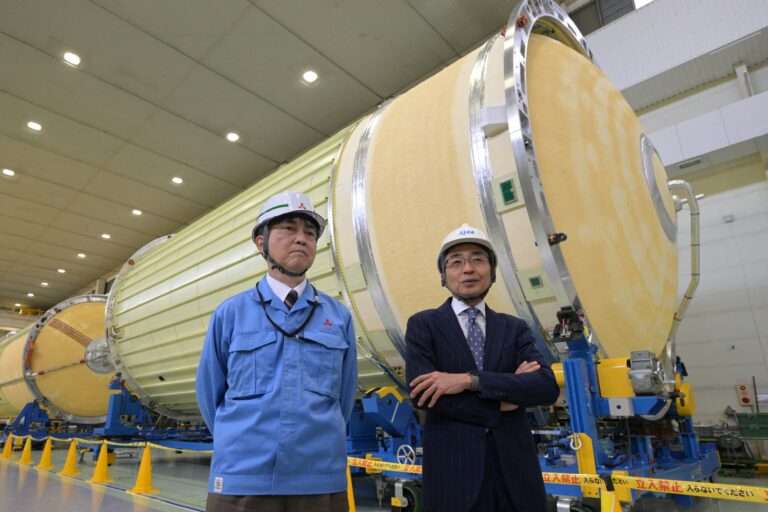
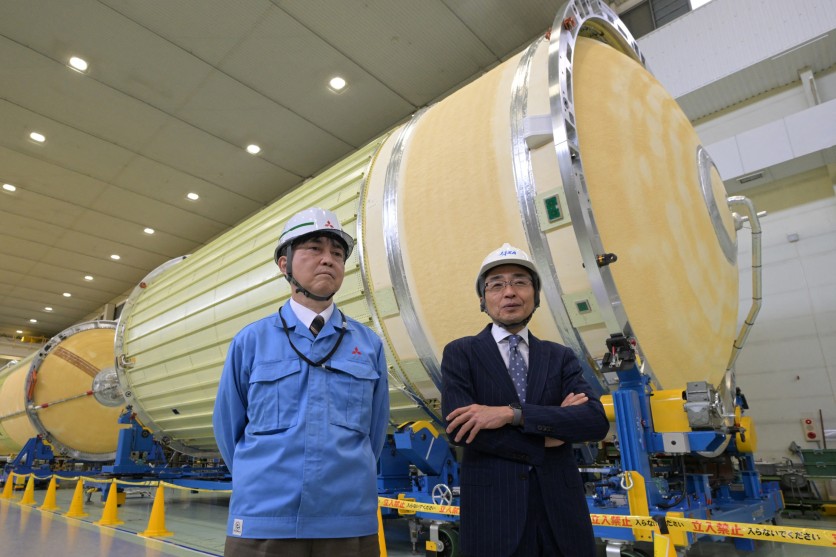
Masashi Okada (R), project manager of the H3 Project Team for JAXA, and Mayuki Niitsu (L), H3 Rocket project manager of Mitsubishi’s Space Systems Division, meet with journalists in front of a rocket core on the floor of the no. 2 assembly shop during a media tour by Mitsubishi Heavy Industries and the Japan Aerospace Exploration Agency (JAXA), at the Mitsubishi Heavy Industries Nagoya Aerospace Systems Works plant in Tobishima, Aichi prefecture, near the city of Nagoya on March 21, 2024. (Photo by Richard A. Brooks / AFP)
RICHARD A. BROOKS/AFP via Getty Images

Mitsubishi Heavy Industries (MHI) will become the legal launch operator for Japan’s H3 rocket in its 22 configuration, a role the Japan Aerospace Exploration Agency (JAXA) has held under Japan’s space activities law, according to a JAXA announcement on November 20. The change begins with the next launch, Flight 11, which is scheduled to lift off from the Tanegashima Space Center between 6 p.m. and 8 p.m. ET on January 10 (8:00 to 10:00 a.m. JST on January 11), carrying a Japanese government satellite launch. The shift matters because the operator is the party the law makes answerable for a launch, and the 22 version is the one that has produced both H3 failures.

Mitsubishi Heavy Moves From H3 Seller to Legal Launch Operator for 22 Version

MHI sells H3 launch services, while JAXA has remained the launch operator under the launch law. From now on, MHI will be both service provider and operator for 22-configuration launches that use the LE-9 Type 1A engine, JAXA said in its release.

The handover is partial. Science minister Yoshihiro Seki said the transfer proceeds in stages after reliability is confirmed, and JAXA keeps launching whenever newly developed components, such as an improved LE-9 engine, enter use. JAXA said launches of other configurations and of the Type 2 engine will move in stages after consultation, and it continues to develop Type 2. The LE-9 itself runs on an expander bleed cycle, according to JAXA’s H3 page.

JAXA president Hiroshi Yamakawa signaled this direction on October 20, saying JAXA is aiming for early private-sector leadership, according to Kyodo News, with a transfer possible as early as 2027.

What Does Launch Operator Status Mean Under Japan’s Space Activities Act?

Under Japan’s Space Activities Act (Act No. 76 of 2016), a launch operator must hold a launch license from the prime minister for each launch (Article 4), and must secure insurance or equivalent security for damages before launching (Article 9). The act channels strict, no-fault liability for ground damage to the operator (Articles 35 and 36), and Article 39 governs the insurance contract and gives victims priority. The government indemnifies losses above the insured amount, up to a limit the Diet approves (Articles 40 to 43). The act also exempts launches the national government implements itself (Article 57, paragraph 1).

Japan enacted an amended version of the law on June 11, 2026, and promulgated it June 17; it takes effect within one year, by about June 16, 2027. Law firm Mori Hamada says the amendment extends strict liability and insurance to space-rocket operators for rocket fall damages, along with channeling of liability and government indemnity.

Sources Do Not Say How License, Insurance and Indemnity Will Work for Flight 11

None of the announcement materials reviewed describes how MHI’s license, insurance or indemnity arrangements will work for Flight 11, or whether JAXA keeps a safety-supervision role. The payload, an optical satellite operated by Japan’s Cabinet Satellite Intelligence Center, is a government customer’s reconnaissance satellite, so how Article 57 applies is also unstated. Readers should treat those arrangements as open questions until JAXA, MHI or the Cabinet Office publishes them.

Both H3 Failures Hit 22 Version, Which Has Five Successes in Seven Flights

The 22 configuration has flown seven times with five successes, according to Jiji Press. Its flights are Test Flight 1 (TF1), TF2, Flight 3, Flight 4, Flight 5, Flight 8 and Flight 9, per JAXA’s Flight 9 documents. JAXA reports successes on TF2 through Flight 5 and on Flight 9.

The two failures are specific. TF1, on March 7, 2023, failed when the second stage did not ignite, and the rocket was destroyed by command. Flight 8, on December 22, 2025 JST, failed after a payload adapter peeled apart at its splice joints. The science ministry’s final report says the peel-off formed during manufacturing and grew under the shock of fairing separation. The ministry’s space subcommittee decided that report on July 23, and the countermeasure headquarters approved it on July 30. The designed fix for standard missions joins the adapter splices with fasteners instead of bonding alone, and it still needs full-scale qualification tests, while a repair method flew successfully on Flight 6. Flight 9 then flew successfully on the 22 configuration.

Critics Read Full Control; JAXA and Minister Describe Staged Handover

Robert Zimmerman of Behind The Black called the change “excellent news” for H3 and read it as MHI gaining full control of the rocket, which he suggested could lower costs. JAXA and Seki describe something narrower: one configuration, one engine version and a staged process in which JAXA keeps new-component launches.

History tempers the cost expectation. MHI’s H-IIA took over under a similar arrangement in 2007, and Flight 13 carrying SELENE on September 14, 2007 was the first launch under MHI, with JAXA in charge of launch safety management. Newsweek Japan reported that the H-IIA won five overseas satellites and flew about twice a year, with orders short of hopes.

Flight 11 Carries Government Intelligence Satellite in Window Opening 6 p.m. ET January 10

Jiji describes the Flight 11 payload as a de facto reconnaissance satellite; the government operates four satellites now and plans to add two optical, two radar satellites by fiscal 2029. MHI’s release gives the backup period as January 12 to February 28 by Japan dates.

Customers beyond the government are watching the operator question. MHI and ispace announced a 2028 ULTRA Mission 3 launch on H3, though the sources do not name the configuration. iQPS and ElevationSpace agreed to H3 rideshares in September. Eutelsat agreed in 2024 to multiple H3 launches starting 2027, according to Reuters.


Frequently Asked Questions

Who operates the H3 rocket now?

For 22-configuration launches using the LE-9 Type 1A engine, MHI becomes both launch service provider and legal operator, starting with the next launch. JAXA remains operator for other configurations and for launches using newly developed components until those move in stages, according to JAXA’s operator announcement.

When is the next H3 launch in Eastern Time?

Flight 11 is scheduled for 6 p.m. to 8 p.m. ET on January 10, which is 8:00 to 10:00 a.m. JST on January 11. Backup dates run January 12 to February 28 by Japan dates, MHI’s Flight 11 notice says.

Who pays if an H3 launch damages property on the ground?

Under the space activities act, the operator bears strict liability for ground damage, must secure insurance or equivalent security, and the government covers losses above the insured amount up to a Diet-approved cap, per the act’s English translation. The reviewed sources do not state how that applies to MHI on Flight 11.

Why does the 22 version matter for this handover?

The handover starts with the 22 configuration, and both H3 failures happened on it: TF1 in 2023 and Flight 8 in 2025. Five of its seven flights succeeded, according to Jiji Press.

Source link