November 19, 2026:


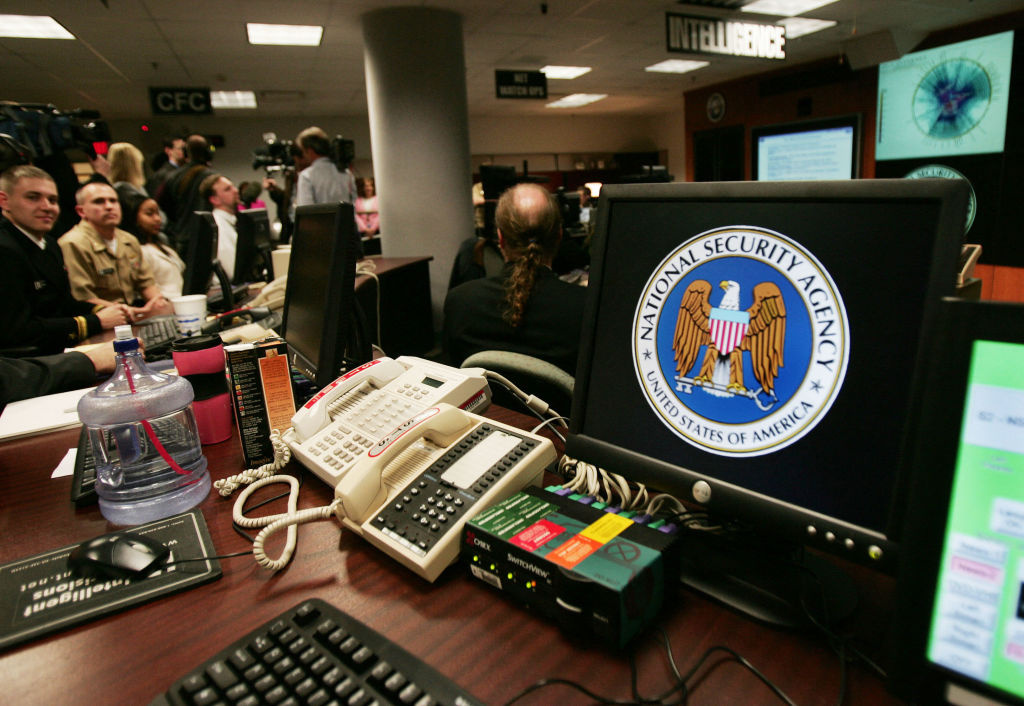
A sweeping technical failure inside one of the United States’ most sensitive intelligence agencies, the National Security Agency (NSA), has disrupted classified communications at a critical moment.
The timing could not be more consequential, with American forces and intelligence assets actively engaged in a conflict in the Middle East.
The NSA’s highly classified internal communications network, known as NSANet, went down on November 17, disrupting the agency’s ability to access and share sensitive intelligence information internally. CNN first reported the outage, citing six people familiar with the problem at the agency, which is headquartered at Fort Meade, Maryland.
The NSA responded by staggering personnel arrival times as it investigated the scope and cause of the disruption, with large swaths of the agency’s workforce asked to remain at home while essential staff reported to the facility. The outage, which sources described as affecting internal communications and analysis capabilities, persisted for two days before the broader follow-on reporting about its impact on the Georgia hub emerged on November 18.
“The National Security Agency experienced temporary degradation during scheduled routine maintenance,” the statement read. “While some internal systems were affected, mission-critical capabilities remain fully operational, and our ability to defend national security continues.
NSA’s infrastructure is designed with multiple layers of redundancy to maintain operations during planned maintenance or unexpected events.” The statement did not confirm or deny CNN’s reporting about classified network disruptions, and the NSA did not elaborate further.
A subsequent CNN report on November 18 revealed that the outage had also disrupted operations at a critical NSA cryptologic center in Georgia, a facility responsible for signals intelligence and cybersecurity operations focused specifically on the Middle East. That facility plays a direct role in supporting the intelligence picture that informs US military and national security decision-making in the region.
The disruption to the Georgia hub affected classified communications between the United States intelligence community and assets, partners, and operations focused on the Middle East theater. The precise operational impact remained unclear given the classified nature of the work involved, but the reporting indicated that the disruption was significant enough to affect the flow of intelligence at a moment of active US military engagement.
Current and former US officials told CNN that alternative secure communications systems remained available and that the outage was not expected to block urgent intelligence from reaching President Trump, who was traveling abroad at the time. The officials’ assurances were specifically about the delivery of critical intelligence to the president rather than a broader claim that all agency functions were unimpaired. Five Eyes intelligence sharing with allied nations was also reported to be unaffected.
Investigators were examining a software update as the likely trigger for the NSANet failure. The outage arrived during a period of unusual cascading technical failures across major US systems. It followed an FAA equipment malfunction on November 13 that triggered a nationwide ground stop disrupting thousands of flights, a Microsoft outage on November 12 that took down Outlook, Teams, and other Microsoft 365 services, and JPMorgan Chase transaction difficulties on November 16.
The NSA outage landed at a particularly sensitive time for US intelligence operations. The United States is engaged in an active military conflict with Iran, making the uninterrupted flow of signals intelligence and secure communications an operational priority rather than an administrative concern.
The specific role of the Georgia cryptologic center in monitoring and processing Middle East-focused signals intelligence means that any disruption to that facility directly touches the operational information environment surrounding the US-Iran conflict. Iran has long been one of the NSA’s primary signals intelligence targets, and the intelligence produced by facilities like the Georgia hub feeds into military planning, threat assessment, and diplomatic decision-making at the highest levels of the US government.
No link was established between the NSA outage and any hostile action by Iran or any other adversary, and investigators were treating the software update as the most likely cause.
The NSA’s own statement framing the event as routine maintenance degradation was not contradicted by the reporting, though CNN’s sources provided significantly more detail about the operational impact than the agency’s official characterization suggested.
The National Security Agency is the United States government’s primary signals intelligence organization and a major component of the US intelligence community. Founded in 1952 and headquartered at Fort Meade, Maryland, the NSA is responsible for collecting and processing foreign signals intelligence, which includes intercepting and analyzing communications, electronic signals, and other data transmitted through global networks. It is also responsible for protecting US government communications and information systems through its cybersecurity mission.
The NSA operates NSANet, its own classified internal network, which provides the agency’s analysts and personnel with access to highly sensitive intelligence data and allows secure communication within the intelligence community and with military partners. The NSA is part of the Department of Defense and is led by a director who simultaneously serves as commander of US Cyber Command.
Based on reporting from CNN and multiple other outlets, the outage primarily affected NSANet, the NSA’s classified internal communications network. NSANet is the internal backbone through which the agency’s personnel access, analyze, and share sensitive intelligence data.
The Georgia cryptologic center, which was specifically identified as affected by the follow-on reporting, houses the systems focused on signals intelligence collection and processing related to the Middle East, meaning the operational impact of the disruption was not uniform across the agency but concentrated in an area of active intelligence priority. Alternative secure communications systems remained operational for the most time-sensitive needs.
The United States and Iran have a long history of tensions rooted in Iran’s 1979 Islamic Revolution, which ended US-Iran diplomatic relations, and subsequent decades of disagreement over Iran’s nuclear program, its support for regional militant groups, and its broader geopolitical ambitions in the Middle East.
The current conflict escalated after Iran crossed a threshold in its nuclear weapons development and took military action against US partners in the region, triggering a direct US military response under the Trump administration. Iran’s support for proxy forces including Hezbollah, the Houthi movement, and various Iraq-based militias has extended the conflict across multiple fronts simultaneously, requiring the US to maintain active intelligence coverage across a wide swath of the Middle East region.
The systems affected by the NSA outage sit at the heart of how the United States gathers and acts on intelligence during active military operations. NSANet functions as the classified information highway through which signals intelligence is collected, analyzed, disseminated, and acted upon across the intelligence community.
The Georgia cryptologic center specifically focuses on the Middle East, which means its systems directly support the intelligence products that inform military targeting, threat warnings, and strategic planning in the US-Iran conflict theater.