HomeAuto Zimbabwe Lion Conflict: Nonprofit Reports 98% Drop in Two Wards, but No Baseline Counts Found
Zimbabwe Lion Conflict: Nonprofit Reports 98% Drop in Two Wards, but No Baseline Counts Found
November 18, 2026:
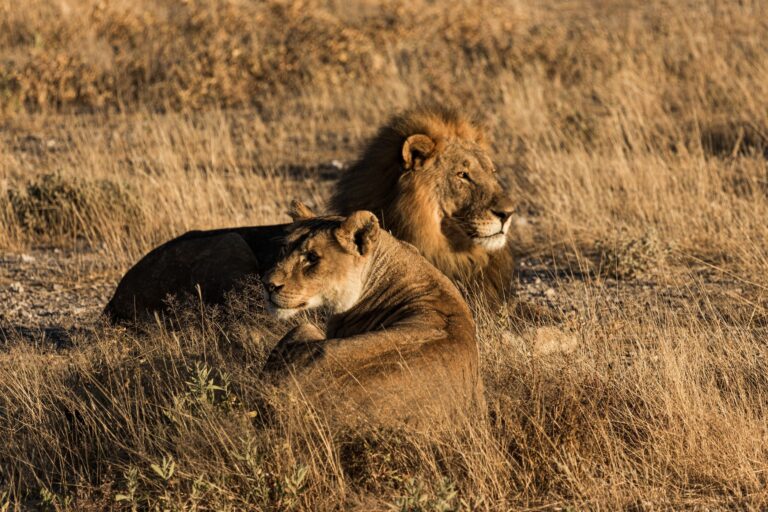
Bruno Almeida/pexels.com
Wildlife Conservation Action (WCA), a Zimbabwean nonprofit, says conflict incidents fell 98% in its first two wards in Nyaminyami District and 53% across three northern districts, but the group has published no raw incident counts, and no independent evaluation of either figure turned up in the sources reviewed. Founder Moreangels Mbizah described the model in a Mongabay Newscast interview released Tuesday, Nov. 17.
The numbers matter now because the program is expanding into Hwange District while Zimbabwe drafts a national human-wildlife coexistence strategy, and organizations from other parts of Zimbabwe, Botswana and Kenya have visited to learn from it. This article separates what the record documents from what the program claims, and shows which of its tools have independent testing behind them.
Mbizah is a conservation biologist whose Oxford doctoral work examined how resource abundance and distribution affect lion ecology and social behavior in Hwange National Park; WCA was founded in 2019. Many of the program’s measures are low-tech, including mobile cattle enclosures and raised kraals, with GPS collars and a planned data system as the technology layer.
Reported 98% Drop Covers Two Wards, 53% Covers Three Districts
WCA’s website ties the 98% decline to wards 3 and 4 of Nyaminyami and describes a composite 53% decline across three project districts: Nyaminyami, Mbire and Binga. Wards are small administrative areas made up of clusters of villages. The Mongabay episode summary describes the 53% as covering Mbire and Binga, and the difference is not explained.
In the interview, Mbizah places the 98% drop in two Nyaminyami wards where WCA began work about six years ago, with the decline occurring over a five-year period. The Whitley Fund for Nature, which gave Mbizah a 2026 award, frames the same result more narrowly: conflict incidents cut by as much as 98% in some areas. Its April press release adds a 49% reduction across three districts since 2021. In April, Mbizah told Mongabay that incidents across the three districts had halved over five years and that conflict was nearly eliminated in at least two wards; that article cited no independent verification. The three-district result therefore appears as 49%, “halved” and 53%, depending on the source, with no stated measurement method.
What none of the sources provide is a starting number. WCA’s website gives no definition of a conflict incident or method for the percentages, the Whitley page gives no baseline or raw counts, and Mongabay’s April report does not describe measurement. The species covered is also unclear: WCA’s site says only “conflict incidents,” while Mongabay’s April report said interventions halved human-carnivore conflict.
WCA’s site also reports 10,341 households (41,364 people) adopting non-lethal mitigation and 20,351 livestock protected, valued at $2,602,950. Whitley’s April release instead says the work protects almost 18,000 livestock worth $2.3 million, and an Africa.com feature cites $2.3 million as well. A WCA PDF on its site separately claims a 61.3% reduction over the last three years, again without a stated starting point. None of the sources explains why the figures differ.
Lost Cow Costs Three Months of Income in Mbire
Losing one cow to a lion costs a family in Mbire District about three months of income, according to Africa.com, which cites an average cow price near $300 and an average monthly wage near $108. The feature presents both as general averages. The Whitley Fund says lions have lost about 90% of range and that fewer than 19,000 remain in the wild in Africa, and the IUCN lists the species as Vulnerable.
Mbizah links falling conflict to fewer retaliatory lion killings; the Mongabay page presents that as her stated link, not a measured cause.
The problem is national. Zimbabwe recorded 12,374 human-wildlife conflict incidents over the past decade, according to a July 1 report in The Herald republished by ATC News, with 486 people killed, 554 injured and 4,025 livestock lost. Africa.com cites the environment ministry for 49 deaths in 2024 and 53 in 2025, while a Herald report quoting ZimParks puts 62 deaths in 2025, up from 49 in 2024. The sources do not explain the difference.
What Do Batabilili Guardians Do to Prevent Lion Attacks on Livestock?
WCA calls its locally recruited Community Guardians “Batabilili.” Mbizah says they are recruited from local communities, then trained. The work falls into three parts.
Monitoring. Guardians head out each morning to look for tracks or droppings and alert farmers to problem animals. Mbizah says WCA also uses GPS collars on lions and elephants for early warning. If a collared lion moves toward communities, guardians alert residents and chase it back into the protected area; that is the only example she gives, and the interview states no collar count.
Prevention. The episode summary says guardians help farmers secure livestock in above-ground kraals at night. WCA’s other measures include solar-powered flashing lights, four per kraal; kraals raised about 1.5 meters (5 feet) off the ground, drawing on the Tonga tradition of stilt houses; and mobile cattle enclosures called bomas. Mbizah told Mongabay in April that farmers who see the tools working for others now buy some with their own money, though no data was provided.
Response. Guardians collect conflict data after incidents. Mbizah says communities previously lacked emotional or psychological support after a loss and that guardians aim to provide it.
Organizations from elsewhere in Zimbabwe have come to learn from WCA, groups from Botswana and Kenya have visited, and Mbizah says they are adopting and adapting the model.
Collar Geofence Alerts and Flashing Lights Have Independent Evidence, With Limits
WCA has published no results for its own collars or lights in the sources reviewed, but both tools have been tested elsewhere, and the findings show what they can and cannot do.
Collar alerts. In a University of Pretoria pilot in northern Botswana’s Okavango Delta, from May 2016 to May 2018, GPS collars were programmed with virtual boundaries called geofences that triggered an alert when a lion crossed one. Researchers received the alerts as text messages and passed them to headmen of villages and cattle posts, who shared them with community members. Nine adult lions were collared, early warning improved livestock protection by enabling informed risk management such as night kraaling, and 91.8% found it beneficial. Researcher Florian Weise cautioned that early-warning alerts are not the big solution to human-wildlife conflict and that such systems have a long way to go before they are practical at large scale. The evidence came from a two-year pilot in one area.
Flashing lights. A Leiden University study of LED flashing lights on livestock enclosures around Nairobi National Park tracked 80 farms from 2007 to 2016, 43 of which installed lights, and found lit enclosures were attacked much less often than unlit ones. Lions also adapted: after lights went up near the park border, attacks shifted to unlit enclosures farther away and from night to daytime, and the researchers called for more work on long-term effects. The university’s summary does not explain why flashing deters lions.
Data system. The Whitley Fund says WCA plans to build a database of wildlife movement and conflict data on SMART, the Spatial Monitoring and Reporting Tool. SMART is software and analysis tools for rapid collection and transfer of field patrol data. The group Lion Landscapes uses SMART with the CyberTracker plugin to log collared lion movements, poisoning events and conflict incidents. A structured, published incident database is the kind of record outsiders could use to test WCA’s figures, if the group chooses to release it.
Incident Counts Depend on Who Records Them, so 98% Needs Baselines
WCA’s guardians both help prevent attacks and collect incident data. That overlap makes the definition of an incident, and the starting count, especially important. A 2026 Biological Conservation study of 20,888 verified elephant-conflict reports around two national parks in Karnataka, India, as summarized by the Centre for Wildlife Studies, found that active monitoring and community outreach raised the chance incidents were detected, and that fewer reports do not always mean less conflict. That study is not about lions or Zimbabwe, and it does not show WCA’s counts are wrong. It shows why a bare percentage cannot be read without the definition and the starting number.
Independent evaluations of guardian programs exist, though not yet for WCA in the sources reviewed. A peer-reviewed study of Lion Guardians in southern Kenya, covering four ranches across a 3,500-square-kilometer (1,351-square-mile) area from 2003 to 2011, estimated that livestock compensation alone cut lion killing by 87% to 91% and that adding guardians raised the reduction to 99%. The two schemes ran at the same time at three ranches, so their individual effects could not be separated, and the killing data came mainly from community informants and interviews with lion hunters. Co-author Leela Hazzah founded Lion Guardians in 2007.
In Zimbabwe, a study in the journal Oryx found that the annual number of lions subject to retaliatory killing dropped 41% after the Long Shields Community Guardians program began in 2013, compared with 2008 to 2012. Most recorded killings were shootings of problem animals by officials, and official shootings stayed unchanged. The study measures lion killings rather than conflict incidents, so it is not directly comparable with WCA’s figures.
Expansion Into Hwange Coincides With National Coexistence Strategy Drafting
The program began in two Nyaminyami wards, grew to 10 wards there, moved into Mbire and Binga, and is now expanding into Hwange District, across three transfrontier conservation areas, which are cross-border landscapes. The Whitley Fund says WCA works in 15 wards across 2.6 million hectares (about 6.4 million acres).
Mongabay reported that the 2026 Whitley Award carries £50,000 (approximately $66,054 USD). The money will fund three more wards, 4,800 people and six new guardians, and in Mbire the work grows from five wards to eight.
On policy, WCA works with ZimParks and the Ministry of Environment, Climate and Wildlife toward a national strategy on human-wildlife conflict and coexistence. Mbizah mentions a July workshop on the strategy but does not give the year. Zimbabwean press reports described a three-day national coexistence strategy workshop underway in Harare on July 2, 2026, which appears to match. No strategy text or adoption timeline appeared in the sources reviewed.
Open Questions: Baselines, Lion Counts, Land Pressure, Funding
Independent verification. The 98% and 53% figures are self-reported, and the sources reviewed cite no outside evaluation from WCA, Whitley or Mongabay.
Baselines and definitions. Raw incident counts, the definition of an incident and the calculation method are unpublished, and the guardian and collar counts are not given in the interview.
Lion outcomes. Fewer conflicts is not the same as more lions. The Whitley Fund describes a long-term target of about 10% growth, to 660 lions, while Mongabay noted there are no reliable population figures for the region.
Durability. Agronomist Frédéric Baudron, who has researched Mbire for decades, told Mongabay that protecting livestock from predators could increase livestock production and habitat conversion unless measures also reduce demand for land. Farm expansion into wildlife corridors already worries Mbizah’s team.
Funding. The interview does not say who funds the work. An Oxford alumni profile listed USAID, Tusk Trust, WWF, the African Wildlife Foundation, Dry Creek Foundation and the Wildlife Conservation Network via the Lion Recovery Fund as funders at that time.
The reported results are striking, the model is drawing visitors, and independent studies of collar alerts, flashing lights and guardian programs elsewhere give the approach some support. But the claim that WCA’s version works at scale rests on its own ward-level data for now. Published baselines, a stated definition of a conflict incident and an outside evaluation would settle it. Until then, readers weighing any conservation-technology success claim can ask the same three questions: what was the starting count, how was an incident defined, and who outside the program checked it.
Currency conversions in this article are approximate and reflect the Nov. 17, 2026 exchange rate.
Frequently Asked Questions
Is Wildlife Conservation Action’s 98% drop independently verified?
Not in the sources reviewed. The figure covers two wards, WCA’s site gives no baseline or definition, and the Whitley Fund describes it as a result in some areas rather than a general one.
Do GPS collars on lions prevent livestock attacks?
They can help when alerts reach herders in time. In the Okavango pilot, alerts supported night kraaling and most participants found them useful, but Florian Weise said such systems are far from practical at large scale.
How do flashing lion lights work?
Researchers found lit livestock enclosures near Nairobi National Park were attacked far less often, though lions shifted to unlit enclosures and daytime attacks; the Leiden summary does not explain why the flashing deters them.
How common is human-wildlife conflict in Zimbabwe?
Zimbabwe recorded 12,374 incidents over the past decade, including 486 deaths and 554 injuries, according to a Herald report; ZimParks says incidents rose to 2,090 in 2025 from 1,654 in 2024.