HomeNews Yesteryear Became a Cultural Sensation. Caro Claire Burke Is Still Reeling
Yesteryear Became a Cultural Sensation. Caro Claire Burke Is Still Reeling
November 17, 2026:
The nurses in the labor and delivery unit at a Boston-area hospital were in for a surprise. On the Wednesday in September when their book club was scheduled to discuss Caro Claire Burke’s Yesteryear, the author herself showed up to deliver her first child. Which is how, in the heady aftermath of giving birth, Burke found herself propped up in her hospital bed, signing copies of her novel. It was as surreal a scene as any from a year in which she went from relative obscurity to the center of the cultural conversation.
Sitting on her living-room couch five weeks later, watching as her husband feeds their infant, all tiny limbs and milk-bloated belly, Burke reflects on the moment. “Holy sh-t,” she remembers thinking. “This has permeated.” The woman who wrote the most divisive mother character in fiction this year is now in the thralls of new motherhood herself, still recovering physically and already deeply in love with her child. Her experience has been nothing like that of Natalie Heller Mills, the protagonist of her best seller, who enters this phase of life entirely unprepared and furious at a world determined to keep her contained. “I will never be Natalie again,” the character narrates. “I will only ever be Mama.”
For Burke, this change is only one of the universe-shifting transitions she’s experienced recently. When she sold her novel two years ago to Knopf—in a seven-figure deal, which is rare for a debut—her financial reality transformed completely. She paid off her car loan, bought this house in coastal Massachusetts, the region where she grew up, and became someone who could independently afford to write fiction for a living. Around the same time, she launched a podcast, Diabolical Lies, with Katie Gatti Tassin, establishing herself as a feminist cultural critic. And this year, Burke achieved her lifelong dream of becoming a published novelist—only to see her spiky, overtly political novel become a sensational hit.
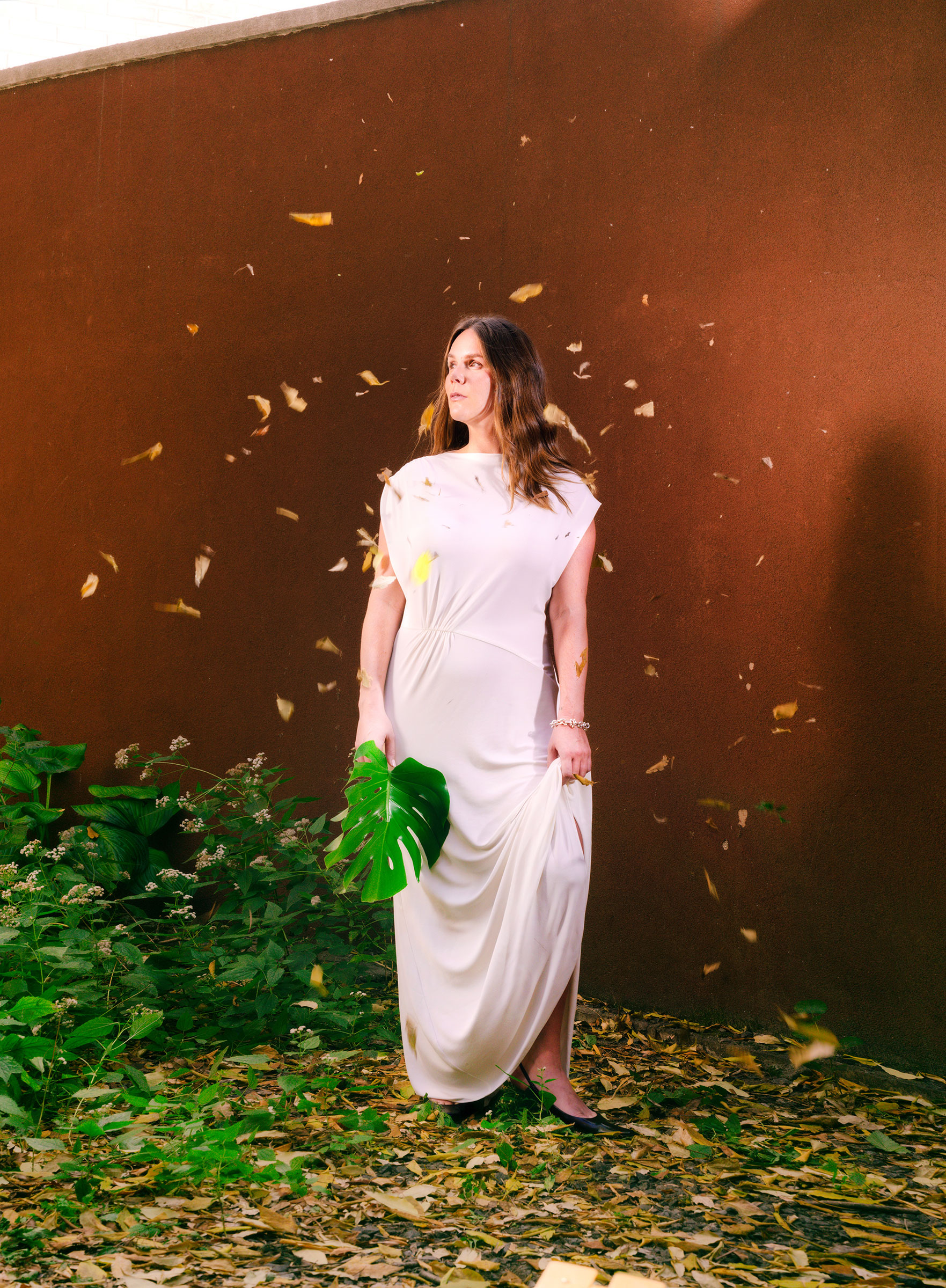
—Tonje Thilesen for TIME
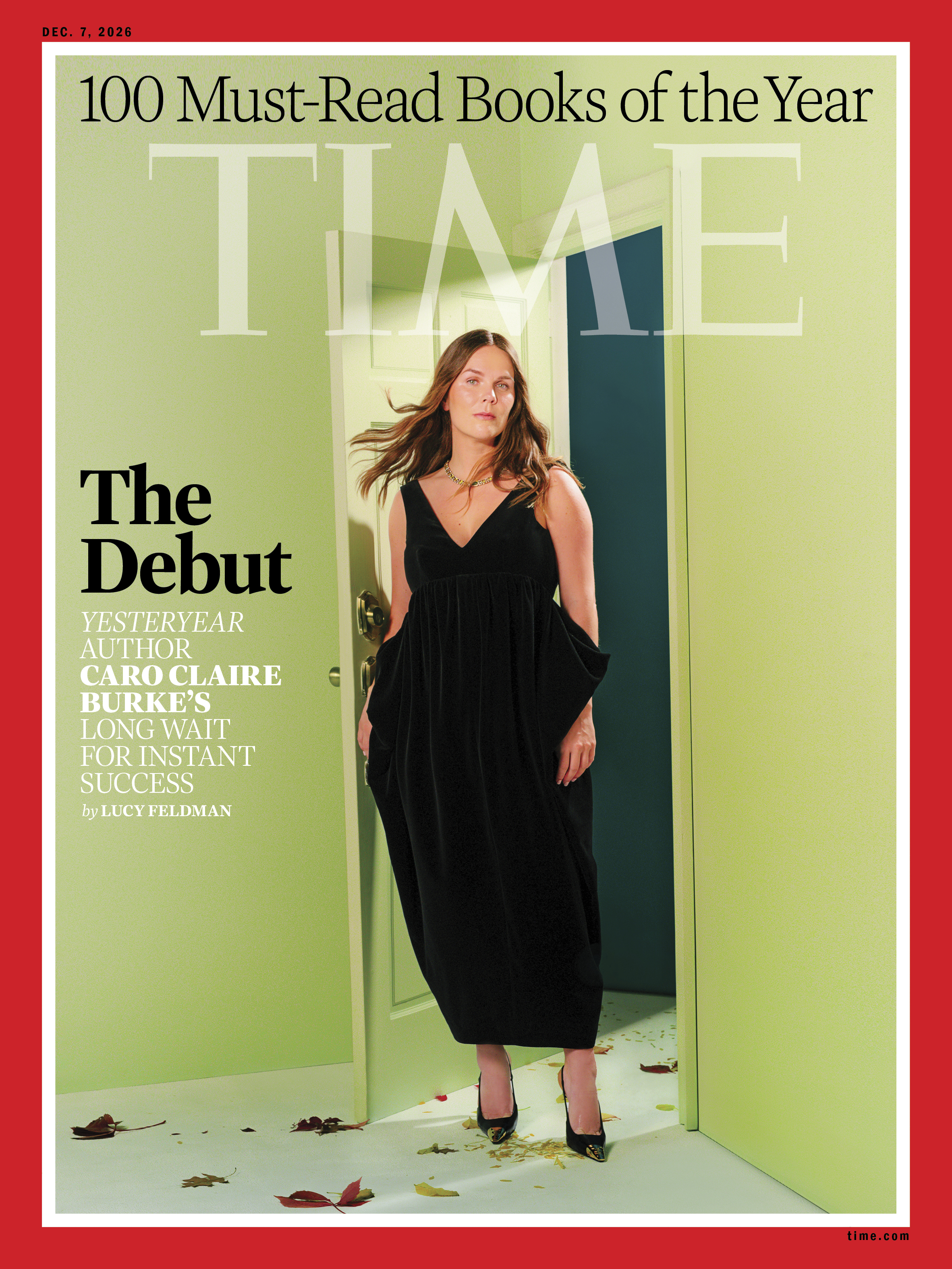
Buy your copy of the 100 Must-Read Books of 2026 issue here
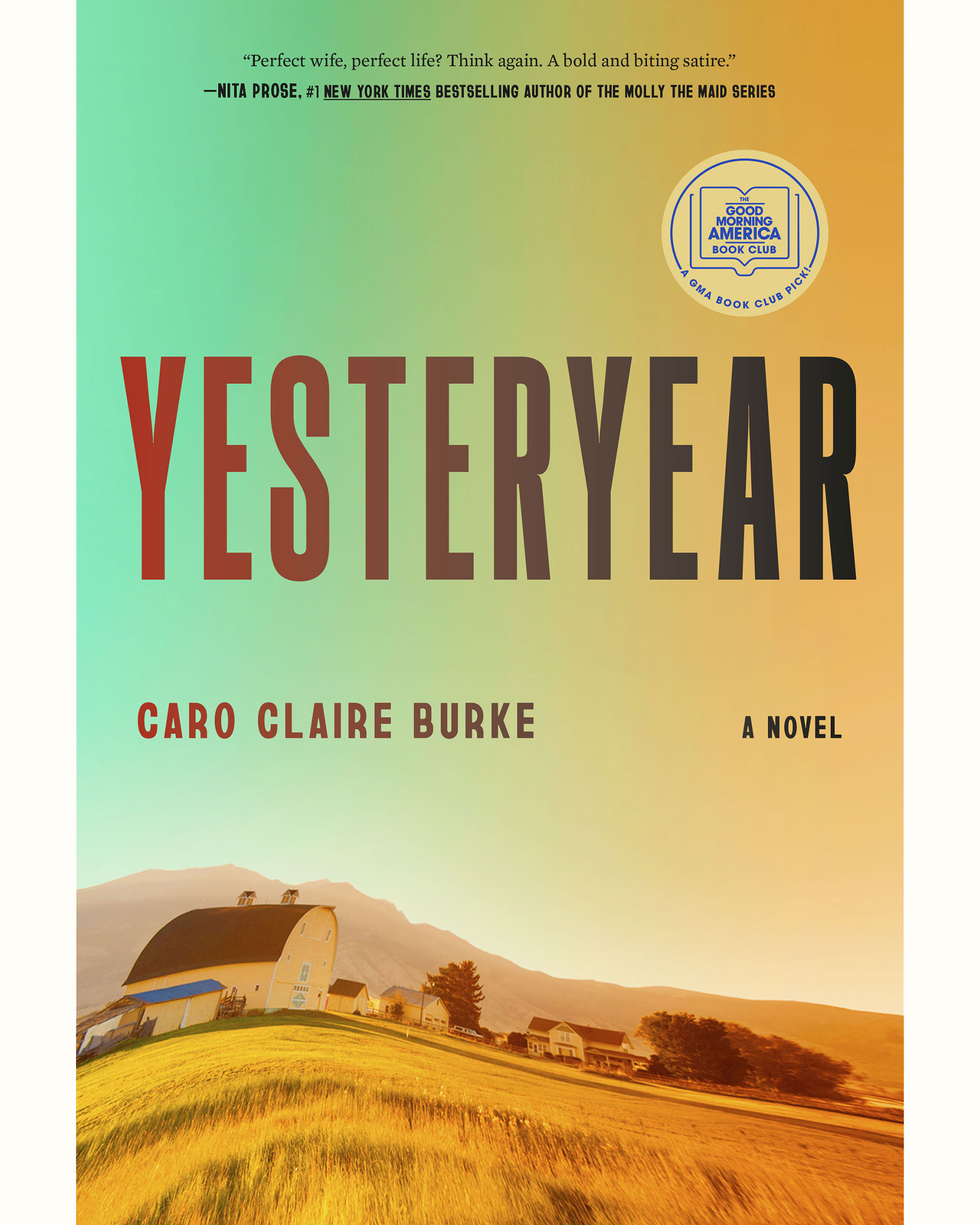
The impact of Yesteryear, published in April, cannot be overstated. The novel has sold 3.5 million copies around the world. Even before you crack the spine, it offers an enticing package: a strong title, the investment of one of the most powerful imprints in American publishing, an early endorsement from Anne Hathaway—who is set to produce and star in an adaptation from Amazon MGM Studios—and the tightest, most delicious elevator pitch for a literary novel in recent memory: a tradwife influencer wakes up in 1855 and is forced to actually live the lifestyle she’s been selling online.
Read more about Caro Claire Burke in the 100 Must-Read Books of 2026
A twisty thriller with a biting voice, it’s the kind of book that you have to discuss with someone else as soon as you finish, and it has soared to zeitgeist-defining status à la Gillian Flynn’s Gone Girl, R.F. Kuang’s Yellowface, and Sally Rooney’s Normal People. This year, it has become, alongside Belle Burden’s divorce memoir Strangers and Lena Dunham’s Famesick, one of the few books that seemingly everyone is talking about. Good Morning America selected it as their April book club pick. In May, Burke was a guest on Late Night With Seth Meyers, one of only a handful of novelists to appear on the show in 2026. These days, authors are lucky to make book-tour stops in a few cities, but Burke has visited 30, and, after a maternity break, is set to continue on to Australia, New Zealand, and multiple countries in Europe. Women dressed as Natalie for Halloween, recruiting friends to go as her chickens, her cows, her useless husband Caleb. The premise of the book was recently a clue on Jeopardy!
Regardless of a given reader’s politics, Yesteryear, which interrogates the virtues of a certain type of womanhood, touches a nerve. Some have read it as a rebuke of conservative ideals—Natalie, who comes from a Christian fundamentalist community, is miserable, therefore Burke must be saying that women who desire “traditional” lives are doomed. Others have read it as equally harsh on liberals—the women in the novel who tout progressive values are just as screwed. Some have accused Burke of taking a lazy shortcut, not doing enough research to articulate Natalie’s specific religious sect; others have perceived a deeper point about gender and control in that choice. Many think Natalie is atrocious, morally bad, and unrelatable; many also see her as a sympathetic victim. Burke, as the author who created this character and this world, has been accused of hating women herself. “People had really strong opinions about the book before it even came out,” she says. “A lot of the criticism I will see, sometimes it’s very legitimate—like the pacing was off or whatever—and sometimes it’s literally just this book was supposed to be something else.”
Burke likens her experience of the seven months since publication to being blasted into space on a rocket ship. “There have been moments where it’s like we are hurtling through the atmosphere, and I’m pretty sure we are not going to make it through,” she says.
Now she can finally exhale. It’s striking that assuming a new identity as a mother and marching through the sleepless first weeks with a brand-new baby could ever be considered a respite. But the time with her family has brought her back to herself. “I feel like a normal person again,” Burke says, “and I want to try to keep that.”
One of the first things Burke posted on social media after Yesteryear became an instant best seller was a slideshow of rejection notices from editors, residency programs, literary magazines, and more: I just wanted more concept and plot… I’m not quite caught up in the narrative… …lost momentum…
Hers is the kind of success that’s so striking that people assume it’s a fluke—that the writer behind Yesteryear struck gold right out of the gate. But Burke is the first person to emphasize just how long and hard she worked to be published—and how many disappointments she faced along the way. Even now she’s been turned down for ideas and events she’s pitched. “I just wanted to encourage writers to remember that it’s never not bumpy,” she says, “and that the rejection you’re receiving doesn’t mean you might not end up with a Yesteryear. In fact, it probably means that’s the only way that you get there.”
Burke tried to establish her career as an author for a full decade before the Yesteryear boom. After attempting a premed track at the University of Virginia (which she let go after getting a C in chemistry) and considering law school (she took the LSAT and never even looked at her score), Burke committed to writing, earning an MFA from Bennington College. She freelanced, publishing essays and short stories, and completed two novels that never sold. Her only full-time job was from 2022 to 2024 as an editor at Katie Couric Media, where she churned out editorial and branded articles.
After the second novel was rejected in 2023, she had a reality-check moment. Her husband, Riley Strand, had been covering their finances for years. But they wanted kids, and Burke was 30, so she decided to focus on her job and take a break from fiction. On a whim, she downloaded TikTok, where she was fed a stream of videos by tradwife influencers—women who showcase their lifestyles conforming to traditional gender roles—and started posting her own videos analyzing their meaning. Suddenly, people cared what she had to say, and soon she connected with Tassin, with whom she’d launch the podcast. She also had the idea for her next attempt at a novel.
Burke wrote the first draft of Yesteryear in two feverish months, surprising herself with the wickedly funny, cutting voice of Natalie Heller Mills. Natalie is an acidic, vitriolic rural Idahoan who grows up sheltered but curious about the world. She heads to Harvard to have her mind expanded, only to find that her liberal peers are just as oppressed in their own way, and decides to retreat to the familiar safety of marriage, motherhood, and a life led by her husband. Eventually, she lobbies her politico father-in-law to buy them a farm, which she uses to create a picturesque vision of a “traditional” life for millions of followers on social media, one abundant with barn animals, homemade dinners, and a gaggle of homeschooled tots—never revealing the help they have behind the scenes. She becomes a conservative icon, held up in the manosphere as the ideal woman: “Look how exhausted and beautiful she is.” And then one day, Natalie wakes up in the mid-19th century, and gone are the luxuries of modern wealth. Her performance becomes her reality, and she needs to find out how—and why—or else risk being stuck in her new hell forever.
—Tonje Thilesen for TIME
After a 12-way bidding war, Burke sold the novel in 2024 to Knopf editorial director of fiction Jenny Jackson, who had twice tried to acquire it before anyone else could make an offer. That was a first for Jackson, the editor of heavy hitters like Kevin Kwan and Emily St. John Mandel. “I personally lose some sleep any time I spend seven figures on a book, and if it’s an author with no track record whatsoever, it’s extra scary,” she says. Once the book went to auction, she was encouraged to see that it wasn’t just literary imprints like hers that wanted Yesteryear, but commercial ones too—Viking, Simon & Schuster, Avid Reader, Crown, Dutton, and Atria all came to the table. “All of these publishers have a vision for how they could do this book, so that means there are a lot of different kinds of bookshelves it could fit on,” Jackson recalls thinking. “And that means we have a hit.”
Jackson feels like she’s witnessed the birth of a public intellectual. Because Burke and Tassin began building an audience before the book came out, Burke arrived as a debut novelist with a ready-made fan base. “We had this launch event with maybe 700 attendees—completely sold out for a debut—and all the young women were wearing Diabolical Lies T-shirts,” Jackson says. “When we signed up this book, we were signing up a debut novel, and what we have on our hands now is a very prominent American thinker.”
For his part, Strand says he was happy to wait for the industry to catch on to his wife’s talents—but he remembers one moment that gave him pause. Bouncing their child in his arms, he shares a family secret: “Caroline watches reality TV while she writes.” He smiles at Burke, who laughs. “I will go on the record saying I always believed in you, but there was a time where Caroline was writing while watching TV, and I walked in, and I was like, maybe she’s not going to make it.”
At a local general store, Burke is greeted with a hug by the manager. She orders a latte and carries it outside to a picnic table. She looks like any 33-year-old taking a coffee break on a crisp fall day. But you can see it on her face, hear it in the way she pauses to think before she speaks—she exists in a liminal space between her old identity of Caroline and her new one as the artist behind a cultural phenomenon. Earlier in the day, she went to get her eyebrows waxed, and when the esthetician asked what she does for a living, she said she was a writer—then lied and told the woman she self-publishes romance novels. “I have brain bleeds every time I have to map my novel life onto my home life,” she says. “I feel like I’m constantly glitching. Everyone’s fine and normal, and I’m the one who’s making it weird.”
She never envisioned Yesteryear being the kind of book that such a wide audience would engage with. Ann Patchett, Taylor Jenkins Reid, Emily Henry, Virginia Evans—she lists authors whose work is hugely commercial yet generally not “contentious.” “Yesteryear has so many hot-button things,” she says. “There’s almost a dissonance between what it is and the level that it reached.”
Similarly, Burke never imagined that she herself would become part of the story. She and Tassin had talked before the book was published about how any woman who’s put on a pedestal will inevitably face backlash. “The second half of that play is knocking her down off of it,” Tassin says. “So when all the initial coverage was so glowing, we were like, ‘Oh god. It’s coming.’” But it wasn’t just that people were suggesting that Burke had cashed in on a viral trend or questioning whether the book lived up to the hype, which was difficult enough. “There were many times throughout the last year where I was like, ‘This book totally failed. People hate it. People hate me. The sales are fraudulent. I’m an industry plant. I guess everyone’s right, and the book is awful, and I failed upwards,’” Burke says, noting that there was a period when she couldn’t log into Substack to work on Diabolical Lies because she was tagged in so many “takedown” posts. People also wanted her to explain exactly how her character’s life and beliefs mirrored her own. Tassin refers to the book’s reception as “Yesteryear extended performance art,” an ironic recreation of the very dynamics that Natalie faces when her online presence becomes so big that people begin treating her as an object up for debate.
Burke is good at social media—this whole chapter started with her drawing a crowd for sharing her opinions online, and she regularly posts snappy responses to commentators. But she’s conflicted about the ways in which she’s now exposed. She wants to keep her personal world, particularly anything having to do with her child, as private as possible. “People started to talk about my pregnancy in the narrative of Yesteryear, which is pretty uncomfortable,” she says. She also emphasizes that that part of her life is not relevant to her work. “That’s a political feeling I have about all of the ways in which my experience has been so gendered—of how people have perceived the book, how they talk about me as an author, how they treat female authors—and I’m like, ‘No. You don’t do this with men,’” she says. “It is possible for me to write about children and motherhood, and for you to not know about how I am a mother in my private life.”
At the same time, Burke knows there’s no changing the fact that she’s chosen to put her views out there, which makes them fair game for conversation. She has talked about the fact that she was raised Catholic with conservative values and voted for Mitt Romney in 2012 before evolving her perspective. On Diabolical Lies, she and Tassin have dissected everything from MAGA figures like Karoline Leavitt and Charlie Kirk to Hollywood’s obsession with thinness. Still, she wants to draw a line between herself as a person and the art she creates. For anyone seeking to read Yesteryear as a manifesto, “I don’t think they’ll find anything coherent,” she says. That ambiguity, the way it refuses to take sides, has helped the book travel. “Most people come away with totally different takes on the moral of the story, and that to me is why people want to talk about it.”
Jackson invented a phrase during their time editing the novel that Burke often repeats as the guiding theme of her work: “the grand performance of womanhood.” It speaks to the way women are always being watched and evaluated on how well we are playing our roles. Yesteryear suggests not only that women are set up to fail but also that this surveillance can be so powerful it becomes ingrained in our sense of self. “The idea of Natalie being a good or bad person is so boring to me, and it’s so beside the point,” Burke says. “But why Natalie operates the way that she does, and why she is constantly surveilling herself and second-guessing her thoughts—it’s relevant to fundamentalism, but it’s also relevant to just being a woman.”
If there’s one reader takeaway that Burke agrees with, it’s that neither the tradwife or the girl-boss model is working. “There really is no one correct way to be a woman,” she says. “If you’re conservative or liberal, no matter what, you often have to deal with choices that are not ideal.”
Burke is still trying to make sense of all the noise. People frequently ask her how she feels about “the discourse,” and she’s come to realize that there are so many threads of debate, she can never assume which one an individual is referring to. “It’s like their algorithm. They’re either like, ‘How are you holding up? I know everyone hates your book,’ or they’re like, ‘Oh my God, you’re going to win a Pulitzer, right?’”
She wrote Yesteryear as if no one was watching, because no one was. She was fearless, reckless. “That’s why it was so much fun to write—and I also think that’s why it’s good,” she says. Now she’s under a microscope. “I feel like, well, you don’t want to say the wrong thing. But with Yesteryear I said every wrong thing.”
Her goal, she insists, is not to replicate the success of her debut. She doesn’t ever want to be a viral topic on social media again, and she doesn’t need to make another appearance on late-night TV. “I just want to write books, which sounds really corny, but being in the center of the zeitgeist is very uncomfortable,” she says. She names Patchett, Rooney, and Maggie O’Farrell as writers whose careers she looks to as the model, women who publish consistently and have a following of readers who will take the time to pick up their new releases. Maybe people love your latest book, maybe they don’t—but they’ll keep giving you another chance.
—Tonje Thilesen for TIME
Burke will happily leave behind the kinds of debates that she’s been brought into with Yesteryear: whether America is reading enough, whether the books that are getting read are any good, whether social media has broken the publishing industry. After experiencing firsthand the way purported book fans gleefully smack down the ones that become hits, she can only point out how self-defeating that pattern is, continue to write what inspires her, and hope readers want to check out the new Caro Claire Burke, whatever that turns out to be. “The same people who have said so many things about my book are the people who complain that no one reads,” she says. “I’m like, ‘Well, 2 million people just read this. Does that count?’”
So how does she deal with the sky-high expectations Yesteryear has created? A little realism. “We’ll all be dead someday. I remind myself that frequently. I’ll be dead someday, and none of this will matter,” she says, smiling. As hard as it’s been for her to process everything that has happened with Yesteryear, it’s not hard for her to be grateful she’s been established as someone who has something to say. “The worst thing in the world is silence. Dude, I tried—I was writing silently for a decade. That’s way worse,” she says. “So as much as I have to deal with my own paranoia and neuroses now, I also have an agent. I have a publishing team. I have the money to take time to write. I have people who care if I write something next. That’s such a privilege.”
And write something she will: Burke and Jackson reveal exclusively to TIME that they’ve signed a deal for Burke’s next novel. “Her idea is the kind of thing where you say the sentence, and you’re like, Oh, yeah,” Jackson says.
She bought the book based on the concept alone.
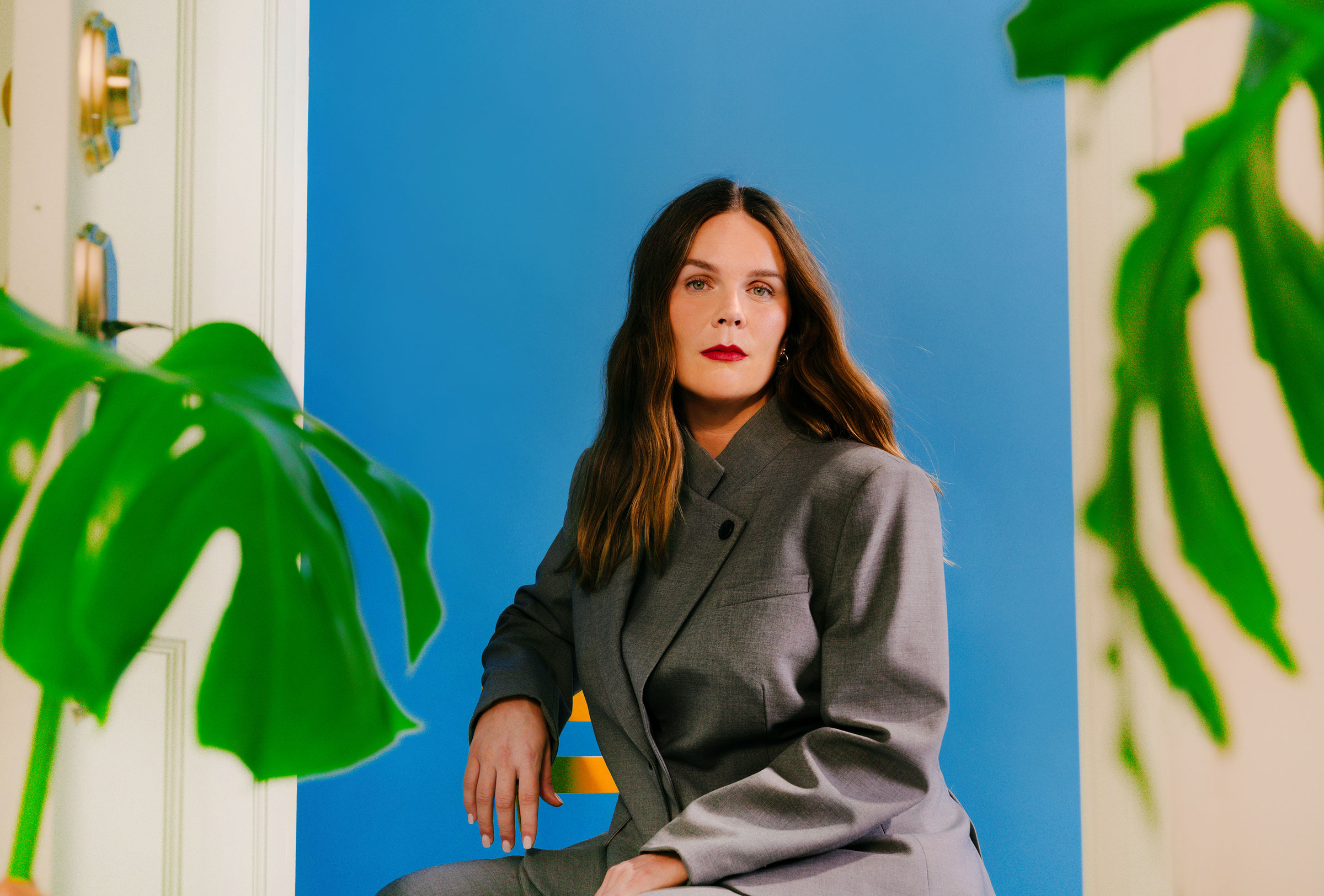
Wardrobe: Kerri Scales; Cover look: Rohe sculptural Volume Velvet Dress, Sabyasachi necklace, Saint Laurent Jeanne Slingback Pumps in Smooth Leather; White look: Right Where I Belong Dress, TWP, Hannah Jewett Earrings, Bracelet, Saint Laurent Anne-Marie Slingback Pumps in Smooth Leather; Grey look: The Double Take Blazer and Avery Pant, TWP, Hannah Jewett Earrings