Hannu Ahonen Wins Nature Photographer of the Year 2026 With Lily Leaf Beside Its Ice Copy

November 17, 2026:

Hannu Ahonen Wins Nature Photographer of the Year 2026 With Lily Leaf Beside Its Ice Copy
NGC 7129: Star Formation with Jets from Webb
Hannu Ahonen/Naturephotographeroftheyear.com

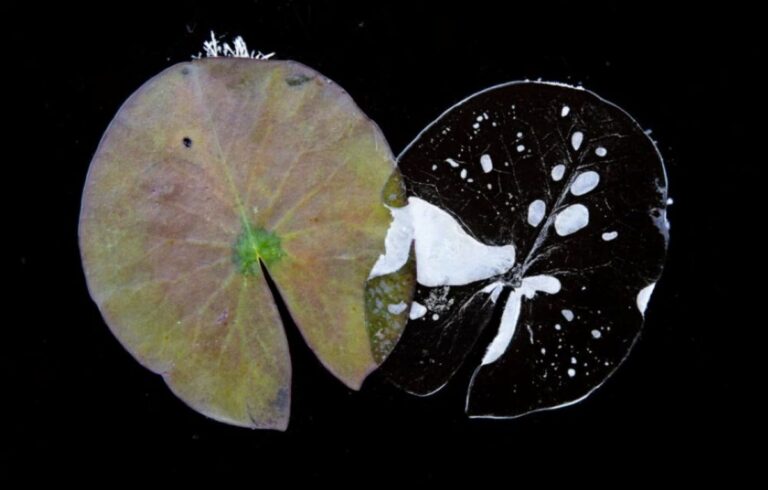
Finnish photographer Hannu Ahonen has been named Nature Photographer of the Year 2026 for The One that Left and the One that Stayed, an image of a water lily leaf resting beside a near-identical copy of itself made of ice.

Nature Talks, the Dutch organization that runs the contest, announced the winners on November 14 at its Nature Talks Photo Festival in the Netherlands. The jury said the image matters beyond its beauty: symbolic photographs like this are valuable because nature has become a lower political priority while the effects of climate change grow more evident.

The picture also took first place in the Plants and Fungi category, and judges found it unusual for a plant photograph to take the top award.

How a Snowless Winter Left a Lily Pad an Ice Twin

Ice formed across the lily pads of a Finnish pond during a snowless winter, and wind then blew the frozen skin off one pad, carrying away a copy of the leaf’s shape and veins. Yle reported that a thin film of water froze on the real leaf before a gust moved the ice sheet alongside it. Ahonen described the conditions this way: “The winter ice had arrived, but it remained snowless for a long time.”

The published accounts do not explain the physics, but a general principle applies. Water can stay liquid below 0°C (32°F) until something gives ice crystals a place to start, and surfaces lower the energy barrier for that start, a process called heterogeneous nucleation. A leaf is one example of such a surface, though the accounts do not say this is what happened in Ahonen’s pond.

Calm water matters too. Lake ice forms in calm water, starting near the shore once the water reaches 32°F (0°C), while turbulent rivers and seas must cool to about 28°F (-2°C) before slushy frazil crystals form.

Jury Chair Theo Bosboom Singled Out a Rare Scene Shot Close to Home

Dutch jury chair Theo Bosboom said the panel could not overlook the leaf beside its frozen replica. He added that the image symbolizes how fleeting nature’s beauty is, since both the ice and the leaf will eventually disappear. The jury also praised Ahonen for shooting close to home, showing that strong photographs do not require distant travel.

Ahonen succeeds Norway’s Åsmund Keilen, who won the 2025 title with Sundance, a long-exposure photograph of a common swift in flight against a summer sun near Oslo.

Twelve Category Winners From Nine Countries

The category winners announced alongside Ahonen are below:

  • Birds: Painting from the End of the World, Lucas Mugnier-Lavorel (France)
  • Mammals: Play Misty, Paul Goldstein (United Kingdom)
  • Other Animals: The Pitcher’s Micro Kingdom, Marcus Kuan (Singapore)
  • Landscape: In the Circle of Vultures Around the Falls, J Fritz Rumpf (USA)
  • Underwater: Beneath Aquatic Constellations, Matt Pérez (USA)
  • Nature Art: Peach Blossoms in the Snow, Xuzhong Liu (China)
  • Human and Nature: Evolution, Petr Bambousek (Czechia)
  • Black and White: Storm on the Sea, László Tóth (Hungary)
  • Animal Portraits: A Seal’s Worst Nightmare, Audun Rikardsen (Norway)
  • Nature of “De Lage Landen”: Fairies, Enikő Kálovics (Hungary)
  • Youth (ages 10 to 17): Tree of Life, Parham Pourahmad (USA)
  • Fred Hazelhoff Award (Portfolio): Eagle Owls in the City: “The Invisible Visible”, Simone Baumeister (Germany)

Judges named in the coverage include Steffen Foerster, Theo Bosboom, Louis Guillot, Ilse Koks and Lana Tannir. Foerster linked the polar bear image in Rikardsen’s picture to warming oceans and melting ice. Bosboom said Liu’s image evokes a feeling of estrangement that he considers a hallmark of good abstract photography. Bosboom said Baumeister’s series met the portfolio standard by showing a recovering bird in Germany that often goes unnoticed.

What Does the Contest Pay, and How Big Is It?

The contest’s website lists a total prize pool of €25,000, with €3,000 (about $3,316) for the overall winner and €500 (about $553) for each category winner. It is open to professional and non-professional photographers worldwide.

The 2026 edition drew a record 27,108 entries, up from 24,781 in 2025, from photographers in more than 96 countries. Nature Talks supports Photographers Against Wildlife Crime through the contest.

Entries for the 2027 Contest Open November 20

Submissions for the 2027 edition open on November 20, 2026, four days from now. Results and entry details are on the Nature Photographer of the Year website.

Dollar conversions are approximate and use the ECB reference rate of 1.1052 dollars per euro on November 13, 2026, the latest rate published as of November 16.


Frequently Asked Questions

How did the ice twin in Hannu Ahonen’s winning photo form?

Ice formed over the lily pads of a Finnish pond during a snowless winter, and wind then shifted the sheet of ice so it lay beside the leaf. Ice forms more easily on surfaces than in open water because surfaces lower the energy barrier for freezing to begin.

Why did the jury call symbolic nature photographs valuable?

The jury said such pictures are valuable at a time when nature has become a lower political priority and the effects of climate change are increasingly evident.

Who won the Nature Photographer of the Year contest before Ahonen?

Norway’s Åsmund Keilen won the 2025 title with Sundance, a long-exposure photograph of a common swift in flight against a summer sun near Oslo.

When do entries open for the 2027 contest?

Entries open on November 20, 2026.

Source link