
Microsoft says hidden software bug caused Outlook outage last week

November 17, 2026:

Microsoft says hidden software bug caused Outlook outage last week

Microsoft says a flaw that slipped through testing months ago helped bring some of the world’s most widely used workplace tools to a standstill last week.

A software bug introduced in July went undetected until heavier traffic and reduced server capacity triggered a chain reaction during peak U.S. business hours Nov. 12, Microsoft executive Charles Lamanna said in a post on X.

“We are deeply sorry for the impact to all our customers and recognize the impact that this has on their normal business & operations,” Lamanna wrote.

PERPETUAL PARALYSIS: WHY EVERYTHING IS GRINDING TO A HALT

The outage disrupted Outlook email, calendars and meeting invitations, along with other Microsoft 365 tools businesses rely on for everyday work.

Explaining the root cause, Lamanna said three factors combined to overwhelm the network gateway that handles traffic for many Microsoft 365 services: the hidden software flaw, increased demand and reduced server capacity.

“First, a latent defect caused servers to become overwhelmed and unresponsive under certain load conditions,” he wrote.

The flaw came from a fix developed specifically for Microsoft 365 gateway servers, Lamanna said. Neither the defect nor that fix applies to broader Windows deployments.

Lamanna said the software change had operated worldwide for more than three months without problems. Microsoft’s testing missed the flaw because its labs did not reflect the mix of traffic and hardware that later triggered it. The bug was worse on newer, more powerful machines, while testing tended to focus on weaker hardware.

DUFFY: INVESTIGATORS EXAMINING 2 ROUTERS AFTER NATIONWIDE FAA GROUND STOP, NO SIGNS OF FOREIGN CYBERATTACK

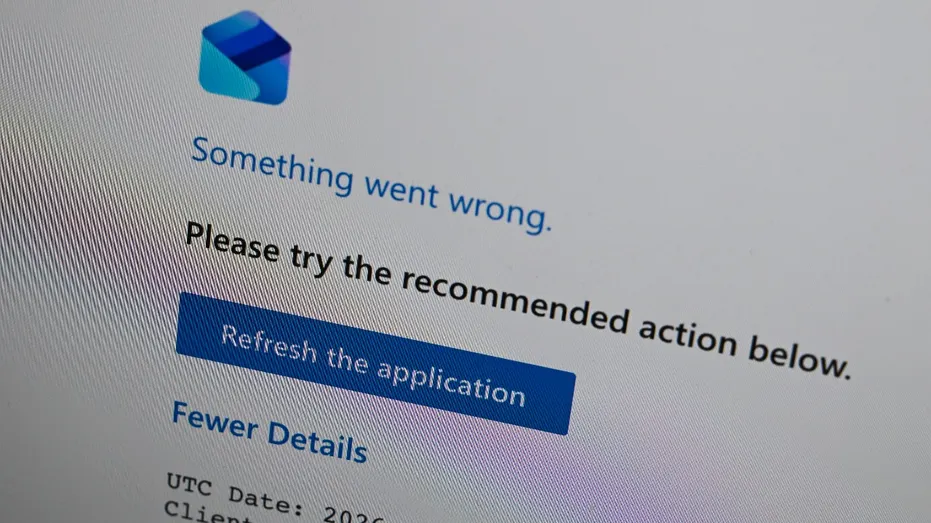
Outlook outage.

A computer screen showing no service available from Microsoft Outlook on November 13, 2026, in Falmouth, Cornwall, United Kingdom. (Hugh R Hastings/Getty Images / Getty Images)

The breakdown came after Teams traffic shifted to a system that also supports Microsoft’s email services. With nearly 14% of that system’s server capacity already offline because of a separate issue, the added demand exposed the bug.

As servers stopped responding, Microsoft automatically sent traffic to machines that were still working, which the company explained overwhelmed those too.

“At its lowest, more than 80% of servers were unresponsive,” Lamanna wrote.

A separate issue also prevented safeguards from containing the failure within individual sections of the network, allowing it to spread globally, he said.

Recovery was slow because servers coming back online were immediately swamped by waiting traffic and failed again. The company’s automated recovery systems were not designed for such a widespread breakdown, and the months-old bug could not be quickly undone using its normal rollback tools, Lamanna said.

8 EVERYDAY THINGS THAT WOULD QUIT WORKING WITHOUT DATA CENTERS

Microsoft

Microsoft apologized after a months-old software bug combined with increased gateway traffic and reduced server capacity to trigger a global outage affecting Outlook and other workplace tools. (iStock / iStock)

Engineers ultimately applied a fix and restarted groups of servers before gradually returning them to service.

Teams, OneDrive, SharePoint and Office apps were able to switch away from the faulty infrastructure and recover earlier. Teams chats and meetings worked normally for most of the outage, Lamanna said, but Exchange Online, which powers Microsoft’s email services, could not make the same switch.

In an earlier post Nov. 13, Lamanna ruled out speculation about hackers or artificial intelligence.

“This was not a cyberattack or an issue caused by AI tooling,” he wrote.

The disruption also affected Microsoft’s Copilot AI assistant and prompted airlines including IndiGo and Akasa Air to report problems with customer-support email systems. OpenAI and Anthropic reported issues with their Microsoft 365 integrations.

Rep. Rich McCormick, R-Ga., said the disruption exposed a vulnerability in the digital systems businesses, hospitals, schools and government agencies depend on.

“Now imagine the consequences if malicious actors had been behind the disruption,” McCormick wrote on X.

McCormick pointed to his Common-Sense Cloud Security Act, saying the country needs to improve how it assesses cloud risks, detects threats and contains damage when systems fail.

“The question isn’t just how we prevent the next failure. It’s how we limit the blast radius when one happens,” he wrote.

Lamanna said a final review would provide more details later this week.

CLICK HERE TO DOWNLOAD THE FOX NEWS APP

“We take our responsibility to our customers seriously and will do everything we can to learn from this and prevent it going forward,” he wrote Nov. 13.

FOX Business’ James Cirrone contributed to this report.

Source link