HomeAuto American Samoa Dengue Outbreak: CDC Credits Faster Lab Testing but Cannot Show Fewer Cases
American Samoa Dengue Outbreak: CDC Credits Faster Lab Testing but Cannot Show Fewer Cases
November 14, 2026:
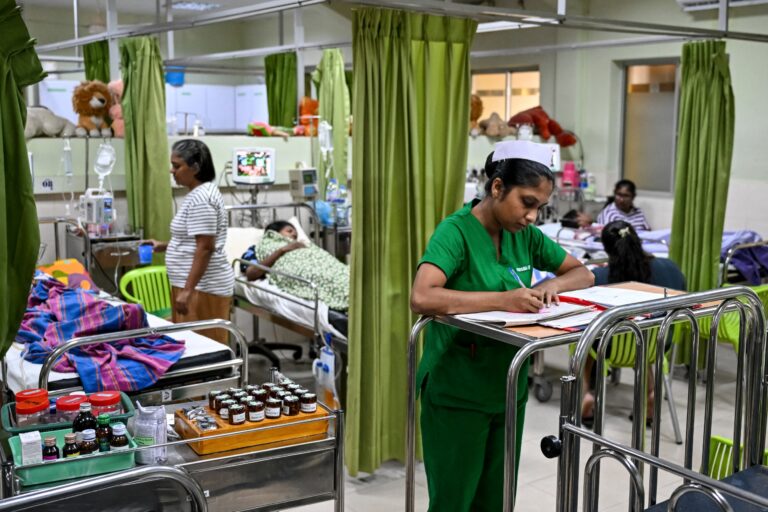
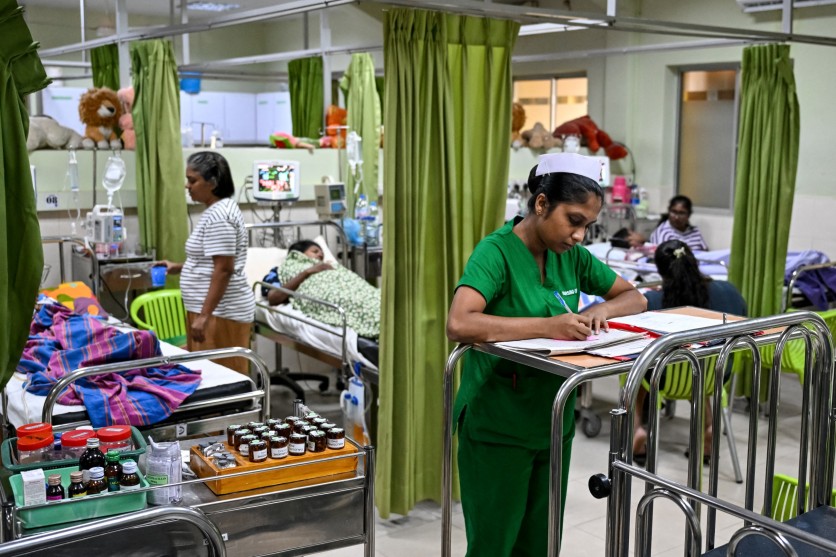
TOPSHOT – Dengue patients receive treatment at the District General Hospital in Sri Lanka’s Negombo city on July 16, 2026. Sri Lanka is intensifying a military-backed drive to contain the spread of mosquito-borne dengue fever, a senior official said on July 15, as the death toll climbed to 49 since the start of the year. Ishara S. KODIKARA/AFP via Getty Images
CDC’s Morbidity and Mortality Weekly Report (MMWR) said on November 12 that American Samoa’s dengue outbreak produced 1,048 confirmed cases and 371 hospitalizations between June 2025 and August 2026 with no deaths, and that the territory’s on-island laboratory confirmed its first cases within days instead of weeks. The report does not test whether that speed reduced cases, and its case count and hospitalization share closely match the territory’s 2016 to 2018 outbreak, so residents and health officials still lack evidence that faster confirmation changed outcomes.
CDC staff wrote the report with the American Samoa Department of Health (ASDOH). They call it the first dengue outbreak in the territory with the benefit of on-island confirmatory testing, and they conclude that such testing “can be considered as an effective strategy” to confirm infections and guide rapid local vector control. The incidence was 211 per 10,000 residents, based on 2020 census figures.
Outbreak Grew From Six Cases to 1,048 Confirmed Across 54 of 76 Villages
American Samoa recorded its first positive dengue test of 2025 on June 20. On July 8, the territory declared a public health emergency after six confirmed cases: two acquired locally and four tied to travel to neighboring Samoa, which was fighting a large outbreak of its own.
Imported infections dominated early. Of 97 cases in June through August 2025, 38 (39%) were travel-associated. From September 2025 through February 2026, only 11 of 783 cases (1%) were, and no travel-associated case appeared after February 15, 2026. Overall, 999 cases were locally acquired (95%) and 49 (5%) were travel-associated. By subtraction, roughly 168 cases fall between March and August 2026, a figure the report does not state.
Children and teens carried the burden:
Age and sex. 814 patients (78%) were younger than 20. Incidence peaked at 652 per 10,000 in ages 10 to 14. 650 patients (62%) were male.
Geography. 54 of the territory’s 76 villages (71%) reported at least one case. Tafuna had the most, with 152 cases (15%).
Hospital load. Weekly admissions peaked at 19 in December 2025, against a weekly median of 6. On the busiest day, dengue patients occupied 18 of about 110 usable beds (16%), and the median stay was four days.
LBJ Hospital, the island’s only hospital, was under construction for most of the outbreak. Its official capacity is 150 beds, but administrators reported about 110 were usable, an estimate rather than a formal count.
How Do NS1 ELISA and RT-PCR Tests Differ for Dengue?
Those two assays carried almost every confirmation in this outbreak. Of 1,048 confirmed cases, 838 (80%) were identified by NS1 ELISA and 204 (19%) by RT-PCR. Two cases were confirmed by IgM ELISA alone and four by a rapid test alone.
The tests detect different things. An NS1 ELISA is a sandwich assay: a capture antibody fixed to a plastic plate pulls the dengue NS1 protein out of a serum sample, a second enzyme-linked antibody binds it, and a color change read by an instrument signals a positive. RT-PCR converts viral RNA into DNA and amplifies it, which detects the virus genome directly.
CDC’s clinical testing guidance matches each test to the day of illness. Molecular tests usually detect viral RNA in the first week, and NS1 antigen tests can be about as sensitive as molecular tests during days 0 to 7. IgM antibody testing can identify most recent infections starting around day 3, but positive IgM results can be affected by cross-reactivity with other flaviviruses such as Zika and West Nile. A negative RT-PCR or NS1 result does not rule out infection.
The tradeoff matters here. An NS1 ELISA can confirm infection but cannot say which of the four serotypes caused it, and small studies suggest NS1 tests miss more cases in people who have been infected before. One Florida comparison of 21 serum samples found NS1 ELISA flagged 9 of 14 RT-PCR-positive samples, and the authors read the five it missed as likely non-primary infections. The MMWR counts confirmed cases only. It does not say how many people were tested or how many suspected cases tested negative, so readers cannot judge how many infections the NS1-heavy workflow missed.
Serotyping Stayed Off-Island: Only 146 of 1,048 Cases Were Typed
Only 146 cases (14%) were serotyped, at the Hawaii Department of Health laboratory using a CDC-developed RT-PCR assay. Of those, 136 (93%) were DENV-1 and 10 (7%) were DENV-2. No DENV-3 was reported. The territory’s earlier outbreaks involved DENV-4 in 2009, DENV-3 in 2015 and DENV-2 in 2016 to 2018.
Serotype is not a trivia item. Infection with one serotype gives lasting protection against that serotype but only short-term protection against the other three, and a later infection with a different serotype raises the risk of severe disease through a process called antibody-dependent enhancement. The MMWR does not discuss immunity or secondary infection, and it does not report severe dengue, intensive care admissions or IgG results.
Case Count and Hospitalization Share Nearly Match 2016 to 2018 Outbreak
The 2016 to 2018 DENV-2 outbreak produced 1,081 laboratory-confirmed cases over 24 months, and 380 of those patients (35.2%) were hospitalized. One patient died, transferred to American Samoa for care late in his illness. The 2025 to 2026 outbreak produced 1,048 confirmed cases between June 2025 and August 2026, with 371 hospitalizations (35%) and no deaths.
The 2016 to 2018 workflow differed. Clinics screened suspected cases on the island with a rapid NS1 test, then sent specimens to Hawaii State Laboratories for RT-PCR confirmation. The 2025 report says the earlier outbreak prompted the on-island confirmatory testing, but it does not compare case counts or outcomes between the two outbreaks.
A similar count does not prove the lab failed. The two outbreaks differ in length, in case definitions and in population denominators, and without a comparison group the report cannot say how large this outbreak would have grown with weeks-long confirmation. It does mean the headline numbers alone cannot show that faster testing reduced illness.
Spraying Reached 97% of Reachable Households Outdoors but 40% Indoors
The response combined cleanup, clinician training and insecticide:
Alerts and training. ASDOH issued a dengue health alert in July 2025. In August 2025, CDC staff trained local clinicians in dengue management, and the hospital updated its surge plan to reallocate staff and space. In a CDC conference abstract, 93% of surveyed clinicians said their dengue knowledge increased after the training.
Cleanups. The American Samoa Environmental Protection Agency ran community cleanups that removed about 250 large loads of household waste.
Institutional spraying. ASDOH applied residual insecticide at 52 day care centers, 33 public schools, 13 private schools, 11 government offices, six community health centers, five churches, one private business and the hospital.
Household spraying. Crews offered outdoor and indoor residual spraying within one to two days of a diagnosis, and to neighbors within 50 meters (164 feet). Among 740 households reached by phone as of June 15, 2026, 716 (97%) had received outdoor spraying and 297 (40%) had received indoor spraying.
Spatial emanators. From March 2026, households that declined indoor spraying were offered transfluthrin emanators with a stated use duration of one year. The program distributed 422 to 77 households, and 331 were installed in schools.
Indoor spraying relied on deltamethrin and bifenthrin, both pyrethroids. Outdoor products included deltamethrin and combinations with the insect growth regulator pyriproxyfen. Crews treated water habitats with Bacillus thuringiensis israelensis and spinosad.
Rapid Confirmation Only Helps If Control Tools Work, and Report Does Not Measure That
The authors say on-island testing can guide rapid deployment of local vector control. The report does not evaluate that control. It describes no comparison between treated and untreated areas, no mosquito or case measurements for the emanators, and no resistance testing of local Aedes populations.
Resistance has undermined pyrethroid spraying elsewhere. A randomized trial in Mérida, Mexico of indoor residual spraying found that deltamethrin produced no measurable reduction in adult Aedes aegypti where local mosquitoes were highly resistant. Researchers in Martinique found pyrethroid resistance undermined space spraying against dengue vectors. Those results show a risk, not a finding about American Samoa, because the report says nothing about local mosquitoes’ susceptibility.
The emanator evidence is also narrow. A placebo-controlled trial in Iquitos, Peru, covering 26 clusters and 2,907 households, found a transfluthrin emanator cut Aedes-borne virus infection by 34.1%. The same trial detected no statistical difference in clinical disease, with only 96 cases in total. Its authors cited imperfect household coverage and participant movement as factors that could dilute the effect, and noted the study was powered to detect a 30% reduction in infection risk, not in clinical disease.
The Peru devices were placed at one product per 9 square meters (97 square feet) and replaced every 15 days. The MMWR describes American Samoa’s product as a one-year use duration and does not say whether the two are the same.
Territory’s Prior-Infection Rate Cleared Vaccine Threshold, but No Dengue Vaccine Is Available
Dengue is not new to the territory. A 2023 serosurvey of 887 students aged 7 to 16 estimated that 60% (95% confidence interval 48% to 72%) of those aged 9 to 16 had been infected before. CDC advises vaccine introduction only where at least 20% of age-eligible people have had dengue before, and the report states that American Samoa exceeds that threshold.
That path has closed. Sanofi discontinued Dengvaxia in 2024, citing low global demand, and CDC says there are currently no dengue vaccines available in the United States. In a page dated October 26, 2026, the American Academy of Pediatrics said all available doses expired in fall 2026. Dengvaxia was a three-dose vaccine for children ages 9 to 16 with laboratory-confirmed prior infection, because its manufacturer cited the risk of worse outcomes in people never infected. Takeda’s Qdenga is approved in other countries, but Takeda withdrew its U.S. application in 2023.
The new MMWR report does not discuss vaccination.
Weekly CDC Tables Count Calendar-Year Cases and Will Not Match Report
CDC’s National Notifiable Diseases Surveillance System (NNDSS) weekly tables list 417 provisional dengue cases for American Samoa in 2026 for the week ending September 26, against 191 at the same point in 2025. The week ending July 4 showed 353 cases in 2026 against 4 in 2025, and the MMWR says the territory’s first positive test of 2025 came on June 20.
Those counts are provisional and subject to change and are tallied by calendar year, while the MMWR covers June 2025 through August 2026, so the two series cannot be added or compared directly. A separate Pacific surveillance summary put the cumulative total at 1,036 laboratory-confirmed cases as of July 21, 2026, close to the report’s 1,048 through August, though the counts may not use identical definitions.
Report Is Preliminary: No Comparison Group, No Severity Data, Recalled Travel History
The authors frame the report as a field note and include no formal limitations section. Several constraints are visible in the text:
No comparison group, so the report cannot test whether any single intervention reduced transmission.
Only 14% of cases were serotyped (146 of 1,048), so DENV-1 dominance may not describe the whole outbreak.
Travel status depends on patients recalling trips in the 14 days before symptom onset.
Spraying coverage comes only from 740 households reached by phone.
Incidence uses 2020 census denominators, which may not match the current population.
The report gives no end date for the public health emergency declaration, which a CDC conference abstract described as still active in mid-April 2026.
The measurable result is speed: first cases confirmed within days, with 80% of confirmations resting on one on-island test. What the report leaves open is whether that speed changed the outcome. Residents and health officials weighing similar claims about local lab capacity can ask what outcome was compared, whether serotyping and insecticide-resistance testing are available on site, and whether the control tools the lab triggers have trial evidence behind them. Until vaccines return, CDC’s long-standing advice is to prevent mosquito bites and control mosquitoes in and around the home.
Frequently Asked Questions
How do NS1 and PCR tests for dengue differ?
NS1 tests look for a viral protein and can confirm infection in the acute phase, but they cannot name the serotype. RT-PCR looks for viral RNA, usually works in the first week and, as in Hawaii’s lab for this outbreak, can identify the serotype. A negative result on either one does not rule out dengue.
Did faster testing reduce dengue cases in American Samoa?
The CDC report does not say. Its authors credit on-island testing with quicker confirmation and guidance for vector control, but it has no comparison group and does not compare case counts with the 2016 to 2018 outbreak, which had 1,081 confirmed cases and 380 hospitalizations.
Is there a dengue vaccine available in the United States?
CDC says no dengue vaccine is currently available in the United States after Sanofi discontinued Dengvaxia, and the American Academy of Pediatrics reports that remaining doses expired in fall 2026.
Do spatial emanators prevent dengue?
One placebo-controlled trial in Peru found a transfluthrin emanator reduced Aedes-borne virus infection by 34.1% but detected no statistical difference in clinical disease. The MMWR reports how many emanators American Samoa distributed but no outcome measures for them.