
November 11, 2026:


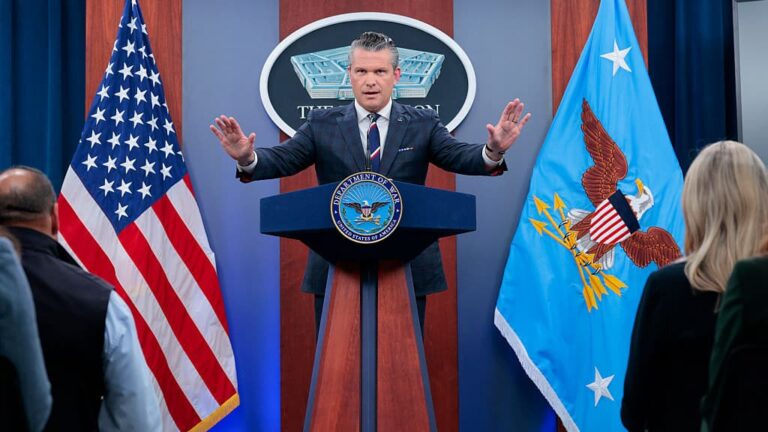
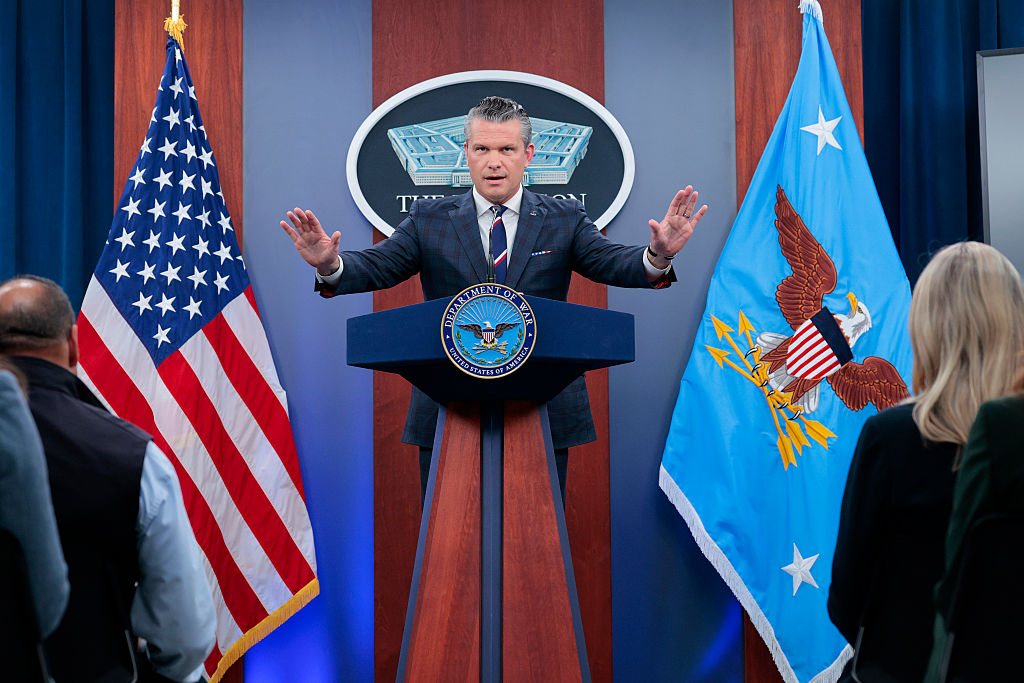
Defense Secretary Pete Hegseth narrowly escaped an impeachment attempt Tuesday after the Republican-led House voted against a resolution filed by a GOP lawmaker.
While Hegseth has been granted a reprieve, it’s possible the Democrats could revive the effort in January, when they take control of both the House and Senate following sweeping victories in the midterms.
The House voted 211-204 to defeat the measure reintroduced Monday by Rep. Thomas Massie of Kentucky. The eight articles of impeachment accused Hegseth of violating the War Powers Resolution of 1973, citing the lack of congressional oversight on the Iran war which Massie argued was “unlawful from its inception.” Another charge accused Hegseth of “ignoring laws that minimize civilian casualties.” The charges also alleged the “kidnapping of a sovereign foreign leader,” in reference to the U.S.’ capture of former Venezuelan President Nicolás Maduro in January.
Hegseth dismissed the impeachment effort as a “political spectacle,” referring to the resolutions put forward by Massie, who lost the Republican primary in May to a Trump-backed challenger, as a “farce” that “mock the Constitution.” Addressing reporters during a press conference at the Pentagon Tuesday morning, Hegseth said that “Iran, the cartels, Maduro, Yemen, every one was a lawful operation ordered by the Commander in Chief, then ordered by myself, notified to Congress, and executed by American warriors who did their jobs.”
Even if the measure had passed the House, it was unlikely to obtain the two-thirds majority needed to pass the current Senate, where Republicans still hold 53 out of 100 seats. But that balance will change in the Democrats’ favor next year.
For now, Hegseth has the support of President Donald Trump, who vowed to “stand by” him even if an impeachment vote is successful, but the embattled Defense Secretary is facing mounting scrutiny elsewhere. House Minority Leader Hakeem Jeffries was among those to throw his weight behind the impeachment effort. Jeffries is widely expected to be the new House Speaker come January, which would put him in a position of influence should another resolution be filed against Hegseth.
While impeachment itself carries no immediate legal consequences, a conviction in the Senate can also result in disqualification from holding future federal office.
“If you wanted to draw an analogy to criminal law: an impeachment vote by the House of Representatives is like an indictment. It doesn’t mean the person has been found guilty, but it means that the House thinks there’s enough evidence of high crime or misdemeanor that there should be a trial,” says Thomas Berry, director of the Cato Institute’s Center for Constitutional Studies.
The House has initiated impeachment proceedings over 60 times, but only 22 cases, involving 21 people, have resulted in formal impeachment by the House. Trump was impeached twice by the House during his first term. He was accused of abusing the power of his office for domestic political advantage and obstructing Congress’ abilities to hold him accountable in the first impeachment, while the second impeachment saw him accused of incitement of insurrection, in relation to the events of Jan. 6, 2021. He was acquitted by the Senate in February 2020 and again in February 2021.
If the House did vote to impeach Hegseth next year, he’d become the third Cabinet secretary to be impeached in U.S. history—here’s what to know about the previous occasions, and how it played out.

William Belknap served under Republican President Ulysses S. Grant from 1869 to 1876 as Secretary of War, a predecessor to the modern-day Secretary of Defense. (Although the Trump Administration has since revived the term after rebranding the “Department of Defense” as the “Department of War” last year.)
Belknap, a Civil War veteran, came under scrutiny after Democrats regained the House majority in 1875 and began investigating the Grant Administration amid a series of scandals and allegations of financial corruption.
“The Grant presidency was particularly corrupt. It was a situation where Grant himself was an honest man, a beloved war hero, turned two-term President,” says Thomas Balcerski, a professor of history at Eastern Connecticut State University. “Yet he had a flaw in his character in that he was too trusting of the men around him, many of whom were military figures from the Civil War.”
In January 1876, the House passed a resolution directing committees with oversight of the executive branch to investigate government spending across all departments.
The investigations turned to Belknap’s appointment of post-traders, civilian merchants licensed by the government to conduct business at military forts. These positions could be highly profitable, making the appointments a valuable source of patronage controlled by the secretary.
Belknap was “accused of bribery, corruption, and taking kickbacks in exchange for essentially providing contracts,” says Balcerski. “These were basically kickback schemes. In the case of Belknap, he gave an exclusive contract, what we would call a ‘no-bid contract’ in our language today, specifically to trading posts in [modern day] Oklahoma.”
While testifying in front of the Committee on Expenditures in the War Department, a wheeler-dealer named Caleb Marsh, who alongside Belknap handpicked associates to operate the lucrative military trading post at Fort Sill, alleged that Belknap had received payments in exchange for the appointments. Estimates placed the amount between $20,000 and $40,000, equivalent to approximately $630,000 to $1.26 million today.
Belknap learned of Marsh’s testimony on March 1, 1876, and resigned the following day, just hours before the House unanimously voted to impeach him.
His resignation, however, did not stop the impeachment proceedings from moving to the Senate, raising the constitutional question of whether an official could still face a trial after leaving office.
“The only real dispute was whether the Senate could do anything about it, because Belknap had actually resigned hours before the House impeached him,” says Berry. “Much of the trial was not about whether he had been corrupt, but about whether the Senate could convict him, given the fact that he had already resigned.”
Although the Senate could have voted to disqualify Belknap from holding future federal office, it ultimately did not reach the two-thirds majority necessary to convict him, and he was acquitted.

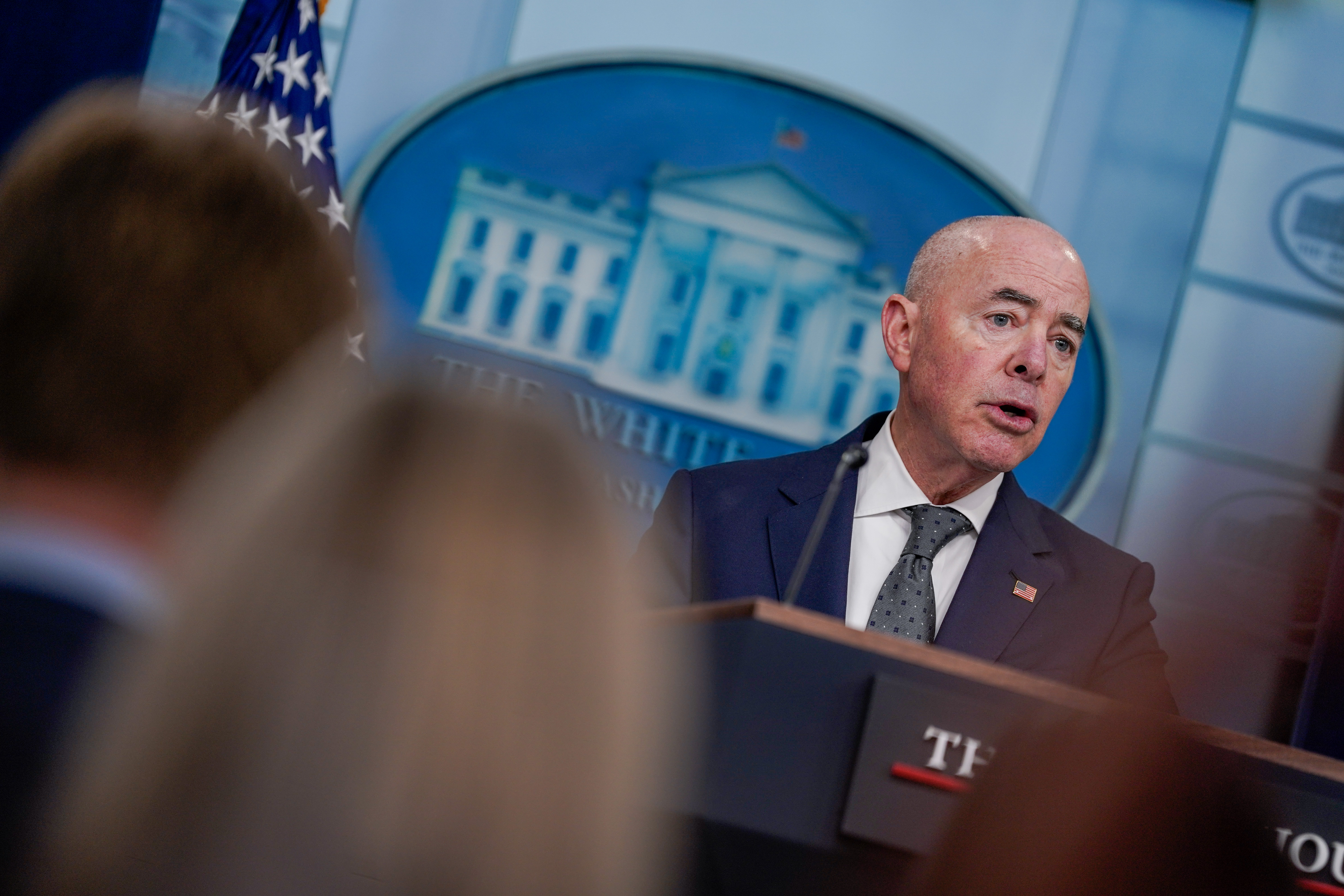
Alejandro Mayorkas served as Secretary of Homeland Security under former President Joe Biden from 2021 to 2025. He was impeached by House Republicans in 2024 over the Administration’s handling of the southern border, as federal officials during the Biden Administration had been overwhelmed by a surge in migrant crossings.
The House of Representatives narrowly voted to impeach Mayorkas in February 2024. Republicans accused Mayorkas of failing to properly enforce the nation’s immigration laws.
Balcerski says that, compared with Belknap, “there wasn’t a similar signature scandal” surrounding Mayorkas’ impeachment. Instead, the case raised questions about the boundaries of impeachment and whether disagreements over how an official carries out government policy should constitute impeachable offenses.
“That was pushing the boundaries of what is an impeachable offense,” argues Berry. “There has been much debate since the Constitution was ratified about what is a legitimately impeachable offense versus what is simply a disagreement in policy.”
The Constitution identifies “conviction of, treason, bribery, or other high crimes and misdemeanors,” as grounds for removal from office, but the scope of what constitutes high crimes and misdemeanors lacks a formal definition, experts tell TIME.
Ultimately, the Democrat-majority Senate dismissed Mayorkas’ articles of impeachment as unconstitutional in a single afternoon, two months after they were filed. Senate Democrats argued that allowing Cabinet officials to be impeached over disagreements with an Administration’s policies could set a dangerous precedent.
The Biden Administration at the time denounced the move as “baseless” and “unconstitutional.” The DHS Office of the General Counsel also sent a 38-page response to the House Rules Committee, arguing that impeachment was being used to punish good-faith policy and enforcement decisions.
Some Republicans raised doubts over the proceedings, also. Rep. Tom McClintock of California said that although he believed Mayorkas was “guilty of maladministration” of immigration laws, he did not view the matter as grounds for impeachment.
“Many people thought that what Mayorkas had done did not rise to the level of a high crime or misdemeanor. That it was simply a political disagreement. That he was choosing to enforce immigration law with different priorities than a Republican DHS Secretary would, but that this was not objectively criminal or illegal,” says Berry.
Mayorkas, who called the impeachment proceedings “baseless,” continued to lead the DHS until the transition to the second Trump Administration in January 2025.