November 11, 2026:


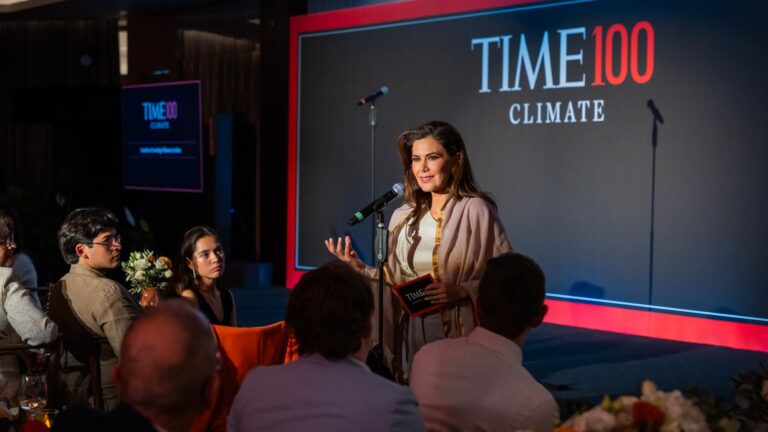
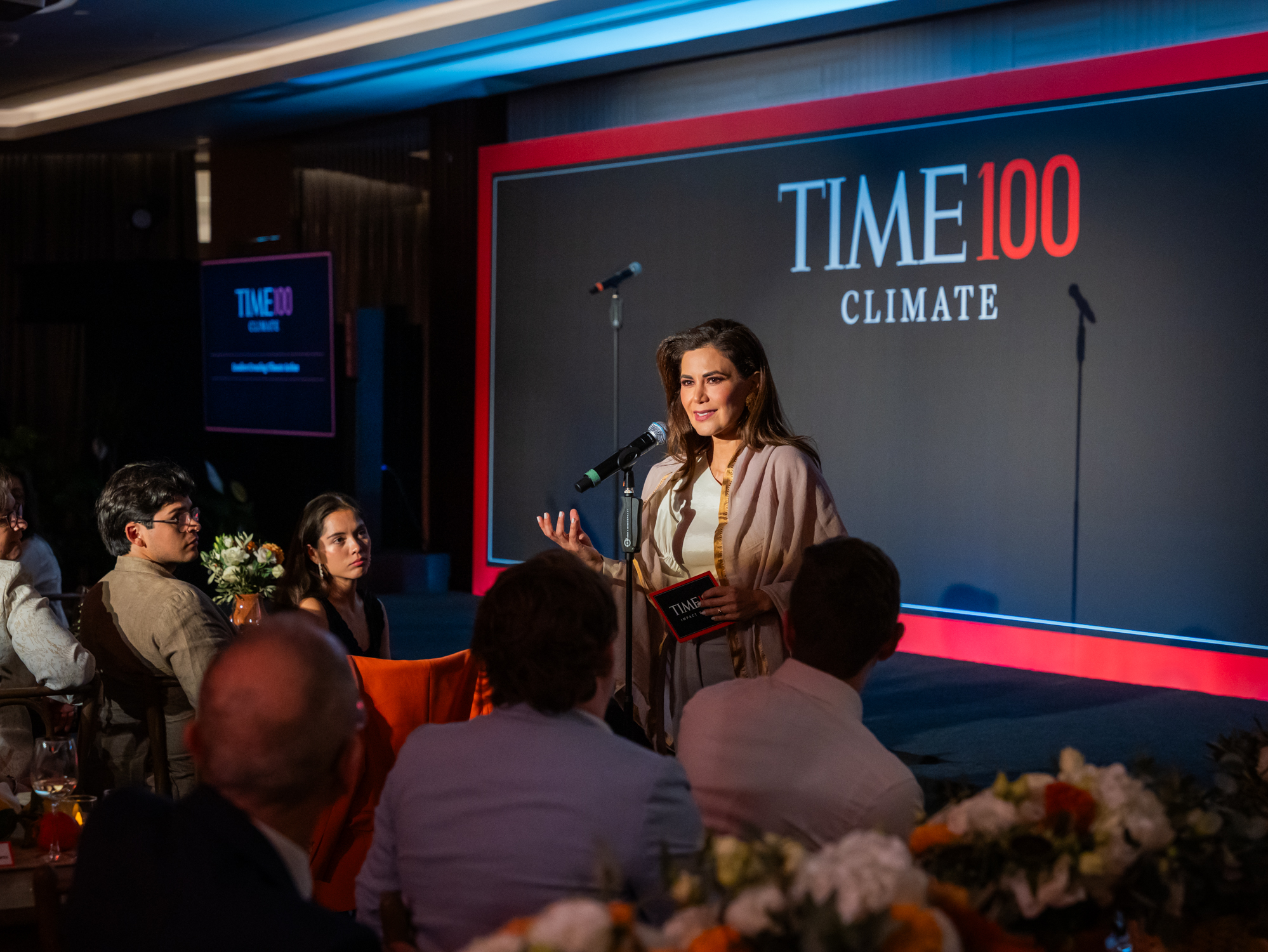
At a TIME100 Impact Dinner on Nov. 10 during the annual U.N. climate conference, this year known as COP31, in Antalya, Türkiye, climate leaders spoke of the challenges and gains in the clean energy transition and the importance of bringing youth into the climate fight.
Five honorees spoke about what gives them hope: Global Citizen co-founder Michael Sheldrick, president and CEO of the World Resources Institute Ani Dasgupta, Telemundo journalist Vanessa Hauc, CEO of CrossBoundary Energy and managing partner of CrossBoundary Group Matthew Tilleard,, and climate activist and co-founder and executive director of the Re-Earth Initiative Xiye Bastida.
Here’s what each of them toasted to.
As co-founder of Global Citizen, Michael Sheldrick, a 2026 TIME100 Climate honoree, has worked to ensure the fight to end poverty remains interconnected with climate action.
He shared the story of two young men training to be solar technicians in Touws River, South Africa, who view the solar boom as an opportunity for boundless ambition. “Luke and Keanu spoke of the determination, the hopes, and aspirations of a billion young people who are going to be entering the job market over the next decade,” he said.
Yet on the other side of the transition, he noted, are people like Bennie, a supervisor at one of South Africa’s oldest coal-fired power stations who might soon see the place he has worked at for much of his career sunset. “He said to me, ‘You know, it is sad when eventually we flip the switch and then we turn off this power plant because of the generations of workers it helped support. But most of us understand why that’s important. We just hope society will have our backs at the end of the day.’”
That, says Sheldrick, is the goal of Global Citizen—to scale up renewables while ensuring that non one is left behind. At the end of October, the non-profit launched the Perth Declaration, which aims to expand electricity access to over 4 million homes and deliver 3 gigawatts of renewable energy capacity globally. “Together, we can build a future worth believing in, one where young people have the chance to build it and workers like Bennie have a place in it too,” he said.
Climate headlines might seem bleak, but leading the World Resources Institute, a non-profit working to improve lives and address climate change, has shown Ani Dasgupta that there are a number of solutions that many might not even realize are out there.
In his toast, he shared examples from around the world: ranging from the democratization of solar power in Pakistan, to the 10,000 Kenyan farms working to grow macadamia trees in degraded land.
“Solutions like this are happening everywhere in the world, across the world,” said Dasgupta, a 2026 TIME100 Climate honoree. “It is the seed for the new economy.”
Dasgupta added that young people are eager to get involved when it comes to climate solutions—and urged the room to bring them into the fold. “I just want all of us to join together to find the solutions that exist. Sing about them. Amplify them. Fund them,” he said. “Find these young leaders. Support them. Mentor them. Because together…we’re going to build a new economy.”
As a veteran journalist, Vanessa Huac, another 2026 TIME100 Climate honoree, is all too familiar with how our changing climate has brought devastation to communities around the world.
“I have reported from the Amazon rainforest, my home, while fires basically erase trees and beautiful ecosystems that were there for centuries,” she said. “I have seen the glaciers in the beautiful Andes of South America retreat with dire consequences and coral reefs in Florida lose their vibrant colors.”
She called the climate crisis, “one of the greatest challenges of our times,” but added that, while she’s seen some of the ways climate change is destroying communities, her reporting has also revealed examples of resilience and innovation.
She spoke of scientists working to find solutions, Indigenous communities putting their lives on the line to protect forests, and young people around the world that are refusing to give up the climate fight.
“Hope is something that we build. It’s a choice that we make every single day, because giving up is not…a choice for us,” she said. “We have only this one beautiful planet, and the future of it depends on what we do today.”
Matthew Tilleard, another 2026 TIME100 Climate honoree, is working to accelerate the clean energy transition by reducing mining’s environmental footprint.
In his toast, he reflected on how this energy transition is markedly different from those past. “Great energy transitions in our past were all fuel to fuel, wood to coal, coal to oil, oil to gas,” he said. “To be honest, we didn’t actually transition.”
He continued by laying out three secrets of the new energy transition.
First, he noted, solar and batteries operate on an “efficiency curve,” meaning that they get cheaper as more are made. “The panel made today is 98% cheaper than the panel just 25 years ago,” he said.
The second secret is that solar and storage-based energy systems will be radically decentralized—which will help make clean energy more accessible. “This has a really important economic implication, which is that the unit cost of… a small storage system isn’t much higher than a large system,” Tilleard said. “And any cost advantage to build a really big system is completely overwhelmed by the savings of not having to transmit and distribute that power.”
Most importantly, the transition will have the potential to shore up energy security around the world, he said. “Technology-based energy systems, unlike fuel, make energy sovereign.”
Xiye Bastida, a 2023 TIME100 Next honoree, ended the night by reminding attendees what role the COP conferences play when it comes to the global climate conversation.
“We come here because we have a bigger responsibility to the future, to our communities, to equity, to just transitions.”
Bastida, who co-founded the Re-Earth Initiative, a youth-led climate justice nonprofit, described meeting with U.N. Secretary General António Guterres earlier in the day, who told a room full of youth climate leaders that they had inspired him to speak boldly on climate action.
“He told us, ‘The reason why my words have been so sharp and my vision has been so grounded is because I listened to you,’” she said, noting the importance of intergenerational conversations on climate change.
She closed by adding that, when it comes to climate change, even if we do not have all the answers, we have a framework—grounded in Indigenous practices: stewardship and service to the land, the people around us, and future generations.
“I hope that… we [can] truly look back at this time and see that we are already living the transformation,” she said. “It’s not coming; it’s already happening.”
TIME100 Impact Dinner: Leaders Creating Climate Action was presented by Rolex.