MADOO Launches First-Ever Full-Size Headphone, Entry IEM at Autumn Headphone Festival

November 8, 2026:

MADOO Launches First-Ever Full-Size Headphone, Entry IEM at Autumn Headphone Festival
sound signature Typ821 inherited Model equipped gold-deposited
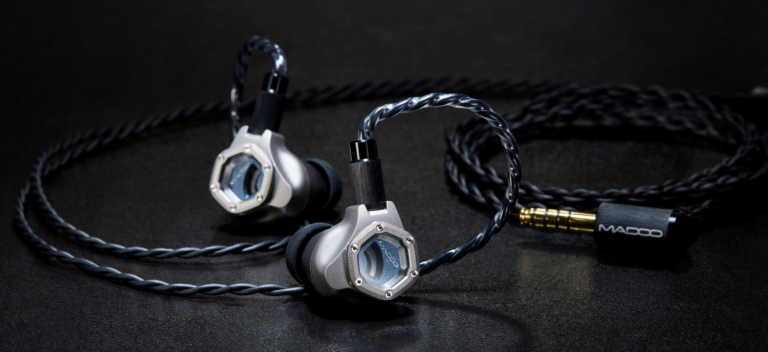
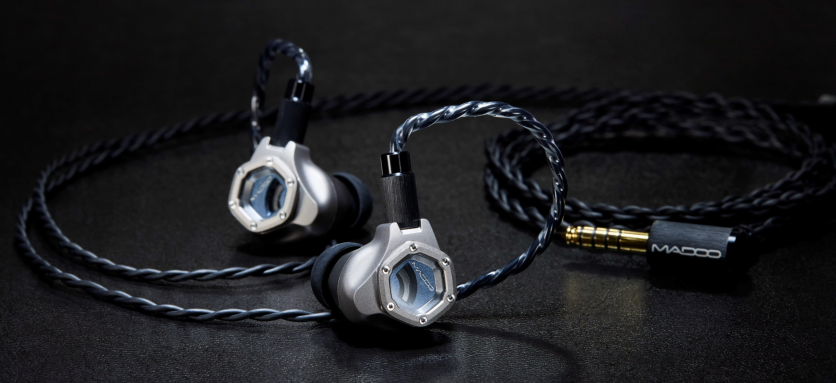
The sound signature of the Typ821 has been inherited. Model equipped with a gold-deposited passive radiator 『Ortho Dual Motion』 driver.
Madoo.jp

MADOO, the Japanese boutique planar audio brand founded in 2021 by veteran engineers from Japanese IEM specialists Acoustune, took its biggest strategic step yet at the Autumn Headphone Festival 2026 on Saturday — simultaneously debuting a more accessible entry IEM and the brand’s first full-size headphone, both world premieres, at the show organized by specialist audio retailer Fujiya Avic. It is the first time in MADOO’s five-year history that it has shown products at two distinct price tiers and two distinct form factors on the same day.

The festival — the 42nd edition overall and the 14th time it has been held at Station Conference Tokyo in Sapia Tower, Marunouchi, Chiyoda-ku — drew more than 170 brands across more than 70 booths this year, with free admission running from 11 a.m. to 6 p.m. JST.

Typ435: Most Accessible MADOO Yet

The Typ435 is a single-driver IEM built around MADOO’s proprietary push-pull micro-planar “Ortho” driver — the same technology the brand has used in its upper-tier products, now retuned for a planned retail price of approximately ¥100,000 (approximately $649). It was available for listening at the MADOO booth (東京音響, 6F rooms 602A–D, booth #14) as a prototype, with a retail launch planned for later in November 2026.

MADOO describes the Typ435’s design brief in terms of tachi (立ち) — a Japanese audio concept that translates roughly to attack precision or leading-edge sharpness. The goal was an IEM whose impulse response feels snappy and unlagged, capable of conveying the first milliseconds of a struck string or percussive transient with physical immediacy. That design priority points directly to the Ortho driver: planar magnetic drivers are inherently faster at transient reproduction than conventional moving-coil designs because the entire diaphragm receives drive force simultaneously, rather than being pushed from a single point.

Just as importantly, the Typ435 is designed to work from mid-range digital audio players and dongle DACs — without requiring a dedicated headphone amplifier. That is a practical consequence of the Ortho driver’s 15Ω impedance, which is unusually low for a planar magnetic design and is one of MADOO’s core engineering accomplishments (covered below).

At ¥100,000, the Typ435 sits meaningfully below MADOO’s existing lineup. The brand’s most distributed single-driver model, the Typ821, retails internationally at $1,599, while the limited-run Typ624 carries a Japanese retail price of approximately ¥162,000 (approximately $1,052). The Typ435 targets a buyer who wants the core MADOO sound signature — fast, precise, low-distortion planar transient response — without the premium attached to the brand’s upper tiers.

The Technology: Why Push-Pull Micro-Planar Is Different

Conventional dynamic IEM drivers work the way a home loudspeaker does: a voice coil attached to the center of a cone receives an electrical signal, the coil moves inside a magnetic gap, and the cone follows. Only the apex of the cone is directly driven; the rest of the cone moves passively as a consequence. At high frequencies, the outer portions of the cone can’t keep up with the coil — they resonate independently and distort the signal.

Planar magnetic drivers solve this by printing a conductive voice-coil circuit directly onto a thin, flat diaphragm, then placing permanent magnets on one or both sides. The magnetic force acts on every point of the diaphragm simultaneously — a “full-surface drive” that keeps the entire membrane moving as a coherent piston rather than a flexing cone. The result: lower harmonic distortion and faster transient response, particularly for complex high-frequency material.

MADOO’s “Ortho” driver takes this further with a push-pull configuration: magnets are placed on both sides of the diaphragm, applying symmetrical force simultaneously. One magnet array pushes while the other pulls, reducing the rocking and tilting motion that single-sided planar designs can produce. The push-pull geometry also allows the diaphragm to operate at lower electrical impedance — MADOO’s Ortho driver is rated at 15Ω, compared to 20–80Ω typical for most planar designs — which is why it can be driven by consumer-grade portable sources rather than demanding a high-current desktop amplifier.

Achieving this in an IEM-scale package is significantly harder than it sounds. At the sub-15mm diaphragm dimensions of an IEM driver, the tolerances on magnet alignment become microscopic; a slight misalignment in a push-pull array introduces the same asymmetrical force the design is trying to eliminate. MADOO uses a 5-magnet array configuration to maintain the push-pull geometry at scale, with a specified frequency response of 20Hz to 40kHz.

Typ5000: MADOO Enters Full-Size Headphone Territory

The Typ5000 — currently a provisional name — is the first full-size (over-ear) headphone MADOO has ever made. It was present at the festival as a reference prototype for visual inspection only; it was not available for listening.

The Typ5000 combines a planar magnetic driver with one or more passive radiators — a driverless diaphragm that extends bass response without ports. MADOO already uses a passive radiator in its current Typ930 IEM; the Typ5000 adapts that approach to the larger acoustic volume of a full-size headphone, where the passive radiator’s mass and compliance can be tuned with more physical room to work with.

A passive radiator is essentially a speaker cone with no motor: a surround, a diaphragm, and a mass, but no coil or magnet. It is mounted in a sealed enclosure alongside the active driver. The active driver’s back-wave pressurizes the enclosure and sets the passive radiator into resonance, extending the acoustic output downward in frequency below what a sealed-box alignment alone would permit — without the phase anomalies and port noise of a ported (bass-reflex) design. The tuning is entirely mechanical, governed by the passive radiator’s mass and compliance, not by the electrical characteristics of the driver circuit.

MADOO has not yet announced a release timeline or confirmed pricing for the Typ5000. The expected price range, based on the brand’s existing tier structure and the complexity of the design, is estimated at ¥400,000 to ¥500,000 (approximately $2,597 to $3,247). That range places it squarely in the flagship segment alongside Focal’s flagship Utopia headphone ($4,999) and Meze Audio’s Elite headphone ($4,000), though those are conventional dynamic and planar designs respectively.

Also at the MADOO Booth: Typ831 and Acoustune XHS1400

MADOO’s official event announcement reveals that the booth also exhibited the Typ831, a product not mentioned in many pre-event previews. The Typ831 uses an “Ortho Dual Motion” driver variant featuring a gold-vapor-deposited passive radiator — a refinement MADOO describes as the legitimate successor to the Typ821’s tonal character. The gold deposition process modifies the passive radiator’s mass and surface properties to tune its resonant behavior with greater precision than conventional polymer membranes.

MADOO’s parent group, Japanese IEM specialists Acoustune, also displayed the recently released XHS1400 dynamic IEM at approximately ¥50,000 (approximately $324) — rounding out a booth that covered price points from ¥50,000 to the ¥400,000-plus Typ5000 concept.

Notable Festival Exhibits

Brise Audio FUGAKU 10th Anniversary Edition (¥4,000,000 / approximately $25,974): Among the most discussed items at this year’s festival was the FUGAKU 10th Anniversary Edition from Japanese audio specialist Brise Audio. The product is a complete IEM system — earphones, a dedicated portable amplifier, and the NISHIKI 16wire Ultimate proprietary cable — bundled as a single package. At ¥4,000,000 (approximately $25,974), it is not intended for the mass market; it is a statement of technical ambition and an anniversary milestone for a brand known for extreme-specification audio accessories.

Faith Audio Labs (Japanese debut): Faith Audio Labs, a China-based boutique IEM label, made its first appearance at a Japanese audio show, exhibiting at the festival while seeking a domestic distributor. The brand’s flagship E1000 is a single 10.2mm dynamic driver IEM with a passive radiator for bass control, retailing at $3,799. The E1000 uses a titanium-coated diaphragm and a dual-neodymium magnet system rated at approximately 9,000 Gauss.

About MADOO

MADOO was founded in 2021 by engineers from Japanese audio specialists Acoustune — one of Japan’s most respected boutique IEM manufacturers — with a focus on proprietary planar magnetic transducer technology. The brand’s products span from the entry-tier Typ435 (now available to prototype audiences) through the internationally priced Typ821 IEM at $1,599 and the Typ930 tri-driver hybrid IEM, up to concept hardware like the Typ5000. All MADOO products use variants of the in-house Ortho push-pull micro-planar driver system; the Typ435’s planned November launch would make it the brand’s most broadly accessible product to date.

(Exchange rate as of November 7, 2026: 1 USD = ¥154.35; all conversions in this article are approximate.)


Frequently Asked Questions

When will the MADOO Typ435 be available to buy?

MADOO has stated that the Typ435 is planned for a retail release later in November 2026. Pricing is set at approximately ¥100,000 (approximately $649 at current exchange rates). International availability has not been confirmed, but MADOO products are typically available through global audiophile retailers within weeks of Japanese launch.

What is the MADOO Typ5000, and when does it go on sale?

The Typ5000 is MADOO’s first full-size over-ear headphone. As of the November 7, 2026 festival, it is a reference prototype not yet available for audition. MADOO has not announced a release date or confirmed pricing; the estimated range based on the brand’s tier structure is ¥400,000 to ¥500,000 (approximately $2,597 to $3,247). It combines a planar magnetic driver with passive radiator technology previously used in the brand’s IEM lineup.

What makes MADOO’s Ortho driver different from other planar magnetic IEMs?

MADOO’s Ortho driver uses a push-pull configuration — permanent magnets on both sides of the diaphragm — which applies symmetrical force and reduces distortion caused by diaphragm rocking. The push-pull geometry also enables a 15Ω impedance rating, lower than most planar designs (which typically run 20–80Ω), making the driver compatible with mid-range portable digital audio players and dongle DACs without a separate amplifier.

What is the Autumn Headphone Festival?

The Autumn Headphone Festival (秋のヘッドフォン祭) is a biannual audiophile trade show organized by Tokyo audio retailer Fujiya Avic. It has been held since the mid-2000s and is now one of the largest dedicated headphone and IEM events in the world, drawing more than 170 brands and thousands of visitors. The 2026 autumn edition — the 42nd overall — was held at Station Conference Tokyo in the Sapia Tower, Marunouchi, with free admission.

Source link