These Democratic Politicians Shattered Glass Ceilings in the 2026 Election

November 6, 2026:

These Democratic Politicians Shattered Glass Ceilings in the 2026 Election

The midterms were a whirlwind of historic firsts as Black, trans, Indigenous, nonbinary, Muslim, and Gen Z candidates won their races.

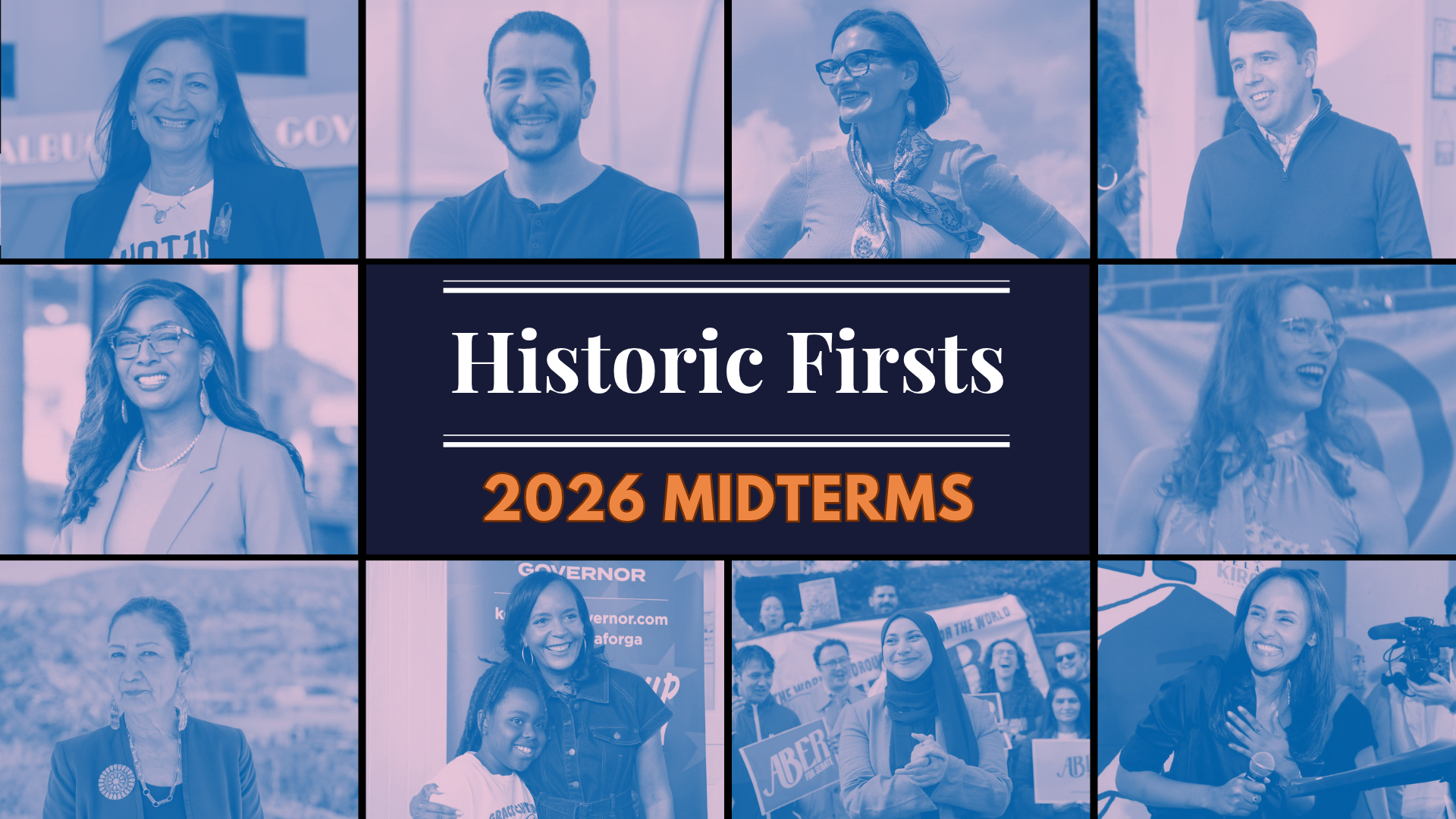
Graphic over photos of historic midterms winners that reads: "Historic Firsts 2026 Midterms Elections."

Democratic candidates made history in the 2026 United States midterm elections—not just because of how many races they won, but because of who won them. Women of color, trans politicians, and Gen Z hopefuls all cinched groundbreaking victories in races across the country. 

From governor’s mansions to the Senate floor and in statehouses nationwide, the American halls of power—and the Democratic Party—will look and feel different when this election’s winners take office in January 2027. 

More governors will be women of color 

Women of color notched several historic firsts on Nov. 3, 2026.

In Georgia, Keisha Lance Bottoms, the former mayor of Atlanta, will be the first Black woman to be the governor of any U.S. state.

Stacey Abrams, a former Georgia state representative, tried twice to break that barrier. She ran for governor of Georgia in 2018 and 2022, and lost both times to Republican Brian Kemp, the current governor and former Georgia secretary state.

Abrams told NPR that Bottoms’ groundbreaking election as a Black woman and Democrat to an historically GOP and male-dominated office was the culmination of a years-long process of “rebuilding the party” and “the trust of the people.”

“That work takes time,” Abrams said. “Each interregnum between those election cycles was about continuing that work. And I’m just grateful that in 2026 … that she won, and that we were able to win up and down the ballot, because it signals that … investment and that consistency can pay dividends.”

Democrat Gina Hinojosa, who defeated incumbent Republican Gov. Greg Abbott in Texas, will be the Lone Star State’s first-ever Latina governor. And following her win in New Mexico’s gubernatorial race, Deb Haaland will become the country’s first-ever Native American woman governor.

Trans candidates win amid growing anti-trans rhetoric

Trans rights were a feature of the 2026 campaign cycle. 

In debates and on TV news spots, Democratic candidates like Texas Sen.-elect James Talarico were pressed to weigh in on whether trans girls should be able to play on girls’ sports teams. Republicans like Byron Donalds of Florida made anti-trans rhetoric a central message of their campaigns.

In the end, trans lawmakers were elected to state office across the country—including in historically red states. 

Jaelynn Scott will become the nation’s first Black trans state lawmaker, after she secured a seat in the Washington House of Representatives. Allison Montgomery flipped a Republican seat in Alabama, making her the first transgender lawmaker in the state. 

Bentley Hudgins will become Georgia’s first nonbinary and first Japanese American state assembly member. And hospital chaplain Joanna Whaley was elected to the Michigan House of Representatives, making her the first trans person elected to the state legislature.

Mariah Moore, director of programs at the Transgender Law Center, told Rewire News Group in a statement that candidates like Scott and Montgomery “won their races because they want to see all of us, trans or not, have the resources to live healthy and fulfilling lives.” 

Their historic wins came in the same election that saw voters in several states approve ballot measures restricting the rights of trans children. Nebraska, Washington, Colorado, and Arizona all passed initiatives that will bar trans girls from competing on girls’ sports teams. 

Results of a separate ballot measure in Colorado to ban gender-affirming surgeries for minors have yet to be declared by the Associated Press as of publication.

“Trans people deserve and belong in positions of governing power to make our communities better for everyone,” Moore said, adding that she expects the trans victors of 2026 will “use their newly elected positions to fight for the rights and dignity of all of us.” 

Changes come to Congress and state legislatures

Both chambers of Congress will welcome members of different faiths, sexualities, and cultural backgrounds for the first time when the class of 2027 is seated in January. One state legislature will also get a new voice.

Abdul El-Sayed, a doctor from Michigan, will become the first Muslim U.S. Senator. Chris Pappas of New Hampshire will be the first openly gay man to serve in the Senate. And Peggy Flanagan, a Democrat and Minnesota’s current lieutenant governor, will be the first Native woman to serve in the Senate. 

In the U.S. House of Representatives, Democratic socialist Melat Kiros, 29, became the first Gen Z woman elected to that body. The median age of congressional representatives in 2025 was 57, according to Ballotpedia. (The Senate skews older.)

The U.S. Constitution sets 25 as the minimum age for a U.S. congressional representative. Maxwell Alejandro Frost, 29, became the first Gen Z member of the House when he was elected in 2022. 

Finally, Aber Kawas became the first Palestinian American elected to the New York State Legislature. She will represent New York’s 12th State Senate District, in the New York City borough of Queens. That district has gone unrepresented in Albany since Democrat Michael Gianaris resigned in August 2026 and shortly after took a job with a casino development project. 

Kawas, whose bid for state assembly was endorsed by New York City Mayor Zohran Mamdani, was born and raised in Brooklyn. Her parents came to the U.S. from Palestine in the 1990s, and she has said that members of her family, including her own father, have been detained and deported by Immigrations and Customs Enforcement.

In her victory speech, Kawas said she envisioned a United States where her father “could be in this audience to witness his daughter make history.”

Source

Source link