Abortion Wins and Losses in the 2026 Midterm Election

November 4, 2026:

Abortion Wins and Losses in the 2026 Midterm Election

In three of the four states that put abortion on the ballot, voters opted to protect their reproductive rights.

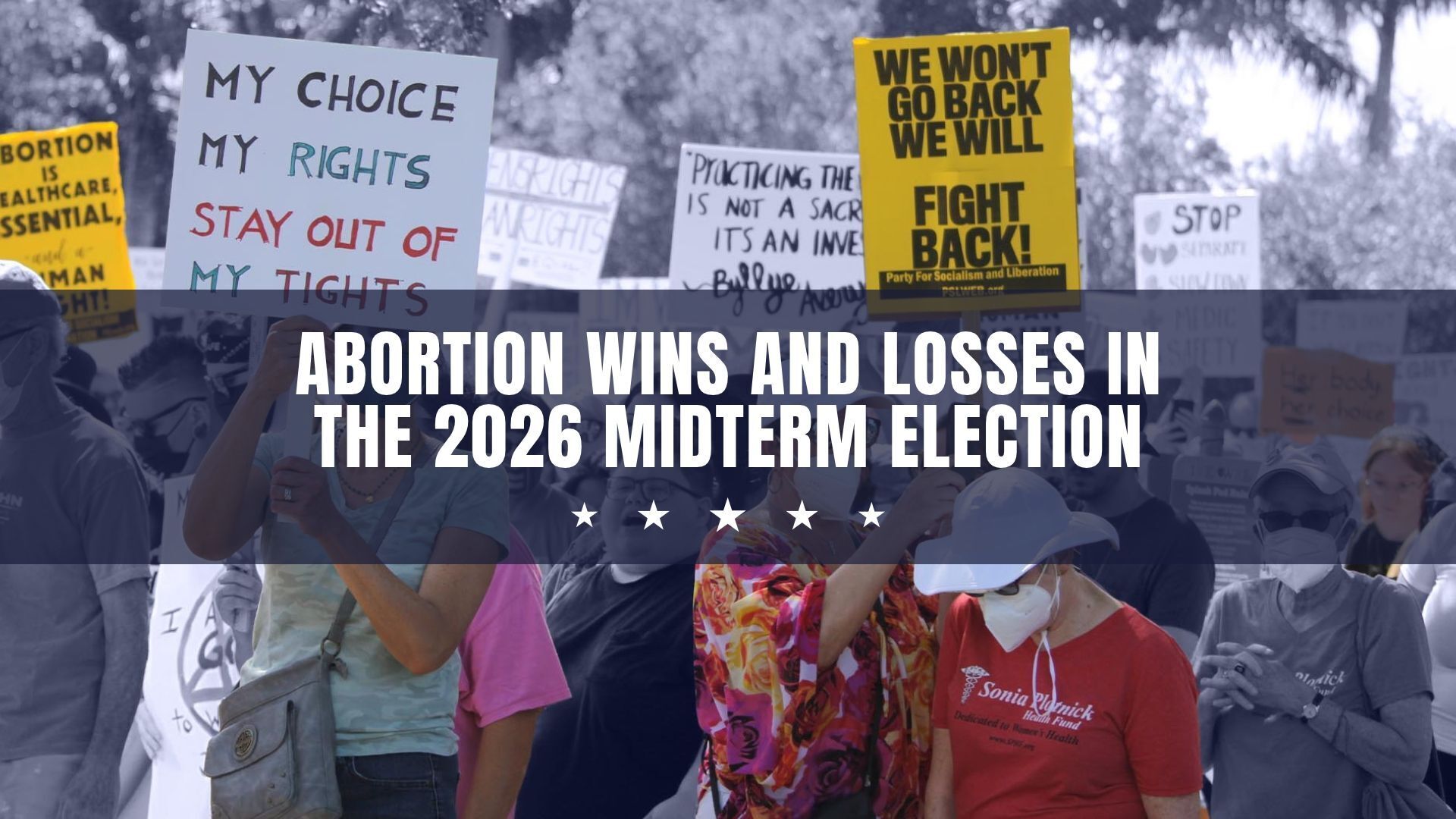
Text over protester imagery that reads "Abortion Wins and Losses in the 2026 Midterm Election."

Abortion rights continued to expand nationwide in the 2026 midterm election. In three of four states that put abortion on the ballot, voters opted to protect their reproductive rights. 

These results continue a trend that began after the Supreme Court overturned Roe v. Wade in 2022, eliminating federal abortion protections. Since its ruling in the case Dobbs v. Jackson Women’s Health Organization, residents in at least a dozen states have cast ballots to protect reproductive rights within their borders.

Here’s how voters in Nevada, Virginia, Missouri, and Idaho weighed in on abortion last night.

Nevada and Virginia cement abortion rights

For the second time in two years, Nevada voters have approved a proposal to amend the state constitution to guarantee reproductive rights. 

Question 6 enshrines abortion access to the point of fetal viability—typically around 24 to 26 weeks—into the state constitution. It also allows for abortions after that point to protect the life or health of the pregnant person. 

Ballot measures in the Silver State must pass twice to become a state constitutional amendment. Nevada’s state constitution will now be amended to add the existing state law.

Virginia voters also enshrined abortion protections into their state constitution. 

Question 1, which passed with about 62 percent of the vote—though the Associated Press still has about 4 percent of votes to tabulate—includes a right to abortion care until the third trimester of pregnancy (and later in certain cases). It also guarantees access to prenatal care, postpartum care, birth control, and other reproductive health care.

Abortion was already legal until a certain point in both of these states, and they have each served as regional hubs for abortion care as neighboring states enacted bans. By essentially enshrining current reproductive rights into the constitution, Nevada and Virginia made those rights much harder to repeal, as laws are easier to overturn than constitutional amendments.

The Blue Ridge Abortion Fund, which helps Virginia residents and out-of-state patients pay for abortion care, celebrated the win. 

“[V]oters sent a clear, resounding message about the Virginia we want to live in: one where reproductive freedom is protected for generations to come,” April Greene, executive director of the Blue Ridge Abortion Fund, said in a statement. “This election is a reminder of our collective power and the future we can build when we all show up.”

But “constitutional protection doesn’t guarantee access,” she added. “It will take every one of us to make reproductive freedom a reality for all Virginians and all who come here for care.”

Missouri voters protect abortion amendment

In Missouri, voters rejected Amendment 3 in 2026, keeping in place the constitutional right to abortion they passed just two years ago. 

Republican state officials had presented the amendment to voters in hopes of reimposing an abortion ban and other restrictions. The 2024 ballot measure that amended the state constitution to protect abortion through fetal viability was also called Amendment 3, which its opponents feared would sow voter confusion at the polls.  

Abortion remains accessible in Missouri through the point of fetal viability. Minors still need parental consent and notification to get abortion care. 

“Missourians have seen what it’s like to have abortion available close to home, and their votes made it clear they don’t want that to change,” said Margot Riphagen-Dunn, president and CEO of Planned Parenthood Great Rivers, in a statement. “Planned Parenthood patients know that they will be heard and receive care without judgment. And they can continue getting abortion care, confident that it is safe, legal, and available right here in their home state.”

Amendment 3 also attempted to add a ban on gender-affirming care for minors into the state constitution. Though it was rebuffed, state law continues to prevent minors from accessing gender-affirming care.

Idaho keeps abortion ban in place

Idaho voters rejected a grassroots effort to expand their reproductive rights, singling it out as the only state with an abortion ballot measure to reject abortion protections in 2026. 

Proposition 1, also known as the Reproductive Freedom and Privacy Act initiative, failed, according to Associated Press projections. 

Idaho has a total abortion ban, which has limited protections to protect the pregnant person’s life or health. It remains the law.

Source

Source link