November 4, 2026:


The global race to put humans back on the Moon has officially entered a new and more urgent phase. China has just offered the most detailed public look yet at how it plans to get its astronauts to the lunar surface within the decade, and the roadmap involves a carefully staged series of missions that leaves very little room for delay.
At the 7th Manned Space Symposium held in Beijing, Wang Xiang, deputy chief designer of China’s manned space program and chief designer of the lunar exploration program, laid out a comprehensive timeline for the country’s crewed lunar ambitions (via Global Times). The plan calls for a crew of three taikonauts, two of whom are expected to touch down on the lunar surface, with the crewed landing targeting a date before 2030.
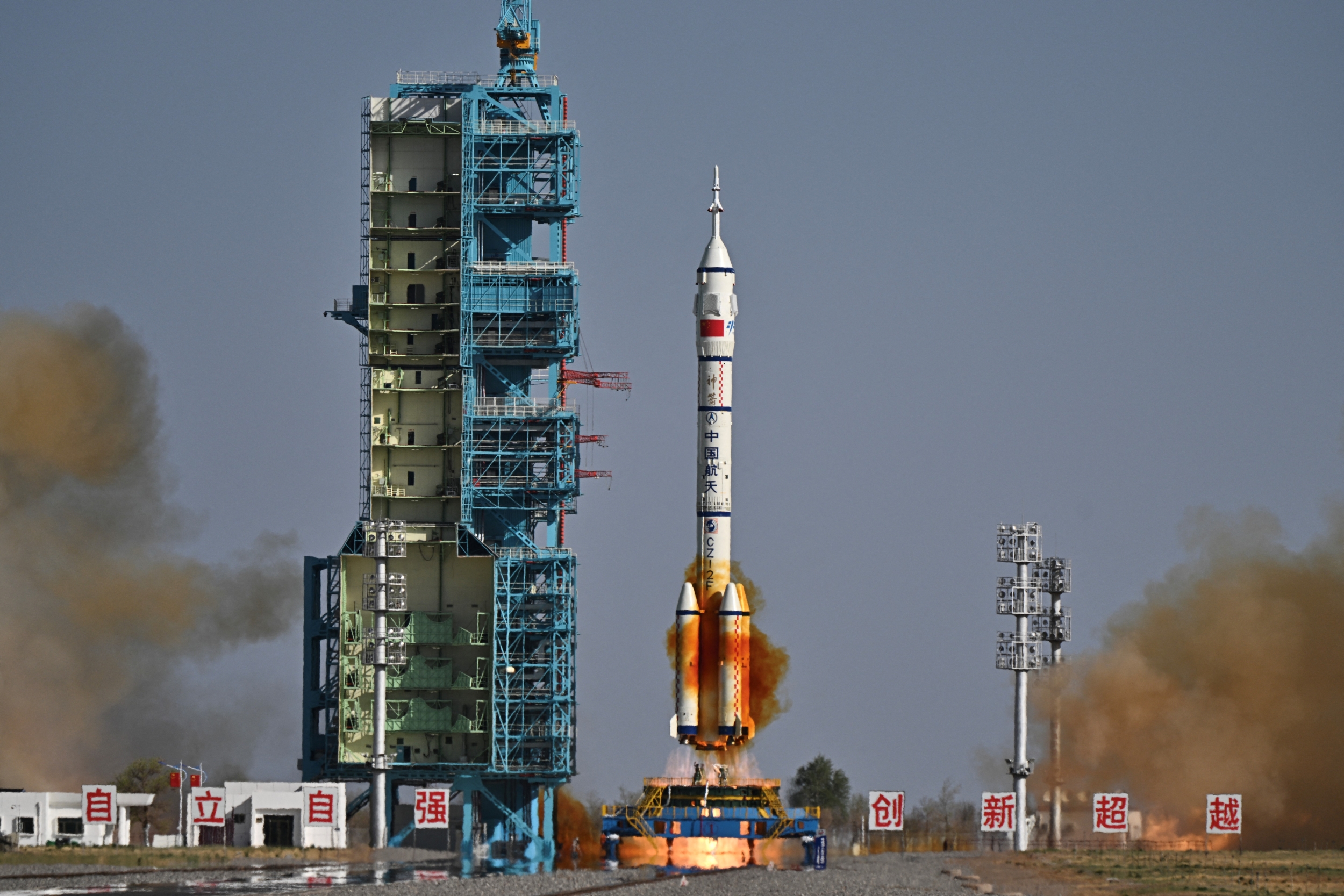
The mission architecture uses what China describes as a “two launches, one lunar landing” approach. Two Long March 10 carrier rockets will be used for the crewed attempt: the first launches the Lanyue lunar lander into lunar orbit, and the second launches the Mengzhou crewed spacecraft, which then rendez-vous and docks with the lander already in orbit before the surface descent begins.
Once docked in lunar orbit, two of the three crew members will transfer into the Lanyue lander, separate from the crewed spacecraft, and descend to the Moon’s surface. After completing their surface activities, they will ascend from the Moon aboard the lander, perform a second docking with the Mengzhou spacecraft waiting in lunar orbit, and then return to Earth aboard the crewed vehicle.
China is not jumping straight to a crewed attempt. The roadmap Wang presented at the symposium begins with a series of progressively more complex test missions, each designed to validate the hardware before human lives are put at risk, Gizmodo reported.
Testing begins in Earth orbit with the Long March 10A, a single-stick variant of the rocket without side boosters, which is planned to launch the Mengzhou spacecraft to China’s Tiangong space station for uncrewed cargo missions in early 2027. These flights are intended to demonstrate the rocket’s reliability and gather operational data before the larger missions proceed.
In 2028, China plans an uncrewed test of the full three-stage Long March 10 rocket alongside the Lanyue lunar lander. Under this test, the Lanyue lander will attempt to touch down on the lunar surface and then lift off again, validating the landing and ascent systems without a crew on board.
The following year, in 2029, Lanyue and Mengzhou will launch on separate Long March 10 rockets and attempt to dock together in lunar orbit, staging a full-scale rehearsal of the rendezvous and docking maneuver that the crewed mission depends on. That rehearsal closely mirrors the orbital mechanics used during the Apollo program, when the Apollo lunar module and command and service module docked in lunar orbit, except that the American system launched both vehicles together on a single Saturn V rocket.
The surface mission itself, once China’s crew lands, is planned to last three Earth days, with the two taikonauts conducting extravehicular activities on each day of their stay. The scope of the scientific work they would carry out has not been fully specified in publicly available materials, but the duration and daily EVA schedule suggest a mission comparable in length to later Apollo landings.
Shortly after Wang’s presentation at the symposium, videos circulated on Chinese social media appearing to show preparations already underway at the Wenchang spaceport. Footage reportedly showed large containers containing hardware for an upcoming rehearsal mission being lifted from a cargo ship. The pace of those preparations suggests China is moving on its stated timeline without waiting for further public announcements.
The United States, through NASA, is pursuing its own crewed lunar return under the Artemis program, with the most recent planning pointing toward an Artemis 4 mission targeting early 2028. Whether NASA and its commercial partners, SpaceX and Blue Origin, will be ready by that date remains an open question, with concerns centering on the readiness of the commercial lunar landers.
China’s space activities are managed primarily by the China National Space Administration, known by its initialism CNSA, which is the government agency responsible for national space policy, international cooperation, and the management of China’s civil space programs. CNSA was established in 1993 and operates under the authority of China’s State Administration for Science, Technology, and Industry for National Defense.
For human spaceflight specifically, the China Manned Space Agency, known as CMSA, plays a parallel and closely integrated role, overseeing the country’s crewed missions including the Shenzhou program and the Tiangong space station. Both agencies work alongside entities such as the China Aerospace Science and Technology Corporation, or CASC, which is the state-owned enterprise responsible for developing and manufacturing China’s rockets, spacecraft, and satellites. Wang Xiang, who presented the lunar roadmap at the Beijing symposium, holds the title of chief designer of the lunar exploration program within this organizational structure.
No. China has never landed human beings on the Moon. The country has, however, demonstrated significant robotic lunar exploration capability. The Chang’e program has achieved several milestones, including Chang’e 3 becoming the first spacecraft to soft-land on the Moon since 1976 when it touched down in December 2013, and Chang’e 4 becoming the first mission ever to land on the far side of the Moon in January 2019.
Chang’e 5 successfully returned lunar samples to Earth in December 2020, making China the third country to accomplish that feat. Chang’e 6 landed on the Moon’s far side in 2024 and returned samples from that region for the first time in history. The crewed mission announced at the Beijing symposium would be a substantially more complex undertaking than any of those robotic missions and would make China only the second country after the United States to land astronauts on the Moon.
The United States is China’s primary competitor in the current lunar race, with NASA’s Artemis program working toward a crewed landing as part of its ongoing series of missions. The most recent Artemis planning points to Artemis 4 as a candidate for the crewed lunar landing attempt, targeting a window in early 2028.
SpaceX is developing the Starship lunar lander, known as the Human Landing System, under a contract with NASA, and Blue Origin is developing its Blue Moon lander as a separate competing system.
India has set a long-term goal of landing humans on the Moon by 2040, with the country’s Gaganyaan program focused first on putting Indian astronauts in Earth orbit before advancing to deeper missions.
Japan and several other spacefaring nations have expressed interest in lunar exploration, primarily as partners in the NASA-led Artemis Accords framework rather than as independent crewed mission programs.
Russia had previously maintained ambitions for independent crewed lunar exploration, but the failure of the Luna-25 lander in 2023 and the country’s ongoing isolation from international scientific cooperation have significantly diminished those plans in the near term.