Apple Fitness+ Gym Strength Builds Lifting Plans That Adjust to What You Logged

November 4, 2026:

Apple Fitness+ Gym Strength Builds Lifting Plans That Adjust to What You Logged
Apple Fitness+ Gym
Apple.com

Apple on Monday released iOS 27.3 developer beta 1, introducing Gym Strength to Apple Fitness+ — a four-week personalized lifting planner that generates structured workouts from your goals and equipment, then rewrites each week’s targets based on what you actually logged the week before. For the millions of Fitness+ subscribers who have been choosing between Apple’s static led-strength programs and paying separately for a dedicated lifting app, Gym Strength is the first Fitness+ feature to close that gap.

What Gym Strength Builds From Your Inputs

Setting up Gym Strength requires a short intake survey: your primary goal (muscle gain, fat loss, general strength, or endurance), your experience level, how many days per week you can train, which body areas to prioritize, and what equipment you have access to. From those inputs, the system builds a four-week plan drawing from a library of more than 350 exercises across more than 30 equipment categories.

Each session is designed around five to seven exercises and runs between 20 and 60 minutes, with trainer-led video demonstrations available for every movement. Gym Strength works on iPhone and iPad; no Apple Watch is required.

How the Adaptive Loop Works

The mechanic that distinguishes Gym Strength from Fitness+’s previous strength offerings — which were fixed programs with no week-over-week adjustment — is a progressive overload feedback loop built directly into the plan structure.

Progressive overload is the principle, formalized by physiologist Thomas DeLorme in the 1940s during his work rehabilitating injured soldiers, that muscles adapt only when training stress increases incrementally over time. Static programs ignore this: they prescribe the same sets, reps, and weights throughout their duration regardless of whether the user is completing sessions at target, surpassing them, or falling short.

Gym Strength automates what DeLorme’s protocol required a coach to manage. During each session, the app displays target reps, sets, and weights. After the workout, users log what they actually completed. The delta between planned and actual becomes the system’s signal: if Week 1 performance meets or exceeds targets, Week 2 targets increase; if Week 1 fell short, the following week’s load is maintained or reduced. Apple has not disclosed the full algorithmic detail, but the approach appears to be a rules-based progressive overload engine rather than a large machine-learning model — simpler than the volume-landmark periodization frameworks used by specialized AI training apps, but sufficient for the majority of users who currently have no structured progression at all.

Does Gym Strength Require Apple Watch?

No. The full plan generation and weekly adaptation cycle work on iPhone or iPad alone, using manually entered rep and weight data after each set.

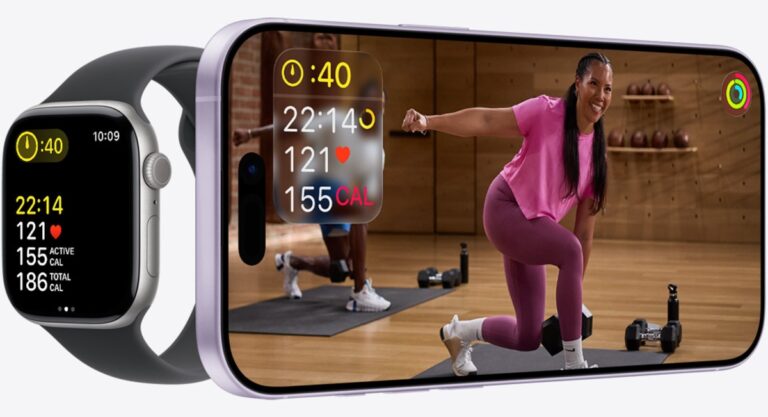
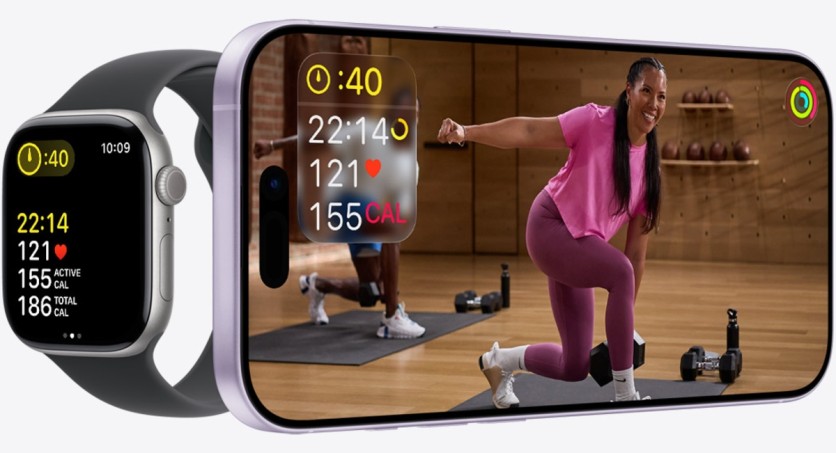
An Apple Watch running watchOS 27.3 adds wrist-based exercise viewing and rep logging during the session, plus automatic heart rate and calorie tracking throughout the workout.

Owners of Apple Watch Series 12 or Ultra 4 — Apple’s current lineup launched in September 2026 — also have access to the Daily Readiness Score, a 0-to-10 metric that analyzes training load, activity trends, vitals, and sleep to recommend one of four recovery states: Recover, Pace Yourself, Ready, or Go For It. Apple has not confirmed whether Gym Strength reads Readiness Score data to inform plan adjustments; as of developer beta 1, the two features operate independently.

How Does Gym Strength Compare to Hevy, Strong, and Dr. Muscle?

For subscribers already paying for Fitness+, the operative question is whether Gym Strength makes their current strength app redundant.

Hevy and Strong — the two most widely used free-tier lifting apps — focus on logging and history tracking, not plan generation. Hevy adds social sharing and preset templates; Strong surfaces your previous performance in a given lift so you can aim to beat it. Neither adapts future workouts based on what you logged. At Hevy’s premium tier of $2.99 per month or Strong’s $9.99 per month, users are paying for a tracking layer, not an adaptive programming layer. Gym Strength now delivers that programming layer within Fitness+.

The comparison tightens with apps that do adaptive programming. Fitbod uses a muscle fatigue model to suggest which muscle groups to train and how heavily, at $15.99 per month. Dr. Muscle applies formal sports science volume frameworks — minimum effective volume, maximum adaptive volume, and maximum recoverable volume thresholds developed by researchers including sports scientist Eric Trexler — to build periodized training blocks, at $48.99 per month. Both are more sophisticated than Gym Strength’s adaptive engine. But for subscribers already paying for Fitness+, the incremental cost of that sophistication is now the question — not the baseline cost of adaptive programming itself.

Apple’s decision to bundle adaptive planning into Fitness+ at no additional charge effectively sets $0 as the new floor price for structured progressive-overload programming inside the Apple ecosystem.

Training Note: Apple Intelligence Logs and Surfaces Patterns in Your Sessions

Gym Strength includes an optional Training Note feature powered by Apple Intelligence that generates a natural-language summary of each session and flags patterns across workouts over time. The feature requires an Apple Intelligence-enabled iPhone or iPad set to English. Users who choose not to use it can skip it; Training Note has no effect on how the adaptive plan generation works.

When Does Public iOS 27.3 Ship, and What Is Fitness+ Pricing?

Gym Strength is live now for developers running iOS 27.3 developer beta 1 or watchOS 27.3 developer beta 1. Apple expects to ship the iOS 27.3 public update in mid-December 2026, at which point Gym Strength will be available to all Fitness+ subscribers.

Fitness+ costs $9.99 per month or $79.99 per year as a standalone subscription, with family sharing included for up to five members. It is also included in Apple One Premier at $39.95 per month. Gym Strength is available in 49 countries where Fitness+ operates.


Frequently Asked Questions

Does Gym Strength work without an Apple Watch?

Yes. Plan generation, weekly adaptation, and all exercise content work on iPhone or iPad alone. Without a Watch, users log reps and weights manually after each set. An Apple Watch running watchOS 27.3 adds wrist-based logging and automatic heart rate data during sessions, but the Watch is not required to use any core Gym Strength feature.

When does the iOS 27.3 public release arrive?

Apple has not announced a specific date. Gym Strength is included in the iOS 27.3 developer beta that shipped November 3, 2026, and Apple expects the public update to arrive in mid-December 2026. Developer beta access requires enrollment in Apple’s developer program.

Will Gym Strength replace dedicated lifting apps like Dr. Muscle or Fitbod?

For many Fitness+ subscribers, it may replace what those apps sell at the lower tier of the market. Gym Strength automates the progressive overload principle — week-over-week plan adjustment based on what you actually logged — that most dedicated adaptive apps charge $10 to $50 per month to manage. Apps like Dr. Muscle implement more sophisticated periodization science, including formal volume-landmark frameworks and deload scheduling, that Gym Strength does not appear to replicate. If you need that depth, those apps remain differentiated. If you need structured week-over-week progression and already pay for Fitness+, the case for a separate subscription has become materially harder to make.

Can Gym Strength use my Readiness Score to adjust session intensity on a given day?

Apple has not confirmed this integration. The Daily Readiness Score — available on Apple Watch Series 12 and Ultra 4 — provides a 0-to-10 daily recovery recommendation based on training load, vitals, activity, and sleep. As of iOS 27.3 developer beta 1, there is no confirmed data link between the Readiness Score and Gym Strength’s adaptive algorithm. Users can check their Readiness Score before a session and decide manually how hard to push — but that call remains theirs, not the app’s.

Source link