CDC Ebola Attestation Takes Effect Tonight: 130 Million Passengers, 25,000 at Risk

November 3, 2026:

CDC Ebola Attestation Takes Effect Tonight: 130 Million Passengers, 25,000 at Risk
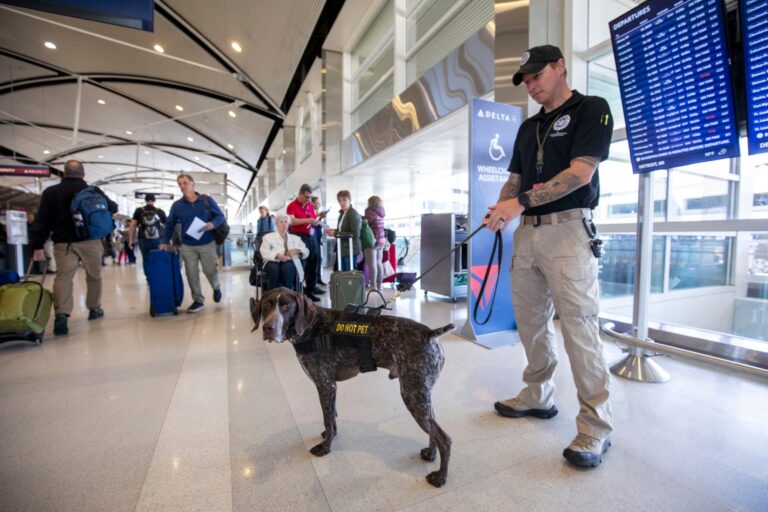
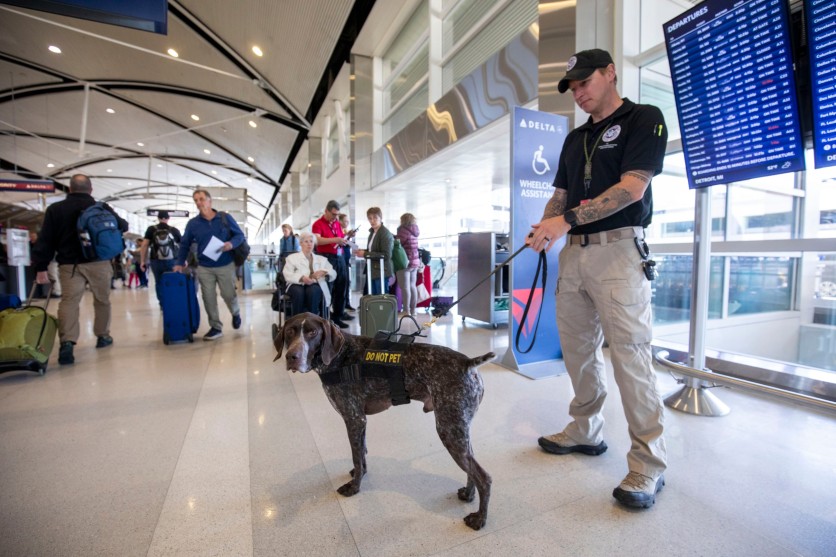
DETROIT MICHIGAN - 21 TSA agent and a working dog are seen at the Edward H. McNamara Terminal of the Detroit Metropolitan Airport
DETROIT, MICHIGAN – MAY 21: A TSA agent and a working dog are seen at the Edward H. McNamara Terminal of the Detroit Metropolitan Airport on May 21, 2026 in Detroit, Michigan. On Wednesday, an Air France flight scheduled to land at the airport was diverted to Montreal due to a passenger on-board who was coming from the Democratic Republic of Congo, where an outbreak of Ebola has occurred. After the passenger deplaned, the flight returned to the United States and landed in Detroit.
Bill Pugliano/Getty Images

Starting tomorrow night at 11:59 PM Eastern time, every passenger on every international flight to the United States — regardless of nationality, itinerary, or whether they have ever set foot in Central Africa — will be required to sign a formal health declaration confirming they were not present in the Democratic Republic of the Congo during the previous 21 days. The Centers for Disease Control and Prevention issued the order on October 22, 2026, the most sweeping U.S. pre-boarding health mandate since the COVID-19 pandemic, and an amendment on October 28 expanded it to cover all aircraft crew members, including pilots deadheading on other carriers.

The CDC’s attestation order is a direct response to a Bundibugyo Ebola outbreak in eastern DRC that has grown faster than any documented Ebola event in recorded history — and for which no approved vaccine or treatment exists.

Why This Outbreak Is Different From Any Before It

The Bundibugyo strain of Ebola virus was first identified in a 2007 outbreak in western Uganda, where it infected roughly 131 to 149 people, and appeared again in a 2012 DRC outbreak affecting about 52 to 57 people, according to CDC Ebola outbreak history. Those two events were the entirety of documented Bundibugyo disease history before this year. The current outbreak is categorically different.

The DRC Ministry of Health and the World Health Organization confirmed the outbreak on May 15, 2026, and the WHO declared a global health emergency shortly after. The case count passed 1,000 confirmed infections within approximately 40 days of the outbreak’s detection — compared to roughly 235 days for the 2018 to 2020 DRC Ebola outbreak to reach the same mark, already making it the fastest-growing Ebola outbreak recorded. The CDC activated its highest-level emergency response — Level 1 — on June 26, 2026, and committed more than 500 staff to the response, with over 120 deployed directly to affected countries, per the CDC Level 1 emergency response.

ECDC October 2026 data showed 9,964 confirmed cases and 4,851 deaths across three DRC provinces as of October 25, 2026, with cases also documented in Kenya and Nigeria. The U.S. has pledged $220 million or more to the international response.

What makes this outbreak uniquely dangerous from a countermeasure standpoint is not only its speed. The Ervebo vaccine — licensed since 2019 and widely deployed against the Zaire ebolavirus strain responsible for the largest outbreaks in history — has limited cross-protection against Bundibugyo. Bundibugyo is 30 percent genetically distinct from all other known orthoebolaviruses, meaning the immune response Ervebo produces against Zaire may not translate into meaningful protection against Bundibugyo. A candidate vaccine, ChAdOx1 BDBV, is under accelerated regulatory review; none has been licensed for Bundibugyo as of this publication. Treatment is supportive care only — intravenous fluids, fever management, and electrolyte support.

What the Attestation Form Actually Requires

The CDC’s attestation requirement is operationally straightforward for anyone with no DRC connection. A traveler certifies — in writing, digitally, or through a recorded verbal affirmation — that they were not physically present in the DRC at any time during the 21 calendar days before their departure to the United States, per the CDC attestation form requirements.

“Presence” is defined broadly. Entry into the DRC by air, land, or sea all qualify, as does a connecting stop at a DRC airport even if the traveler never exited the aircraft. Overflying the DRC without landing does not count. Day 0 is the day of departure from DRC; the earliest a traveler may board a US-bound flight is Day 22, per the CDC 21-day window definition.

Airlines are responsible for collecting the attestation — either through their own digital check-in platforms, at the gate via paper form, or through a contracted third party — and for denying boarding to any passenger who fails to complete it. Carriers must retain each attestation record for 42 days after the flight departs and must furnish those records to the U.S. government upon request. The CDC published the CDC fillable attestation form for use where digital check-in is unavailable, and encouraged airlines to integrate the attestation into existing paperless check-in workflows.

Anyone who provides a false attestation faces serious legal exposure. Knowingly making false statements in connection with any matter within U.S. federal jurisdiction is a federal crime under 18 USC 1001 federal penalties, carrying potential criminal fines and up to five years in federal prison.

Who Actually Bears This Compliance Burden

Airlines for America, the trade group representing United Airlines, American Airlines, Delta Air Lines, Southwest Airlines, and other major U.S. carriers, made a pointed statistical argument in its letter to the CDC: in 2025, U.S. Customs and Border Protection screened approximately 130 million air passengers arriving from international origins, but fewer than 25,000 of those passengers had any documented connection to the DRC.

That ratio — fewer than one in 5,200 US-bound passengers with any DRC ties — captures the core policy tension the attestation order creates. The CDC’s stated goal is to prevent Ebola importation from a specific outbreak zone. The operative mechanism, by design, imposes a documentation and compliance obligation on every international traveler regardless of travel history, because the prior travel-ban system offered no verifiable paper trail that airlines could check at the gate. The attestation shifts enforcement away from the CDC and onto airlines and individual travelers alike.

Airlines: ‘Overly Stringent, Costly and Burdensome’

Airlines for America called the order “overly stringent, costly and burdensome to Americans and the U.S. airline industry” in its letter to CDC Director of Global Migration Health Dr. David Fitter. The International Air Transport Association, representing more than 370 member airlines operating across over 130 countries, urged the CDC to develop “a more surgical approach, an extension of the November 3rd implementation date and a workable transition period developed in consultation with industry.”

In letters reviewed by Reuters, both groups warned that the under-two-week implementation timeline — from the CDC’s October 22 order to the November 3 effective date — was operationally unworkable for carriers that must modify check-in software, airport kiosk systems, and gate procedures across hundreds of international departure points in dozens of countries, per the airline groups’ CDC challenge. IATA also questioned why the requirement was limited to air travel and did not extend to maritime and surface transport, which it characterized as an inconsistency that could invite circumvention.

The CDC did not issue a public response to either letter before the order’s effective date. The October 28 amendment — which expanded coverage to deadheading crew, a category Airlines for America had specifically sought to exempt — suggests the agency intended to hold its scope even as it made technical clarifications. The Department of Transportation issued a separate notice indicating it will not take enforcement action against airlines that strictly follow the CDC directive for passengers who cannot present an attestation, offering carriers limited legal cover while the CDC’s compliance framework is tested in the field.

The graduated U.S. response reflects an escalating strategy tracking the outbreak’s growth. The CDC DRC entry restriction order first covered foreign nationals who had been in DRC in the prior 21 days, then those restrictions were extended in July 2026 to U.S. citizens and lawful permanent residents. The attestation system replaces an earlier ban that was difficult to enforce without documentation, shifting legal liability directly to travelers who misrepresent their travel history.

What Travelers Should Expect Tomorrow Night

For the vast majority of passengers — those with no DRC travel history — the attestation will appear as a new checkbox or digital acknowledgment during online check-in or at the airport gate. It will be a brief additional step in the standard boarding process, with no additional documentation required beyond confirming the basic geographic fact of non-presence in the DRC.

For anyone who has been in the DRC within the previous 21 days and does not qualify for an exemption, the order means they cannot board a U.S.-bound flight. Exemptions exist for aircraft transporting Ebola patients under U.S. government authorization and for individuals to whom the CDC grants a humanitarian or government-related waiver, per CDC attestation exemption criteria.

The order is set to expire on December 18, 2026, unless the CDC extends or modifies it. Whether it will be renewed depends primarily on whether the outbreak — which has now spread beyond the DRC to Kenya and Nigeria and has shown no sustained signs of containment — remains active. If it does, this attestation system may prove to be more than a one-time emergency measure: it is the first proof-of-concept test of whether the U.S. can use airlines as distributed public health surveillance infrastructure at intercontinental scale, a capacity that public health officials have sought to build since the early days of the COVID-19 pandemic.


Frequently Asked Questions

Does the Ebola attestation apply to U.S. citizens returning home?

Yes. The CDC order applies to all passengers aboard international flights bound for the United States, including U.S. citizens, nationals, and lawful permanent residents. Citizenship provides no exemption. The only exemptions the CDC has published are for aircraft transporting Ebola patients under U.S. government authorization and for individuals granted humanitarian or government-related waivers by the CDC directly, per the CDC attestation exemptions list.

What is the Bundibugyo virus, and why isn’t there a vaccine for it?

Bundibugyo virus is one of six recognized orthoebolavirus species that cause Ebola disease in humans. It was first identified during a 2007 outbreak in western Uganda and has caused only two small outbreaks — totaling approximately 180 to 200 cases combined — before the current crisis. It is more than 30 percent genetically distinct from the Zaire ebolavirus strain, which means the Ervebo vaccine licensed and deployed against Zaire Ebola is unlikely to provide reliable cross-protection, per Bundibugyo genetic divergence research. No vaccine has been licensed specifically against Bundibugyo, and there are no approved antiviral treatments; care consists of supportive measures only. A candidate vaccine is in accelerated review but is not yet authorized.

What happens if an airline can’t implement the attestation form before tomorrow night?

Airlines bear the legal responsibility for collecting attestations and denying boarding to passengers who do not complete them. The Department of Transportation has indicated it will not take enforcement action against airlines that strictly follow the CDC directive for passengers who cannot present an attestation — meaning an airline that follows the CDC’s compliance guidance, even imperfectly at launch, receives limited protection from DOT penalties. However, airlines that make no attempt to implement the process remain liable. Both Airlines for America and IATA warned the CDC that the sub-two-week implementation window was operationally unworkable for modifying international check-in systems; the CDC has not publicly responded, per the DOT enforcement notice October 2026.

How long will this requirement last, and what does it mean for future travel restrictions?

The current order is scheduled to expire on December 18, 2026, unless the CDC extends or modifies it. Renewal will depend on the trajectory of the Bundibugyo outbreak, which had expanded to Nigeria and Kenya as of late October and showed no clear path to containment. More broadly, this attestation system — the first time the U.S. has required all US-bound international passengers to sign a health declaration regardless of itinerary — is a proof-of-concept for using airlines as a distributed federal public health compliance layer under 42 CFR Part 71 authority. How effectively airlines implement it, and whether it survives any legal challenge on proportionality grounds, will shape the template for how the U.S. responds to the next pandemic-scale disease event.

Source link