HomeAuto Celltrion Adds Safety-Syringe Yuflyma Biosimilar to Korean Formulary at Lowest Adalimumab Price
Celltrion Adds Safety-Syringe Yuflyma Biosimilar to Korean Formulary at Lowest Adalimumab Price
November 3, 2026:
Diana Polekhina/Unsplash.com
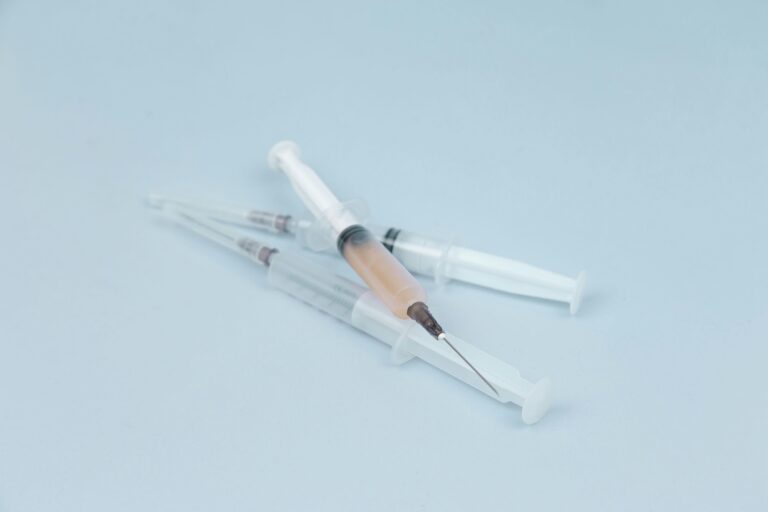
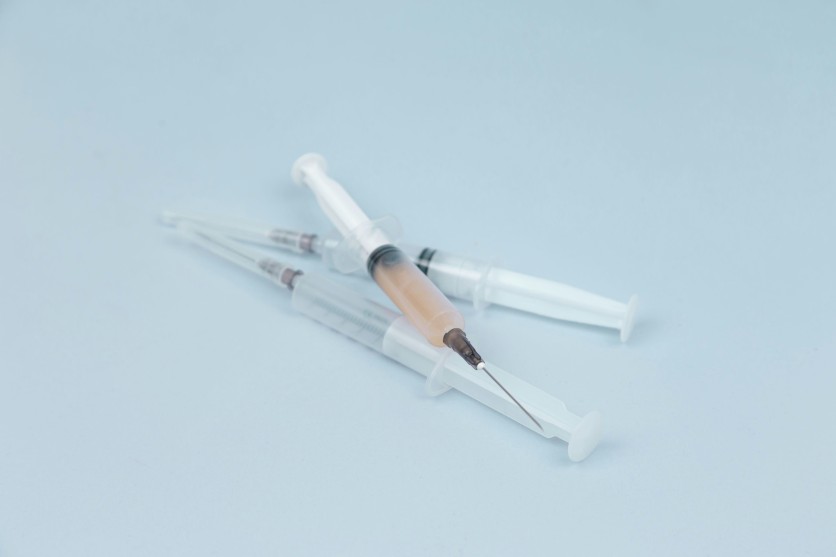
Celltrion Pharm’s Yuflyma adalimumab biosimilar is entering South Korea’s national health insurance formulary this month in a new prefilled-syringe presentation equipped with an integrated passive needle safety guard — at a reimbursement ceiling price of ₩220,390 (approximately $165 USD; exchange rate as of November 1, 2026; conversions are approximate) per dose, the lowest NHI-reimbursed adalimumab price of any adalimumab biosimilar in prefilled-syringe format in the country. The new device designation, PFS-S, distinguishes this presentation from standard prefilled syringes and from the autoinjector pen format that Celltrion already offers: the safety guard deploys automatically as the needle is withdrawn, covering the sharp without any additional user action.
The arrival fills a competitive gap that opened earlier this year when Samsung Bioepis voluntarily withdrew the marketing authorization for its Adalloce prefilled syringe in Korea in January 2026, triggering the product’s involuntary delisting from the reimbursement formulary. That withdrawal left Celltrion’s Yuflyma as the only biosimilar-category product available in both autoinjector pen and true prefilled-syringe formats for Korean adalimumab patients — and now, with the PFS-S presentation reaching the formulary, also the only biosimilar-category prefilled syringe available at the lowest price tier.
Korea’s Adalimumab Pricing Stack Has Three Tiers — Yuflyma PFS-S Is Now at the Bottom
Korea’s National Health Insurance Service maintains a ceiling reimbursement price for each approved adalimumab presentation, and the new Yuflyma PFS-S sits at the base of a three-tier hierarchy. At ₩220,390 ($165 USD), it shares the lowest rung with LG Chem’s Xelenca PFS — though Xelenca is actually marketed as an autoinjector pen rather than a safety syringe, making Yuflyma’s presentation the only syringe-format product at this tier. Celltrion’s own Yuflyma pen injector sits one step above at ₩244,508 ($183 USD), and AbbVie Korea’s Humira PFS — the originator product in the same device format — is listed at ₩284,677 ($213 USD) per dose, a ceiling set when it joined the formulary in July 2024.
The arithmetic is meaningful for patients on indefinite therapy. Adalimumab is typically administered subcutaneously every two weeks across most of its approved indications — including rheumatoid arthritis, ankylosing spondylitis, psoriatic arthritis, Crohn’s disease, ulcerative colitis, and plaque psoriasis — meaning a standard treatment course accumulates 26 injections per year. At published ceiling prices, a patient choosing Yuflyma PFS-S over Humira PFS saves ₩64,287 per dose, a differential that compounds to roughly ₩1,671,462 ($1,252 USD) per year before any additional rebates or negotiated supply discounts that operate below the published ceiling level.
The new price point is 22.6 percent below Humira PFS and approximately 9.9 percent below Celltrion’s own pen injector. That pricing discipline reflects a Korean reimbursement landscape that Celltrion has actively shaped. “For patients receiving long-term treatment, product selection needs to take into account affordability, the method of administration and handling after use,” a Celltrion Pharm official said in a Celltrion Pharm launch statement accompanying the product’s introduction. “We will address the treatment needs of patients and healthcare professionals through Yuflyma’s competitive pricing and range of presentations.”
What Makes Yuflyma Different From the Original Humira — and Why That Matters
Yuflyma is not a clone of the formulation that Humira patients have been using for two decades. When Celltrion Healthcare received European Commission approval for the product in February 2021, it became the first approved adalimumab biosimilar in a high-concentration, citrate-free formulation: 100 mg/mL rather than the 50 mg/mL of older Humira versions.
The concentration difference has a direct functional consequence: the same 40 mg dose is delivered in 0.4 mL rather than 0.8 mL, cutting injection volume in half. Smaller injection volume means a faster injection event and reduced pressure on subcutaneous tissue. The removal of citrate — a buffer used in the original lower-concentration Humira formulation that is associated with the stinging and burning many patients experience at the injection site — is the other clinically significant distinction. By the time of Yuflyma’s European approval, more than 90 percent of the European adalimumab market had already shifted to high-concentration formulations, according to IQVIA data cited by Celltrion, meaning Yuflyma entered as the market-normative concentration rather than as a reformulated outlier.
The US Food and Drug Administration approved Yuflyma in May 2023, its ninth adalimumab biosimilar approval in the American market. Celltrion subsequently obtained full FDA interchangeability designation for all approved dosage forms and strengths in May 2025 — a regulatory status that in practical terms allows pharmacists in states that permit it to substitute Yuflyma for Humira without a separate prescriber sign-off. Interchangeability is a higher evidentiary bar than basic biosimilar approval: it requires clinical data specifically demonstrating that switching between the biosimilar and the reference product does not diminish safety or efficacy compared with continuous reference-product use.
In Korea, Celltrion began offering the Yuflyma pen injector with reimbursement from March 2023, entering a domestic market where Samsung Bioepis’s Adalloce had been the first Korean-approved adalimumab biosimilar since 2021. The Korean adalimumab market was estimated at around 100 billion won ($75 million USD) annually in the years before biosimilar competition began. Korea’s Ministry of Health and Welfare mandated approximately a 30 percent price reduction on Humira following the entry of the first biosimilar, standard practice under Korea’s price-linkage policy for original biologics — a mechanism that resets the competitive baseline and gives biosimilars more runway to compete on price alone.
By the first half of 2023, the combined biosimilar share of Korea’s adalimumab market stood at approximately 14 percent, a modest but growing penetration. Yuflyma posted 800 million won in Korean sales during that period against an estimated semi-annual market of 50 billion won — a small fraction, but a benchmark from which the PFS-S launch and its more competitive pricing represent the next competitive move.
How the Passive Needle Guard Works — and Why Home Injection Changed the Safety Calculus
The PFS-S designation identifies a specific mechanism: a prefilled syringe with a passive needle guard that activates automatically when the plunger reaches the end of its travel and the needle is withdrawn from the skin. The guard deploys without any deliberate secondary action from the user — the moment the injection is complete and the syringe is pulled back, the sharp is covered. This is distinct from active safety devices, which require the user to consciously slide, cap, or retract a safety mechanism after injection.
The distinction is clinically significant for home-use biologics. A patient on biweekly adalimumab accumulates hundreds of individual injection events over a decade of treatment — roughly 260 over ten years of continuous therapy. In a clinical setting, institutional safeguards — trained staff, certified sharps containers, formal disposal protocols — surround each injection. At home, those protections depend on the patient or a non-clinical caregiver maintaining consistent habits across hundreds of repetitions. A passive safety device removes one variable from that equation by making the safe state the default outcome of a completed injection, rather than a step requiring deliberate attention.
The regulatory framework underpinning this design philosophy has been building across major pharma markets for decades. In the United States, the Needlestick Safety and Prevention Act of 2000 was the first major national mandate requiring safer device designs in healthcare settings; studies subsequently credited the legislation with reducing non-surgical needlestick injuries by 31.6 percent. The European Union’s Medical Device Regulation 2017/745 incorporated comparable sharps-protection requirements for devices placed on the European market. Across both jurisdictions, passive activation has become the preferred design for safety-integrated biologics aimed at home-use populations, not because active devices fail to protect but because passive devices are more forgiving of the human variability inherent in thousands of repeat injections by non-professional patients.
In the Korean competitive context, that design choice now functions as a meaningful differentiator. Xelenca, the product sharing the ₩220,390 floor price, is an autoinjector pen — a device that conceals the needle throughout the injection process, better suited to patients who prefer not to see the sharp. The PFS-S format addresses a different clinical preference: syringe-based delivery offers more tactile feedback and injection-rate control, which some healthcare professionals prefer when administering injections and which some patients prefer for reasons of familiarity or dexterity. With Adalloce’s syringe presentation gone from the formulary, the Yuflyma PFS-S enters as the only biosimilar prefilled syringe in the Korean adalimumab market at this reimbursement tier.
A Three-Competitor Market With Shifting Device Lineups
Korea’s adalimumab biosimilar field now has three active companies — Samsung Bioepis (Adalloce, pen format only following the PFS withdrawal), LG Chem (Xelenca, in both autoinjector pen and PFS formats), and Celltrion (Yuflyma, in pen injector and now PFS-S) — competing with AbbVie’s Humira across a range of reimbursed presentations. The competitive matrix has evolved significantly since Adalloce’s 2021 debut as Korea’s first approved adalimumab biosimilar.
The trade publication Dailypharm, which first reported the upcoming Yuflyma PFS listing in late October, described the new pricing as positioning the product with “the lowest price among identical adalimumab formulations” in the PFS format category in Korea. The category distinction — identical formulation in the same device class — matters because the Korean NHI price comparison applies within formulation equivalence groups; the ₩220,390 floor is specifically for the high-concentration, citrate-free adalimumab PFS category.
Celltrion’s willingness to price aggressively in its home market has been visible elsewhere in its domestic portfolio. Earlier in 2026, the company cut the Korean reimbursement price of Stoboclo, its denosumab biosimilar, by 28 percent. That move, alongside the Yuflyma PFS-S launch at the formulary floor, signals that aggressive domestic pricing is a deliberate commercial strategy — not a byproduct of regulatory ceilings — as Celltrion competes against local and multinational rivals in the market where it originated.
A 20 mg Version Planned, Expanding the Pediatric Lineup
Celltrion Pharm has confirmed it plans to introduce a 20 mg Yuflyma prefilled syringe in Korea in 2027, a lower-dose presentation used in pediatric patients with juvenile idiopathic arthritis, pediatric Crohn’s disease, and pediatric plaque psoriasis, where dosing regimens vary by body weight.
The 20 mg strength’s inclusion would extend the Yuflyma line to cover every patient segment currently served by the Humira reference product — adult standard-dose, adult low-dose for certain indications, and pediatric weight-based dosing — allowing prescribers to source all adalimumab therapy from a single biosimilar line without requiring patients to switch device type as clinical needs change.
Celltrion’s Broader Biosimilar Platform in Context
The Korean domestic Yuflyma expansion reflects a larger Celltrion commercial trajectory. The company — which first commercialized Remsima (infliximab, CT-P13) in 2013 as the world’s first monoclonal antibody biosimilar — has since built a global biosimilar portfolio spanning infliximab, adalimumab, ustekinumab, trastuzumab, bevacizumab, denosumab, and omalizumab. Steqeyma, Celltrion’s ustekinumab biosimilar, has reached a 16.2 percent share of the US ustekinumab market by IQVIA measurement. In Singapore, where Celltrion has been expanding its Asian presence, Yuflyma ranks among the top two adalimumab products by market share and, by the company’s account, is outperforming Humira in prescription volume.
For Korean patients managing rheumatoid arthritis, ankylosing spondylitis, inflammatory bowel disease, or other chronic autoimmune conditions requiring long-term adalimumab therapy, the practical significance of this month’s formulary addition is straightforward: a biosimilar-category prefilled syringe with automatic post-injection needle coverage is now available at the lowest reimbursed price in its device category, at a savings of more than ₩1.6 million ($1,252 USD) per year compared with the originator product’s syringe presentation — without any change in the formulation or the clinical profile of the drug they are already taking.
Frequently Asked Questions
What is the difference between a biosimilar and a generic drug?
A generic drug is a chemically identical copy of a small-molecule drug that can be manufactured to an exact formula. A biosimilar is a biologic — a large, complex protein produced from living cells — that is “highly similar” to an already-approved reference biologic, with no clinically meaningful differences in safety, purity, or potency. Because biologics cannot be precisely replicated the way a small molecule can, biosimilar approval requires clinical studies demonstrating similarity rather than simply a certificate of chemical identity. This is why biosimilars go through a distinct regulatory pathway from generics and why questions such as interchangeability — which allows pharmacy-level substitution without a new prescription — require additional evidentiary steps beyond the basic biosimilar designation.
Is Yuflyma interchangeable with Humira in the United States?
Yes. The US Food and Drug Administration granted Yuflyma full interchangeability status for all approved dosage forms and strengths in May 2025. An interchangeable designation means pharmacists in states that permit biosimilar substitution can swap Yuflyma for Humira at the dispensing stage without a new prescriber sign-off — the same mechanism that governs generic drug substitution for small molecules. The designation was based on clinical switching study data, specifically a Phase 3 trial in plaque psoriasis patients.
What adalimumab biosimilars are available in South Korea, and how do their prices compare?
As of November 2026, three companies offer NHI-reimbursed adalimumab biosimilars in Korea. Samsung Bioepis’s Adalloce is available in pen format only after the PFS presentation was withdrawn from the market in January 2026. LG Chem’s Xelenca is available in autoinjector pen and PFS formats. Celltrion’s Yuflyma is available in autoinjector pen and, as of this month, in the new PFS-S syringe format. Yuflyma PFS-S and Xelenca PFS share the lowest NHI reimbursement ceiling at ₩220,390 ($165 USD) per dose. Celltrion’s own Yuflyma pen is priced at ₩244,508 ($183 USD). AbbVie’s originator Humira PFS is listed at ₩284,677 ($213 USD).
How does a passive needle safety guard work, and why does it matter for home injection?
A passive needle guard deploys automatically when the syringe plunger reaches the end of its travel and the needle is withdrawn from the skin — no secondary action is required from the user. The needle is covered the instant the injection is complete. This contrasts with active safety devices, which require the user to deliberately slide or retract a safety cap after use. For patients administering adalimumab at home every two weeks — potentially for decades — the passive mechanism removes a step that depends on consistent human attention across hundreds of injections. Regulatory frameworks in the US (Needlestick Safety and Prevention Act, 2000) and EU (Medical Device Regulation, 2017) have progressively encouraged passive designs over active ones for home-use biologics for this reason.