November 2, 2026:


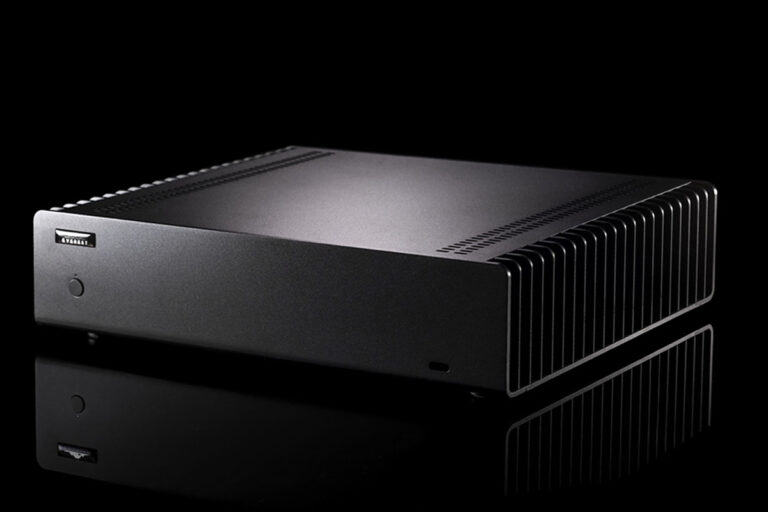
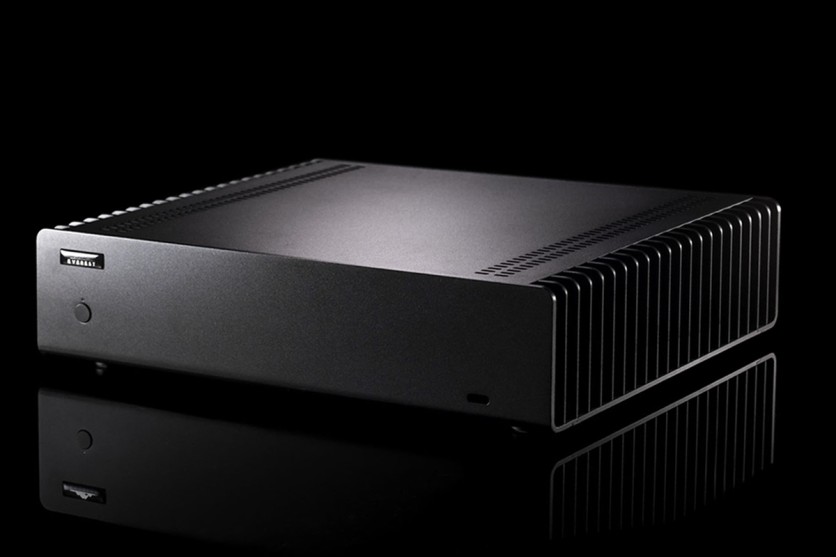
Polish boutique manufacturer Everest Audio Labs has opened orders for its Ascent music server, a fanless CNC-milled aluminum machine built around the engineering premise that USB audio quality is fundamentally a power-noise and clock-precision problem — and that solving it in hardware, not software, is what separates a reference-class source from an audiophile PC. The Ascent is priced at €8,000 (approximately $8,960 USD) including the USB One PCIe output card, with delivery estimated at three weeks from order confirmation. That price sits substantially below the flagship servers from Innuos and Pink Faun that address the same problem — a gap the Ascent’s bill of materials explains in concrete engineering terms.
The USB standard was not designed with audio in mind. Its VBUS power line — nominally 5 V — is shared between data signaling and device power, which means every packet transaction, every start-of-frame event, and every device enumeration event on the bus injects a transient current draw onto the same rail that powers the host controller’s clock circuitry. That transient noise couples into the oscillator’s power supply, and oscillator frequency is sensitive to supply voltage. The result is jitter: the sampling clock of a connected digital-to-analog converter no longer ticks at perfectly equal intervals but wobbles in proportion to the power-line noise upstream.
The consequences are measurable and audible at high bit depths. Research on digital converter performance has found that less than a nanosecond of jitter can reduce a 24-bit DAC operating at a 22 kHz Nyquist frequency to approximately 14 effective bits. The jitter is not random — it is correlated to USB packet activity, which means the errors appear as spurious spectral tones rather than broadband noise, creating a distinctive coloration tied to the music’s own dynamic patterns. Measurements of a laptop computer connected to a switching power supply have recorded USB jitter of 3,000 to 3,500 picoseconds; the same laptop running on battery, with the switching supply removed from the circuit, fell below 200 picoseconds. The Ascent’s design addresses both causal layers: oscillator quality and power-rail noise.
The USB One is a PCIe card that installs in the Ascent’s main board and provides the server’s USB audio output. Its clock is an SC-cut quartz crystal oscillator, a type developed in 1974 that uses a double-rotated crystal cut oriented at angles of 35°15′ and 21°54′. The geometry compensates for stress-induced frequency shifts and reduces close-in phase noise relative to the more common AT-cut crystal — the noise sidebands that appear nearest to the oscillation frequency, which are the ones that map most directly onto jitter in the audio band. Because SC-cut oscillators reach their minimum frequency-temperature sensitivity at around 95°C (203°F), they require oven operation — the crystal is kept at that temperature inside a heated enclosure, making the module an oven-controlled crystal oscillator (OCXO). Everest Audio Labs houses the OCXO in a vibration-damped, CNC-milled metal enclosure. As with all OCXO-grade oscillators, the USB One card requires a few minutes of warm-up time after power-on to reach its rated stability — standard practice in precision timing equipment.
Power for the USB One is supplied by regulators using the LT3042, a linear regulator from Analog Devices — the first sub-1 µVRMS linear regulator commercially produced — rated at a noise floor of 0.8 µVRMS across 10 Hz to 100 kHz with a power supply rejection ratio of 79 dB at 1 MHz. That PSRR figure means noise arriving from the host power rail is attenuated by more than 89,000 to one before it reaches the oscillator.
Energy storage for instantaneous current delivery comes from two 450 F supercapacitors wired in series, yielding approximately 225 F of effective capacitance at a nominal 6 V. Supercapacitors in this capacitance range carry a series resistance of approximately 3 mΩ — low enough to deliver short-duration current surges with minimal voltage sag — compared to approximately 8 mΩ for lithium-iron-phosphate cells of comparable capacitance. The USB One’s total noise floor is quoted below 1 µV. The card has its own dedicated 60 VA transformer and 29,000 µF of local filter capacitance, electrically independent of the server’s main power section.
The Ascent’s chassis is machined from 12 mm (0.47 in) aluminum plate by CNC, with no fan and no rotating media during playback. The Ascent weighs 13 kg, measuring 430 × 353 × 109 mm (16.9 × 13.9 × 4.3 in). The computing platform is an Intel N100, a quad-core chip with a 6 W thermal design power that operates within passive-cooling margins without special thermal measures. Standard configuration includes 16 GB of RAM and a 500 GB SSD, with storage expansion to 8 TB.
The main power supply is built around a 250 VA shielded transformer feeding seven independent linear voltage regulators, with 320,000 µF of total filter capacitance throughout the chassis. Each power rail serving a distinct subsystem — processor, storage, USB controller, network — receives its own regulator, so current-draw events in one subsystem do not modulate the voltage seen by others. The combination of shielded magnetics, substantial filter capacitance, and per-rail regulation is the same approach used in reference-class servers at twice the price; the Ascent’s cost reduction comes from the commodity Intel N100 platform rather than a custom low-power embedded board, and from a single integrated chassis rather than the separate power-supply chassis used by some competitors.
The optional Everest LAN One card provides an Ethernet output for setups using a separate network-attached DAC or streaming endpoint, and is available as an alternative to the USB One.
The Ascent ships with AudioLinux, an Arch Linux-based real-time operating system purpose-built for audio playback, with CPU scheduling latency below 1 microsecond on optimized configurations. In its headless RAM mode, the OS loads completely into system memory at boot and suspends all disk I/O during playback, eliminating storage-access interrupts as a source of processor scheduling jitter. Everest Audio Labs configures each unit individually before shipping.
Supported software modes are Roon Server, Roon Bridge, MPD (Music Player Daemon), and HQPlayer NAA (Network Audio Adapter), covering the four dominant audiophile playback and streaming platforms. The Ascent functions both as a library server — storing and indexing a local music collection — and as a Roon-Ready endpoint, depending on the configuration selected.
The Ascent’s competitive framing requires updating: the primary mid-market incumbent it would have been measured against, the Innuos Statement Next-Generation, was discontinued in approximately September 2024. At HIGH END Vienna in June 2026, Innuos debuted the NAZARÉ NET network switch and NAZARÉ FLOW USB reclocker — both accessory products priced at approximately €10,900 — extending the Innuos ecosystem rather than introducing a new music server. The Innuos Nazaré music server, Innuos’s current server flagship, carries substantially higher dealer pricing than the discontinued Statement NG. Pink Faun’s flagship 2.16 Ultra — the Dutch manufacturer’s reference server — builds on a prior generation reviewed as a $20,750 music streamer and carries an 800,000 µF dual-chassis power supply specification, more than double the Ascent’s 320,000 µF. Pink Faun introduced the Scion, a more affordable model, in early 2025, targeting the segment below its 2.16 series.
The engineering delta between the Ascent at €8,000 (~$8,960) and flagship servers above $20,000 reflects genuine component and manufacturing decisions. The Ascent’s USB One card uses the same LT3042 ultra-low-noise regulators and SC-cut OCXO components found in reference-tier designs; those components are not made cheaper by volume in this market. The cost reduction comes from the Intel N100 platform — available at commodity pricing — the single-chassis form factor instead of a separate PSU enclosure, and lower total capacitance. Buyers weighing the gap should ask their dealer or system integrator whether the specific sonic benefit of 800,000 µF vs. 320,000 µF in their listening room is audibly meaningful; the Ascent is the first product to make the sub-€10,000 question answerable in those engineering terms specifically.
The base Ascent without the USB One card is priced at €4,999 (approximately $5,599 USD); the USB One card is available separately at €800 (approximately $896 USD).
USD conversions throughout this article are approximate, based on exchange rates at the time of publication.
A supercapacitor stores energy at capacitances measured in hundreds of farads — orders of magnitude above a conventional electrolytic capacitor — and can deliver or absorb short-duration current surges with an internal resistance of approximately 3 milliohms. In the USB One card’s circuit, the supercapacitors act as a low-impedance energy reservoir that stabilizes the power rail during the transient current spikes that USB protocol activity generates. Because those spikes are what couple into the oscillator and produce jitter, absorbing them before they modulate the clock reduces jitter in the audio band. The result is a supply impedance low enough that a current spike of 1 ampere produces only a 3 millivolt perturbation on the rail, rather than the tens or hundreds of millivolts that an unfiltered switching supply would allow.
Yes. Because an SC-cut crystal reaches its lowest frequency-temperature sensitivity at approximately 95°C (203°F), it must be operated in an oven-controlled enclosure (OCXO). All OCXO-grade oscillators require a warm-up period — typically three to ten minutes — after power-on to bring the crystal to its operating temperature and allow the frequency to stabilize to its rated specification. During warm-up, phase noise performance is higher than the rated value. Everest Audio Labs houses the oscillator in a vibration-damped, CNC-milled metal enclosure; users should allow the server to warm up before critical listening sessions.
The Ascent runs AudioLinux, an Arch Linux-based real-time operating system that can operate entirely from RAM during playback with no disk I/O activity. It supports four playback modes: Roon Server (stores a local library and acts as a Roon core), Roon Bridge (acts as a Roon-Ready endpoint driven by another Roon core on the network), MPD (Music Player Daemon, compatible with a wide range of open-source and commercial control apps), and HQPlayer NAA (Network Audio Adapter, for users running HQPlayer’s upsampling engine on a separate computer). Everest Audio Labs configures each unit to the customer’s specification before shipping.
The Ascent’s USB One card uses component-level specifications — LT3042 regulators at 0.8 µVRMS noise, SC-cut OCXO clock, supercapacitor buffering — that are equivalent in quality to the clock and power-isolation designs in reference-tier servers. The primary engineering differences at higher price points are: greater total filter capacitance (Pink Faun 2.16 Ultra specifies 800,000 µF versus the Ascent’s 320,000 µF); dual-chassis designs separating the power supply physically from the computing platform; and custom low-power embedded computing boards rather than commodity Intel processors. The Innuos Nazaré music server, Innuos’s current flagship, carries substantially higher dealer pricing than the discontinued Statement Next-Generation it replaced in the reference tier. Buyers prioritizing the specific clock and USB power-delivery approach — rather than maximum capacitance or dual-chassis isolation — will find the Ascent’s engineering rationale straightforward to evaluate against those alternatives.