


iMac With M6 Chip, 14-Inch MacBook Pro With M6 Chip Among Apple Releases on November 6

November 2, 2026:

iMac With M6 Chip, 14-Inch MacBook Pro With M6 Chip Among Apple Releases on November 6

Apple is gearing up for another major product release, with five new devices scheduled to become available on November 6, 2026. The upcoming launch adds to the company’s growing hardware lineup for the year, bringing updates across some of its most popular product categories.

The latest releases reflect Apple’s continued efforts to improve its devices through hardware upgrades, new technologies, and closer integration across its ecosystem. From personal computing to mobile productivity, the new products are expected to appeal to different types of users, including professionals, creative users, and consumers looking to upgrade their existing devices.

With the November 6 launch approaching, Apple’s latest releases give consumers another opportunity to explore the company’s newest hardware offerings. The five products also highlight the company’s broader product strategy as it continues to refine its existing lineup and introduce new features designed to enhance the user experience.

Without further ado, here are the five products Apple fans can expect on November 6.

iMac With M6 Chip

iMac With M6 Chip
Apple

The new iMac with M6 features Apple’s M6 chip, bringing performance upgrades for everyday computing, creative work, and artificial intelligence tasks. According to Apple’s announcement, the desktop computer offers configurations with up to a 12-core CPU and a 12-core GPU, with Neural Accelerators integrated into each GPU core. It also features a dual 16-core Neural Engine and memory bandwidth of up to 170GB/s, enabling faster on-device AI processing. Apple claims the M6 model delivers up to five times faster on-device AI performance than the previous M4 version.

The computer retains its 24-inch 4.5K Retina display, which offers 500 nits of brightness and support for the P3 wide color gamut with more than one billion colors. It also features a 12-megapixel Center Stage camera for video calls, Desk View for sharing an overhead view of a workspace, a studio-quality three-microphone array, and speakers supporting Spatial Audio and Dolby Atmos. The new iMac is available in seven colors: blue, green, pink, yellow, purple, orange, and silver. According to Apple, the system also supports up to four Thunderbolt 4 ports on select configurations and can connect to as many as two external 6K displays.

Connectivity and software also receive upgrades, with the M6 iMac supporting Wi-Fi 7, Bluetooth 6, and optional 2.5-gigabit Ethernet. Apple says its solid-state drive offers up to twice the read and write performance of the previous generation, helping applications launch faster and large files load more quickly. The desktop runs macOS 27, which introduces updated Apple Intelligence capabilities and Siri AI integration across supported apps. Users can also take advantage of Continuity features to transfer files between their Mac and iPhone, hand off tasks, and access compatible iPhone functions from their computer. Apple’s official newsroom announcement provides additional details on the hardware and software features.

iPad mini With OLED Display and A20 Pro Chip

iPad mini With OLED Display and A20 Pro Chip
Apple

The new iPad mini brings a major display upgrade to Apple’s compact tablet lineup, replacing the previous generation’s LCD panel with an 8.5-inch OLED display. According to 9to5Mac’s report on Apple’s announcement, the tablet features an OLED screen designed to deliver deeper blacks, stronger contrast, and more vibrant colors. The larger display also comes with bezels that are 24% thinner than those of its predecessor, while the device measures just 5.4 millimeters thick. These changes give users more screen space for reading, watching videos, drawing, and multitasking without sacrificing the portability that distinguishes the iPad mini from Apple’s larger tablets.

At the heart of the tablet is Apple’s A20 Pro chip, built using a 2-nanometer manufacturing process. According to Apple’s official announcement, the chip delivers up to 60% faster multithreaded CPU performance, up to 2.7 times faster graphics performance, and up to 4.5 times faster AI performance compared with the previous-generation iPad mini powered by the A17 Pro. Its seven-core GPU supports hardware-accelerated ray tracing, while Neural Accelerators built into each GPU core help speed up AI-intensive tasks. The 512GB configuration also features a Dual 16-core Neural Engine, compared with the single 16-core Neural Engine in the 128GB and 256GB models. The tablet runs iPadOS 27, which introduces updated Apple Intelligence features and Siri AI capabilities.

The iPad mini also introduces an Acoustic Display audio system, which uses specially designed woofers and hidden tweeters to deliver fuller bass and clearer high-frequency sound without conventional speaker openings. Its camera system includes a 12-megapixel Center Stage front camera positioned along the landscape edge for video calls and a 12-megapixel rear camera capable of recording 4K video at up to 60 frames per second.

Other features include Wi-Fi 7, Bluetooth 6, and Apple’s N1 wireless networking chip, while cellular models use the C2 modem for faster mobile data connectivity. The device also carries an IP67 rating for water and dust resistance and supports Apple Pencil Pro and Apple Pencil (USB-C). Storage options range from 128GB to 512GB, with Midnight and Starlight finishes available. More specifications are listed on Apple’s iPad mini technical specifications page.

14-Inch MacBook Pro With M6 Chip, 14-inch MacBook Pro With OLED Touchscreen, and
16-inch MacBook Pro With OLED Touchscreen

14‑inch MacBook Pro with M6
Apple

Apple is expanding its MacBook Pro lineup with three new configurations, giving consumers different options depending on their performance requirements, display preferences, and budgets. The three models include the 14-inch MacBook Pro with the M6 chip, the 14-inch MacBook Pro with an OLED touchscreen, and the larger 16-inch MacBook Pro with an OLED touchscreen. While all three are designed for demanding professional workflows, they differ considerably in their processors, display technology, and physical design. According to Apple’s October announcements, the new laptops bring upgrades in processing power, artificial intelligence capabilities, and display technology.

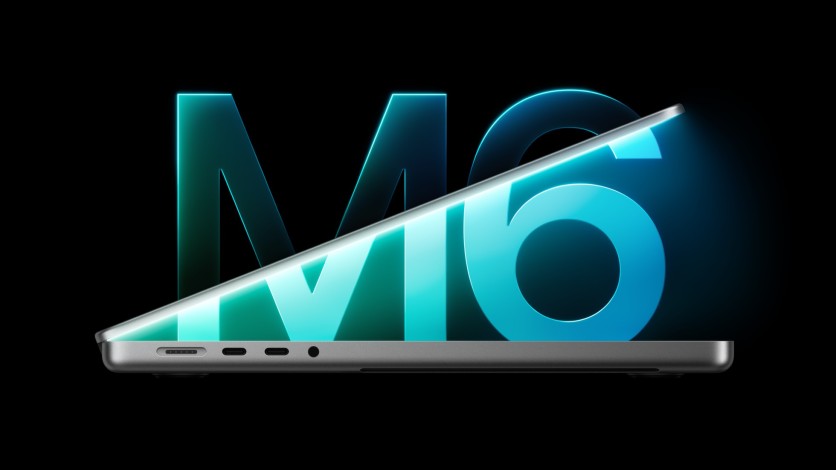
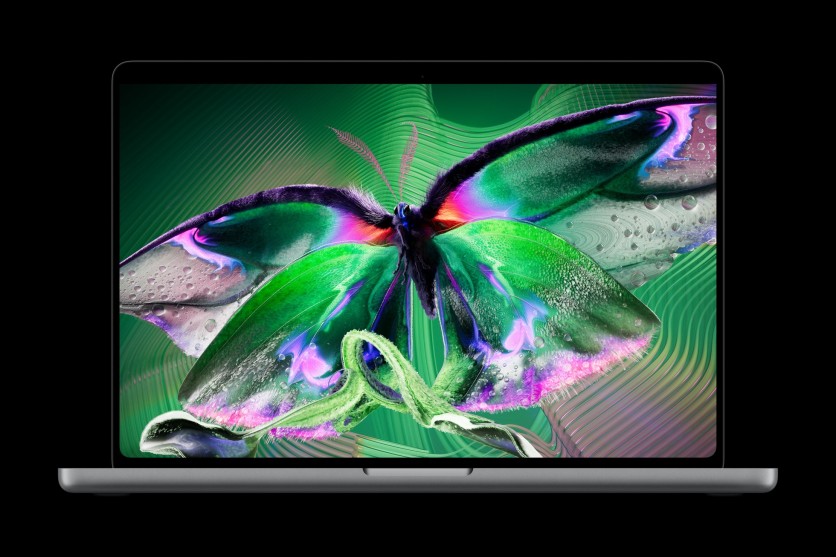
The standard 14-inch MacBook Pro is powered by Apple’s M6 chip, featuring a 12-core CPU and a 12-core GPU with Neural Accelerators built into each GPU core. According to Apple’s official announcement, the processor delivers up to 30% faster graphics performance and up to 25% faster performance for on-device AI workloads compared with the M5. It also features a Dual 16-core Neural Engine and supports up to 170GB/s of memory bandwidth on configurations with 24GB or 32GB of unified memory. The laptop starts with 16GB of unified memory and 1TB of SSD storage, with configurations available up to 32GB of memory and 4TB of storage.

The M6-powered model retains Apple’s 14.2-inch Liquid Retina XDR display, which supports ProMotion technology with adaptive refresh rates of up to 120Hz. Other features include a 12-megapixel Center Stage camera, a six-speaker sound system with Spatial Audio and Dolby Atmos support, and a selection of ports for connecting peripherals and external displays. Apple also upgraded its wireless connectivity with Wi-Fi 7 and Bluetooth 6. The laptop runs macOS 27, bringing Apple Intelligence features and Siri AI integration across supported applications. Apple claims the device offers up to 24 hours of battery life and comes in Space Black and Silver finishes.

14-inch MacBook Pro with OLED touchscreen
Apple

The 14-inch MacBook Pro with OLED touchscreen, meanwhile, introduces a significant change to Apple’s traditional laptop design. It features a 14.2-inch tandem OLED display marketed as the PROLED XDR display, offering up to 2,000 nits of peak HDR and SDR brightness, a 10,000,000:1 contrast ratio, and a 120Hz variable refresh rate. According to Apple’s announcement, the display also supports both the P3 and Adobe RGB color gamuts, making it suitable for professionals working with photography, video production, and graphic design. Unlike the M6-powered version, this configuration introduces touch interaction to the MacBook Pro for the first time, allowing users to scroll, zoom, drag content, and interact directly with applications on the screen.

Under the hood, the 14-inch OLED touchscreen MacBook Pro is powered by Apple’s M5 Pro or M5 Max chips rather than the newer standard M6 processor. These chips are designed for more demanding professional workloads, including software development, 3D rendering, AI development, and high-resolution video editing. Apple also introduced a Dynamic Island to the MacBook Pro, giving users a dedicated area for Spotlight searches, Live Activities, and Siri AI.

The redesigned laptop weighs approximately 3 pounds and features a reinforced hinge to provide additional stability when using the touchscreen. Other specifications include a six-speaker audio system with 50% deeper bass, a 12-megapixel Center Stage camera, three Thunderbolt 5 ports, an HDMI port, an SDXC card slot, and MagSafe charging. It also supports up to 128GB of unified memory and 16TB of storage, depending on the selected chip and configuration. More information is available in Apple’s official product announcement.

The 16-inch MacBook Pro with OLED touchscreen shares many of the features found in its smaller counterpart but offers a larger display and a different form factor for users who prefer more screen space. Its PROLED XDR display measures 16.3 inches, with tandem OLED technology, a 120Hz variable refresh rate, up to 2,000 nits of peak brightness, and a 10,000,000:1 contrast ratio. Like the 14-inch OLED model, it supports touch interaction, Dynamic Island, and Apple’s M5 Pro and M5 Max processors.

However, the larger model weighs approximately 4 pounds and features a redesigned thermal architecture intended to maintain sustained performance during demanding workloads. It also offers up to 24 hours of battery life, three Thunderbolt 5 ports, Wi-Fi 7, Bluetooth 6, and support for up to four external displays when configured with the M5 Max chip. According to Apple, the 16-inch model is intended for professionals who need a larger workspace without compromising the performance and portability of a MacBook Pro.

Source link