HomeAuto HUAWEI FreeBuds Neo Thailand Launch: Strong ANC Tech Comes With China Data Law Trade-Off
HUAWEI FreeBuds Neo Thailand Launch: Strong ANC Tech Comes With China Data Law Trade-Off
November 2, 2026:
Huawei.com
HUAWEI’s FreeBuds Neo earbuds are scheduled to go on pre-sale in Thailand starting November 7, 2026, via TikTok Shop, at 2,999 THB (approximately $89 USD; exchange rate as of November 2, 2026; conversions are approximate) — positioning them as a mid-range alternative between the entry-level FreeBuds SE and the flagship FreeBuds Pro 5. Before buyers put them in their cart, two findings from independent reviews and one fixed legal condition are worth understanding: real-world battery life with active noise cancellation (ANC) and LDAC audio both enabled runs roughly 4.5 hours rather than the 6.5 hours Huawei specifies under lab conditions, according to Notebookcheck’s independent battery test, and the companion app required for full functionality operates under China’s National Intelligence Law, which legally obligates the company to cooperate with Chinese government intelligence requests. General availability follows on November 10.
What Makes the FreeBuds Neo a New Sub-Line
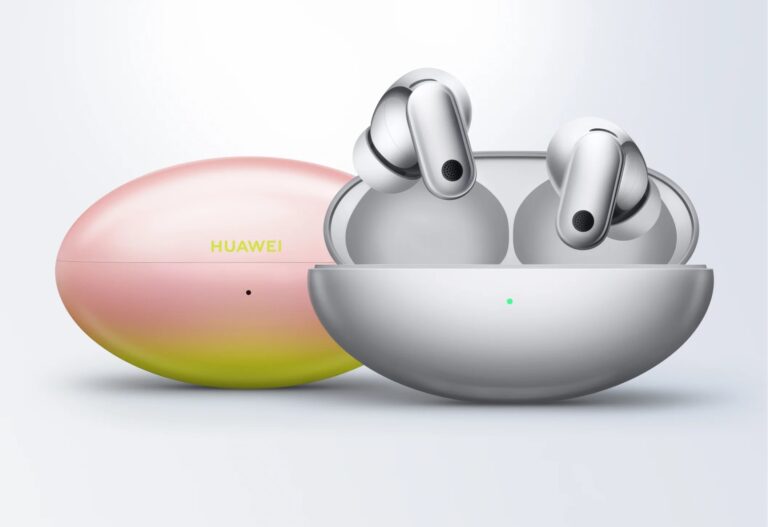
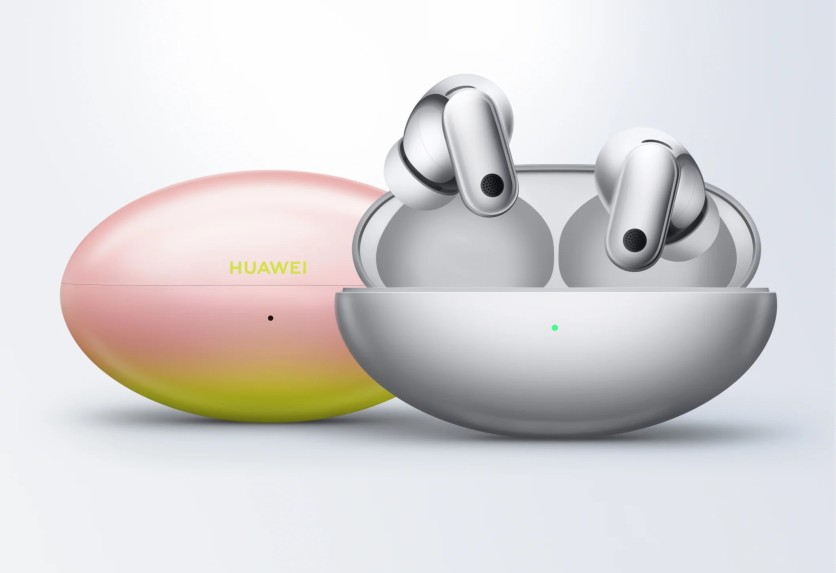
The FreeBuds Neo introduces a “Star UFO” charging case and shortened stems — closer in silhouette to Apple’s AirPods 4 than to HUAWEI’s earlier long-stem designs. Each earbud weighs 4.8 grams, and the earbuds carry an IP55 rating (earbuds only) — the case does not. Four colorways are available: Stellar Silver, Nebula Pink, Ice White, and Starry Black.
Connectivity runs on Bluetooth 6.0 per specifications, the newest version of the specification, which adds Channel Sounding for precision device ranging (useful for locating misplaced earbuds) and ISOAL enhancements that reduce audio latency versus Bluetooth 5.x. Dual-device pairing lets users stay connected to two source devices simultaneously.
The FreeBuds Neo sits in a growing segment of SEA mid-range TWS earbuds. At launch, comparable models in Thailand’s market include Samsung’s Galaxy Buds FE (roughly ฿2,990/~$89) and Sony’s WF-C510 (roughly ฿2,990/~$89) — both with ANC, both at similar price points.
How Does the ANC Hold Up in Real Use?
Huawei specifies 55 dB peak ANC performance and 30 dB average, measured under the IEC 60268-24:2023 standard. That standard — “Active Noise-Cancelling Characteristics of Headphones and Earphones,” published in 2023 by the International Electrotechnical Commission — uses reference tonal noise sources in a controlled acoustic chamber, as described in the IEC noise measurement standard. It is a laboratory measurement. It does not represent broadband real-world performance, which is lower at most frequencies.
The FreeBuds Neo uses a dual-path coordinated noise cancellation architecture: a feedforward microphone on the exterior of each earbud captures ambient noise before it reaches the ear canal; a feedback microphone inside the canal monitors residual noise after initial cancellation. Huawei’s audio processor specifications describe a third-generation audio AI chip that processes both paths simultaneously at approximately 400,000 samples per second with roughly 8 microseconds (µs) of processing latency. In practice, Notebookcheck found ANC effective at reducing constant background noise — commuter train rumble, open-plan office hum — but did not independently measure the dB figure.
One documented limitation: transparency mode, which lets ambient sound through so users can hear conversations without removing the earbuds, produces a “fairly noticeable background hiss” in quiet environments. That hiss does not affect ANC performance but makes transparency mode less useful in library or home-office settings where ambient noise is already low.
Huawei’s microphone specifications describe a bone conduction microphone (called a Vibration Pickup Unit, or VPU) that works alongside three external microphones for call clarity. By sensing vocal cord vibrations through the skull rather than capturing airborne sound, the VPU can isolate the speaker’s voice from surrounding noise even when the earbuds are not in ANC mode.
What LDAC Actually Delivers (and What It Requires)
Huawei’s most prominent audio claim for the FreeBuds Neo is LDAC support up to 990 kbps. LDAC is a Sony-developed Bluetooth audio codec — licensed broadly and mandatory on Android 8.0 and later — that transmits audio at resolutions up to 48kHz/24-bit. That resolution matches hi-res audio files. What it does not mean is lossless: CD audio (16-bit/44.1kHz PCM) requires approximately 1,411 kbps; LDAC’s maximum of 990 kbps means compression is still applied, even in its highest mode, as SoundGuys’ LDAC codec guide explains.
LDAC operates in three modes: 330 kbps (standard), 660 kbps (approximately CD quality), and 990 kbps (hi-res). The default setting on Android is “Best Effort,” which selects the highest stable mode based on connection strength. To force 990 kbps, Android users must manually activate it through Developer Settings. At shorter distances and strong Bluetooth signal, 990 kbps delivers noticeably richer audio than AAC; at longer distances or through walls, the codec downgrades to 330 kbps — which falls below the quality of aptX in SoundGuys’ independent LDAC measurements.
For buyers with a HUAWEI smartphone running HarmonyOS, L2HC 4.0 is available instead: a proprietary Huawei codec operating at up to 2.3 Mbps at 48kHz/24-bit. That bandwidth exceeds LDAC’s maximum by more than double. For everyone else — including all iPhone users and Android users on non-Huawei devices — L2HC 4.0 is not accessible. The full 2.3 Mbps pipeline is exclusive to the Huawei ecosystem.
Where Huawei’s Battery Spec and Real-World Use Diverge
Huawei’s official battery specifications are: up to 10 hours with ANC off; up to 6.5 hours with ANC on; up to 40 hours total including the charging case. These figures come from lab tests using AAC codec at 50% volume.
Independent reviewers at Notebookcheck measured real-world battery life at approximately 4.5 hours when ANC and LDAC were both active at listening volume, as documented in Notebookcheck’s real-world battery measurement. The gap — 4.5 hours measured versus 6.5 hours claimed — is explained by how the two systems interact. The dual-path ANC processor runs continuously at ~400,000 samples per second. The LDAC codec decoder also draws dedicated DSP power. When both operate simultaneously, the combined power demand is substantially higher than either feature alone, and it is higher than the AAC-at-50% baseline Huawei used in its testing. Users who choose the FreeBuds Neo specifically for LDAC hi-res audio and ANC together — the premium use case the earbuds are marketed for — will experience the shorter figure, not the headline spec.
Huawei’s 40-hour total (case included) figure remains accurate for standard use without both features enabled simultaneously.
What Does the Companion App Collect?
Full FreeBuds Neo functionality — ANC mode switching, spatial audio with head tracking, dual-device pairing management, software equalizer, and the “find my earbuds” feature — requires the HUAWEI Audio Connect app. The earbuds will play audio without the app; the app is required only for the above functions.
An analysis by Exodus Privacy’s app tracker report — an independent Android app-privacy research project — found that the app contains the HMS Core (Huawei Mobile Services) SDK, categorized as carrying analytics, advertisement, and location tracking capabilities. Exodus Privacy tracker analysis documents requested permissions including: precise and approximate location, microphone (record audio), camera access, full internet access, Bluetooth pairing and scanning controls, read/modify shared storage, and the ability to start at device boot.
The Mozilla Foundation’s “Privacy Not Included” review of the Huawei FreeBuds Pro companion app — the predecessor to HUAWEI Audio Connect — rated the product “*Privacy Not Included.” Mozilla found that Huawei collects personal data including name, email, mobile number, shipping address, and location, and shares it with business partners who use it to predict user interests and serve targeted advertising. Mozilla’s recommendation: use the earbuds without connecting the companion app, at the cost of losing the advanced features listed above.
Using the earbuds without the app provides basic Bluetooth audio playback — with ANC active at the last set level — but removes access to spatial audio, ANC mode selection, equalizer customization, dual-device pairing management, and earbud location tracking.
China’s Data Laws: A Fixed Condition, Not a Policy Position
Three Chinese laws collectively define the legal conditions under which Huawei operates, regardless of the physical location of its servers or the terms of its privacy policy:
China’s National Intelligence Law (2017), Article 7: “All organizations and citizens shall support, assist and cooperate with the state intelligence work in accordance with the law.” Article 14 grants intelligence agencies authority to demand that support. This is a statutory obligation — not a policy choice Huawei can opt out of.
China’s Data Security Law (2021): Requires all data processors handling “important data” to conduct security assessments and Data Security Law 2021 grants authorities access to data for national security purposes.
China’s Cybersecurity Law (2017): Requires network operators to store user data within China and to provide authorities with technical assistance for national security investigations. (English full text not independently verifiable at time of publication; statutory reference only.)
Huawei has published legal analysis — through the Zhong Lun law firm — arguing that overseas-incorporated subsidiaries are not subject to the National Intelligence Law. Independent legal analysts, including researchers at the Australian Strategic Policy Institute, have assessed the law’s text as ambiguous and note that the question cannot be definitively resolved without a judicial test case. (ASPI Strategist source not accessible for independent URL verification at time of publication.) That ambiguity does not mean the obligation is suspended; it means the scope remains legally contested.
The US Federal Communications Commission has formally designated Huawei as national security threat and affirmed that designation after Huawei’s appeal. That designation applies to Huawei’s network infrastructure equipment, not to its consumer audio products, and is not binding in Thailand or other non-US markets.
No independent security audit of the FreeBuds Neo hardware has been published. There is no confirmed evidence of backdoor access or active surveillance functionality in the device. The legal framework above is a structural condition of the company’s operating jurisdiction — not a confirmed technical capability.
Practical mitigations for buyers who proceed:
Use the earbuds without connecting the HUAWEI Audio Connect app to limit data collection to Bluetooth device pairing
Deny location permissions to the app if installed
Connect the companion app on a separate network segment from home or work devices
Understand that spatial audio, ANC mode switching, and the find-my-earbuds feature are unavailable without the app
Huawei FreeBuds Neo Specifications at a Glance
Specification
Detail
Weight (per earbud)
4.8 g
IP Rating
IP55 (earbuds only; case unrated)
Driver
Turbo driver, 10 Hz – 48 kHz
ANC
55 dB peak / 30 dB avg (IEC 60268-24); dual-path coordinated
Battery (earbuds, ANC off)
Up to 10 h (AAC, 50% volume, lab conditions)
Battery (earbuds, ANC on)
Up to 6.5 h (AAC, 50% volume, lab) / ~4.5 h real-world (ANC+LDAC, independent test)
Battery (total with case)
Up to 40 h
Codecs (non-Huawei device)
LDAC 990 kbps, AAC, SBC
Codecs (Huawei device)
L2HC 4.0 at 2.3 Mbps, plus above
Bluetooth
6.0, multipoint (2 devices)
Microphones
3 external + 1 bone conduction (VPU)
Colors
Stellar Silver, Nebula Pink, Ice White, Starry Black
When and Where to Buy in Thailand
The HUAWEI FreeBuds Neo will go on pre-sale in Thailand on November 7, 2026, exclusively through TikTok Shop Thailand. General availability at other retailers is scheduled to begin November 10. The price at launch is 2,999 THB (approximately $89 USD at current exchange rates).
For context, the earbuds are already available in other markets: EUR 129 (approximately $144 USD) in European markets, RM 499 (approximately $122 USD) in Malaysia, HK$798 (approximately $102 USD) in Hong Kong, CNY 699 (approximately $105 USD) in China. The Thailand price of ~$89 USD is the lowest among confirmed regional launch prices.
Exchange rate conversions throughout this article are approximate and based on rates as of November 2, 2026.
Frequently Asked Questions
Does enabling LDAC and ANC at the same time significantly reduce battery life?
Yes, and by more than Huawei’s specification table suggests. Huawei’s advertised “up to 6.5 hours with ANC” figure was measured using AAC codec at 50% volume under lab conditions. When LDAC and ANC run simultaneously at real listening volume, the combined DSP load shortens battery life to approximately 4.5 hours, according to Notebookcheck’s real-world battery test. Buyers who plan to use both features together — the primary use case for choosing LDAC earbuds with ANC — should plan their day around the shorter figure.
Is LDAC on the FreeBuds Neo actually lossless audio?
No. LDAC at its maximum setting of 990 kbps transmits 48kHz/24-bit audio, which matches the resolution of hi-res audio files, but it is not lossless, as SoundGuys’ LDAC codec guide explains. CD audio (16-bit/44.1kHz PCM) requires approximately 1,411 kbps uncompressed; LDAC’s 990 kbps maximum means compression is applied even in hi-res mode. Additionally, Android devices default to an adaptive mode that may drop to 660 or 330 kbps based on connection strength; manually forcing 990 kbps requires activating Developer Settings. HUAWEI device owners have access to L2HC 4.0 at 2.3 Mbps, which offers substantially higher bandwidth — but that codec is not available on iPhones or non-Huawei Android phones.
What data does the HUAWEI Audio Connect app collect, and what Chinese law applies to it?
The HUAWEI Audio Connect app requests permissions including precise location, microphone, and camera access, and contains HMS Core, an analytics and location SDK, per Exodus Privacy’s tracker report. The Mozilla Foundation rated the predecessor Huawei FreeBuds companion app “Privacy Not Included” and found data is shared with business partners for interest prediction. At the legal level, China’s National Intelligence Law (2017) Article 7 obligates all Chinese organizations to support, assist, and cooperate with national intelligence work; the Data Security Law obligations (2021) and Cybersecurity Law (2017) impose additional data-access requirements. These are statutory obligations, not contested policy choices. Users who want to limit exposure can use the earbuds without the app for basic playback, at the cost of losing spatial audio, ANC mode switching, and earbud location tracking.
Does the FreeBuds Neo work with iPhone and non-Android devices?
Yes, for basic functionality. The earbuds connect to iOS devices via standard Bluetooth and deliver AAC audio — the codec Apple devices support. ANC works at the last set level. The HUAWEI Audio Connect app is available on iOS through the App Store. The premium audio features (LDAC, L2HC 4.0) do not apply to iPhone, which does not support LDAC. iPhone users receive AAC audio quality, which is comparable to the standard wireless listening experience — not the hi-res audio path the earbuds are marketed for, per Huawei’s FreeBuds Neo specs.
The HUAWEI FreeBuds Neo is a technically capable mid-range TWS earbud with genuine ANC performance, LDAC support, and strong battery life for typical ANC-only use. The real-world battery gap when running ANC and LDAC together, the transparency mode hiss in quiet environments, and the high-frequency limitations at the upper end of the frequency range are documented engineering trade-offs, not defects. The China data law framework is a fixed legal condition of buying a device from a company operating under Chinese law — not a speculative risk. Buyers who understand both the technical trade-offs and the legal conditions of the ecosystem are equipped to make an informed purchase decision. The November 7 pre-sale on TikTok Shop Thailand and November 10 general availability are the upcoming decision windows.