November 2, 2026:


The only Indian audio company to manufacture entirely on domestic soil has opened a second, larger factory — this one built from the ground up to put circuit-board designers in the same building as the assembly line, a structural choice that separates Mivi from every other consumer-electronics brand competing in India’s crowded budget market. Hyderabad-based Mivi, founded in 2015 with ₹3.5 crore (approximately $368,700 USD) in personal savings and still majority self-funded, inaugurated its ₹200-crore (approximately $21.1 million USD) integrated research and manufacturing campus at E-City, Tukkuguda, Hyderabad on October 31, 2026.
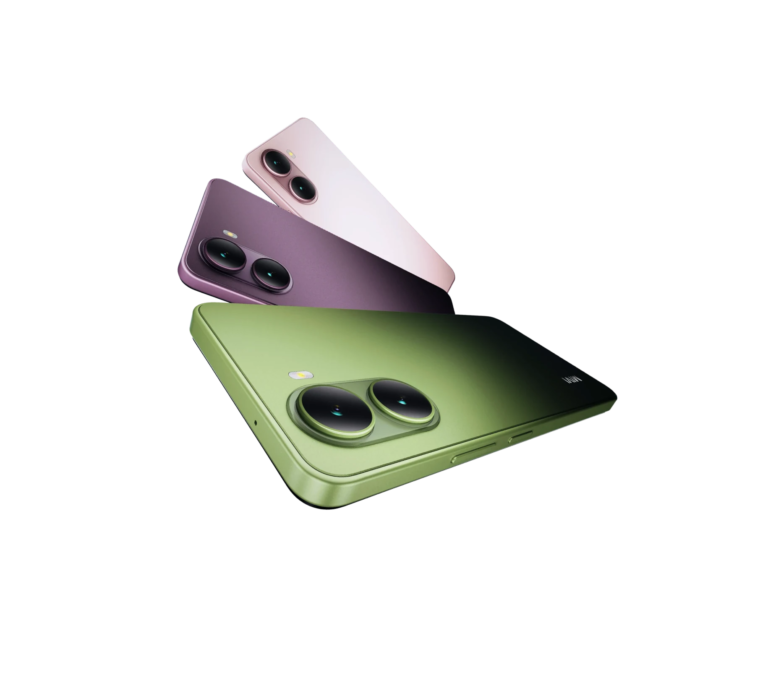
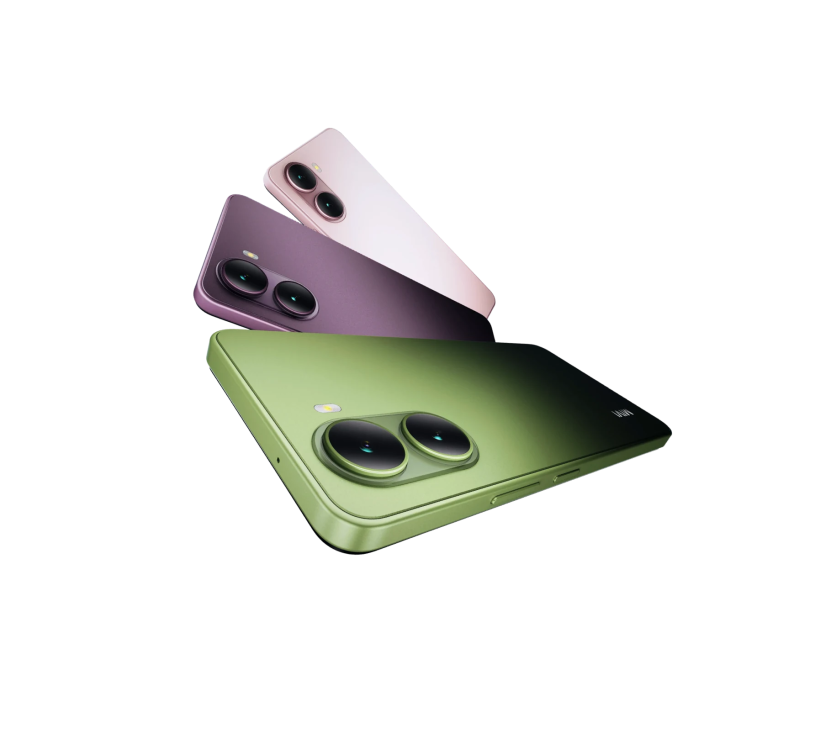
The facility, backed by the Telangana government’s Electronics City industrial corridor, is rated to 500,000 earbuds monthly at capacity and 75,000 soundbars every month at full capacity. It also serves as the birthplace of the Mivi One 5G — the company’s first smartphone, launched in September 2026 and now on sale exclusively on Flipkart — whose printed circuit board assembly was designed in-house rather than sourced from a Taiwanese or Chinese original design manufacturer, as is standard for nearly every other Indian handset brand at this price point.
Minister Babu inaugurated the campus — Telangana IT and Industries Minister Duddilla Sridhar Babu — and cited NITI Aayog’s target of $500 billion in electronics manufacturing output by 2030 as the national context for the investment. “Telangana has the ecosystem to innovate and manufacture globally,” he said, “not just for India but for the world.”
Co-founders Viswanadh Kandula and Midhula Devabhaktuni launched Mivi in 2015 after Kandula returned from eight years in the United States, staked personal savings in 2015 — ₹3.5 crore (approximately $368,700 USD) — on the proposition that Indian consumers would pay for domestic-brand audio hardware if the product was good enough. The company’s first significant product was the ThunderBeats Bluetooth earphone in 2017; by 2020 it had opened its first manufacturing plant at Shamshabad Hardware Park, where more than 1,500 employees produce audio hardware — roughly 85 percent of them women.
The company has taken only one round of external capital — a debt facility from N+1 Capital in 2022 — and has not disclosed equity funding. By fiscal year 2025, it reported revenue exceeding ₹300 crore (approximately $31.6 million USD), against the backdrop of a market dominated by brands including boAt, Noise, Sony, JBL, and Bose. The target for fiscal year 2026 is ₹1,000 crore; Mivi targets ₹1,000 crore in FY26 (approximately $105.4 million USD).
Mivi’s Shamshabad plant produced the SuperPods Opera TWS earbuds, which earned Japan Audio Society Hi-Res Wireless Audio certification — a standard requiring Bluetooth audio playback at or above 48kHz/24-bit quality over codecs such as LDAC or aptX HD. Devabhaktuni said Mivi remains “the only Indian audio brand” to have earned that certification.
The Tukkuguda campus represents a structural departure from how Indian consumer-electronics manufacturing typically works. Most Indian brands that assemble domestically — under the government’s Make in India and Aatmanirbhar Bharat policy frameworks — do so using printed circuit board assemblies designed overseas by original design manufacturers (ODMs) in Taiwan or China, then imported as semi-finished boards for local final assembly. The design work and the production line are separated by weeks of shipping time and international vendor coordination.
At Tukkuguda, Mivi has built its PCBA design team into the same physical campus as its production floor. The engineering implication is a compressed hardware feedback loop: when a design revision is needed — a component swap forced by a supply constraint, a trace reroute uncovered in quality control — Mivi’s engineers can prototype a revised board, run it through the line, and have test units in QA the same day. In a standard separated-design model, that same iteration cycle requires ordering revised samples overseas, waiting for international freight, and scheduling time on a contract manufacturer’s line. The difference is days versus weeks per iteration.
This is what Kandula described as building “a global consumer technology company from India” — the specific capability that makes the claim more than marketing language. With PCBA design in-house, Mivi controls specification changes in a way that Indian hardware companies relying on ODM designs cannot. The Mivi One 5G is the first product built on that model. “The Mivi One is not just our first smartphone,” Kandula said; “it is the first expression of our ambition to build a global consumer technology company from India.”
The Tukkuguda facility will add approximately 2,500 jobs at Tukkuguda campus directly and indirectly, Mivi said, bringing total employment across both campuses above 4,000.
The Mivi One 5G is powered by Qualcomm’s Snapdragon 4 Gen 2, a chip whose design decisions reveal precisely why a 5G smartphone can now cost under ₹13,000 (approximately $137 USD) — and what gets traded away to get there.
The Snapdragon 4 Gen 2 is manufactured on Samsung’s 4nm process (Samsung 4LPE, distinct from TSMC’s 4nm used in higher-end Snapdragon tiers). Its CPU configuration pairs two Cortex-A78 performance cores running at 2.2 GHz with six Cortex-A55 efficiency cores at 2.0 GHz. The performance cores are ARM’s A78 design — capable, but not the Cortex-X class that appears in Snapdragon 7- and 8-series parts — which means single-core tasks plateau below what buyers of ₹20,000+ ($211+) phones experience.
The 5G modem is Qualcomm’s X61, supporting Sub-6GHz standalone and non-standalone connections with X61 modem throughput 2.5 Gbit/s download and 900 Mbit/s upload. That capability covers all three major Indian mid-band 5G spectrum allocations — n41, n77, and n78 — meaning the Mivi One 5G will connect to 5G infrastructure rolled out by Jio and Airtel without carrier-side restrictions.
The GPU is an Adreno 613, which is a step down from the Adreno 619 in the previous-generation Snapdragon 4 Gen 1 — a counterintuitive regression that reflects Qualcomm’s pricing architecture: the 4nm process budget goes toward 5G modem efficiency, not graphics throughput. Benchmark scores on AnTuTu v10 scores around 428,748 for reference devices on this chip, roughly on par with 2021-class Snapdragon 695 performance and approximately 29 percent behind the Snapdragon 6 Gen 1 found in phones priced ₹5,000–₹8,000 higher. Buyers who prioritize mobile gaming will find the Adreno 613 adequate for casual titles but a constraint on demanding 3D games.
Mivi’s design team paired the chip with a 6.75-inch IPS LCD panel running at 120Hz with HD+ (1600×720) resolution, a 6,000mAh battery with 18W charging, a 50MP Samsung ISOCELL rear sensor (f/1.8, PDAF), an 8MP front camera, and Android 16 with no manufacturer overlay. The phone ships with a charger in the box. Storage options are 128GB (UFS 2.2) across three RAM tiers: 4GB, 6GB, and 8GB of LPDDR4x memory.
The Mivi One 5G was launched September 24 via Flipkart, going on sale October 8, 2026, exclusively through Flipkart. Pricing is ₹12,999 (approximately $137 USD) for the 4GB+128GB variant, ₹14,999 (approximately $158 USD) for 6GB+128GB, and ₹16,499 (approximately $174 USD) for 8GB+128GB.
At those prices, Mivi One 5G enters the densest and most competitive segment of the Indian smartphone market. India’s 5G penetration reached 88 percent of total smartphone shipments in calendar year 2025, according to CMR India, and sub-₹15,000 ($158) 5G has become the default purchase tier for first-time 5G upgraders. Direct competitors at comparable price points include the Redmi 14 5G, Samsung Galaxy A16 5G, Vivo T3x 5G, OPPO A3x 5G, and CMF Phone 2 — all from brands with significantly larger marketing budgets, established service networks, and multi-year smartphone track records.
Mivi’s differentiation argument is brand provenance (bootstrapped, India-founded, India-manufactured, no Chinese ownership), PCBA design depth, and a software experience — stock Android 16 with no bloatware — that several competitors at the same price point do not offer. Whether that is sufficient to take meaningful share from Vivo (19 percent Indian market share, CY2025), Samsung (16 percent), OPPO (13 percent), and Xiaomi (13 percent), according to CMR India, is a question the sales data from Flipkart’s Big Billion Days will start to answer in the coming months.
The company launched the phone “in partnership with Qualcomm, Flipkart, and Google,” with Flipkart citing the device’s manufacturing origin as a selling point for consumers seeking Indian-origin alternatives.
Mivi’s Tukkuguda campus sits inside Telangana’s E-City (Electronics City) development zone, a state-designated industrial cluster that anchors part of the Telangana Rising-2047 economic strategy. Minister Sridhar Babu has been the government’s primary face at multiple major technology facility openings in the state in 2026, including the expansion of Medtronic’s Engineering Innovation Center and the inauguration of the TechWaves AI Hub.
The ₹200-crore ($21.1 million USD) Tukkuguda investment is modest against the NITI Aayog’s $500 billion electronics manufacturing target for 2030, but it represents a structurally different kind of company than the foreign assembly operations that dominate India’s electronics output statistics. Mivi designs and manufactures domestically without a foreign ODM partner for its flagship products — a model the government’s Production Linked Incentive (PLI) scheme for electronics is designed to encourage but which few Indian companies have achieved at commercial scale.
Mivi has also applied to the Telangana government for an additional 100 acres of land adjacent to the Tukkuguda facility, with no public approval announced as of this writing. That expansion, if approved, would be aimed at further capacity scaling as the company pursues its ₹1,000 crore ($105.4 million USD) FY26 revenue target.
Currency conversions throughout this article use an exchange rate of approximately 94.93 INR per USD as of October 30, 2026, and are approximate.
No. Mivi is owned and operated by Avishakaran Industries Pvt Ltd, incorporated in Hyderabad, India, and co-founded by Viswanadh Kandula and Midhula Devabhaktuni. The company has not disclosed any foreign equity investment and has taken only a domestic debt facility (N+1 Capital, 2022) as external capital. Its two manufacturing facilities — at Shamshabad Hardware Park and the new Tukkuguda E-City campus — are both in Hyderabad.
GPU performance. The Snapdragon 4 Gen 2 uses an Adreno 613 graphics processor, which benchmarks roughly 29 percent behind the Snapdragon 6 Gen 1 found in phones priced ₹5,000–₹8,000 (approximately $53–$84 USD) higher. The chip’s resources were directed toward enabling 5G connectivity at a low price point, not graphics throughput. The Mivi One 5G handles casual gaming adequately but will struggle with demanding 3D titles. Wi-Fi is also limited to 802.11ac (Wi-Fi 5) rather than the Wi-Fi 6 offered by some competing chipsets at similar price points.
The Mivi One 5G’s printed circuit board assembly was designed in-house at Mivi’s Hyderabad facility — not outsourced to a Taiwanese or Chinese design house, as is typical for Indian brands at this price point. The phone is physically assembled in India. However, like all smartphones at this tier, individual components — the display panel, the Qualcomm chip, memory — are manufactured internationally and imported. “Made in India” in this context means domestic design, domestic assembly, and domestic employment, not domestic component fabrication across the full supply chain.
Vertically integrated domestic PCBA design, if proven at commercial scale, could eventually allow Mivi to offer contract manufacturing or design services to other Indian electronics brands — reducing their own dependence on international ODMs. That would accelerate the broader capability India needs to reach its $500 billion electronics manufacturing target. Mivi has not announced contract-manufacturing plans, but the Tukkuguda campus’s R&D infrastructure is larger than its current product portfolio requires, which leaves that option open.