November 2, 2026:
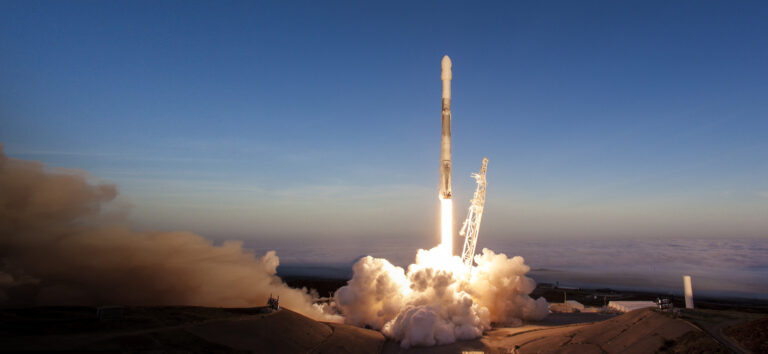
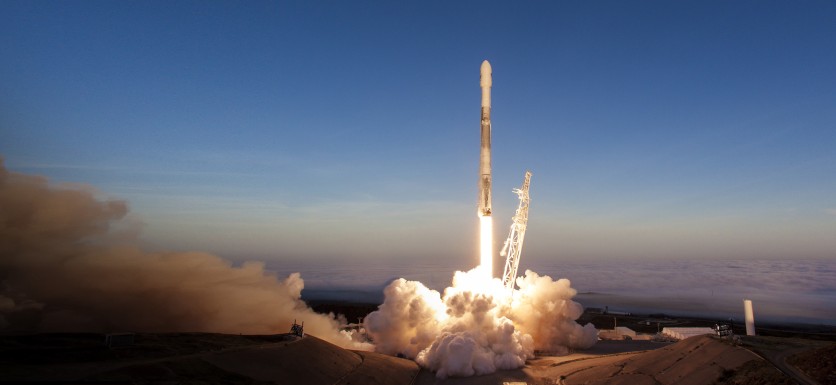
SpaceX is targeting 1:42 a.m. UTC Tuesday, Nov. 3 — 8:42 p.m. ET Monday night — to launch USSF-432 on Falcon 9, the sixth in an accelerating series of classified Space Force missions from Vandenberg Space Force Base, each one adding nodes to a nascent constellation designed to detect and track aircraft, cruise missiles, and drones from low Earth orbit without relying on airborne radar planes. The launch window extends four hours, to 5:25 a.m. UTC, and NASASpaceFlight forum trackers confirmed a “Go For Launch” status as of Sunday.
The mission, flying on a reused Falcon 9 booster from SLC-4E at Vandenberg, continues one of the most compressed launch campaigns in modern military space history. Six missions in roughly four months represents a pace more associated with commercial broadband deployment than with classified national security payloads, and it points to a strategic bet that a proliferated constellation of small sensing satellites can match — and ultimately exceed — what Cold War-era airborne radar platforms delivered.
Since mid-August, the Space Force’s Space Based Sensing and Targeting (SBST) program has launched USSF-366 in mid-August 2026, USSF-153 in early September, USSF-259 and USSF-385 in mid-to-late September, USSF-481 on Oct. 15, and now USSF-432. Each mission adds Starshield-bus satellites carrying government-furnished radar sensors into low Earth orbit, extending what open-source orbital trackers have cataloged as roughly 239 Starshield-class objects on orbit as of early October.
The program’s pace became possible after Space Systems Command (SSC) awarded a $4.16 billion OTA to SpaceX for Space-Based Airborne Moving Target Indication (SB-AMTI) in May 2026 — one of the largest single OTA awards in Pentagon history. “This agreement accelerates our ability to field persistent, global airborne moving target indication capability,” Col. Ryan Frazier, the acting SBST portfolio acquisition executive at SSC, said at the time. In July, SpaceX received an additional $1.6 billion in task orders under the NSSL Phase 3 Lane 1 contract, covering 18 Falcon 9 national security launches.
The technology underlying the SBST constellation — Space-Based Airborne Moving Target Indicator, or SB-AMTI — is less intuitive than it sounds. It does not take pictures. It uses Doppler radar.
When a radar pulse strikes a moving object, the reflected echo returns at a slightly different frequency than the transmitted pulse — shifted by an amount proportional to the target’s velocity toward or away from the radar. This is the same Doppler effect that makes a passing ambulance siren seem to pitch down as it drives by. For an airborne radar like the E-3 Sentry (AWACS), this principle allowed the plane’s rotating radar dish to distinguish jets and cruise missiles from the stationary ground beneath them, because ground clutter stays at a fixed apparent frequency while airborne targets show a measurable Doppler shift. That is AMTI — Airborne Moving Target Indicator — and it is what the E-3 Sentry has been doing since the 1970s.
The SBST constellation does the same thing from orbit. Each Starshield-bus satellite carries a government-furnished radar payload that illuminates the Earth below and processes the Doppler-shifted returns from any moving airborne object — aircraft, drones, cruise missiles — against the background of stationary ground clutter. The technical wrinkle is that the satellite itself is moving at roughly 17,400 mph, which means the signal processing (“space-time adaptive processing,” or STAP) must account for the satellite’s own velocity to extract the target’s movement from the returns.
Why this requires a large constellation: A single Starshield satellite at roughly 500 km (310 miles) altitude has a finite radar swath — useful illumination geometry covers perhaps 500 to 1,000 km (310 to 620 miles) of ground at a time. A single satellite passes any given point on Earth roughly once every 90 minutes. For true persistent global coverage — the kind that could warn of a cruise missile launch anywhere on Earth within seconds — the constellation needs enough satellites in overlapping ground tracks to eliminate those 90-minute gaps. Industry modeling suggests on the order of 150 to 300+ satellites at this altitude may be needed for continuous global AMTI coverage. The approximately 239 objects currently cataloged in open-source trackers suggest the constellation is still in an early, potentially periodic-coverage phase.
The Starshield bus that carries the SBST radar payloads shares a lineage with SpaceX’s Starlink satellites — the same flat-panel form factor, the same krypton ion thrusters for orbit maintenance — but adds capabilities Starlink lacks. Starshield satellites feature inter-satellite laser links (ISLs) that can relay classified data from one satellite to another across a chain without touching a ground station, allowing sensors over denied airspace to pass targeting-quality information back to users without relying on a ground terminal inside the adversary’s range. The bus also features an encrypted payload interface: SpaceX engineers build and fly the satellite without accessing the sensor data, which passes through a classified hardware boundary controlled by the government customer.
The avionics are hardened against the kind of electromagnetic disturbances — including nuclear electromagnetic pulse — that can disable commercial electronics, a requirement the Pentagon took seriously after assessments of Cold War-era exquisite satellite survivability.
The E-3 Sentry, the airborne radar platform the Air Force has sought to retire, required a crew of 17 to 19, flew at 35,000 feet (10,668 meters), and had a useful endurance of roughly eight hours on station before needing to refuel or return to base. Congress blocked further E-3 retirements through fiscal year 2027 while the SBST replacement capability matures. It could surveil one region at a time. The E-8 Joint STARS, which tracked ground vehicles, was retired entirely in 2019. Together these platforms represented the Cold War approach to air-domain awareness: a small number of expensive, crewed aircraft that could be in one place at a time.
The SBST constellation’s premise is that a proliferated network of uncrewed orbital sensors — each one cheaper than a single flight hour of an AWACS crew — can provide coverage that is simultaneously broader in geographic scope and more survivable. An adversary wishing to blind the SBST mesh would need to target hundreds of satellites simultaneously, a task that strains even the most capable anti-satellite weapons; an adversary wishing to destroy an E-3 Sentry needs only shoot down one aircraft.
Space Delta 7, the USSF unit responsible for intelligence, surveillance, and reconnaissance from orbit, activated the 77th Surveillance Squadron at Grand Forks Air Force Base, North Dakota, on July 31, 2026, to begin building the operational workforce that will ultimately task, receive, and exploit data from the growing constellation.
The Golden Dome missile defense initiative, which President Trump directed in early 2025, calls for a layered system capable of defeating ballistic missiles, hypersonic glide vehicles, and cruise missiles in all phases of flight. SB-AMTI addresses one part of the cruise-missile tracking problem — detecting and tracking low-flying airborne threats before they reach their targets — making it a natural architectural complement to any Golden Dome intercept layer. Space Force officials have not officially confirmed SBST’s role within Golden Dome in public statements, citing classification, but the temporal alignment between the Golden Dome directive and the SBST OTA (awarded roughly two months after the directive) is consistent with an architectural link.
NATO’s DIANA accelerator listed “Resilient Space Operations” as a 2026 priority challenge, reflecting allied recognition that proliferated LEO sensing is now a key domain of defense technology development.
The congressional oversight landscape around the program’s procurement approach — specifically the OTA mechanism, which can bypass some competitive bidding requirements of the Federal Acquisition Regulation — has drawn scrutiny from members of the House Armed Services Committee, who have requested briefings from SSC on the SBST acquisition strategy.
SpaceX will not broadcast the USSF-432 launch. As with all SBST missions, there will be no public webcast; the launch will be trackable only through FlightAware, observer networks, and post-launch confirmation on SpaceX and Space Force social channels. Vandenberg residents in Santa Barbara and San Luis Obispo counties may see the Falcon 9’s first stage reenter and land at Landing Zone 4 following booster separation, weather permitting.
If the primary window is unavailable, the backup window opens Nov. 3 at 1:42 a.m. UTC (the following night), per NASASpaceFlight trackers.
USSF-432 is the sixth mission in the Space Force’s Space Based Sensing and Targeting (SBST) program, carrying classified radar sensor payloads into low Earth orbit aboard the Starshield satellite bus SpaceX builds for government customers. The mission is classified because the radar sensor specifications, the satellites’ exact orbital parameters, and the targeting capabilities they provide are sensitive national security information. What is publicly known — from unclassified SSC SB-AMTI announcements — is that the payload serves the Space-Based Airborne Moving Target Indicator (SB-AMTI) function: detecting and tracking aircraft, drones, and cruise missiles from space.
This is the key architectural question the program is working to answer through deployment. Based on orbital geometry: a single satellite at roughly 500 km (310 miles) altitude can cover a radar swath of perhaps 500 to 1,000 km (310 to 620 miles) and revisits any ground point roughly every 90 minutes. For persistent global coverage with no gaps, the constellation would need enough satellites with overlapping ground tracks to cover the entire surface continuously — generally estimated at 150 to 300 or more satellites at this altitude, depending on radar aperture and minimum useful elevation angles. Open-source trackers cataloged approximately 239 Starshield-class objects in orbit as of early October, suggesting the current constellation may provide periodic rather than continuous global coverage.
Directionally, yes — SB-AMTI is designed to take over the airborne-threat detection mission that the E-3 Sentry has performed for decades, detecting moving aircraft and distinguishing them from ground returns using Doppler processing. The E-3 Sentry can loiter over one theater at a time with a crew of 17 to 19 for roughly eight hours; the SBST constellation, once mature, would provide continuous global coverage without any crew or fuel requirements. The Air Force has sought to retire E-3 Sentry aircraft alongside the SBST program’s growth, though Congress blocked further retirements through fiscal year 2027 while the SBST replacement capability matures. The E-8 Joint STARS, which tracked ground vehicles (not airborne targets), was already retired in 2019 — the ground-vehicle mission falls under a separate SB-GMTI (Ground Moving Target Indicator) capability track.
Starshield is SpaceX’s government-focused satellite product, using the same flat-panel bus as Starlink but with additions for classified military use: inter-satellite laser links for routing data across a satellite network without ground stations, an encrypted payload interface that lets government sensors be integrated without SpaceX engineers accessing the sensor data, and hardened avionics for classified use designed to survive electromagnetic disruptions that would disable standard commercial electronics. SpaceX created a separate subsidiary, Starshield LLC, to manage government contracts independently from the commercial Starlink business.