Black Lake Gameplay Teaser Drops Halloween: Phone Detects What Eyes Can’t See

November 1, 2026:

Black Lake Gameplay Teaser Drops Halloween: Phone Detects What Eyes Can’t See
Black. Lake
Blacklakegame.com

On Halloween 2026, Polydin Studio released the first official gameplay teaser for Black Lake, a first-person cosmic horror game set inside a ruined orphanage adrift on an endless black ocean — and the footage makes a confident case that this is one of the most technically ambitious indie horror games currently in development. The Tehran-based studio built the game on Unreal Engine 5 with backing from Epic’s MegaGrants program, placing a small independent team on the same technical foundation as major AAA productions. The result, visible even in a brief teaser, is a game that looks and feels several tiers above what independent horror has typically been able to achieve.

Black Lake is a story-driven, single-player survival horror game targeting PC via Steam in Winter 2027, with PS5, Xbox Series X|S, and Nintendo Switch 2 versions arriving in mid-2027. Players take on the role of Elena, a woman who returns to the orphanage where she grew up after receiving a message from her missing twin sister, Rita. The orphanage should be empty. It isn’t. The bells are ringing again, something is moving through the walls, and Elena begins to uncover the remains of a forbidden ritual connected to children who vanished from the building years ago — some of whom, the game suggests, may still be inside, though not in any form she remembers.

The gameplay teaser dropped on Halloween specifically — a timing choice that signals Polydin’s awareness that the horror market rewards spectacle-on-occasion. The studio announced Black Lake in July 2026 with a pre-alpha reveal, meaning certain visuals, animations, and audio remain in development. The Halloween teaser represents a step forward: it is gameplay footage, not a cinematic, and it shows systems in action.

A Missing Sister and the Place That Should Have Been Empty

Elena’s search for Rita provides Black Lake with something the horror genre often neglects: a personal emotional core beneath the dread. This isn’t a protagonist investigating a haunted building out of curiosity or professional obligation. She came back because her sister asked her to, and everything she finds — the still-warm hallways, the impossible bells, the traces of a ritual no one was supposed to perform — becomes terrible precisely because of what it implies about what happened to someone she loves. The central dramatic question isn’t “what is this place” but “what did this place do to Rita?”

The game’s setting amplifies that feeling of inescapable commitment. The orphanage isn’t in a place Elena can walk away from: it sits stranded inside an endless black ocean, cut off from the rest of the world entirely. There is no rescue coming. There is no road out. That architectural choice — isolating the location on water rather than in a forest or a city — transforms the orphanage from a place to explore into a situation to survive.

Smartphone as Supernatural Radar: The Mechanic That Matters

The most distinctive design decision visible in the teaser is the use of Elena’s smartphone as the game’s primary supernatural detection instrument. The phone is not merely a flashlight. Through its screen, Elena can see threats invisible to the naked eye, uncover hidden clues embedded in the environment, and communicate with presences within the building. Keeping the battery alive is a survival priority because, as Polydin’s description puts it, sometimes the screen is the only warning she will receive.

This mechanic has genre precedent. Fatal Frame‘s Camera Obscura (2001) established the idea of a handheld device that sees what the human eye cannot — a tool that makes the player simultaneously more informed and more aware of what they cannot see without it. Alien: Isolation (2014) deployed a motion tracker mechanic similarly: a tool that creates tension by revealing the presence of a threat without showing its exact location. Polydin’s smartphone variant updates that tradition by tying it to a modern ubiquitous object, which grounds the supernatural in the familiar — and adds battery management as a resource economy layer that the earlier precedents lacked.

The revolver Elena carries operates differently from most horror games’ weapons. It cannot kill whatever is hunting her, but it can buy her a moment to run. That design decision places Black Lake firmly in the tradition of Clock Tower and Haunting Ground — games where combat is a stall, not a solution, and stealth and environmental awareness are the actual survival tools.

What Unreal Engine 5 and Epic MegaGrants Actually Mean for an Indie Horror Studio

The technical infrastructure behind Black Lake is worth understanding, because it explains how a small independent studio in Tehran can produce footage that competes visually with titles from established publishers.

Polydin Studio is an Epic MegaGrants recipient, confirmed on the official website. Epic’s MegaGrants program distributes funding — ranging from $5,000 to $500,000 — to Unreal Engine developers without taking equity or a revenue share. Receiving a grant is a signal that Epic’s own evaluators found the project technically credible and commercially viable. For an indie studio running on art outsourcing revenue to keep its game in development, that institutional backing changes what is achievable.

Unreal Engine 5 itself provides the specific capabilities that matter most for horror. Its Lumen system handles real-time dynamic global illumination — the technology that makes candlelight in a dark corridor feel like a physical presence rather than a flat texture. Its Nanite virtualized geometry allows environments to contain film-quality detail without the manual optimization work that previously consumed much of a small team’s development time. Both systems are visible in Black Lake‘s footage: the interplay between Elena’s candlelight and the shadows in the orphanage corridors is doing serious work.

Polydin also uses Wwise audio middleware by Audiokinetic — the same system deployed in The Witcher 3, Resident Evil Village, and Assassin’s Creed — to handle adaptive audio. In a horror game, audio is not background; it is the primary instrument of tension. A system that dynamically adjusts sound design based on player state changes what a close encounter sounds like depending on how far away the threat is, how aware it is of the player, and how much battery the phone has left.

The Steam minimum hardware requirement of an RTX 3050 (8 GB) confirms that Black Lake is built around real-time ray-traced lighting as a non-negotiable feature rather than an optional enhancement. A player who cannot meet that threshold will not experience the game as designed.

The Studio Behind the Game

Polydin Studio is an independent team based in Tehran, Iran, that spent years building its technical reputation as an outsourcing art studio for other developers’ projects before beginning work on its first original title. Co-founder Abtin Khaleghi has described the studio’s path plainly: three years of self-funding development alongside commercial art work, believing in a game they were building on the side. The initial announcement trailer garnered hundreds of thousands of views on IGN, a response the studio described as unexpected.

Polydin plans to expand Black Lake into an anthology of four chapters over time, each expanding the lore of the same universe while telling a distinct story.

The system requirements suggest the PC version targets mid-tier gaming hardware as its baseline — an RTX 3060 Ti or RTX 4060 for the recommended experience — which positions it within reach of the mainstream PC gaming market while still demanding the hardware capable of running Lumen properly.

What the Teaser Doesn’t Show

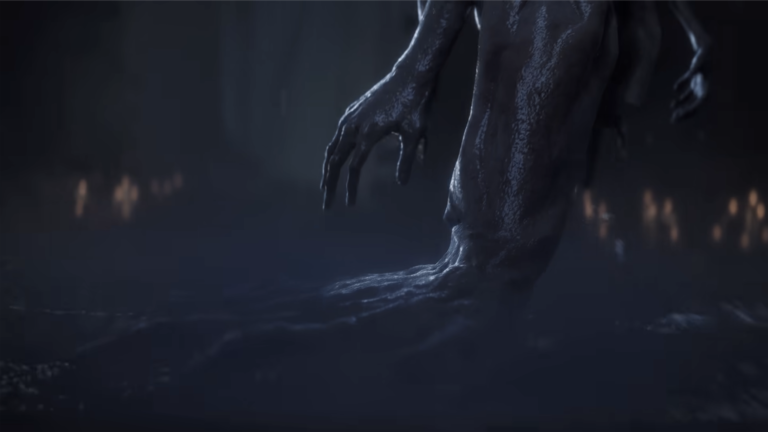
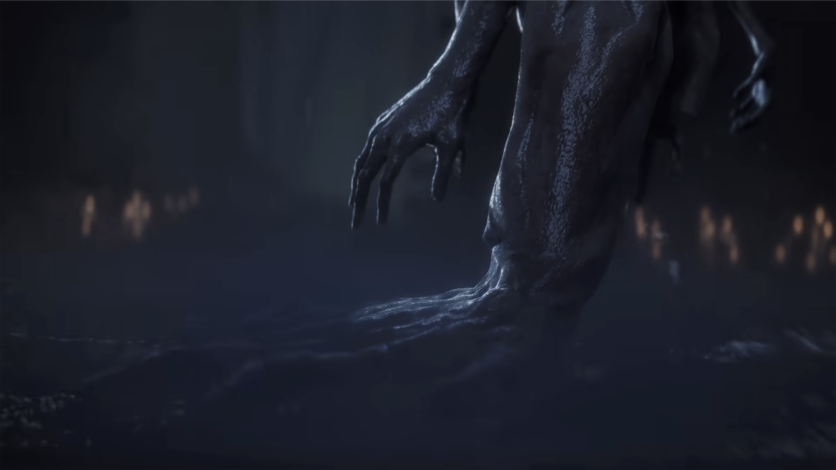
Polydin is playing the reveal carefully. The gameplay teaser establishes atmosphere, shows Elena navigating darkened corridors and using the phone mechanic, and hints at the threat — but it withholds what the children have become. That restraint is deliberate and appropriate. Horror built on what you cannot see holds tension in a way that an early creature reveal destroys. The studio has confirmed multiple endings governed by player choices, the secrets Elena uncovers, and who she chooses to trust. None of that is shown in the teaser, which means there is still substantial material to surface in future reveals.

The candle safehouse system — placing lit candles to create temporary recovery zones — adds a resource management layer to exploration. It’s a mechanic that creates map-level decisions about where to stage and where to risk going dark, which survival horror games have typically handled through item boxes and save points. Using candles that consume themselves introduces time pressure into the safety equation.

Platforms and Wishlist

Black Lake is in development for PC (Steam), PlayStation 5, Xbox Series X|S, and Nintendo Switch 2. The PC version is targeting Winter 2027; console versions are expected to follow in mid-2027. No price has been announced. The Steam page is live and accepting wishlists at store.steampowered.com/app/4928600.

Is This Horror Worth Watching?

The survival horror genre is in what game journalists have called a renaissance period, driven by the critical and commercial success of survival horror genre remakes and new entries from established franchises. That crowded field makes it harder for new independent entries to cut through — and easier, paradoxically, for a debut game with a distinctive technical execution and a specific emotional premise to stand out from the noise.

Black Lake has both. Its premise is personal rather than procedural. Its setting has a quality of inescapability that most horror locations don’t. Its mechanic — the phone that sees what the eye cannot — is a distinctive answer to the genre question of how to make darkness dangerous without making it opaque. And its technical foundation, courtesy of Unreal Engine 5 and an Epic MegaGrant, is credible enough that the footage it has already released is not a promise that might not be kept.

The Winter 2027 target gives the studio time to build on the foundation the teaser establishes. Horror fans who know what to look for in a pre-release reveal will find enough here to justify a wishlist add.


Frequently Asked Questions

What is Black Lake and when does it come out?

Black Lake is a first-person cosmic horror game from Polydin Studio set inside an abandoned orphanage stranded on an endless black ocean. Players control Elena as she searches for her missing twin sister and uncovers a forbidden ritual. The game is targeting a Winter 2027 release on PC via Steam, with PS5, Xbox Series X|S, and Nintendo Switch 2 versions expected in mid-2027. No specific release date or price has been announced yet.

What makes Black Lake different from other first-person horror games?

Two things stand out. First, Elena’s smartphone functions as a supernatural detection tool — revealing threats invisible to the naked eye through its screen, not just providing light — which means battery management becomes a survival mechanic alongside inventory and stealth. Second, the game is built on Unreal Engine 5 using Lumen global illumination, giving it dynamic lighting that responds to candles and darkness in a physically grounded way that sets it apart visually from most indie horror games. The revolver won’t kill what hunts Elena, reinforcing that this is a stealth-and-evasion game rather than an action game dressed as horror.

Who is Polydin Studio and what is Epic MegaGrants?

Polydin Studio is an independent game and art studio based in Tehran, Iran, with a background in providing art outsourcing services for other developers’ projects. Black Lake is the studio’s debut original intellectual property. The Epic MegaGrants program, run by Epic Games, provides funding to Unreal Engine developers without taking equity or a revenue share. Polydin is a confirmed recipient, which signals institutional endorsement from Epic and provided the studio with development resources to invest in the game’s technical quality.

What do players actually do in Black Lake?

Players explore interconnected environments — abandoned classrooms, flooded corridors, underground passages, and forgotten chapels — using a combination of stealth, distraction, and careful resource management. Candles create temporary safe zones for recovery and inventory management. The smartphone screen reveals hidden clues and unseen threats. A revolver is available but cannot eliminate enemies — only stall them long enough to escape. Choices made throughout affect which of the game’s multiple endings players reach.

Source link