Encave Flips FPS Tower Defense by Letting Enemies Destroy and Reroute Through Walls

November 1, 2026:

Encave Flips FPS Tower Defense by Letting Enemies Destroy and Reroute Through Walls
Encave
Encavegame.com

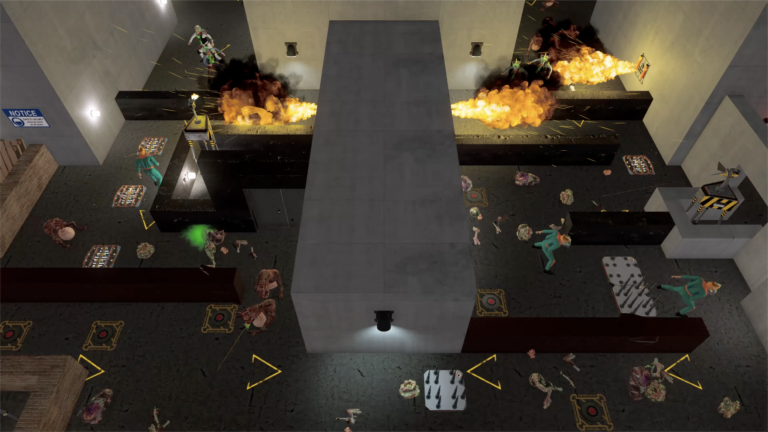
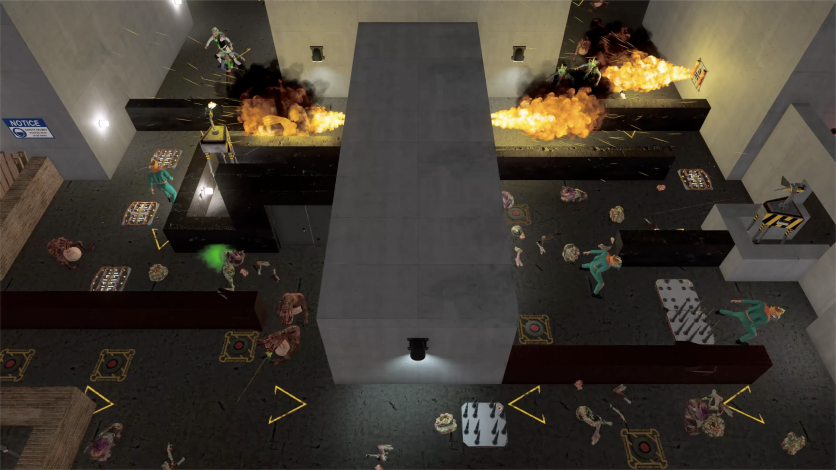
A official gameplay trailer released October 30 for the upcoming indie game Encave does something most FPS-tower-defense titles don’t: it shows your carefully built killroom getting punched through, carved apart, and turned into a liability by the things it was supposed to kill.

That detail matters more than it sounds. Since Coffee Stain Studios’ Sanctum popularized the FPS-tower-defense hybrid back in 2011 — selling more than 600,000 copies on Steam — every major title in the genre has operated on the same foundational assumption: the layout you build is a stable obstacle. Enemies follow paths around your defenses. Your turrets shoot them as they pass. The goal is to optimize the path, not survive its erasure. Encave, developed by Imagination Port and listed on Steam with a release date yet to be announced, removes that assumption entirely.

What the Trailer Actually Showed

The October 30 gameplay footage gave the clearest look yet at Encave‘s three-part loop: build, get breached, adapt. Before each wave, players shape the facility to their advantage — placing turrets, traps, mines, walls, and barricades to funnel incoming creatures into precisely designed kill zones. Then the wave starts, and the creatures do something prior FPS-tower-defense games specifically prevented: they smash through walls, destroy fortifications, and carve entirely new paths through the facility’s fully destructible geometry.

The setup phase plays like a puzzle. The defense phase reveals that the puzzle is temporary.

Why Destructible Walls Are a Bigger Deal Than They Sound

In a conventional FPS-tower-defense game — Sanctum, Sanctum 2, Outpost: Infinity Siege — enemy artificial intelligence navigates using a precomputed navigation mesh, or navmesh: a simplified map of every path the AI is allowed to walk. That mesh is static. Walls are permanent. The player’s job is to optimize around a fixed geometry. The reason nearly every title in the genre takes this approach isn’t creative conservatism; it’s engineering practicality. Dynamic navmesh updates — recalculating navigable space in real time when geometry is destroyed — are computationally demanding. Research presented to the Association for the Advancement of Artificial Intelligence identified AI navigation in destructible game worlds as an open problem as recently as 2007, when Midway Games built a specialized system for Stranglehold. Bethesda later used a partial version of the technique in Fallout 3 when removing large rigid bodies from a scene.

Encave is built in Unity. Unity’s NavMesh system supports runtime updates via NavMeshSurface and NavMeshObstacle components, but using that capability across a fully destructible environment — where, per the Steam page, “everything in the environment can be destroyed” — means the engine must rebake navigable tiles every time a wall comes down. The result, if it works as described, is that every breach the creatures punch through becomes a new valid route their pathfinding can exploit. Your chokepoint design doesn’t just fail to stop them — it temporarily becomes the path they take to reach you faster.

That is the specific technical reason the trailer’s “a creature punches through the wall” moment carries weight. It isn’t a cinematic flourish. It is a navmesh event.

Who Is Doing This to You, and Why

The fiction Encave wraps around this mechanical loop is worth understanding on its own terms, because it shapes the game’s emotional register in ways that distinguish it from Sanctum‘s relatively earnest sci-fi framing.

The player is not a hero. The player is an employee of Encave Corporation — a cold, clinical biotech megacorporation that breeds living weapons deep underground. Most of the corporation’s products never make it to market. The player’s job is to dispose of the failures: mutant bioweapon specimens that failed inspection, engineered to be dangerous, now rejected by the organization that made them. The game’s named setting, Killroom 305, is a product-termination facility. The creatures attacking you are, by the corporation’s own accounting, defective merchandise.

The corporate propaganda meets underground horror framing — telegraphed in the trailer and in the Steam page’s wry copy — gives Encave a darkly humorous industrial sci-fi atmosphere that the developer describes as Lovecraftian in creature design but satirical in framing. The mutants are described as Lovecraft-inspired, but the game’s corporate framing treats them as a workplace problem. You didn’t create them. You just have to terminate them before they terminate the facility.

Between Waves, Your Destroyed Walls Become Your Building Materials

The scavenge-and-rebuild phase between waves ties the loop together. When creatures destroy your fortifications — and the Encave Steam wishlist page is explicit that everything in the facility is destructible — those destroyed sections also yield the materials needed to rebuild. Players break down anything that isn’t actively contributing to defense, recover what’s salvageable, and apply those resources to patching the breach or redesigning the approach for the next wave.

This resource loop gives the defensive cycle an escalating economic pressure: early waves give you room to build a tidy layout; later waves give you destroyed infrastructure and mounting resource demands. The question each wave answers isn’t “how good was my original layout” but “how well did I adapt to what the last wave did to it.”

What This Adds to the Genre

The FPS-tower-defense genre has been looking for its next structural innovation for over a decade. Sanctum (2011, Coffee Stain Studios) introduced the hybrid by letting players step into the FPS perspective alongside their automated defenses; Sanctum 2 (2013) added co-op and deeper character classes; Orcs Must Die! added third-person action elements; Outpost: Infinity Siege (2024, Team Ranger) added large-scale base building. All of them preserved the foundational static-geometry assumption. A survey of the tower defense genre history confirms that none made enemy re-pathfinding through player-built structures central to the gameplay loop.

Encave proposes a different question: what if the layout you spent the build phase designing doesn’t last the first minute of the defense phase? The answer — judge by the trailer, not by a final build — suggests a game where tactical preparation and real-time improvisation are equally essential by design rather than by accident. Whether Imagination Port’s Unity-based navmesh implementation holds up at scale, across a full Early Access build, across escalating wave counts that stress-test the dynamic pathfinding continuously, is the open question a release date will eventually answer. For now, the trailer says the studio understands exactly what problem it’s trying to solve, and it’s a problem no one in this genre has solved before.

Encave does not yet have a confirmed release date; the Steam listing for Encave is open for wishlisting, and an open playtest ran in August 2026.


Frequently Asked Questions

How is Encave different from Sanctum or Outpost: Infinity Siege?

The key difference is structural rather than cosmetic. Sanctum, Sanctum 2, and Outpost: Infinity Siege all use static environments — enemies navigate around fixed player-built defenses, and the geometry never changes during a wave. Encave uses a fully destructible environment, meaning enemies can physically break through walls and defenses, forcing the game’s AI to recalculate valid routes through the new breach in real time. No prior FPS-tower-defense game has made dynamic enemy re-pathfinding through player-built geometry the central mechanic.

Why is fully destructible enemy pathfinding technically challenging?

In most games, enemy AI navigates using a precomputed navigation mesh — a static map of where the AI can walk. When geometry is destroyed, that map becomes incorrect until it is updated. Recalculating a navmesh across a fully destructible environment in real time is computationally demanding, which is why most games in this genre avoid it. Encave is built in Unity, which does support runtime navmesh updates, but doing so across an entire destructible facility for a continuously escalating wave-defense scenario is an engineering challenge that defines whether the game’s central promise is sustainable across a full run.

Does Encave have a release date?

No. As of November 2026, the Encave on Steam page lists the release date as “Not Announced.” An open playtest ran in August 2026, and a demo has been available on itch.io. The Steam page is open for wishlisting.

What is the story premise of Encave?

You play as an employee of Encave Corporation, a biotech megacorporation that engineers living weapons in underground facilities. The creatures attacking you are the company’s own rejected products — bioweapon specimens that failed quality inspection, now turned hostile in the termination facility named Killroom 305. The game pairs its Lovecraftian creature design with darkly humorous corporate satire: the existential threat is framed as a workplace problem, and the atmosphere has more in common with dystopian industrial sci-fi than with straightforward creature-feature horror.

Source link