HomeAuto BBC Built Cameras That Didn’t Exist to Film Blue Planet III, Including 24-Hour Seabed Recorder
BBC Built Cameras That Didn’t Exist to Film Blue Planet III, Including 24-Hour Seabed Recorder
October 31, 2026:
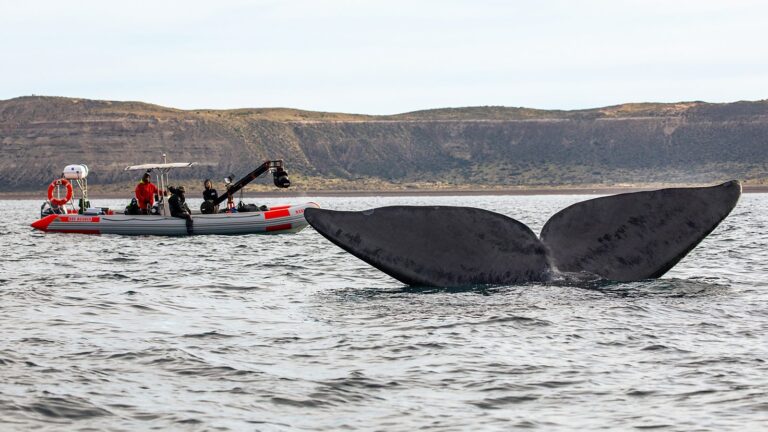
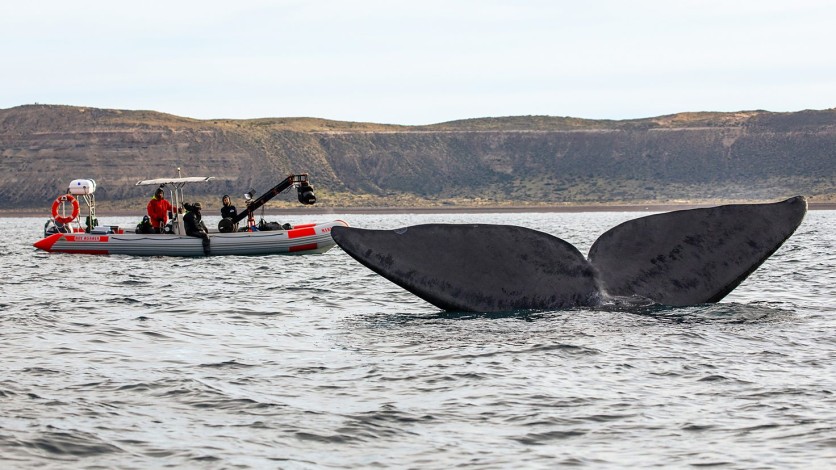
Blue Planet III team film a Southern right whale Jo Haley/Bbc.co.uk
The BBC Natural History Unit has revealed that filming Blue Planet III required building camera systems that did not previously exist — most notably the Stonefish, a fully autonomous seabed recorder that captures 4K footage continuously for 24 hours with no external power, no tether, and no human presence within range of the animals it observes. The series is set to premiere Sunday, November 1, on BBC One and BBC iPlayer. Blue Planet III BBC premiere announcement
The Stonefish is not simply a new underwater camera. It is, by executive producer Elizabeth White’s account, the first device of its kind ever deployed: no previous 4K-capable underwater housing had been engineered to operate continuously on the seafloor under its own power for a full day. What distinguishes it from earlier wildlife camera traps — the motion-activated or timer-triggered cameras that have documented land-based animal behavior since the 1990s — is its combination of cinema-grade resolution, fully passive operation, and extended autonomous runtime. A camera trap that does not move, does not emit light, and does not make noise produces behavioral data that crewed systems cannot. In behavioral ecology, the presence of any observer — human or mechanical — alters what the observed animal does. The Stonefish’s design explicitly removes that variable.
The footage it produced may have scientific consequences beyond the broadcast. Deployed in Shark Bay, Western Australia — a UNESCO World Heritage Site where bottlenose dolphins have been documented carrying sea sponges on their rostrums for at least 40 years — the Stonefish captured dolphin foraging behavior under conditions that no research team or film crew could replicate. Dolphin sponge-tool-use Shark Bay research Jane Mann Georgetown. Whether that footage provides the definitive evidence needed to resolve a long-standing debate about why the dolphins carry the sponges — for physical protection, prey-flushing, or as a social signal — is a claim White has made in production materials but one that the scientific community will need to evaluate independently. BBC Blue Planet III Stonefish dolphin sponge-feeding footage White claim.
Stonefish: World’s First Autonomous Seabed Cinema Recorder
The Stonefish was developed during production by Yoland Bosiger, a BBC NHU producer-director. TVBEurope Blue Planet III camera tech Bosiger Stonefish. Its housing contains a battery pack capable of supplying 24 hours of continuous power, a 4K camera, and internal recording storage — all sealed inside a waterproof enclosure designed to rest on the seabed with minimal visual signature. The “stonefish” namesake is apt: the actual stonefish (Synanceia species) is a bottom-dwelling ambush predator that achieves near-total camouflage by resembling a rock or piece of reef rubble. The BBC’s device borrows that approach, sitting unattended on the seafloor without drawing attention.
The engineering challenge the Stonefish solves is not primarily miniaturization — it is the elimination of the human footprint. Standard underwater camera operations involve a diver, a remotely operated vehicle, or at minimum a surface tether. All of these introduce acoustic signatures, visual disturbances, or electromagnetic interference that can alter animal behavior. A 4K camera rated for seabed deployment at power budget sufficient for 24 continuous hours of recording requires careful thermal management (heat dissipates poorly in water-tight enclosures), storage capacity (cinema-grade 4K bitrates generate several hundred gigabytes over 24 hours), and structural integrity against hydrostatic pressure at coastal depths. Underwater camera housing pressure engineering specifications.
Little Charlie: A Selfie Stick Rated for 3,000 Meters (9,843 Feet)
The series’ fifth episode, The Deep, presented a fundamentally different filming problem. Remotely operated vehicles are the standard tool for exploring the ocean’s abyssal zones, but they see only what is directly ahead of them. For a documentary audience, that means footage of the seafloor from the ROV’s perspective — never footage of the ROV itself at work in its environment.
The solution, designed by series producer James Brickell and producer Eva Spielvogel, is called Little Charlie. TVBEurope Blue Planet III Little Charlie Brickell Spielvogel. It functions as a camera arm — analogous to a selfie stick, but rated to 3,000 meters (9,843 feet) and designed to interface with an ROV’s onboard manipulator arms. The ROV grips the device, carries it to depth, positions it on the seafloor, and releases it. From that fixed point, Little Charlie can film the ROV operating at a short distance — giving the audience a third-person perspective on deep-sea work that would otherwise require a second simultaneous ROV.
At 3,000 meters (9,843 feet), the ambient pressure is approximately 300 atmospheres, or around 4,400 pounds per square inch. Camera housings at this depth require precision-machined metal (typically titanium or high-grade aluminum alloy) with O-ring seals rated for extreme compression and near-zero tolerance for imperfect seating. The manipulator-arm grip interface represents a further engineering challenge: ROV manipulators are designed to handle scientific instruments and sample containers, not external camera extensions. A custom coupler allowing the ROV to securely grip and then cleanly release Little Charlie would have required specific mechanical design to ensure no camera movement during operation and reliable release without entanglement. ROV deep-sea camera housing engineering pressure specifications.
RED V-RAPTOR 8K DSMC3: Cinema Workhorse for All Six Episodes
While the bespoke builds drew creative attention, the primary recording camera across all six episodes was a commercial cinema platform: the RED V-RAPTOR 8K DSMC3, described in the TVBEurope feature simply as the “Red Raptor.” RED V-RAPTOR 8K specifications
The V-RAPTOR 8K records at a native resolution of 8,192 × 4,320 pixels — approximately twice the linear resolution of 4K and four times the pixel count — while delivering more than 16.5 stops of dynamic range and the capability to record at up to 120 frames per second. RED Digital Cinema V-RAPTOR 8K specifications sensor dynamic range frame rate. Its body weighs approximately 1.8 kilograms (about 4 pounds) without accessories, a critical attribute for underwater use: in a camera housing, every kilogram of camera body requires additional buoyancy compensation or physical counterweighting by the diver. A lighter camera body simplifies housing design, reduces dive fatigue, and expands the range of environments — including confined reef structures and rock-pool edges — where a housing can be positioned.
The 16.5-stop dynamic range figure reflects what is technically achieved through a dual-ISO architecture, in which the camera captures two overlapping exposure tiers and combines them in the raw processing pipeline to extend the usable latitude beyond what a single exposure setting produces. For underwater cinematography, this matters primarily in shallow-water environments where sunlight penetrates unevenly — creating high-contrast scenes in which reef surfaces in direct sun can be five or more stops brighter than shadowed areas a meter away, all within a single frame. Dual-ISO dynamic range architecture cinema camera design.
The 120fps recording capability at full 8K resolution enables in-camera slow-motion without resolution compromise — a technical distinction from cameras that achieve high frame rates by cropping the sensor. For fast-moving subjects like dolphins, sharks, and schooling fish, full-sensor high-speed recording preserves the wide field of view that allows context to read around the subject. RED V-RAPTOR 120fps full sensor 8K recording.
The V-RAPTOR 8K DSMC3 is a product of RED Digital Cinema, which was acquired by Nikon in 2024. Nikon acquisition RED Digital Cinema 2024. The camera was reportedly in use as a primary platform “at the start of production” of Blue Planet III — a claim sourced to the TVBEurope article, which could not be independently fetched for this article. TVBEurope Blue Planet III V-RAPTOR production timeline claim.
DropCam: Drone Meets Underwater Camera
The DropCam system addresses one of the persistent frustrations of ocean wildlife cinematography: aerial and underwater footage of the same animal behavior requires either two separate crew positions or an abrupt cut at the waterline. Both break the audience’s immersive experience of a hunt or migration sequence.
The DropCam’s design pairs a standard multi-rotor aerial drone with a waterproof camera on a lowerable cable. Blue Planet III DropCam drone underwater camera system BBC. The drone tracks the animals from above the surface; at the key moment, the camera is lowered through the water line and submerged. The result is a continuous shot — no cut, no camera change — that follows the action from air into water. For the Tropical Seas episode, the system was deployed off Fernando de Noronha archipelago, a protected archipelago approximately 220 miles (354 kilometers) off the coast of northeastern Brazil, where it captured tiger sharks pursuing green turtles from both perspectives in a single take.
The technical demands of this approach are non-trivial. A multi-rotor drone hovering above the ocean surface while a cable extends below it is subject to considerable instability: surface chop creates drag on the submerged camera, the cable introduces pendulum effects, and salt spray loads the motors and electronics. Keeping the drone stable enough for usable footage while the waterproof camera transitions through the surface tension boundary — where drag forces abruptly shift from aerial to aquatic — requires either active compensation in the drone’s flight controller or very careful manual piloting. The production has not publicly detailed the specific engineering solutions employed, but the Fernando de Noronha footage indicates they worked. TVBEurope Blue Planet III DropCam Fernando de Noronha.
Wave Drones: Into Iceland and Chile Swells
For the third episode, Seasonal Seas, the production needed to place cameras inside active wave systems battering the coastlines of Iceland and Chile — environments that would be lethally dangerous for any human operator at close range.
Two further custom drone platforms were deployed. A custom-built waterproof first-person-view (FPV) drone flew directly into breaking waves, with the pilot navigating via a live video feed transmitted from the drone’s camera. Standard FPV drones are built for speed and agility, not waterproofing — motor windings, electronic speed controllers, and camera connections must all be sealed against water ingress for the drone to survive contact with spray and foam. The resulting footage has the immersive, kinetic quality associated with FPV racing footage, placing the audience inside the wave rather than observing it from a distance. Custom waterproof FPV drone Blue Planet III wave filming Iceland Chile.
Alongside it, a splash drone — a platform capable of landing directly on the ocean surface — provided stable, wave-level camera positions that could be set, left to record during a set, and retrieved. Blue Planet III splash drone wave filming.
White described the multi-camera approach as fundamental to the series’ visual language: no individual system captures a behavioral sequence in full, and combining five or more different camera types on a single shoot is standard practice for the production. Elizabeth White BBC NHU Blue Planet III multi-camera production methodology.
Mini Dome, Macro Z-Rig, and Flow Motion: Specialized Systems
The camera engineering extended beyond the headline systems. For Seasonal Seas‘ rockpool sequences, BBC NHU engineers built the Mini Dome — claimed as the world’s first macro split-shot camera small enough to fit inside a rockpool and capture both the underwater and above-water worlds simultaneously in a single frame. BBC NHU Mini Dome world-first macro split-shot claim Blue Planet III Jo Haley.
An over-under (split-shot) photograph requires a dome port — a curved glass or acrylic element that compensates for the different refraction indices of air and water and maintains focus on both sides of the surface simultaneously. Standard dome ports for cinema cameras are 20 centimeters (about 7.9 inches) in diameter or larger. Achieving a functioning split-shot at macro scale — inside a structure as small as a rockpool — requires a dome port small enough to straddle the surface of a few centimeters of water, with optical tolerances that maintain the macro focus plane both above and below the surface. The BBC NHU’s claim of a “world-first” for this configuration is sourced to executive producer White and has not been independently verified by external optical engineers. The resulting footage, described as placing viewers at the eye level of a hunting octopus, was built by producer Jo Haley. Jo Haley BBC NHU Mini Dome rockpool macro split-shot Blue Planet III.
A custom Macro Z-rig was developed for low-light macro cinematography, deployed in Open Ocean to film newly hatched green sea turtles crawling through dense, rotting sargassum in near-darkness. Blue Planet III custom Macro Z-rig open ocean green sea turtle sargassum. A Flow Motion camera rig enabled high-speed traversals through coral reef structure for the reef sequences, producing footage described as simulating the experience of flying through an underwater city.
For aerial coverage of bowhead whales breaking Arctic sea ice — footage requiring camera positions miles offshore from safe ground — the production used two commercial drone platforms adapted for the conditions: DJI’s DJI Inspire 3 product page and Mavic 3 Pro. DJI is headquartered in Shenzhen, China, and its products are subject to standard US government national security review guidelines; in the context of wildlife documentary production in remote Arctic environments, data handling concerns are distinct from consumer device use cases. DJI US Entity List China national security review.
Why Autonomous Seabed Recording Changes More Than Documentary Filmmaking
The camera engineering behind Blue Planet III is worth understanding beyond its production value. The Stonefish’s 24-hour autonomous operation addresses the most fundamental constraint in wildlife behavioral observation: the presence of an observer changes what the observed animal does.
This is not a new insight — behavioral ecologists have documented the observer effect in wildlife research since at least the 1970s, and the development of terrestrial camera traps in the 1990s was driven by exactly this concern. Observer effect behavioral ecology wildlife camera trap history. What the Stonefish adds is cinema-grade resolution and continuous runtime to the camera-trap paradigm, applied underwater. The result is footage that functions simultaneously as documentary material and as behavioral research data of a quality that crewed systems cannot produce.
If the BBC shares its technical methodology with the marine biology community — or if the footage is incorporated into peer-reviewed behavioral studies on dolphin sponge-tool-use — the Stonefish may prove to be as significant to cetacean behavioral science as it is to wildlife cinematography. The 40-year question about why Shark Bay dolphins carry sponges is not trivially answered: it has occupied researchers at institutions including Georgetown University for decades, and behavioral data from unobserved animals is the category of evidence most difficult to obtain by conventional methods. Janet Mann Georgetown dolphin sponge-tool-use Shark Bay research.
Blue Planet III is set to premiere Sunday, November 1, at 8 p.m. on BBC One and BBC iPlayer, with the first three episodes available simultaneously on iPlayer. A US premiere on BBC America and AMC+ is planned for 2027. Blue Planet III BBC One iPlayer premiere November 2026.
Frequently Asked Questions
How was the Stonefish camera designed to film dolphins without disturbing them?
The Stonefish uses a fully passive design: no external lights, no acoustic emissions, no tether connecting it to a surface vessel, and no human in the water during recording. It is placed directly on the seabed and left to record 4K footage continuously for up to 24 hours under its own battery power. Wildlife behavioral research has established that stationary, silent objects produce significantly less behavioral disturbance in marine mammals than active observers — a principle the Stonefish operationalizes at cinema-grade resolution for the first time. The footage captured in Shark Bay, Western Australia, may represent the cleanest observational record of bottlenose dolphin sponge-tool-use behavior obtained to date. Stonefish BBC NHU design autonomous underwater camera observer effect.
How deep can Little Charlie go, and why does that depth matter?
Little Charlie is rated to 3,000 meters (9,843 feet), which corresponds to roughly 300 atmospheres of pressure — approximately 4,400 pounds per square inch at the camera housing’s exterior. That depth threshold covers the vast majority of the continental slope and much of the bathypelagic zone where deep-sea documentary subjects live. The engineering significance is the combination of that depth rating with the ROV manipulator-arm interface: the system lets a single ROV carry and deploy the camera, then film itself operating — a third-person deep-sea perspective that previously required two simultaneous ROVs, at roughly double the operational cost. Little Charlie depth specification ROV manipulator arm BBC NHU.
What makes the RED V-RAPTOR 8K particularly suited to underwater filming?
Three factors combine: its compact body weight (approximately 1.8 kilograms / 4 pounds without accessories) keeps underwater housing size and buoyancy management feasible for single operators; its 16.5+ stops of dynamic range handles the extreme brightness contrast of shallow underwater environments where sunlit and shadowed zones coexist in the same frame; and its 120-frames-per-second capability at full 8K resolution delivers slow-motion footage of fast marine subjects — dolphins, sharks, schooling fish — without the sensor crop that degrades field of view on most high-frame-rate cameras. RED V-RAPTOR 8K underwater filmmaking dynamic range frame rate weight specifications.
Could the BBC’s bespoke camera systems be adopted for scientific research beyond documentary filmmaking?
The Stonefish concept is directly applicable to marine behavioral research. Camera-trap methodology is already a standard tool in terrestrial ecology; the gap in marine settings has been the absence of a cinema-grade, fully autonomous underwater equivalent with runtime measured in hours rather than minutes. The Stonefish’s 24-hour recording capability, no-tether design, and 4K resolution meet the data-quality threshold that peer-reviewed behavioral studies typically require. If BBC NHU publishes the system specifications and methodology, it could serve as a reference design for academic research groups studying cetacean behavior, benthic (seafloor) ecology, and fish behavioral patterns at sites where diver presence would prevent authentic observation. Wildlife camera trap marine ecology research applications autonomous underwater camera.