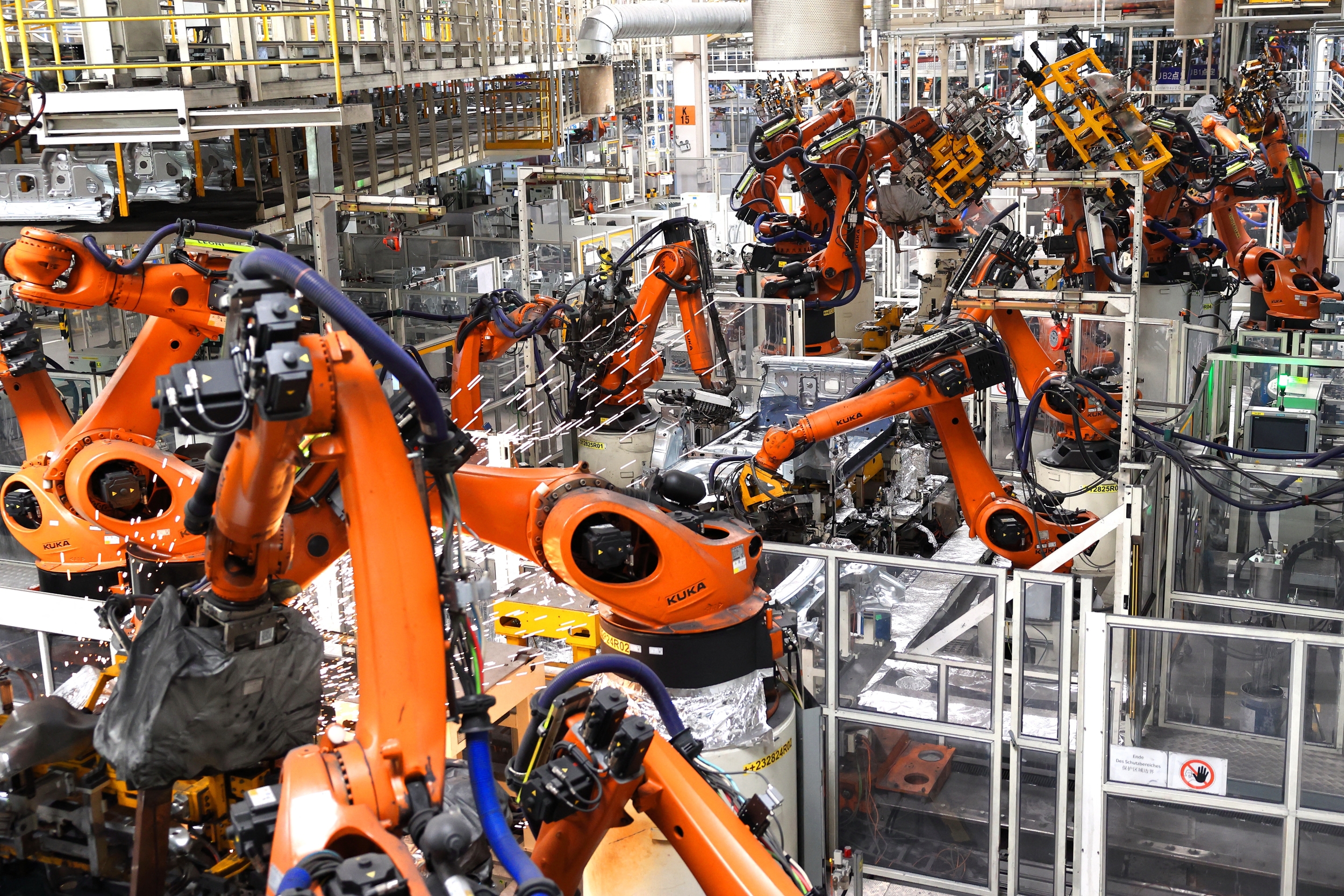
North American manufacturers placed 10,989 industrial robot orders in the third quarter of 2026 — worth $723.5 million and the highest quarterly total of the year — as semiconductor and electronics companies nearly doubled their robot purchases year over year, driven by a $265 billion domestic chip-fabrication construction wave that is now converting into automation equipment orders at scale. The Association for Advancing Automation released its Q3 2026 robot orders report on Wednesday, showing orders up 24.8% in units and 26.1% in value compared to the same period a year ago — after a subdued first half that offered little sign this acceleration was coming.
“What’s noteworthy about Q3 isn’t just the scale of growth, but that the improvement was broad-based across the market,” said Alex Shikany, Executive Vice President at A3. “Automotive OEMs returned to growth, and automotive components, semiconductors and electronics, and life sciences all posted significant gains.”
The breadth matters as much as the headline number. Q3’s surge brought the nine-month running total to 28,984 units worth roughly $1.89 billion — up 9.6% in units and 13.3% in value compared to the first three quarters of 2025.
Q3 Ended a Year of Two Halves
The quarterly trajectory tells a precise story of subdued momentum breaking into outright expansion. Q1 2026 saw 9,055 units ordered at $543 million — essentially flat, down just 0.1% in units and 6.4% in value year over year, weighed down by an automotive OEM spending freeze. Q2 recovered slightly to 8,940 units at $622 million, a 4.3% unit gain and a sharper 21.3% jump in value, as non-automotive sectors began filling the gap. By Q2, non-automotive customers accounted for 56% of unit orders — a milestone A3 described as the continuation of a structural shift building over several quarters.
Then Q3 broke the pattern entirely. At 10,989 units, it surpassed the previous two quarters’ combined non-automotive growth and added an automotive rebound on top of it. Both of the dynamics that had been building separately — semiconductor demand and automotive recovery — arrived in the same quarter.
Why Chip Fabs Generate Robot Orders: The Engineering Behind the 97.6% Surge
The semiconductor, electronics, and photonics vertical posted the largest year-over-year percentage gain of any major category in Q3 2026: 97.6%. Understanding why requires understanding what a semiconductor fab actually needs in terms of automation — and why that need is not discretionary.
Modern chip fabrication at leading-edge process nodes operates inside Class 1 cleanrooms: environments where fewer than one particle larger than 0.5 microns per cubic foot of air can be tolerated. Human bodies generate skin flakes, breath moisture, and microbial contaminants at rates that would make wafer yields collapse in these environments. As a result, wafer transport and handling inside a fab is handled almost entirely by robotic systems — overhead transport (OHT) rails that move wafer lots autonomously between processing stations, and robotic end-effectors that load and unload wafers at each tool without human contact.
That’s before accounting for the downstream automation requirements: die bonding, which places individual chips onto substrates with sub-100-micron precision; wire bonding, which connects chip pads to package leads with wire thinner than a human hair; automated optical inspection (AOI) systems at multiple process steps; and the final packaging and test lines that handle hundreds of chip variants simultaneously. Each of these operations requires purpose-built robotic equipment.
TSMC’s $265 billion total US commitment — confirmed in July 2026, when the company announced an additional $100 billion for its Arizona campus network bringing its total US investment to that figure — represents a multi-year equipment procurement pipeline. Micron’s $200 billion expansion across Idaho, New York, and Virginia adds to that total. Samsung’s Taylor, Texas operation, with an initial investment exceeding $17 billion, was ramping toward operational status through 2026. Across the semiconductor ecosystem, the Semiconductor Industry Association documented that private-sector investment in US chip manufacturing surpassed $640 billion since 2020.
What the Q3 robot orders data confirm is that this construction pipeline has crossed a threshold: the fabs being built are now ordering the automation equipment to fill them.
Automotive Sector Posts a Two-Speed Story
The automotive industry’s Q3 performance contained two distinct narratives that point in the same direction — a return to capital spending — but from different stages of the cycle.
Automotive parts suppliers led all tracked industries in Q3 with orders up 90.4% year over year. Parts suppliers act earlier in the spending cycle than original equipment manufacturers: when an automaker awards a contract for a new model’s components, the supplier must automate production cells before the OEM begins taking volume deliveries. The 90.4% surge suggests suppliers were locking in capacity for model cycles planned for 2027 and 2028 — an early leading signal of OEM production schedules.
Automotive OEMs, by contrast, posted a 7.5% increase in Q3 — a genuine turnaround after orders fell 35.1% in Q1 and remained cumulatively down 25% through the first half of 2026. That single-quarter rebound is encouraging, but it hasn’t erased the hole: OEM orders remain roughly 17% below their nine-month 2025 pace. The depth of the 2024–2025 OEM slowdown was significant enough that one strong quarter restores momentum without fully recovering lost ground.
Other sectors showing double-digit year-over-year growth in Q3: plastics and rubber, up 67.7%; life sciences, pharmaceuticals, and biomedicine, up 38.7%; and metals, up 37.0%. One outlier on the downside: food and consumer goods orders fell 23.7% in Q3, the only major sector to post a meaningful decline.
Why Cobots Claim 36.9% of Semiconductor Orders — Not Just Because They’re Safer
Collaborative robots — which operate alongside humans without traditional safety cages — posted 1,831 units ordered in Q3 at $63.8 million, a 56% year-over-year increase in units. Cobots now represent 16.7% of all industrial robot units ordered in the quarter.
The nine-month cobot picture is more revealing. At 4,605 units and roughly $178 million, cobots represent 15.9% of unit orders but only 9.4% of total order value — reflecting that cobots carry lower average selling prices than traditional industrial robots.
The sector breakdown, however, reveals something more structurally significant. Cobots comprised 43.8% of all robot orders in life sciences, pharmaceuticals, and biomedicine through the first nine months of 2026, and 36.9% of orders in semiconductor, electronics, and photonics — more than double their 15.9% share of the overall market.
The reason cobots dominate in these two sectors is not primarily about the human-proximity safety benefits that the “collaborative” label implies. It’s about chip design velocity. Advanced semiconductor packaging — chiplets, heterogeneous integration, 3D stacking — requires different tooling and programming for each new chip architecture. Retooling a hard-wired fixed-automation cell for a new chip design involves mechanical changeovers costing days of downtime and tens of thousands of dollars per line. Cobots, by contrast, can be reprogrammed in hours via software updates; an operator can reconfigure a cobot cell for a different chip variant without a mechanical teardown. In a fab producing hundreds of chip designs simultaneously, this software reconfigurability commands a premium that justifies the per-unit cost. Life sciences manufacturing faces the same dynamic: product mix changes constantly as drug formulations evolve through clinical trials and approval cycles.
The first-quarter data had already flagged this pattern: cobots claimed 45.9% of semiconductor robot orders in Q1 2026, and 60.7% of life sciences orders. The Q3 figures confirm the structural preference is holding across the full year — not a quarterly anomaly.
What the ISM Manufacturing PMI Is Signaling for Q4 Robot Demand
The macroeconomic backdrop for Q3’s robot surge was corroborated by two separate government and survey data streams.
The ISM Manufacturing PMI reached 54.5% in September 2026 — its ninth consecutive month above the 50-point expansion threshold — after touching a cycle high of 55.6% in July, the strongest reading since May 2022. New Orders, one of the PMI’s five core components and a leading indicator of future production activity, came in at 55.3% in September.
Federal Reserve data released October 16 confirmed that manufacturing output rose 0.3% in September. Total industrial production gained 0.7% month over month — exceeding analyst forecasts of 0.4% — and posted a 2.2% year-over-year increase.
The ISM New Orders component is specifically weighted as a leading indicator of manufacturing capital spending, with a typical one- to three-month lead time. Nine consecutive months of PMI expansion above 50, with New Orders running above 55, suggests that the demand pipeline that produced Q3’s result remains intact heading into Q4.
The potential headwind is the automotive OEM segment. At 17% below its nine-month 2025 pace, OEM orders have not fully recovered, and any further model-cycle pause could limit Q4’s floor. The parts supplier surge of 90.4% in Q3 also raises the possibility that some demand was pulled forward, potentially moderating sequential growth even as year-over-year comparisons remain favorable.
Semiconductor demand, by contrast, operates on a different calendar. Fab construction timelines are publicly announced years in advance, and equipment procurement schedules follow construction milestones predictably. The $265 billion TSMC commitment, Micron’s $200 billion program, and Samsung’s Texas ramp are all multi-year efforts with robot procurement needs extending well beyond 2026.
For now, Q3’s 10,989 units — the year’s single strongest quarterly result — indicate that North American industrial robotics has exited recovery and entered expansion, with a broader array of sectors making automation investments simultaneously than at any point since the sector’s pre-2024 peak.
Frequently Asked Questions
What caused the 97.6% surge in semiconductor and electronics robot orders in Q3 2026?
The primary driver is the domestic chip-fab construction buildout underway across the US. TSMC’s total US investment reached $265 billion after a July 2026 announcement; Micron’s $200 billion fab expansion covers Idaho, New York, and Virginia; and Samsung’s Taylor, Texas facility was ramping toward operational status in 2026. Collectively, these projects require extensive automation — wafer handling robots that operate in Class 1 cleanrooms where human contamination is not tolerable, robotic die bonding and wire bonding at sub-100-micron precision, automated optical inspection, and packaging/test lines. The Q3 data suggest that multiple fab projects moved from construction into equipment procurement in the same quarter.
Why do collaborative robots make up 36.9% of semiconductor robot orders — nearly double their overall market share?
The standard explanation — that cobots’ human-safe design suits delicate semiconductor work — misses the more significant engineering reason. Advanced chip packaging requires different tooling for each new chip design: a new architecture means reprogramming and reconfiguring the production line. Hard-wired fixed automation requires mechanical changeovers that can take days and cost tens of thousands of dollars per cell per changeover. A cobot can be reprogrammed for a different chip variant in hours via software update. In a facility handling hundreds of chip designs simultaneously — as TSMC’s Arizona campuses will — that software reconfigurability justifies the cobot’s premium over fixed automation. Life sciences manufacturing faces the same variable-mix dynamic, which is why cobots also claimed 43.8% of life sciences orders through the first nine months of 2026.
What is the ISM Manufacturing PMI, and what does the September 2026 reading of 54.5% mean for future robot demand?
The ISM Manufacturing Purchasing Managers’ Index is a monthly survey of purchasing managers at manufacturing companies, compiled by the Institute for Supply Management, which has published it since 1948. Any reading above 50 signals that more purchasing managers reported expansion than contraction. The September 2026 figure of 54.5% marks nine consecutive months above that threshold. The New Orders component — which carries the highest weight in the composite index and serves as a one- to three-month leading indicator of capital spending — came in at 55.3% in September. Taken together, the sustained expansion streak and elevated New Orders reading suggest the demand conditions that drove Q3’s robot orders remain in place heading into Q4.
Which sectors could moderate North American robot demand in Q4 2026?
Automotive OEM orders are the most visible risk. Despite Q3’s 7.5% turnaround, OEM orders remained roughly 17% below their nine-month 2025 pace — a deficit large enough that a single quarter of recovery has not erased it. A renewed pause in new-model cycle spending could limit Q4’s floor. The parts-supplier surge of 90.4% in Q3 also raises the possibility of some demand pull-forward, potentially tempering sequential growth in that sub-segment even as the year-over-year comparison stays favorable. Food and consumer goods, the only major sector to fall in Q3, dropped 23.7% in orders and could also remain a drag if inventory adjustment continues.