HomeAuto Garmin Posts Record Quarter, Warns Smartwatch Prices May Climb in 2027
Garmin Posts Record Quarter, Warns Smartwatch Prices May Climb in 2027
October 30, 2026:
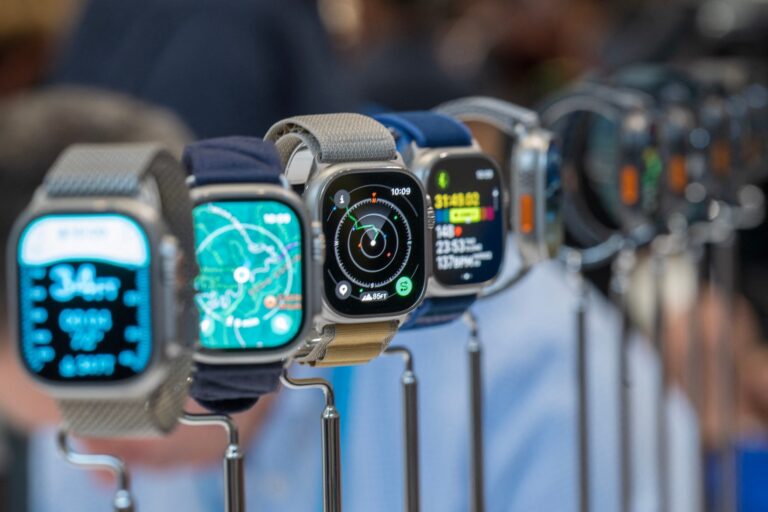
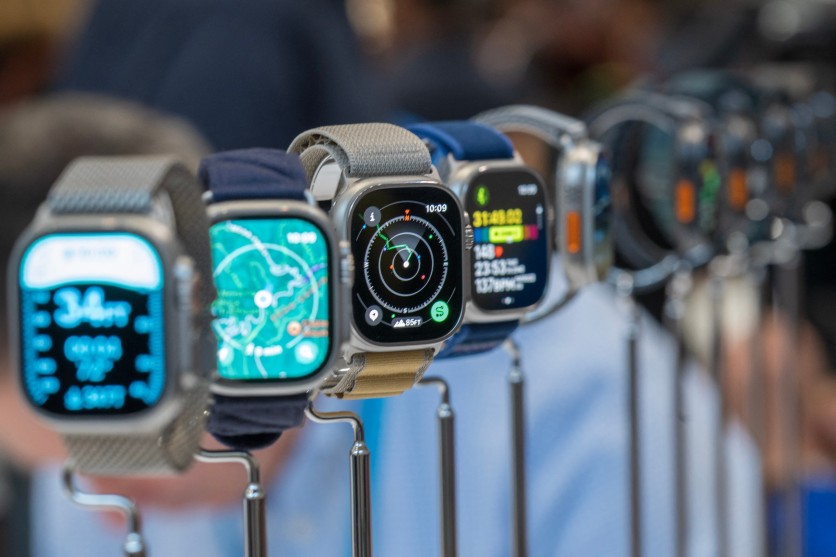
Apple Watch Ultra 2 models are displayed following Apple’s “It’s Glowtime” event in Cupertino, California, September 9, 2024. (Photo by Nic COURY / AFP) NIC COURY/AFP via Getty Images
Garmin posted the best quarterly results in company history on Wednesday — and then its CEO told the market that shoppers who want a fitness watch at today’s prices may not want to wait until next year. The company’s Q3 2026 earnings call, held October 28, produced record revenue, record operating income, and a record gross margin — alongside a warning that a structural shift in the global memory chip market, driven by AI data center build-out, is on course to compress margins throughout 2027, with pricing named explicitly as one of the tools available to offset the damage.
“Definitely pricing is something that, when I mentioned the mitigations that we can use, it is one of the things that we can look at,” CEO Cliff Pemble told analysts during the Q&A session. “It is one of the tools that we have, but we do not overfocus on one particular thing, and we try to get the best balance of all the different ways that we can mitigate cost increases in our supply chain.”
Garmin’s shares fell sharply on the day despite the headline beat. No specific products, price ranges, or markets were named — but for consumers considering a Garmin purchase, the CEO’s signal lands just four weeks before Black Friday 2026, which industry observers expect to be the most competitive promotional window before any 2027 adjustments could take effect.
Record Quarter, Shadow Over Next Year
The Q3 numbers were, by every conventional measure, exceptional. Consolidated revenue reached $1.99 billion, a 12% increase year-over-year and a company record. Operating income hit $612 million, up 34% from the same period in 2025 and also a record. Gross margin expanded to 63.3% — a 420-basis-point improvement versus the prior-year quarter — representing the highest in Garmin’s history.
On the bottom line, GAAP diluted EPS came in at $2.80, while pro forma EPS of $2.76 represented a 39% year-over-year increase. The company raised its full-year 2026 guidance to approximately $8.15 billion in revenue and $10.80 in pro forma EPS, up from the $8.05 billion and $10.00 previously projected.
But the Q3 gross margin of 63.3% carried one-time tailwinds that make it a misleading baseline. CFO Doug Boessen identified three drivers: a favorable business-mix shift as the lower-margin Auto OEM segment shrinks; lower product costs connected partly to a weaker Taiwan dollar; and approximately $33 million in refunds of tariffs previously paid — of which an estimated $20 million was attributable to the marine segment. Strip out the tariff refunds, and the underlying margin picture is notably less exceptional heading into the year-end stretch.
Pemble was direct in his prepared remarks: “While it is too early to offer a comprehensive outlook for 2027, we expect our consolidated gross margin profile will return to a historical range primarily due to higher memory costs.” Full-year guidance was raised even as analysts on the call were working from an implied range of roughly 58–59% gross margin for next year, compared with approximately 61% in 2026 — a compression of two to three percentage points that, at Garmin’s revenue scale, represents hundreds of millions of dollars in margin erosion.
The Memory Crunch: AI Is Eating Your Smartwatch Budget
Understanding why Garmin faces this specific problem requires a brief detour into the physics of semiconductor production. The AI data center build-out — the infrastructure behind ChatGPT, Google Gemini, and every enterprise AI deployment — requires a specialized type of memory called High-Bandwidth Memory, or HBM. Unlike the standard DRAM chips inside smartwatches, laptops, and smartphones, HBM is built by stacking multiple memory dies vertically and connecting them through silicon, consuming roughly three to four times more silicon wafer area per unit of capacity than commodity DDR5 memory.
That wafer-area competition is the core mechanism. Samsung, SK Hynix, and Micron — three companies that control approximately 95% of global DRAM production — have been redirecting wafer capacity toward HBM to serve AI customers. Every wafer converted to HBM is a wafer not producing the chips that go into Garmin devices. The result is a commodity DRAM market where supply cannot keep pace with demand — not because of a factory disaster or a tariff shock, but because AI infrastructure has permanently repriced the opportunity cost of producing consumer-grade memory.
In April 2026, Hardware Busters projected that DRAM supply would cover only 60% of demand by 2027 as AI demand continued outpacing supply growth — approximately 7.5% per year in capacity versus the roughly 12% required to close the gap. SK Hynix CEO Kwak Noh-jung put the situation in starker terms in July: “We forecast that next year will be the worst year in the industry’s history from the supply perspective,” he said, adding that he expected customer demand to exceed SK Hynix’s capacity “even beyond 2030.”
The cost cascade has already reached other device categories. Nothing CEO Carl Pei reported that memory chips now exceed 50% of the bill of materials for his company’s smartphones. HP CFO Karen Parkhill confirmed memory has risen above 30% of PC bill-of-materials costs. Gartner has projected that memory and storage costs could rise 130% by the end of 2026, while CCS Insight expects average smartwatch prices to increase 12% in 2026 from component cost pressure alone.
Garmin had been shielded from this until recently through deliberate inventory strategy. The company made a decision — confirmed on both the Q4 2025 and Q3 2026 earnings calls — to purchase a safety stock of memory components at lower prices, giving it a multi-quarter runway of cheaper chips. Garmin Q4 2025 earnings results confirmed this strategy. That buffer is now depleting. Boessen told analysts the memory cost impact was modest in Q3, but will grow more substantially in Q4 as lower-cost inventory is consumed, and will then persist throughout 2027 as new chips are sourced at current market prices — which Pemble described as “significantly” higher than a year ago.
The pressure is not limited to memory alone. Pemble told analysts that availability and pricing concerns have spread to printed circuit boards and cabling — components tied to the same AI-driven demand surge — which he described as additional cost headwinds requiring parallel management.
Garmin’s aggressive inventory build reflects the stakes. Inventory at Q3 close stood at $2.25 billion, up 27% from $1.77 billion at the end of 2025. To fund that buildup and expand its manufacturing footprint, the company cut its full-year free cash flow guidance to approximately $1.1 billion from the roughly $1.4 billion it had previously projected, and raised capital expenditure guidance to approximately $500 million.
“One of the Tools That We Have”
The moment that moved markets came during analyst Q&A, when a question surfaced the observation that Garmin’s customers tend to buy on features rather than price — implicitly asking whether the company had real pricing power if it chose to use it.
Pemble’s answer confirmed that it does, and that pricing is in the mitigation toolkit, while declining to commit to it as the primary response. He framed Garmin’s approach as multi-pronged: vertical integration (Garmin designs its own chips, writes its own firmware, manufactures its own devices), manufacturing scale, and supply-chain planning are the primary levers, with pricing available as a selective option rather than a first resort.
The company’s prepared language, included in the SEC earnings press release, reinforced that framework: “As we formulate our 2027 plan, we will look for every opportunity to offset this headwind by leaning heavily on our vertical integration and scale of operations and through strategic and selective mitigations, which we have successfully used in the past.”
Pemble pointed to Garmin’s navigation of the 2025 tariff environment as the relevant precedent — the company absorbed where possible, leaned on its manufacturing advantages, and acted selectively rather than raising prices broadly. The memory challenge, however, is different in kind from tariff policy. Tariffs are policy instruments that can be renegotiated, modified, or reversed; the AI-HBM supply displacement that is pressuring commodity DRAM is a structural market shift with a multi-year trajectory, and the cheap inventory buffer that protected 2026 is not refillable.
No price increases have been announced for any specific products, regions, or product lines. But the combination of language used — “one of the tools,” “strategic and selective mitigations,” pricing explicitly named alongside vertical integration and scale — is the kind of signal that analysts treat as meaningful, even when hedged.
New Thailand Factory Adds Capacity — and Another Cost Line
One piece of structural relief for Garmin’s supply constraints arrives in the first quarter of 2027: the company’s new manufacturing facility in Chonburi, Thailand, is on track to begin production. Garmin received Thai Board of Investment approval for approximately $92.5 million in the facility, part of a broader capital expenditure plan exceeding $400 million. Details on the Garmin Chonburi factory approval confirm it is Garmin’s first significant manufacturing footprint outside Taiwan.
Pemble confirmed the factory addresses an immediate operational constraint. “Our volumes have basically reached our capacity,” he said, making the Chonburi facility both a capacity expansion and a geographic risk-management measure. The factory represents Garmin’s “Taiwan plus one” diversification strategy, providing an alternative production base at lower tariff exposure to the US and EU markets.
The opening, however, is not margin-neutral. CFO Boessen confirmed that factory startup costs will begin flowing through Garmin’s profit-and-loss statement as soon as production begins in Q1 2027 — adding another line item to an already-complicated margin equation for next year. The new facility will produce automotive navigation components initially, with smartwatch production capacity added in phases.
Connect Plus: A Revenue Cushion Growing Faster Than Expected
Against the hardware margin headwind, Garmin’s subscription business is providing a brighter counterpoint. Connect Plus — the paid tier of Garmin’s companion app that layers AI-powered coaching tools, nutrition tracking, advanced health analytics, and premium insights on top of the free Garmin Connect platform — is growing faster than projected and converting trial users at strong rates.
“Connect Plus has outpaced our expectations and the renewals and the commitments after the free periods have been very strong,” Pemble said. The service is attracting subscribers beyond the premium sports-watch segment, including users of CIRQA, Garmin’s screenless smart band launched in July at $199.99 — a lower price point that expands the potential subscriber base meaningfully.
At current scale, Connect Plus represents less than 10% of Garmin’s total revenue, making it a modest but growing buffer against hardware margin pressure. Pemble confirmed a long-term roadmap to expand the service and acknowledged that some premium features are already gated behind the subscription — citing nutrition tracking as a current example. The strategic intent is for Connect Plus to become an increasingly meaningful revenue contributor as the hardware business faces higher component costs: a software-economics lever against a hardware-economics problem.
Product Lines Driving Q3 Growth
The quarter’s headline growth was broad-based across Garmin’s major segments. Fitness revenue grew 16% in Q3, though this represented the slowest quarterly growth rate of 2026 — down from 42% in Q1 and 25% in Q2. Pemble attributed part of the deceleration to the retail channel, where registrations — a measure of devices reaching end users — outpaced sell-in, suggesting retailers reduced orders ahead of Q4 restocking.
Outdoor was the standout performer, growing 20% in Q3, carried by the launch of the fēnix 9 and fēnix 9 Pro adventure watch series. The fēnix 9, which starts at $999.99, and the fēnix 9 Pro, from $1,099.99, launched August 25 and feature the largest AMOLED display in the flagship fēnix lineup alongside a new all-titanium case option. Pemble confirmed the fēnix 9 followed the typical upgrade cycle: initial sales weighted toward existing Garmin users trading up, with broader adoption from new users building as retail availability expands.
CIRQA, the screenless smart band priced at $199.99, remains on backorder — a constraint Pemble described as a “happy problem.” Production is being expanded to fulfill outstanding orders.
Marine grew 16%, led by the LiveScope 2 sonar launch, while aviation grew 5% on OEM strength. Auto OEM declined 20% as legacy domain controller programs wind down; Pemble confirmed the Mercedes-Benz program is set to ramp beginning in early 2027.
Is This a Good Time To Buy a Garmin Smartwatch?
For consumers, the calculus is more concrete than the earnings-call language suggests. Pemble confirmed retailer interest in Q4 promotional activity is “very strong” — consistent with a competitive Black Friday environment on November 27. Garmin’s devices are currently available at the prices set before the memory cost spike fully feeds through, with the company’s safety stock of pre-purchased chips effectively subsidizing today’s price tags.
That subsidy is finite. As the cheap inventory depletes through Q4 2026 and Garmin sources replacement memory at current market prices, the internal cost basis for devices rises. Whether or when Garmin decides to pass that cost to consumers depends on the mitigation levers Pemble outlined — but pricing is explicitly in the toolkit in a way it was not at the start of 2026.
At the high end, the fēnix 9 and fēnix 9 Pro are already at $999.99 and $1,099.99 respectively. A 12% increase — the CCS Insight industry average estimate for 2026 smartwatch price increases — would add roughly $120 to the fēnix 9’s price tag. Garmin has not confirmed any specific percentage or any specific product for a potential increase.
The structural forces behind the cost pressure — AI-driven HBM demand displacing commodity DRAM production — are expected by industry analysts to persist through at least 2027 and potentially well beyond. SK Hynix’s CEO has projected the shortage extending past 2030. For consumers, this is not a temporary disruption like a factory fire or a tariff spike that will reverse in six months. The AI infrastructure boom has effectively imposed an ongoing cost on every electronic device that uses memory — and Garmin’s CEO has now said, on the record, that pricing is one of the tools available to manage it.
Garmin will provide formal 2027 guidance on its Q4 2026 earnings call, expected in February 2027.
Frequently Asked Questions
Will Garmin actually raise smartwatch prices in 2027?
Garmin CEO Cliff Pemble explicitly named pricing as “one of the tools” available to offset rising memory costs in 2027, but no specific increases have been announced for any product, market, or price point. The company’s preferred approach is to lean first on vertical integration, manufacturing scale, and supply-chain strategy, using pricing selectively. Based on his comments, a targeted increase on some product lines is more likely than not — but the timing, scope, and magnitude are not yet determined and will be addressed in the formal 2027 guidance on the Q4 earnings call in February 2027.
Why are memory chip costs rising for smartwatch makers?
The AI data center build-out is at the root of the problem. AI training and inference accelerators require High-Bandwidth Memory (HBM) — a premium type of DRAM that uses three to four times more silicon wafer area per unit of capacity than the commodity DRAM inside consumer devices. The three major DRAM producers — Samsung, SK Hynix, and Micron — have been redirecting wafer capacity toward higher-margin HBM, shrinking supply of the commodity memory chips used in smartwatches, smartphones, and laptops. The result is a structural supply shortfall that industry analysts expect to persist through at least 2027, with SK Hynix’s CEO forecasting the gap will extend past 2030. Hardware Busters has projected DRAM supply covering only 60% of 2027 demand.
Is Black Friday 2026 a good window to buy a Garmin watch at current prices?
Based on CEO Pemble’s comments, Black Friday 2026 (November 27) is likely the most favorable window to purchase before any potential 2027 pricing adjustments. Pemble confirmed strong retailer interest in Q4 promotional activity, and Garmin’s current pricing reflects a safety stock of memory components purchased at lower pre-spike prices. That buffer depletes through Q4 2026; devices sourced afterward will carry higher component costs that the company has flagged as a 2027 headwind. No guarantee of imminent price increases exists, but buying during an active promotional event before the cost environment worsens is consistent with Pemble’s own framing of the situation.
How does Garmin’s vertical integration protect it — and where does it fall short?
Garmin’s in-house model covers software, firmware, chip design, PCB manufacturing, and final assembly — giving it more cost levers than competitors who rely on third-party contract manufacturers. This structural advantage lets Garmin absorb some cost pressure without immediately passing it to consumers, as it demonstrated during the 2025 tariff environment. The limitation is that DRAM and NAND flash memory are commodity inputs that even vertically integrated manufacturers must purchase from external suppliers. No amount of in-house manufacturing insulates Garmin from a market where the three producers controlling 95% of DRAM capacity have redirected supply toward AI data centers. Garmin’s vertical integration buys time and flexibility; it does not override commodity market economics. Additional context on DRAM supply constraints confirms the structural nature of the shortage.