HomeAuto Polymer Chemists Win IUPAC 2026 Prize for Printable Implants and Chip-Made OLED Pixels
Polymer Chemists Win IUPAC 2026 Prize for Printable Implants and Chip-Made OLED Pixels
October 28, 2026:
Iupac.org
When the field of polymer science wants to signal where the discipline is heading, it looks to the Hanwha-TotalEnergies IUPAC Young Polymer Scientist Award. This year, it pointed squarely at two laboratories where chemistry is being stretched into the territory of personalized medicine and next-generation display manufacturing: the group of Associate Professor Yinyin Bao at the University of Helsinki and the lab of Dr. Jing Lyu at University College London (UCL). The International Union of Pure and Applied Chemistry (IUPAC) updated its official award record today, naming Bao and Lyu as the 2026 joint recipients — the Polymer Division’s most prestigious honor for researchers within fifteen years of their doctorate.
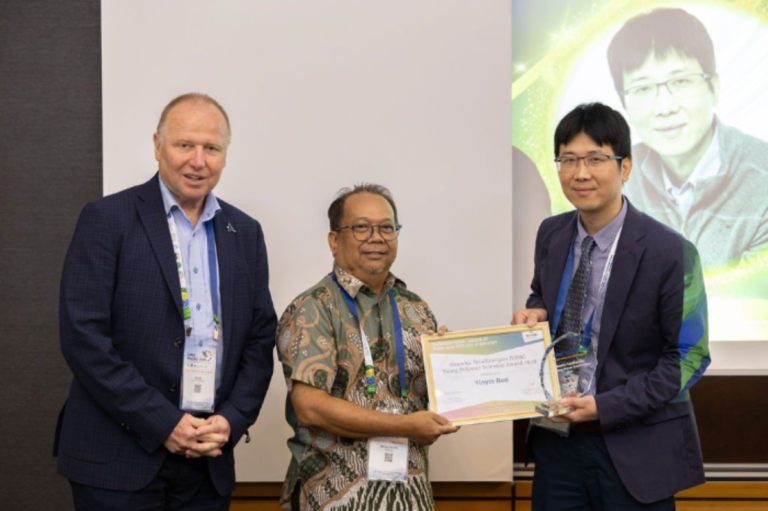
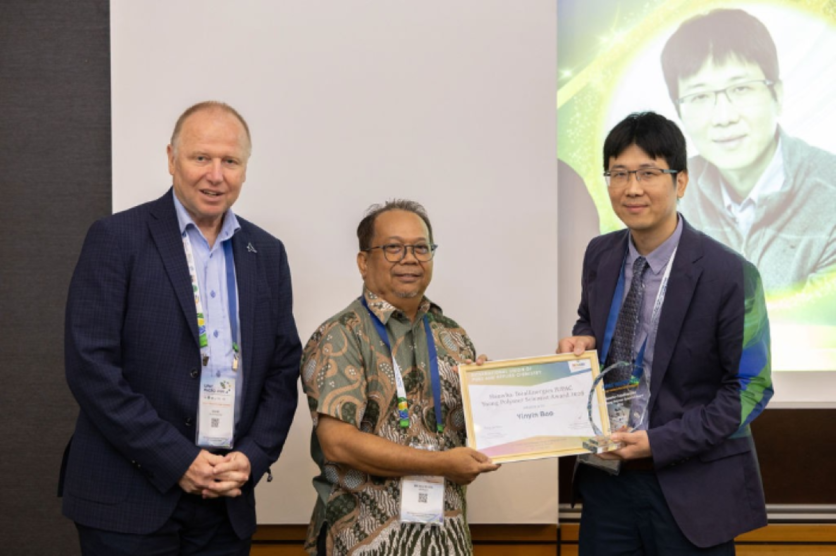
The award was presented in person at MACRO 2026, the 51st IUPAC World Polymer Congress, held July 28–31 at the Borneo Convention Centre in Kuching, Sarawak, Malaysia.
Prize With Roots in Paris, Reach Across Five Continents
The Hanwha-TotalEnergies IUPAC Young Polymer Scientist Award — formerly the Samsung-Total Petrochemicals IUPAC Young Scientists Award — was first presented at MACRO 2004 in Paris and is granted every two years at the IUPAC World Polymer Congress. It is sponsored by a corporate grant from Hanwha TotalEnergies, a joint venture equally owned by South Korea’s Hanwha and France’s TotalEnergies. The award is limited to researchers generally no older than 40, with eligibility typically confined to scientists within fifteen years of completing their doctorate. Recipients are selected by a committee of the IUPAC Polymer Division from a pool of nominated candidates.
Past recipients track the field’s evolution reliably: Lutz Nuhn and Rongrong Hu (2024), Qian Chen and Eric Appel (2022), Athina Anastasaki and Changle Chen (2020), Andreas Walther (2018), and Moon Jeong Park and Brent Sumerlin (2016). The full recipient history is maintained on the IUPAC website.
Yinyin Bao: When Photopolymers Meet the Patient
Yinyin Bao was honored for research on functional synthetic polymers as 3D printing biomaterials and light-emitting materials, with applications spanning personalized medicine and advanced optoelectronics. The University of Helsinki confirmed the recognition in an announcement published in August 2026.
His route to Helsinki traces a transnational arc through polymer chemistry’s elite institutions. After earning his Ph.D. in Polymer Chemistry in 2012 from the University of Science and Technology of China, Bao completed postdoctoral research at KU Leuven in Belgium (2012–2014), then became a Marie Curie IntraEuropean Fellow in the French National Center for Scientific Research (CNRS) at the University of Paris Sud. He joined ETH Zürich in 2016 and was promoted to Senior Scientist and group leader by the end of 2018. In January 2025, he moved to the University of Helsinki as an Associate Professor in the Department of Chemistry while maintaining a Senior Guest Scientist position at ETH Zürich’s Institute for Chemical and Bioengineering.
His laboratory now operates along two frontiers simultaneously — biomedical and photonic — unified by a single underlying capability: the use of controlled polymerization chemistry to dictate molecular architecture with enough precision to unlock specific high-performance applications.
How Photopolymers Enable Printable Personalized Implants
The biomedical frontier is built on photopolymerization — the conversion of liquid monomer or oligomer resins into solid three-dimensional structures upon exposure to light of a specific wavelength. In vat photopolymerization techniques such as stereolithography (SLA) and digital light processing (DLP), a digital light source cures a resin layer by layer or volumetrically, enabling the fabrication of geometrically complex objects with resolution measured in tens of micrometers.
For the biomedical field, the appeal is obvious: if a photopolymer can be made both biodegradable and mechanically tunable, it becomes possible to fabricate patient-specific implants, drug-delivery scaffolds, or surgical guides on demand — printed from a CT scan, matched to the patient’s anatomy, and designed to degrade at a controlled rate as tissue heals around it.
The challenge is equally obvious. Most high-molecular-weight biodegradable photopolymers are solid at room temperature, making them too viscous for high-resolution printing without the addition of reactive diluents or organic solvents — both of which compromise biocompatibility. Bao’s group addressed this directly. In published work from his ETH Zürich period conducted with co-author Nevena Paunović and group leader Jean-Christophe Leroux, the team reported a dual-polymer resin system that pairs two poly(D,L-lactide-co-caprolactone) macromolecules to achieve tailorable mechanical properties in DLP-printed biodegradable elastomers comparable to those of Sylgard-184, a widely used benchmark silicone elastomer — while preserving tuneable degradability. In a separate advance, the same group achieved solvent-free 3D printing of biodegradable elastomers by synthesizing liquid macrophotoinitiators — photoinitiator–polymer conjugates that remain liquid at room temperature, eliminating the need for organic solvents that are environmentally problematic and suboptimal for implant manufacturing. Applications explored include 3D-printed drug-eluting stents for airway stenosis and custom tissue scaffolds.
More recently, Bao’s Helsinki group has expanded into 4D printing — structures whose shape or properties can change after fabrication in response to external stimuli.
How Bao’s OLED Polymer Photoresist Changes Display Manufacturing
The second frontier is where Bao’s work becomes directly relevant to the electronics industry.
Conventional small-molecule OLED manufacturing — used in the majority of premium smartphone and television screens — relies on vacuum thermal evaporation: organic light-emitting molecules are vaporized in a vacuum chamber and deposited in thin layers on a substrate. The process achieves excellent efficiency and long device lifetimes, but it wastes approximately ninety-five percent of the expensive organic material on the chamber walls, with only five percent landing on the substrate. It also cannot easily produce sub-micrometer pixels using photolithography — the same precision patterning technique that underlies microchip manufacturing — because standard OLED emitters are destroyed by the harsh chemicals that photolithography requires.
Bao and ETH Professor Chih-Jen Shih solved this by designing a new class of light-emitting polymers that simultaneously function as photoresists. The key was spatial separation of function within the polymer chain: the light-emitting core — a thermally activated delayed fluorescence (TADF) emitter — is protected inside the molecule, while reactive cross-linking groups sit on the outside. This architecture allows the photoresist groups to react during lithography without damaging the light-emitting core. The polymers were synthesized using atom transfer radical polymerization (ATRP), a controlled radical polymerization technique that enables precise specification of chain length, composition, and end-group chemistry.
The team demonstrated the precision of this method with a high-resolution test image: a multicolor macaw parrot image measuring 300 by 430 micrometers, consisting of 250 by 350 pixels — produced with photolithography achieving pixel sizes as small as 4 micrometers, and with e-beam lithography reaching as small as 300 nanometers. The researchers also fabricated a functioning 1 mm × 2.4 mm (0.04 in × 0.09 in) glowing ETH Zürich logo using electrically powered diodes. The work was published in Nature in 2026. ETH Professor Shih said he sees potential applications not only in small screens but also in miniature light sources for medical technology and in devices for biological and neuroscientific research.
Bao was named a 2025 American Chemical Society Rising Star in Polymer Science by the journal ACS Polymers Au, and was recognized as an Outstanding Reviewer by the Royal Society of Chemistry’s Polymer Chemistry journal in 2026.
Jing Lyu: Designing Macromolecules That Deliver Genetic Medicine
Dr. Jing Lyu of University College London joined Bao as a joint award recipient for research at the intersection of advanced polymer synthesis and molecular biology — specifically RNA interference and gene delivery, and advanced biosensing and bioanalysis. The University of Helsinki’s announcement confirmed Lyu as the co-recipient.
RNA interference (RNAi) is a cellular mechanism in which short double-stranded RNA molecules induce sequence-specific silencing of target genes — discovered by Andrew Fire and Craig Mello, who received the 2006 Nobel Prize in Physiology or Medicine for the work. The challenge for therapeutic application is delivery: the mediating molecules (typically small interfering RNA, or siRNA, about 21 nucleotides long) are fragile, negatively charged, and cannot cross cell membranes without assistance. Viral delivery vectors were the first solution developed, but they carry risks of immunogenicity and genomic integration. The alternative — synthetic polymer carriers — has attracted sustained research attention since the 2000s.
The canonical approach uses cationic (positively charged) polymers: they form stable complexes with negatively charged siRNA through electrostatic attraction, protect the cargo from enzymatic degradation in the bloodstream, and facilitate uptake into target cells. The challenge then becomes ensuring the cargo escapes from the endosome — the cellular compartment where it is initially sequestered after cell entry — before being degraded by cellular machinery.
Lyu’s contribution is to bring precision to this design problem. In recent published work, his group used surface-initiated polymerization to generate libraries of polycationic polymer brushes with systematically varied chemical parameters — hydrophobicity, acid dissociation constant (pKa), chain rigidity, and degree of quaternization — and mapped how each parameter modulates siRNA delivery and silencing — binding strength, cellular uptake, and intracellular release kinetics. The resulting design rules allow the rational engineering of polymeric carriers rather than empirical trial-and-error — a meaningful step toward the clinic, where reproducibility and mechanistic understanding are prerequisites for regulatory approval.
Lyu’s published record spans 48 papers with 800-plus citations, published in Journal of the American Chemical Society, Angewandte Chemie International Edition, and Advanced Materials. Collaborations extend across institutions in China, Ireland, and the United Kingdom.
Kuching and the Convergence Thesis
The MACRO 2026 congress drew scientists from 64 countries to the Malaysian state of Sarawak — only the second time the World Polymer Congress has been hosted in Southeast Asia. It was organized by Institut Kimia Malaysia under the auspices of IUPAC, with the theme “New Polymers and Innovative Materials for a Sustainable Future” — details on the congress page.
Opening the congress, Sarawak Deputy Premier Datuk Amar Professor Dr Sim Kui Hian emphasized that scientific discoveries must translate beyond the laboratory to make a tangible difference in people’s lives — citing polymer science’s reach across healthcare, from drug delivery to biodegradable implants and diagnostic technology.
The award was presented by IUPAC Polymer Division President Professor Igor Lacík and MACRO 2026 Organizing Chair Professor Rusli Daik.
Why IUPAC’s Recognition Signal Matters in 2026
Taken together, the 2026 award cohort encodes a thesis about where polymer science believes its most consequential near-term work lives. Bao’s photopolymers are proximate to clinical deployment: biodegradable, mechanically tailored, patient-specific devices manufactured from digital files represent a direct challenge to the mass-manufactured implant paradigm that has governed medical devices for decades. His OLED photoresist work, published in Nature, proposes a manufacturing pathway to sub-300-nanometer pixels using existing semiconductor industry infrastructure — a potential route to displays and miniaturized photonic devices that current vacuum-deposition technology cannot reach economically.
Lyu’s polymer gene-delivery systems participate in the same convergence from the molecular medicine side. Since the mRNA COVID-19 vaccine era demonstrated that nucleic acid therapeutics can reach clinical scale, the question of how to deliver other genetic payloads — siRNA for cancer gene silencing, CRISPR guides for rare disease correction — has intensified. Polymer carriers offer a non-lipid, tunable alternative to the lipid nanoparticles that currently dominate nucleic acid delivery, with design parameters that can be specified at the molecular level using controlled radical polymerization techniques.
The biennial IUPAC prize, now in its twelfth cycle since 2004, has tracked the field’s trajectory reliably. In 2026, that trajectory runs through the boundary between materials chemistry and molecular medicine.
Frequently Asked Questions
What is the Hanwha-TotalEnergies IUPAC Young Polymer Scientist Award?
It is the IUPAC Polymer Division’s most prestigious prize for early-career polymer chemists, awarded every two years at the IUPAC World Polymer Congress (MACRO) to researchers generally within fifteen years of their doctorate and no older than 40. First presented at MACRO 2004 in Paris, the award is co-sponsored by Hanwha TotalEnergies and selected by a committee of the IUPAC Polymer Division from an international pool of nominees.
What makes photopolymer-based 3D printing significant for personalized medicine?
Most biomedical implants today are mass-manufactured to standard sizes and then modified surgically to fit individual patients. Light-curable (photopolymer) 3D printing can, in principle, fabricate a device in the exact geometry of a specific patient’s anatomy from a digital scan — a drug-eluting stent, a tissue scaffold, a surgical guide — using biodegradable polymers designed to degrade at a controlled rate as the patient heals. The main technical hurdles are achieving sufficient mechanical strength and printing resolution while using materials safe for long-term biological contact, which is precisely where Bao’s dual-polymer resin and macrophotoinitiator approaches make progress.
Why are polymer-based OLED photoresists considered a manufacturing breakthrough?
Standard small-molecule OLED manufacturing requires vacuum deposition, which wastes about ninety-five percent of expensive organic emitter material and cannot use photolithography — the precision patterning process that makes microchips — because conventional OLED emitters are destroyed by the harsh chemicals involved. Bao and colleagues’ TADF polymer architecture places the light-emitting core inside the molecule and the photolithography-reactive groups outside, letting the same molecule act as both the emitter and the photoresist. The result is OLED pixels fabricated using chip-making methods, reaching sizes as small as 300 nanometers — far below current commercial pixel dimensions.
What distinguishes polymer carriers for gene delivery from the lipid nanoparticles used in mRNA vaccines?
Lipid nanoparticles (LNPs) — the delivery vehicle used in Pfizer-BioNTech and Moderna COVID-19 mRNA vaccines — are self-assembling fat-based structures whose composition can be varied but whose architecture is constrained by lipid biophysics. Synthetic polymer carriers can be designed with specified molecular weights, chain architectures, charge densities, and stimuli-responsive groups using controlled radical polymerization techniques such as ATRP and RAFT. This design freedom allows researchers like Lyu to systematically map which polymer chemistry parameters govern intracellular RNA release — information that can, in principle, be incorporated directly into a carrier’s molecular design for a specific therapeutic application.