In Breast Cancer Prevention and Screening, Trans Women Are ‘Invisible,’ Doctors Say

October 27, 2026:

In Breast Cancer Prevention and Screening, Trans Women Are ‘Invisible,’ Doctors Say

Without high quality data and clear consensus among the limited guidance available, patients are “falling through the cracks.”

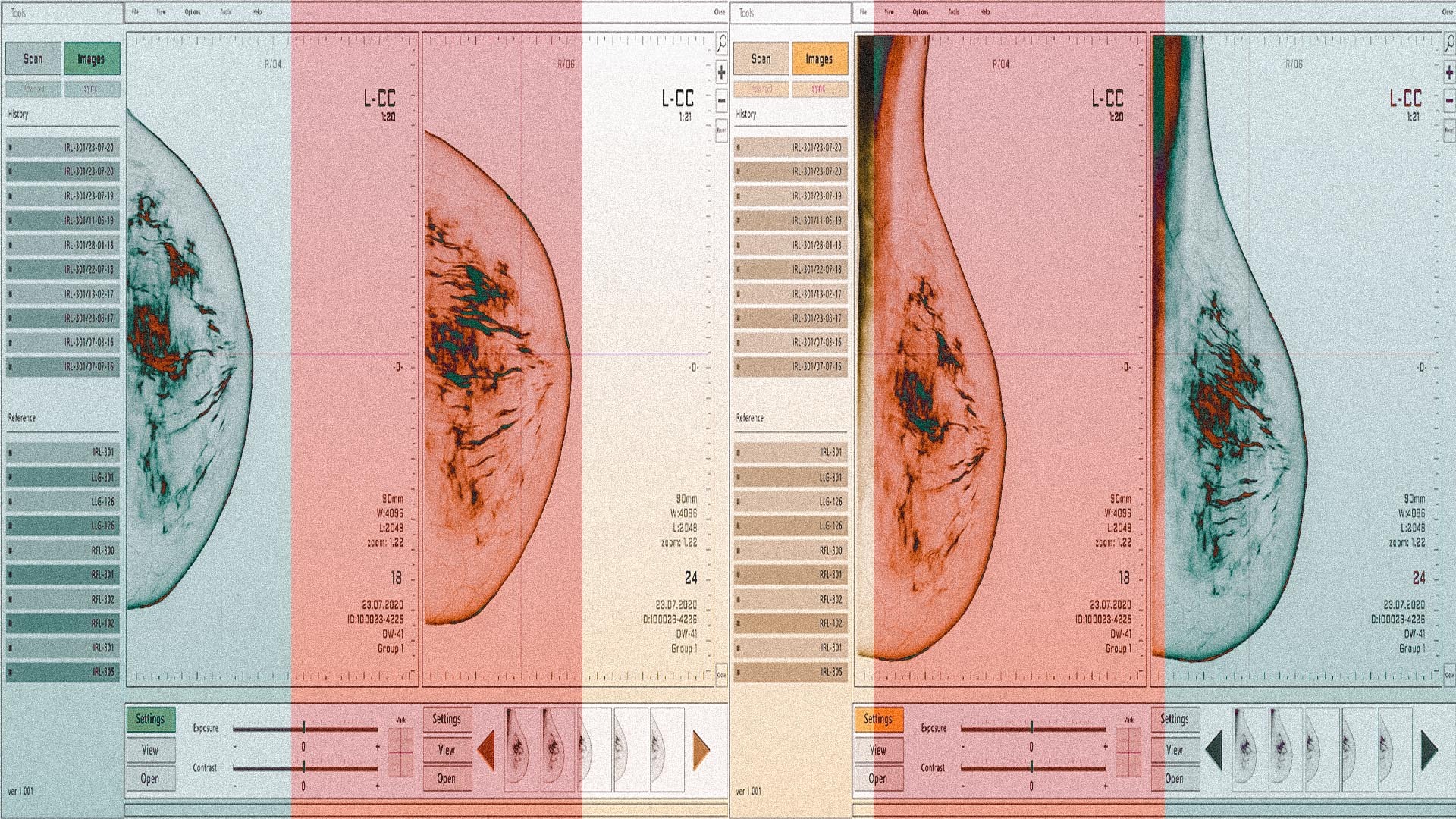
Trans pride flag colors superimposed over images of breast scans.

Chloe Gremory, 34, knows that at 40, she should begin getting regular mammograms.

Early breast cancer detection, which has been facilitated in the U.S. by large education campaigns, guidelines, and routine screening practices, is linked to better outcomes, including fewer breast cancer deaths and incidences of advanced cancer.

But what might seem like a routine process isn’t so simple for Gremory—because she’s one of an estimated nearly 700,000 trans women in the U.S. 

For decades, cisgender women have borne the benefits of improvements to breast cancer prevention and screening. Breast cancer screenings are procedures targeted at detecting breast cancer, including self-exams, MRIs, and, most commonly, mammograms. On average, 1 in 8 U.S. women will develop breast cancer in their lifetime. In the U.S., breast cancer is the second leading cause of cancer death among all women, and it’s the leading cause of cancer death for non-Hispanic Black women and Hispanic women. 

But trans women, who often develop more breast tissue as a result of hormone therapy, have largely been left out of those strides. And while some medical groups have tried to provide some guidance, a lack of high quality data and consensus among major cancer organizations means trans patients—and the providers who care for them—lack the information they need to make decisions about cancer prevention.

When asked if she’d feel comfortable getting screened, Gremory’s answer was a “resounding maybe.”

“I know I’d feel a lot of anxiety and want to find an explicitly trans-friendly provider for it,” she explained.

Gremory said that despite her current primary care provider being trans-friendly, they have never brought up potential breast cancer screening options or told her about the guidance. Instead, she learned what she knows from her wife. 

‘A lot of deducing’

A lack of data on trans populations may, in part, be to blame for trans women’s disparate breast cancer screening experiences. Little is known about how high breast cancer risk even is for trans women, doctors told Rewire News Group. A 2019 study in the Netherlands, which experts say is the largest and most authoritative cohort study on this subject, placed the risk as lower than that of cis women and higher than that of cis men. 

But that’s a broad range. Compared to that 1 in 8 statistic for cis women, breast cancer in U.S. men is incredibly rare. Only about 1 in 775 men, on average, develop breast cancer in their lifetimes. This leaves standard-setters, providers, and ultimately, patients in a difficult position when deciding how to screen trans women, and nonbinary and gender-expansive people on feminizing hormones.

It’s “a lot of deducing,” said Dr. Chandler Cortina, a breast surgical oncologist whose research at the Medical College of Wisconsin primarily focuses on trying to understand the impacts gender-affirming care may have on breast cancer risk factors. “Well, this is what we see in cisgender men. This is what we see in cisgender women. Where can we maybe use that information to then make educated decisions for gender diverse populations?”

It’s not just a challenge in the U.S.—providers around the world struggle with what Dr. Alison Berner, a medical oncologist in the U.K., calls “the research gap.” 

Berner trained in gender-affirming care and founded the U.K. Cancer and Transition Service, which “provides specialist clinical advice and support for trans, non-binary, and gender diverse people affected by cancer, and their care teams.”

For cisgender populations, Berner explained, national cancer databases have gotten incredibly granular about tracking different kinds of cancer. 

“We have tools that mean … we can crunch numbers to give people incredibly accurate percentage points about their treatment choices if they are a cisgender woman,” she said. “We have that less so for cisgender men, but we have it to some degree.”

Trans women, though, Berner said, are “invisible to most of [those] systems.” 

She explained that while recently some cancer databases have begun acknowledging trans people, that data may fail to distinguish between transgender men and transgender women, making it difficult to drill down on actual patterns.

Cortina, too, expressed concerns about the lack of data. 

“To really understand and pinpoint what the risk of breast cancer development is in a trans woman, essentially, you have to follow a general cohort of trans women in America for a number of years, and then see if and how breast cancer pops up over time,” he said. 

Because there’s been a spike in gender-affirming hormone usage over the past two decades, Cortina said, that data could have, in theory, already been collected and analyzed. 

But “we don’t have any database or large prospective cohort study, that I’m at least aware of …, that’s following trans women in that way,” he said.

Instead, recommendations vary among providers, meaning there are likely trans patients with breast cancers that would be detected in early screening who simply won’t get screened.

“Most providers don’t really know what the screening options are,” said Cortina. “I do think we’re seeing people fall through the cracks.”

Mistreatment, distrust, and limited guidance

Trans people experience high rates of medical mistreatment and discrimination. One 2020 survey found that almost half of its trans respondents reported being mistreated by a provider. For transgender people of color, that rate rose to almost 70 percent. Those experiences have been shown to lead some trans people to delay or avoid seeking medical care. Systemic poverty in trans communities and insurance denial of trans patients’ claims also present barriers to health-care access. 

The disparities trans people face in accessing health care are compounded by the fact that many providers lack education on trans patients—and breast cancer screening is no exception. 

One 2023 survey found that only 35 percent of the 95 providers surveyed even knew breast cancer screening guidelines for trans people exist. Another study found that only around 10 percent of those surveyed had received any formal education on the recommendations.

And with public health breast cancer awareness efforts being largely targeted to cisgender women, some transfem people may not even know screening is an option for them. 

In one 2014 study of more than 5,000 transgender veterans, ten were diagnosed with breast cancer. Three of those patients were trans women diagnosed with late-stage breast cancer. All three women died of breast cancer or related complications.

While U.S. medical bodies have slight variations in their recommendations for cis women, most agree women with average breast cancer risk over the age of 40 should begin getting mammograms done annually or every other year. And U.S. law requires most insurance plans to cover that screening at little-to-no cost to the patient.

But trans women are largely absent from those recommendations.

In 2016, the University of California, San Francisco (UCSF) published screening guidelines for transgender women that recommend that patients who’ve been on feminizing hormones for upwards of five years should, beginning at age 50, get screened every two years. (If certain risk factors are present like a family history of breast cancer or denser breast tissue, mammograms may be recommended for younger women as well.) 

In 2017, a task force formed by the Endocrine Society, a global consortium on hormone health, published standards with a single line that advises trans women without an increased risk of breast cancer to follow “breast-screening guidelines recommended for those designated female at birth.” 

Fenway Health, a Boston-based clinic that specializes in LGBTQ+ populations, makes a similar recommendation in their guidance, updated this year. According to a statement from Julie Thompson, Medical Director of Fenway’s Trans Health Program, the clinic “recommend[s] a plan based on each patient’s personal and family risk factors, in accordance with the U.S. Preventive Services Task Force recommendations for cisgender women.”

And 2021 guidance from the American College of Radiology, the leading professional body of U.S. radiologists, suggests mammograms “may be appropriate” for trans women beginning at age 40. 

While these groups have begun the important work of making guidelines for transfeminine patients, according to Cortina, they’re based on data that’s much more “sparse” than guidelines for their cis counterparts. He noted the current guidelines are “largely based from extrapolating data from cisgender women and from isolated case reports.”

And these guidelines’ lack of consensus and the general lack of awareness around these guidelines means patients may not even know they exist.

Starting a screening conversation

Trans women are facing disparate standards, a lack of data, and a medical system that can fail people like them. But doctors told RNG that patients and providers should still try to get screened. 

Both Berner and Cortina encouraged trans patients to start conversations about breast cancer risk with their providers. Patients “should feel comfortable talking with their primary care providers about how long they’ve been on gender-affirming hormone therapy for their age, their family history, and possible underlying risk factors for breast cancer,” Cortina said. “And then to talk with them about what may be reasonable screening options.” 

He also noted organizations like UCSF post their recommendations online, and suggested patients bring them as a conversation starter. 

“I would encourage any trans person who’s over 35 and has been on hormones for a number of years to start thinking about having these conversations with their providers,” he said.

Berner acknowledged that it can be difficult for trans patients to check themselves for cancer.

“Many trans women have smaller, denser breast tissue, which is really difficult to feel for lumps in,” Berner said. 

Bodily changes, trauma, and other factors may also make self-checks harder. 

Berner  emphasized that though they may be difficult to find, there are networks of providers who are dedicated to the work of supporting trans patients in all specialties. 

She added that patients, including those who are self-managing their hormone therapy, can keep track of their hormone levels so they can monitor to find a level that’s right for them.

Emmy Earnest, a 43-year-old trans woman, told RNG she frequently encourages people she knows to get their mammograms because she’s worked in breast cancer research. 

She’s been taking estradiol and progesterone for less than two years, so she hasn’t been screened—though she intends to once she’s been on hormones for more than five years. But even though she has worked in health research, she has reservations about trying to get the care she needs. 

“I worry about how I will be treated by staff and other people in the clinic—whether people will actually accept that I’m a biological woman with a true medical need to get a mammo,” Earnest said. 

“With the general atmosphere in this country, I need to stay vigilant. Or just not go,” she said. “But I know better than that.”

Source

Source link