HomeAuto Cell Therapy Maker Pluri Takes 50% of ZEO to Crack Regenerative Medicine’s $400K Cost Floor
Cell Therapy Maker Pluri Takes 50% of ZEO to Crack Regenerative Medicine’s $400K Cost Floor
October 27, 2026:
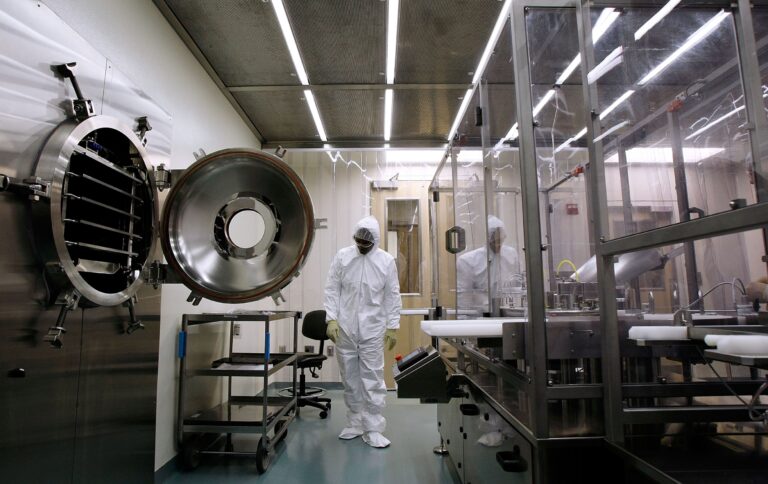
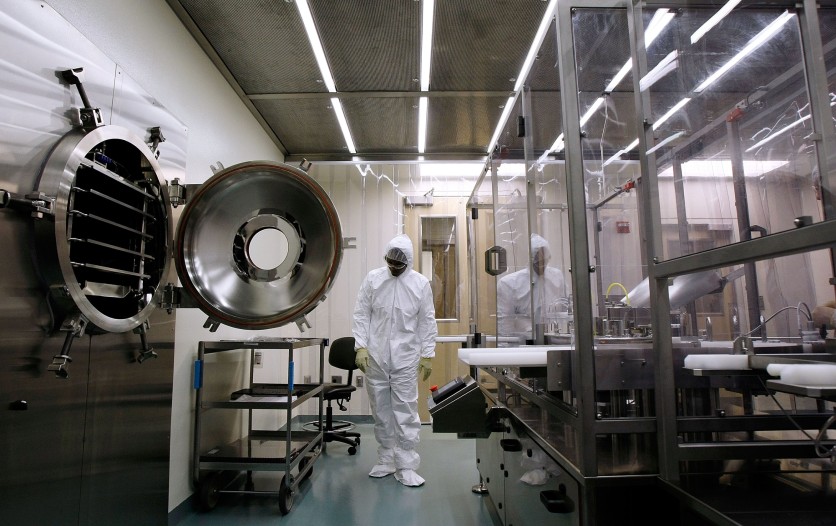
ROCKVILLE, MD – MAY 4: Manufacturing Associate Tina Miller demonstrates the machinery that will fill small glass vials with individual doses of a tuberculosis vaccine at the Aeras Global TB Vaccine Foundations’ new manufacturing plant May 4, 2009 in Rockville, Maryland. The multi-million dollar manufacturing facility will be capable of producing 200 million doses of a new TB vaccine. Aeras is a non-profit partnership that collaborates with various institutions to develop new TB vaccine candidates and delivery systems. Aeras is funded by the Bill and Melinda Gates Foundation, the Netherlands Ministry of Foreign Affairs, the Danish International Development Agency, and the Research Council of Norway, among others. Chip Somodevilla/Getty Images
Cell therapy has spent decades generating extraordinary science and struggling to get it out the door. On Monday, two companies announced a partnership specifically built around that gap: Pluri Inc. (Nasdaq and TASE: PLUR), an Israeli biotechnology firm with more than two decades of cell-expansion science, and ZEO ScientifiX (OTCQB: ZEOX), a South Florida biologics company with a 600-physician commercial network, disclosed a definitive strategic Partnership Agreement that merges their capabilities into a single manufacturing and distribution platform for the regenerative medicine, aesthetics, wellness, and longevity markets.
The problem they are trying to solve is specific and well-documented: no approved autologous cell therapy has yet achieved profitability at commercial scale, and manufacturing economics — not the underlying science — are the primary reason. This partnership is structured as a direct answer to that constraint.
Why Cell Therapy Has Failed to Scale
Unlike conventional pharmaceuticals, cell-based products cannot simply be stirred in larger tanks to increase output. They require sterile, highly controlled environments, rigorous quality management systems, and processes that preserve biological function across every batch — conditions that drive cost and complexity simultaneously.
The scale-up problem has two forms. Autologous therapies, which use cells derived from each individual patient, require one batch per patient, with dedicated sterility testing, potency assays, and identity confirmation for each dose. That is why autologous cell therapies carry per-treatment costs above $400,000 and why labor accounts for roughly 50% of the cost of goods sold. The approach scales out — more machines, more staff, more facilities — but not up. No matter how much capital goes in, the per-patient cost stays stubbornly high.
Allogeneic therapies, derived from donor cells rather than each patient’s own tissue, offer a different economic structure. One manufacturing run can serve many patients. Batch consistency and yield per run become the governing variables, not per-patient logistics. The challenge shifts from managing individual patient samples to maintaining donor-cell quality and managing immune rejection risk. Companies that solve the allogeneic manufacturing problem can, in principle, approach the cost curves of monoclonal antibodies — which are also complex biologics but have been manufactured at commercial scale for decades.
Pluri’s entire scientific program is built around that allogeneic model. Its manufacturing platform was designed from the outset to produce cells at industrial scale rather than adapting clinical-lab techniques to larger volumes — a distinction that matters enormously at commercialization.
What Each Company Brings to the Partnership
Pluri is the science-and-manufacturing half of the equation. Founded in the early 2000s at the MATAM Advanced Technology Park in Haifa, Israel, the company holds a portfolio of more than 250 patents and pending applications across 52 countries. Its intellectual property covers its proprietary 3D cell-expansion platform and its placenta-derived cell therapy programs.
Through its wholly owned aesthetics subsidiary Cellav Health and Aesthetics Ltd., Pluri has built a consumer-facing product line derived from that same cell-expansion science. Cellav’s professional offerings — Regenativo+, a plant-derived topical formulation, and Placento+, a placenta-derived formulation — completed U.S. cosmetic product listings in June 2026 under the Modernization of Cosmetics Regulation Act of 2022 (MoCRA), clearing the regulatory path for domestic commercial launch. Both products are supplied in Cellav’s DUO format: a lyophilized powder vial paired with a liquid booster vial for professional aesthetic application. To be clear: the MoCRA listing does not constitute FDA approval, and these products are not intended to diagnose, treat, cure, or prevent any disease. Cellav’s clinical programs — PLX-PAD and PLX-R18, which are FDA-regulated biologics in Phase III development — operate on a separate regulatory pathway.
ZEO ScientifiX is the commercialization and distribution half. Based at Nova Southeastern University’s Center for Collaborative Research in Davie, Florida, ZEO has invested heavily in physician education and commercial sales infrastructure. Monthly Masterclass programs have trained more than 600 clinicians on the science and clinical application of regenerative biologics, including extracellular vesicles and other biologically derived materials. By April 2026, ZEO reported crossing $1 million monthly in unaudited sales for the first time — a milestone attributed to its dedicated internal sales force and the physician-education model now central to its growth strategy.
Earlier this month, ZEO ran ZEO Xperience, a three-day immersive program for healthcare professionals held at the Pier Sixty-Six Resort in Fort Lauderdale, October 23–25, 2026 — extending its educational reach beyond its regular Masterclass format.
How Pluri’s 3D Scaffold Bioreactor Actually Works
The specific technology at the center of this partnership is Pluri’s PluriMatrix bioreactor system — a scaffold-based, packed-bed design that differs fundamentally from conventional 2D cell culture.
In 2D monolayer culture, cells grow as flat sheets on the bottom of plates or flasks. The approach is straightforward but limited: surface area constrains how many cells can grow in a given space, and large-scale manufacturing requires enormous numbers of flasks with correspondingly large labor inputs. 2D culture was designed for research-scale biology, not industrial-scale medicine.
PluriMatrix replaces the flat surface with a three-dimensional scaffold structure within a proprietary bioreactor. Cells grow attached to scaffolds inside this structure, mimicking the extracellular matrix environment they inhabit in living tissue. This has two practical consequences. First, the 3D scaffold dramatically increases the surface area available for cell growth within the same physical volume — more cells per cubic unit than flat culture allows. Second, cells growing in a 3D matrix environment behave more like cells in vivo, which matters for maintaining the biological properties that therapeutic and aesthetic applications depend on.
The system is modular and fully automated, which addresses directly the labor cost problem that makes autologous manufacturing prohibitively expensive. The automated, closed-system design also reduces contamination risk and supports GMP-compliant production. For allogeneic programs where a single manufacturing run serves many patients, this combination of scalability, automation, and batch consistency is the architectural prerequisite for commercial viability.
Pluri’s platform has been applied to placenta-derived mesenchymal stromal cells — cells sourced from placental tissue, which is non-controversially available, immunologically tolerant, and rich in cells with documented anti-inflammatory and regenerative properties. The placental source underpins both the Cellav aesthetics line and the clinical programs; the PluriMatrix bioreactor is the manufacturing system that enables both to reach production scale.
The Deal’s Structure: Equity, Exclusivity, and Integration
Under the definitive Partnership Agreement, Pluri will grant ZEO defined rights to its manufacturing technology and associated know-how for regenerative medicine assets, retaining ownership of its underlying intellectual property. In exchange, ZEO will issue Pluri shares representing 50% of its issued and outstanding common stock at closing — making Pluri an equal owner of its commercial partner.
The agreement also provides warrants, corporate governance and protective rights, and standard representations, warranties, and indemnifications. Critically, the transaction grants ZEO exclusive U.S. rights to Pluri’s Cellav aesthetic product line, including future offerings — a provision that immediately deploys ZEO’s physician network to distribute products that have already completed their U.S. cosmetic listings.
Closing is expected in Q4 2026, subject to the negotiation of ancillary agreements, certain regulatory approvals, and delivery of valuations. Neither company requires stockholder approval. Once complete, ZEO’s financial results are expected to be consolidated into Pluri’s financial statements under applicable accounting requirements.
ZEO’s most recently reported quarterly results provide context for what Pluri is acquiring: ZEO reported $2.58 million in revenue for Q2 2026, representing 124.6% year-over-year growth, with an approximately 80% gross margin and a net loss that narrowed by roughly 62% to $1.0 million. The revenue trajectory — with a six-month figure of approximately $4.0 million — suggests a business that has passed its inflection point and is scaling its commercial model effectively.
Leadership Perspectives
Pluri President and CEO Yaky Yanay framed the deal as a route-to-market problem finally solved. “ZEO has built something highly valuable: an established U.S. commercial platform with direct access to physicians, an existing advanced product portfolio, and dedicated sales, marketing, and educational capabilities,” Yanay said in the announcement. “For Pluri, this creates an important opportunity to connect more than two decades of cell technology, clinical development, and advanced manufacturing expertise with an existing route to market.”
ZEO CEO Ian Bothwell described the partnership as access to capabilities his company could not otherwise acquire at this stage. “Pluri brings capabilities that are exceptionally valuable to our business: proprietary cell technology, two decades of scientific and clinical experience, and proven expertise in scalable cell manufacturing,” Bothwell said in the announcement. “We believe combining these strengths with ZEO’s scientific expertise and commercial infrastructure will allow us to expand our product portfolio, accelerate innovation, and pursue opportunities that neither company could address as effectively on its own.”
The deal follows a separate signal of confidence in Pluri’s direction: earlier this month, Pluri Chairman and lead investor Alejandro Weinstein announced plans to arrange a European Investment Bank loan — a non-dilutive financing structure the company has used previously to fund clinical development.
Full-Stack Bet on Multiple Markets
The partnership’s stated ambitions extend well beyond distributing Cellav products through ZEO’s physician channel. The companies intend to advance selected clinical development programs — a reference to Pluri’s Phase III–stage pipeline, including PLX-PAD (muscle recovery following hip-fracture surgery) and PLX-R18 (critical limb ischemia) — using their combined scientific resources. ZEO’s physician network provides a commercial infrastructure for any product that reaches market approval; the current Cellav aesthetics line is the first product family to move through that channel.
The market contexts for both tracks are large. The global regenerative medicine market is estimated at roughly $48 billion in 2026, with projections calling for compound annual growth approaching 17% through 2034. The medical aesthetics subset — the nearer-term commercial opportunity for Cellav — is on a separate trajectory, with industry projections placing that market at $90 billion by 2030.
The combined entity — if the Q4 2026 closing proceeds as planned — would have Pluri’s manufacturing platform and clinical pipeline at one end, ZEO’s physician relationships and distribution infrastructure at the other, and a set of aesthetic products already listed for U.S. commercial sale in the middle. That is a more complete commercialization architecture than either company possessed independently.
Does This Partnership Actually Close the Gap?
The manufacturing cliff that has limited cell therapy commercialization is a systems problem: companies fail not because their science is wrong but because the transition from clinical-scale batches to commercial volumes exposes decisions made years earlier — in process design, technology selection, regulatory strategy — that are expensive to correct at scale.
Pluri’s platform was designed specifically to sidestep the retrofit problem by building scalability and automation in from the start, rather than adapting research-grade techniques to larger volumes. Whether that design holds up at full commercial scale remains to be demonstrated in practice — the PLX-PAD and PLX-R18 Phase III programs have not yet completed, and Cellav’s commercial launch is in its early stages. But the underlying logic of the partnership — combining manufacturing infrastructure with a physician channel rather than trying to build each separately — addresses the structural problem that has historically caused the gap to persist.
For the regenerative medicine sector, where the distance between scientific promise and commercial delivery has long been the defining frustration, this partnership is a test of the proposition that building the full stack — science, manufacturing, and market access together — is the only reliable way to close it.
Frequently Asked Questions
Why has cell therapy been so expensive and hard to commercialize?
Most approved cell therapies use autologous approaches — cells derived from each individual patient — which require a separate manufacturing batch, with dedicated quality testing, for every single dose. That structure drives costs above $400,000 per treatment and means labor alone accounts for roughly half the cost of goods sold. No matter how much the manufacturing process is optimized, the per-patient economics stay high because the process does not scale up; it only scales out. Allogeneic platforms, which use donor cells to serve many patients from a single batch, offer a different cost structure — but require different manufacturing technology to maintain consistency and quality at volume.
What are the Cellav products, and are they FDA-approved?
Cellav’s two professional aesthetics products — Regenativo+, a plant-derived topical formulation, and Placento+, a placenta-derived formulation — are listed as cosmetic products in the United States under the Modernization of Cosmetics Regulation Act of 2022. That listing authorizes them for cosmetic sale; it does not constitute FDA approval, and these products are not intended to diagnose, treat, cure, or prevent any disease. They are separate from Pluri’s clinical-stage therapeutic programs (PLX-PAD and PLX-R18), which are biologic drug candidates subject to full FDA regulatory review. Physicians who purchase through ZEO’s channel will be distributing a cosmetically listed aesthetic product, not an FDA-approved therapeutic.
What does this deal mean for physicians in ZEO’s network?
Physicians who participate in ZEO’s Masterclass training program and commercial platform will gain access to distribute Cellav’s Regenativo+ and Placento+ products under the exclusive U.S. rights the deal grants ZEO. Beyond the Cellav line, the partnership positions the combined entity to commercialize additional products from Pluri’s pipeline as those programs progress — giving physicians in the network a potential long-term supply relationship with a company that controls its own manufacturing technology.
What is Pluri’s 3D cell-expansion platform, and why does it matter for manufacturing?
Pluri’s PluriMatrix system uses a packed-bed scaffold design: rather than growing cells in flat 2D monolayers, cells expand on three-dimensional scaffolds inside a proprietary bioreactor that mimics the extracellular matrix environment of living tissue. The 3D structure dramatically increases available surface area per unit volume, enabling higher cell yields in a smaller physical footprint. The system is fully automated and modular — adding units increases capacity — which directly addresses the labor-cost and scale-up problems that have limited conventional cell manufacturing approaches. Pluri has protected this architecture with more than 250 patents across 52 countries.