What New York’s Historic $1.9B Subway Signal Upgrade Means for Commuters, Costs, and the City’s Transit Future

October 24, 2026:

What New York’s Historic $1.9B Subway Signal Upgrade Means for Commuters, Costs, and the City’s Transit Future

Governor Kathy Hochul formally set in motion the largest signal replacement project in the history of the Metropolitan Transportation Authority on October 22, committing $1.9 billion to swap out the A and C lines’ Depression-era switching hardware for wireless Communications-Based Train Control technology spanning 42 track miles and 23 stations in Brooklyn and Queens.

The stakes could not be more concrete: signal failures are the single greatest driver of subway delays across New York’s network, and the Fulton-Liberty corridor has been running on equipment installed when the IND Fulton Street Line first opened in 1936 — nearly nine decades of accumulated technical debt now set to be retired.

Trains Serving a Modern City on a 90-Year-Old Signal System

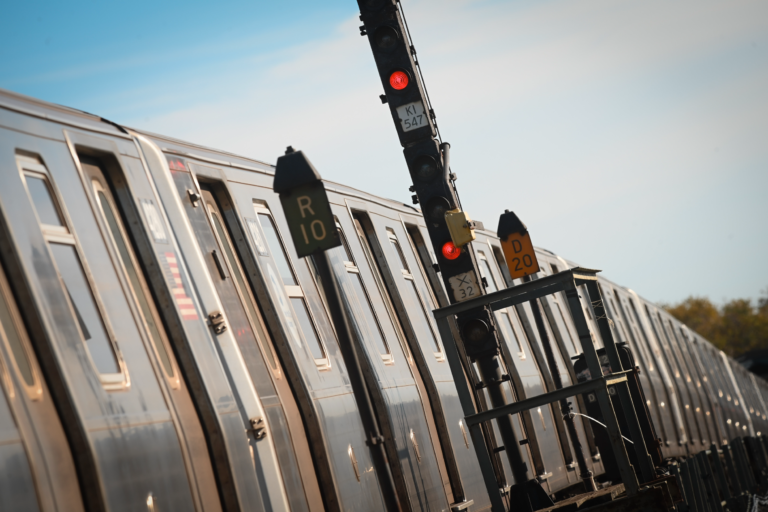
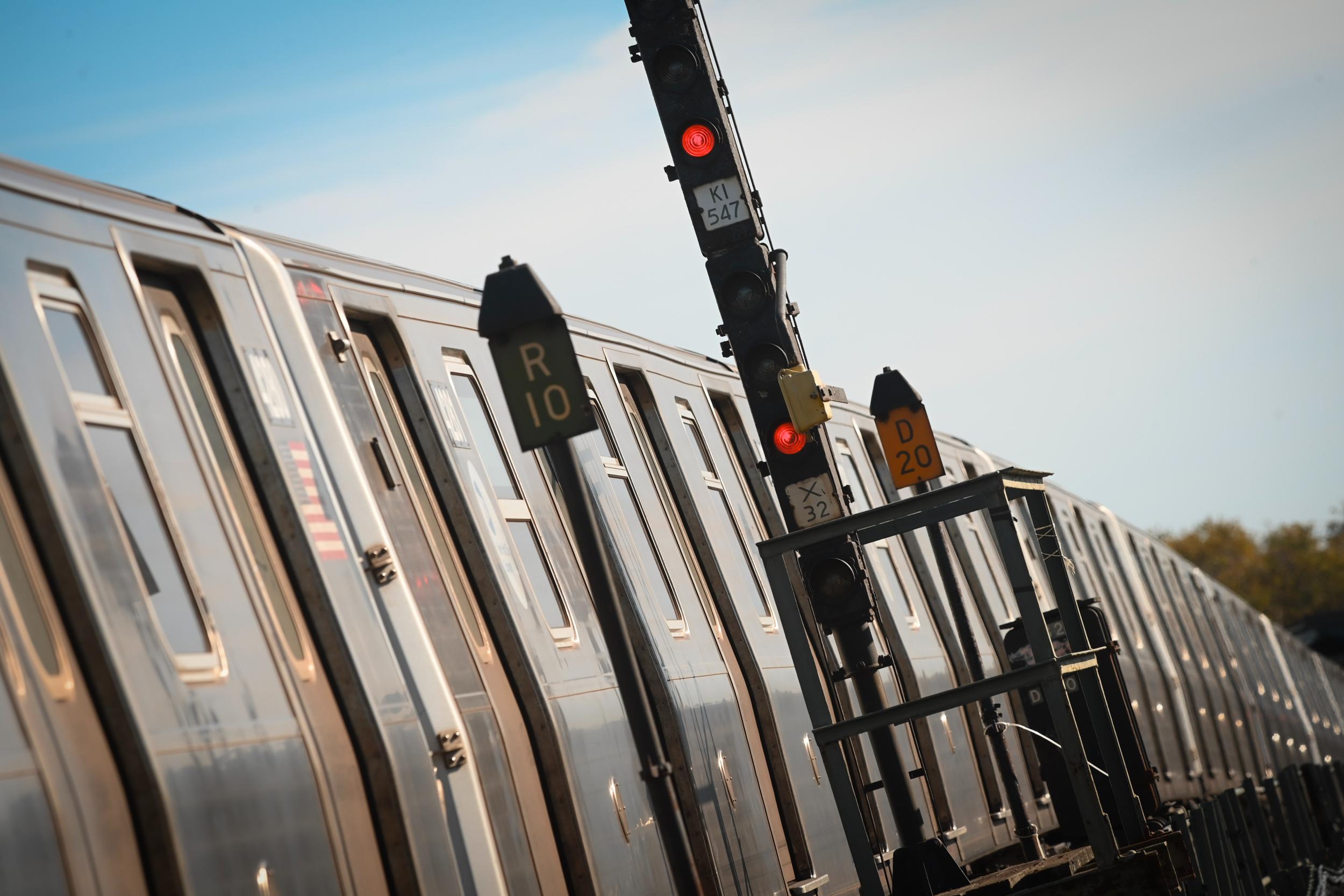
The Fulton Street Line in Brooklyn and the Liberty Avenue Line in Queens share a signal infrastructure that predates the invention of the transistor. The existing system detects whether a train is occupying a fixed track section but cannot determine where within that section the train actually sits — a precision gap that forces operators to keep wide, mandatory spacing between trains, capping how frequently service can run.

Maintenance costs grow steeper every year as original parts become impossible to source commercially. MTA Chair and CEO Janno Lieber described the operational result in plain terms: “Signal issues are the number one cause of subway delays.”

The 350,000 weekday riders who travel through the project corridor between High Street in Brooklyn and Ozone Park–Lefferts Boulevard in Queens absorb the real-world cost of that aging hardware every day. When the full upgrade is complete, all 750,000 riders who use the A and C lines across their entire routes on an average weekday will benefit from the improved system.

What CBTC Delivers That Fixed-Block Signals Cannot

Communications-Based Train Control replaces fixed-block logic with continuous wireless positioning data, allowing the rail control center to track every train to within a few meters in real time. That precision removes the wide safety buffer required by older technology, making it possible to run trains closer together and increase service frequency on existing track — without laying a single foot of new rail.

Earlier CBTC conversions in the system have documented results. After CBTC came online on the 7 line, on-time performance rose from 68% to 91%; the E line on the Queens Boulevard corridor saw train speeds climb by roughly 10% following its own activation. The A and C would also gain full interoperability with the R211 subway car fleet — new cars that come factory-equipped with CBTC receivers — unlocking shorter wait times across the routes once the transition is complete.

The project’s scope extends past signal replacement. It also includes upgraded tunnel lighting, new switch installations, and cabling to enable future cellular coverage through the tunnels — improvements for both daily riders and the maintenance crews who work the line at night.

Congestion Pricing Is Writing the Entire Check

Every dollar of the $1.9 billion investment comes from the congestion pricing program — the tolling system that began charging drivers entering lower Manhattan in January 2025, generating a dedicated revenue stream for transit capital spending. Governor Hochul framed the project as evidence that the policy is delivering on its central promise.

The path to stable funding was not without turbulence. After the tolling program launched, the Trump administration moved in early 2025 to revoke the federal approval that made the program possible, triggering months of litigation. A federal judge ruled decisively in March 2026 that the administration’s effort to eliminate the program was unlawful, clearing the legal path for the MTA to commit to large-scale capital projects like this one.

Disclosure on figures: When the MTA board approved the initial design-build contracts in December 2025, the Governor announced $1.75 billion covering both the CBTC contract and accessibility upgrades at five stations. The October 22, 2026 launch announcement put the signal modernization project’s price at $1.9 billion — the figure reflected throughout this article.

A New Construction Blueprint Cuts Costs by a Third

The contract structure breaks from MTA tradition. Rather than sequencing engineering, procurement, and construction into separate phases under different contracts, the agency consolidated all three into a single design-build award given to L.K. Comstock & Railworks in December 2025, chosen from three competing bids — an unusually competitive field for a specialized signal market.

MTA Construction & Development President Jamie Torres-Springer credited the design-build structure and a new installation strategy — one that installs CBTC directly without the costly step of maintaining legacy signals in parallel during the transition — for driving per-mile costs 33% below the average recorded on prior CBTC contracts.

The 2025-29 MTA Capital Plan builds directly on that model, dedicating $5.4 billion to modernize signals across more than 75 additional miles on the Broadway N/Q/R/W, Liberty Avenue A, Rockaway A/S, and Nassau Street J/Z corridors. The Fulton-Liberty project is simultaneously the largest single signal contract in MTA history and the cost benchmark for every project that comes after it.

Phase One Has Already Started

Work is not waiting on further approvals. Phase 1 targets aging switches and more than 250 feet of specialized track between 104 St and 99 St in Queens and is already underway. The MTA’s target for full project completion remains Q2 2032 — roughly six years of overnight construction on a subway system that operates around the clock every day of the year.

A Track Record of Delays Looms Over the Target Date

That timeline will face pressure from the start. A July 2025 investigation by Time Out New York found every single active CBTC project in the subway system running late — the F line in southern Brooklyn was three years behind, and the A/C/E upgrade beneath Eighth Avenue had slipped more than two years past its target. An independent consultant’s review obtained by Gothamist confirmed two of those contracts had also gone over budget, and a recently completed Queens signal project finished four years later than its original schedule.

Whether the design-build efficiency that trimmed per-mile costs by a third can also hold this project to its timeline — through six years of nightly track possessions on a line that never stops running — will determine whether the MTA’s new construction model becomes the standard for how New York builds transit infrastructure for decades ahead.

Source link