October 22, 2026:


SpaceX has been steadily building toward a milestone that would close the full reuse loop on the world’s largest rocket, and the next test flight appears set to be the most ambitious yet.
The company has now laid out what it is targeting for Flight 15, and the stakes are considerably higher than anything that has come before.
SpaceX unveiled the plans for Starship’s fifteenth integrated flight test through its official channels, confirming that the upcoming mission will attempt something the program has never done before: catching the Starship upper stage, known as Ship, using the mechanical tower arms at Starbase in Texas. This would be the first time both stages of the full Starship stack are recovered by the launch tower in a single flight, completing a full end-to-end reuse demonstration for the two-stage system.
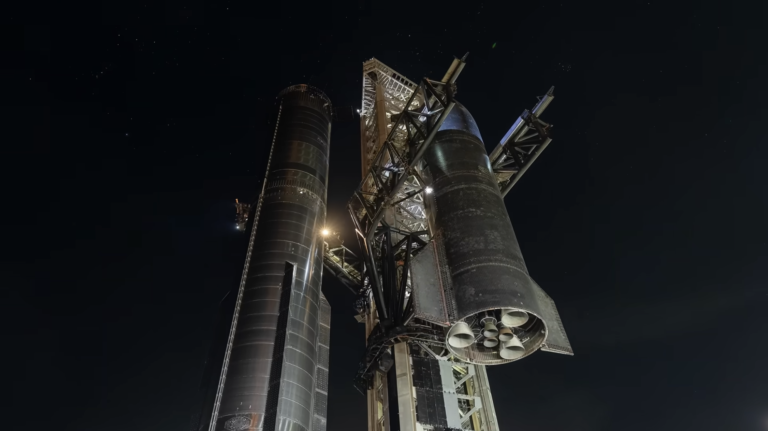
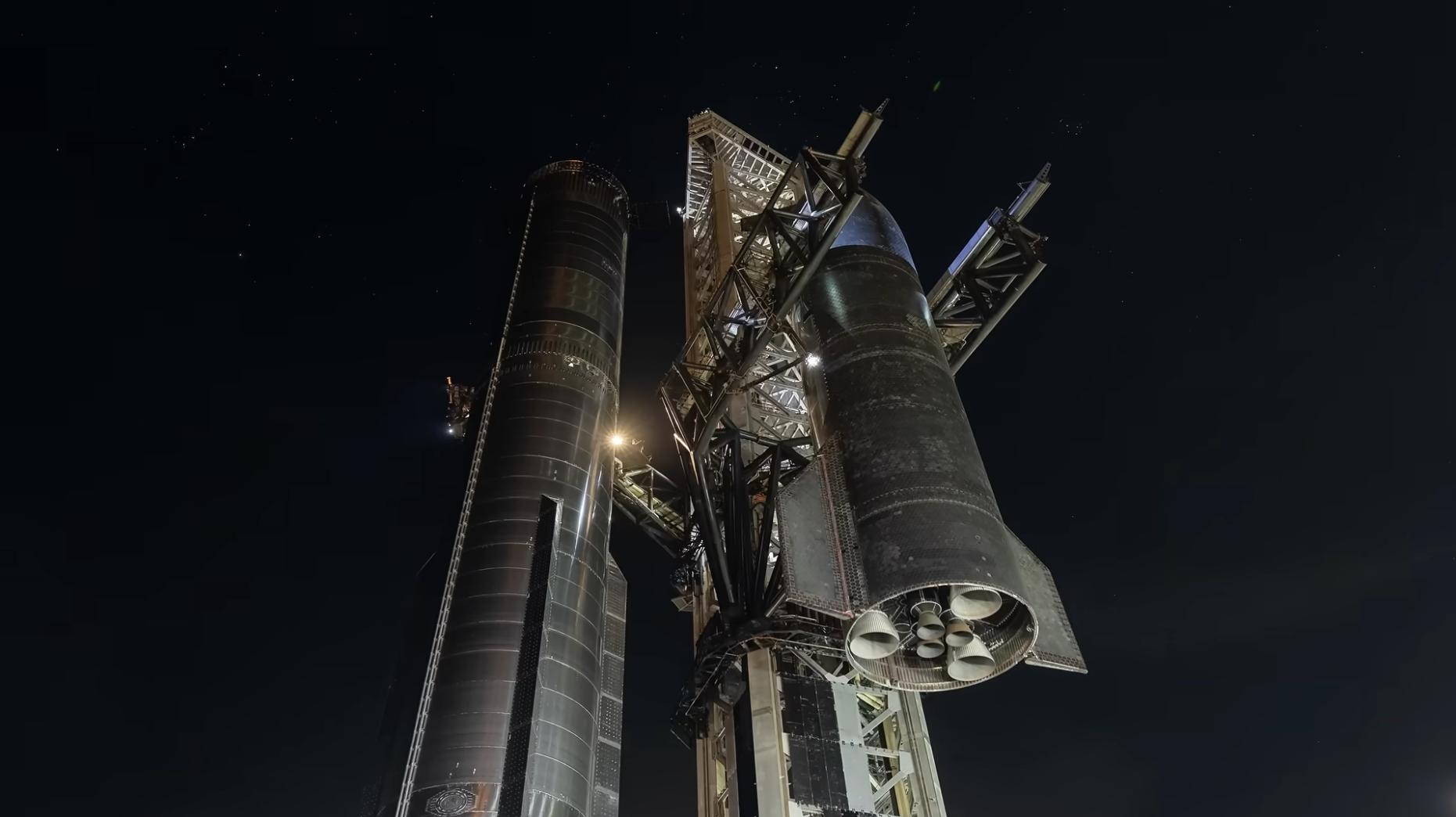
Flight 15 will fly Booster 22 and Ship 42, the fourth pairing built to the larger Starship V3 design standard, launching from Orbital Launch Pad 2 at the Starbase facility. Ground testing for the catch configuration was already underway before the announcement, with Ship 42 being lifted into catch position on the Mechazilla tower at Pad 2 during tests in mid-September 2026 to verify the hardware alignment and arm positioning.
The announcement came after Elon Musk addressed the subject publicly at the X Takeover event at Giga Texas, where he told roughly 2,000 attendees that Flight 15 is targeting a launch window approximately four to six weeks out, placing it somewhere around the Thanksgiving period. SpaceX had not set a specific date as of the week of the post, but the internal planning timeline and hardware preparations indicate a November target.
What makes Flight 15 different from every Starship test that came before it is the planned fate of both vehicles after separation, according to ArsTechnica. SpaceX has successfully caught Super Heavy boosters using the Mechazilla tower’s chopstick arms multiple times since October 2024, but every Starship upper stage has splashed down in the ocean at the end of its flight until now.
Flight 14, which launched on September 28, 2026, and reached orbit for the first time while deploying 26 Starlink V3 satellites, ended with the Super Heavy performing a return sequence and splashing down in the Gulf of Mexico while Ship descended to a designated splashdown zone in the Pacific.
For Flight 15, both stages are targeted for tower recovery. The Super Heavy booster is set to return to the Mechazilla tower for a catch attempt in the same manner as previous flights, while Ship 42 will guide itself back to the launch tower after completing its descent from orbit, with the tower arms positioned to catch it before it reaches the ground.
Musk said in September that if Flight 14 went well, a ship catch would be attempted on Flight 15, and he put the probability of success on the first try at somewhere between 50 and 60 percent.
If both catches succeed, Musk indicated that the hardware recovered from Flight 15 could be turned around and reflown on Flight 16, which would represent a rapid reuse cycle at a scale the program has not yet demonstrated.
While SpaceX had not confirmed a formal launch date at the time of the Flight 15 post, Musk’s public comments pointed toward a target in the weeks before Thanksgiving 2026, and the cadence of ground testing and hardware stacking at Pad 2 supported that window. The earlier provisional planning had placed a no-earlier-than date around October 19, but that window passed as preparations continued.
The pace at which Flight 15 follows Flight 14 will itself be a data point for the broader cadence goals the company has set for the program. NASA Administrator Jared Isaacman stated on Fox News that Starship launches on a near-weekly cadence going into 2027 is what he expects, and Musk himself projected weekly or twice-weekly Starship launches in 2027 during a White House livestream alongside NVIDIA CEO Jensen Huang.
The FAA has already approved up to 25 Starship launches per year from Starbase, and SpaceX is building out pad infrastructure at Kennedy Space Center’s LC-39A as well to support higher cadences across multiple sites.
Starship is SpaceX’s fully reusable two-stage launch vehicle and the largest rocket ever built. It consists of the Super Heavy first-stage booster, which provides the thrust needed to lift the stack off the ground, and the Starship upper stage, which carries payloads and is capable of reaching orbit, the Moon, and eventually Mars. Both stages are designed to be recovered and reflown in rapid succession, a design philosophy modeled on the reuse economics that made SpaceX’s Falcon 9 the most frequently launched orbital rocket in history.
The full stack stands approximately 123 meters tall, and each Super Heavy booster is powered by 33 Raptor engines using liquid methane and liquid oxygen propellant. The vehicle is central to SpaceX’s long-term plans for deep-space travel as well as near-term commercial ambitions including deploying Starlink V3 satellites, which are too large and heavy to fly on any other rocket in SpaceX’s fleet.
As of October 2026, Starship is still classified as a developmental launch system undergoing integrated flight testing. Fourteen integrated test flights have been completed since the program’s first launch attempt in April 2023, with each flight demonstrating progressively more complex capabilities. Flight 14 on September 28, 2026, was the first mission to reach orbit and deploy a payload, marking Starship’s first operational-style demonstration.
However, the vehicle has not yet completed a full recovery of both stages from a single flight, which is the primary engineering goal for Flight 15. Additional milestones required before Starship is considered operational for crewed missions include demonstrating on-orbit propellant transfer and proving rapid reuse turnaround times at scale. NASA’s Artemis program has designated a lunar-adapted version of the Starship upper stage as its Human Landing System, making continued progress on the test flight program directly tied to the timeline of returning humans to the Moon.
Starship’s first operational mission was Flight 14 on September 28, 2026, which successfully reached orbit and deployed 26 next-generation Starlink V3 satellites, the first batch of the larger constellation designed to provide significantly higher throughput than earlier Starlink generations. Before that flight, all previous Starship test missions ended without deploying any payload, as each flight was focused entirely on demonstrating vehicle performance and recovery capabilities.
Beyond Starlink deployment, SpaceX has commercial and government contracts lined up for Starship, including a contract with NASA to use a Starship variant as the Human Landing System for the Artemis program’s crewed lunar landing missions. A propellant transfer demonstration in orbit, which is required before the lunar lander can be tested in space, is also expected to be demonstrated in a future flight.
SpaceX has not publicly confirmed which specific flight number will carry the first propellant transfer demonstration, but the capability is central to the path toward using Starship as a lunar landing vehicle.