October 22, 2026:


Steam Next Fest opened this week, and among the thousands of demos competing for attention is one that takes a genuinely different approach to the cozy genre: Mafate, a free-to-download adventure set not in a fantasy pastoral world but inside a real volcanic caldera on a French island in the Indian Ocean — a place where roughly 700 people still live without a single road, accessible only on foot or by helicopter. Steam Next Fest October 2026 opened on October 19 and runs through October 26.
The Cirque de Mafate is a caldera formed from Piton des Neiges on Réunion Island, France. Its name from Malagasy “Mahafaty” means “lethal” — a reference to how difficult the caldera is to reach. Its residents, known as Mafatais, live in small hamlets called îlets scattered across relatively flat shelves of land inside the encircling cliffs. There are no automobile roads, only solar power and diesel generators. The caldera is part of the UNESCO World Heritage listing “Pitons, cirques and remparts of Réunion Island,” recognized since 2010.
The cozy game genre has grown explosively on Steam, with the tag appearing in roughly 675 percent more game descriptions between 2022 and 2025. Most entries are set in invented pastoral worlds — charming villages, fantasy farms, imaginary islands — where the setting exists to serve the game’s emotional tone. Mafate does something structurally different: it grounds every element of its design in a place that already exists and a community that already lives there.
“A cozy game is usually a fantasy of elsewhere,” Blue Ramen Studios’ announcement noted. “This one is a portrait of somewhere.” The wooden signposts inside the game point to real place names: Marla, La Nouvelle, the Piton des Neiges. Players navigate actual îlet geography, not invented terrain. The mail route they walk is the one a real mail carrier has been walking.
This is not a common design commitment. It makes Mafate something closer to an interactive documentary than a genre entry.
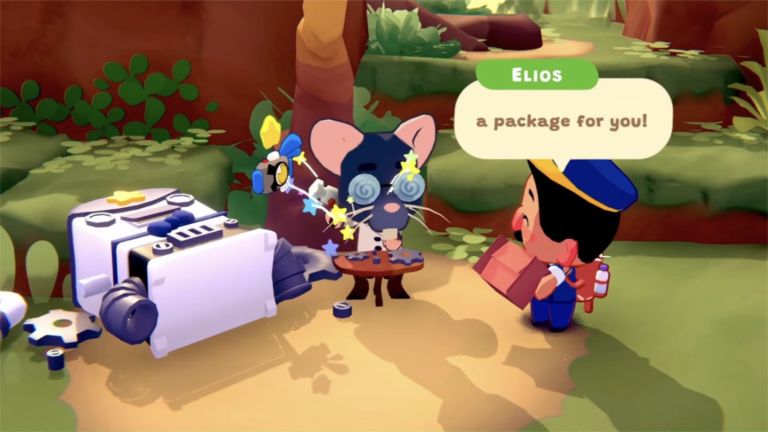
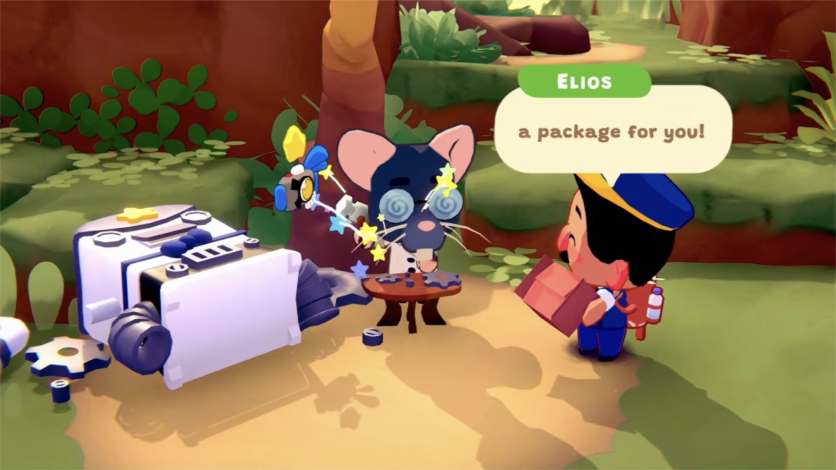
In Mafate, a young Creole woman named Luna has spent her entire life in mainland France, far from her family’s island roots. When her grandfather dies, she returns to Réunion to comfort her grandmother — and a mysterious event transforms her, sending her back to the 1970s as a magical camera. She finds herself accompanying the very first delivery route of the man who would become the Cirque’s legendary mail carrier — a person her grandmother likely knew, in a world she has never seen.
The central dramatic question is not a mystery or a conflict but a journey of belonging: can Luna, the camera, witness enough of this community’s ordinary life to understand what she lost by growing up so far from it? The game’s emotional register, as Blue Ramen’s announcement conveys, is warm but not weightless — grief and displacement sit beneath the soft, toy-like visuals. Luna’s ability to leave the camera body and possess native animals — slipping into a duck to cross a pond, borrowing a creature’s instincts to reach a hidden path — gives the mechanic a gentle surreal quality that fits the time-slip premise without explaining it away.
Three design systems carry the game: mail delivery, photography, and animal possession. Each one maps directly to something the Cirque de Mafate actually requires of its inhabitants.
Mail delivery — hiking from hamlet to hamlet without road transport — is the literal job of the Cirque’s real-world carrier, who remains one of the only practical links between its isolated communities. The game’s central verb (“deliver”) draws its stakes from the real logistical fact that these villages have no other way to exchange physical correspondence or small packages.
Photography in Mafate works through what the developer describes as a composition system that rewards patience and observation rather than subject-collection. Players must identify “unique life moments” and frame them deliberately — a system closer to photojournalistic judgment than the item-completion photography mechanics of games like Pokémon Snap. Luna IS the camera: the mechanic and the story are the same object.
The animal possession system asks players to understand the specific capabilities of each native species — swimming, climbing, or exploring routes a human carrier cannot reach — before borrowing those instincts to solve a puzzle. This ties the puzzle design to the real ecology of the island rather than to invented fantasy rules. The creatures called Bibiis — collectible hidden inhabitants of the valley — function as the game’s secondary discovery layer, rewarding the same careful observation the photography system demands.
Mafate is developed by Blue Ramen Studios, an independent studio based in Sainte-Marie, on the north coast of Réunion Island. The studio was founded by Loïc Manglou, who serves as creative director and CEO.
In August 2025, Blue Ramen became the first studio from a French overseas territory to represent France at the European Game Night — a competitive pitch event held alongside Gamescom in Cologne, Germany, featuring studios from across Europe. The studio won the pitch competition, beating over 100 applicants including large established French studios. The prize was €1,000 (approximately $1,120 USD) (exchange rate as of October 21, 2026, conversions are approximate) and an all-expenses-paid trip to the Madrid in Game campus.
The studio is affiliated with the Expressive Game Lab — a research laboratory at the Université de Lorraine — as its institutional research partner, and has previously developed Alon Paré, a cyclone-awareness educational game app commissioned by the French Red Cross.
The game is published by Blue Ridge Games, a new label established by IndieGameBusiness and The Powell Group.
The updated demo for Steam Next Fest is available free on Steam for Windows PC right now. The festival runs through October 26 at 10 a.m. PDT, giving players several more days to download and try it. The game supports both English and French interfaces.
No release date for the full game has been announced; Steam lists it as “to be announced.” A Switch version is in development, with the launch window still undetermined as of its June 2025 announcement.
The studio encourages players who enjoy the demo to add the full game to their wishlists on Steam.
Mafate is a cozy adventure game set in the Cirque de Mafate, a real volcanic caldera on Réunion Island, France, where roughly 700 people live without road access. You play as a mail carrier hiking between isolated hamlets to deliver letters, accompanied by Luna — a young Creole woman from mainland France who has been transformed into a magical camera and transported back to the 1970s. The core activities are mail delivery, photography (using a composition rating system that rewards patient observation), collecting hidden creatures called Bibiis, and possessing native animals to solve environmental puzzles and reach hidden areas.
Yes — it is genuinely road-free. The Cirque de Mafate is a volcanic caldera on Réunion Island, a French overseas territory in the Indian Ocean east of Madagascar. The caldera was formed by the collapse of the Piton des Neiges volcano and is enclosed on all sides by steep cliff walls called remparts. No road has ever been built into it. Its roughly 700 residents reach the outside world exclusively on foot via hiking trails or, occasionally, by helicopter. The cirque is part of the UNESCO World Heritage listing for the Pitons, cirques and remparts of Réunion Island, inscribed in 2010.
Blue Ramen Studios, an independent studio based in Sainte-Marie, Réunion Island, developed the game under the direction of founder and creative director Loïc Manglou. The team hiked the caldera during production as part of their production research. The studio describes its philosophy as making games that are “calm, thoughtful and deeply human, built far from noise and overstimulation.” The game was published internationally through Blue Ridge Games, a new label from IndieGameBusiness and The Powell Group.
The demo is free to download on Steam for Windows PC. It is available during Steam Next Fest October 2026, which runs through October 26 at 10 a.m. PDT. Even after the festival ends, free demos on Steam typically remain available unless a developer removes them — check the game’s Steam page directly for current availability. A Nintendo Switch version is in development but has no confirmed release date.