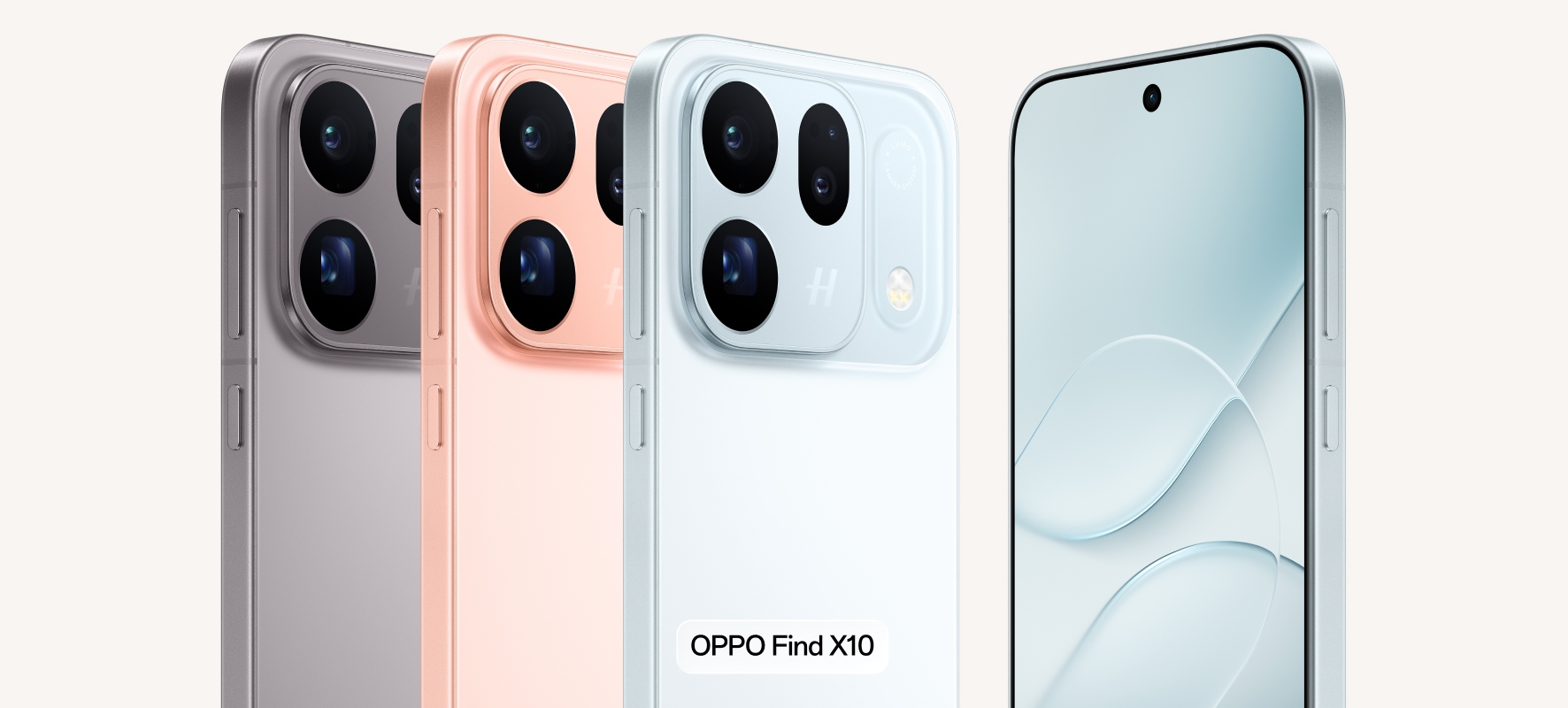
OPPO is set to launch the Find X10 globally on October 21 in Spain — the first flagship Android lineup to ship with a named third-party AI agent platform baked into the operating system — and the integration with Manus represents a genuine step forward in what smartphones can do autonomously.
But buyers evaluating the Find X10 need to understand one fact before granting the Manus agent permissions over their email, calendar, and files: both OPPO and Manus are subject to China’s National Intelligence Law, which legally compels any organization under Chinese jurisdiction to support and cooperate with Chinese state intelligence work, regardless of stated privacy architecture, Singapore incorporation, or server location.
This article provides the decision framework the product launch coverage does not: what the technology actually does at a technical level, what Manus’s 18-month history and security record reveal about the platform’s maturity, and what China’s data-access legal framework means for anyone who uses an agentic AI phone powered by these two companies.
From AI Features to Agentic Loops: How Agent Mode Works on Find X10
The distinction OPPO is drawing with Manus is technically significant and worth understanding precisely. The two companies announced their agentic AI partnership in October 2026, with Manus’s technology integrated at the OS level.
Previous versions of AI Mind Pilot, OPPO’s on-device intelligence layer, operated in a single-turn question-and-answer paradigm: user asks, AI responds. Agent Mode introduces an agentic loop — a multi-step execution cycle in which the system receives a high-level natural-language goal, decomposes it into discrete sub-tasks, selects appropriate tools for each sub-task, executes each step, observes intermediate results, adjusts its plan if necessary, and synthesizes a final output. The user specifies a goal; the agent determines how to accomplish it.
The underlying technical architecture is Manus’s Cascade framework, released with Manus 2.0 on September 28, 2026. Cascade introduces a planner-executor hierarchy: a top-level planner agent breaks the user’s goal into parallel and sequential sub-tasks and dispatches them to specialized executor agents — one for calendar and travel data, one for file management, one for web lookups, one for device contacts and communications. The planner agent collects intermediate results and synthesizes the final output. Manus reported a 23.2% per-task token reduction versus the previous architecture, an internal claim that has not been independently benchmarked.
On the Find X10 Pro Max, this loop runs against the MediaTek Dimensity 9600 Pro — built on a 2nm process node, featuring C2-Ultra and C2-Pro performance cores and MediaTek’s second-generation Super Efficient NPU. The NPU enables on-device neural inference for 7–13B parameter language models, which means the agent’s reasoning for local tasks — finding and organizing files, reading contacts, sorting photos — can execute entirely on the device without transmitting data to any server. OPPO states that ColorOS 17 prompts user consent before any content is uploaded to Manus’s cloud infrastructure for tasks requiring web access or more complex multi-step reasoning.
The engineering tradeoff embedded in this architecture is real: on-device-first processing preserves privacy for self-contained tasks, but any goal requiring current web information, complex multi-step reasoning, or external API calls routes to Manus’s cloud infrastructure. That cloud infrastructure — and the legal jurisdiction it operates under — is where the decision framework this article describes becomes relevant.
Who Is Manus: A $4 Billion Independent Platform After a Turbulent 18 Months
Understanding what Manus is, and what it has been through, is necessary context for evaluating the OPPO partnership. The Sacra Research Manus platform analysis published in 2026 provides one of the most detailed independent assessments of the platform’s market position.
Manus was built by Butterfly Effect, a Chinese team that also created the Monica browser extension. The platform launched in invitation-only beta in March 2025 to unusually wide attention — observers drew comparisons to DeepSeek’s debut for the scale of interest it generated. Its core proposition was distinct from earlier AI assistants: a general-purpose agent that accepts a high-level goal, is provisioned with its own virtual compute environment, and returns a finished result without user direction of intermediate steps. By December 2025, the company reached an estimated $127 million in annual recurring revenue, according to Sacra Research’s independent analysis.
That same month, Meta moved to acquire Manus for a reported $2 billion. The deal entered regulatory review in January 2026. On April 27, 2026, Chinese regulators blocked the acquisition outright. During the review period, Chinese authorities imposed exit bans on two of Manus’s co-founders, preventing them from leaving China while the review was active. This is standard practice in Chinese regulatory reviews of transactions involving nationals and sensitive technology. The exit ban was lifted following the blocking decision. Meta severed operational ties by mid-June 2026.
In September 2026, Manus announced return to independent operations and resumed normal service. On September 28, 2026, the company released Manus 2.0 and a new feature called Cue — which provisions agents with real working resources: email accounts, phone numbers, digital wallets, and computer access, enabling agents to act on the user’s behalf using these resources directly. On October 8, 2026, the company closed a $500 million funding round at a reported $4 billion valuation, with investors that included multiple international venture capital firms. Five days later, OPPO announced the partnership.
The company is 18 months old, has a $4 billion valuation, a blocked acquisition by the world’s largest social media company at the explicit direction of the Chinese government, and now ships agent provisioning for email, wallets, and phones. All of that context belongs in an evaluation of what it means to grant this platform access to your device.
Manus Security Record: Prompt Injection Disclosed and Patched in September 2026
On September 24, 2026 — four days before Manus 2.0 launched — Salt Labs published a Manus prompt injection disclosure covering a critical indirect prompt injection vulnerability.
The attack worked as follows: an attacker sends a malicious email to a user whose Manus account has been granted email access. When Manus processes the email as part of an agent task, the email’s content — controlled by the attacker — contains adversarial instructions embedded using JSFuck encoding, a JavaScript polyglot technique that transforms code into combinations of !, +, (, ), [, and ] characters. This encoding bypasses Manus’s content filters. The embedded instructions direct Manus to execute attacker-controlled code within the agent’s virtual environment. Because the attack enters the system through data the agent is legitimately processing — not through a direct attacker-to-model interface — it is classified as an indirect prompt injection, the more dangerous class of this vulnerability.
The vulnerability was disclosed through Meta’s bug bounty program while Manus was still operationally integrated with Meta’s infrastructure. Salt Labs confirmed the fix was effective before publication.
Three things matter about this disclosure in the context of the OPPO partnership. First, the vulnerability was discovered in Manus’s production system, not a theoretical model. Second, it was triggered via email — and Manus’s Cue feature, which launched four days after this disclosure, provisions agents with email accounts as working resources.
The attack surface that this class of vulnerability exploits expands with every additional resource Cue grants to an agent. Third, the patch addresses this specific exploit, not the underlying attack class. Indirect prompt injection is structurally enabled by any system where instructions and data share the same channel — a category that includes every general-purpose LLM-based agent, and one that security researchers regard as not yet fully solved at the architectural level.
Buyers deciding whether to grant Manus Cue permissions over their email, digital wallet, or phone number should understand that a demonstrated email-based attack against this specific platform was disclosed four weeks ago.
China’s National Intelligence Law Applies to Both OPPO and Manus: What That Means for Your Data
OPPO’s on-device processing default and explicit consent model are genuine design choices. They are not a legal exemption from China’s national data-access framework. Every Find X10 buyer who grants Agent Mode access to their data should understand the following:
The laws that apply:
National Intelligence Law Article 7 (2017) states: “All organizations and citizens shall support, assist and cooperate with the state intelligence work in accordance with the law, and keep the state intelligence work secrets they are aware of.” This obligation has no opt-out mechanism. It applies to all organizations under Chinese jurisdiction, including OPPO and its parent company, BBK Electronics Corporation Ltd., headquartered in Dongguan, Guangdong, China.
Data Security Law extraterritorial reach (2021) extended PRC data jurisdiction to processing activities outside China’s territory when those activities affect China’s national security or public interests. This provision is why Singapore incorporation does not exempt Manus from Chinese data law to the extent the company has operations, personnel, or data flows with Chinese connections.
Cybersecurity Law cooperation requirements (2017) require organizations operating in China to cooperate with cybersecurity investigations and store data locally for critical information infrastructure operators. BBK Electronics and its OPPO brand operate in China and are subject to this framework.
No company subject to China’s National Intelligence Law has publicly documented successfully refusing an intelligence cooperation request. The law includes criminal liability for non-compliance.
OPPO’s CEO for Australia and New Zealand, Tony Chen, acknowledged before Australia’s Joint Committee on Intelligence and Security that he could not guarantee OPPO would be able to protect user data from Chinese government access if legally compelled. That is the honest answer under the operative legal framework.
What data is at risk:
Agent Mode on Find X10, when fully utilized, processes: device file contents (photos, documents, presentations), email and calendar data (if app access is granted), travel booking confirmations and itineraries, web browsing context when the agent performs searches, location data for travel and mapping tasks, and — if Manus Cue permissions are granted — email account content, phone call metadata, and financial transaction data via digital wallet access.
Independent audit status:
As of this article’s publication, no publicly available independent security audit of OPPO’s ColorOS 17 data collection practices or Manus’s production data-handling architecture exists. OPPO’s stated on-device-first privacy design and Manus’s stated Singapore server consolidation are the companies’ own claims — neither has been confirmed by a named independent third party.
What buyers can do to reduce exposure:
- Enable on-device-only mode where available. This limits agent functionality but eliminates cloud data transmission for self-contained tasks.
- Do not grant Manus Cue access to email, phone, or digital wallet. These are the highest-risk permissions and the demonstrated attack surface from the Salt Labs disclosure.
- Review app permissions granted to AI Mind Pilot. Limit access to only the categories required for the use cases you actually intend.
- Use a VPN for network-level partial mitigation. Routing through a VPN does not change the legal obligations on OPPO or Manus, but may limit some forms of passive data collection.
No mitigation fully addresses the structural legal condition created by China’s National Intelligence Law.
Find X10 Hardware: Dimensity 9600 Pro and the Silicon Behind Agentic AI
The Find X10 launches globally as three models: the Find X10 E, the Find X10, and the Find X10 Pro Max. All three ship with ColorOS 17 and Agent Mode out of the box; Find X10 China launch specs detail the full lineup and pricing from the October 8, 2026 domestic release.
The Find X10 Pro Max carries the MediaTek Dimensity 9600 Pro — a 2nm chipset featuring C2-Ultra and C2-Pro performance cores, G2-Ultra NX GPU, and the second-generation Super Efficient NPU. The NPU delivers on-device inference for local tasks — file searches, contact lookups, photo organization — without round-tripping data to Manus’s servers. The Pro Max pairs this with an 8,000mAh battery, a 6.78-inch display, and a triple 200-megapixel Hasselblad co-developed rear camera system covering main, ultrawide, and telephoto focal lengths.
The standard Find X10 shares the 8,000mAh battery and carries a 6.59-inch 1.5K flat display. The Find X10 E provides the entry point to the lineup with scaled-down specs that OPPO has not detailed for global markets ahead of launch.
ColorOS 17 — Android 17-based — introduces what OPPO calls the Polar Light Engine for resource management, a floating navigation system across built-in apps, and a Living Flow Design framework. OPPO says the OS delivers 35% better app launch stability, 30% lower rendering demands, and 55.6% better background app retention versus ColorOS 16, and will roll out to more than 130 devices across OPPO, OnePlus, and Realme over time. These are OPPO’s own benchmarks; no independent verification has been published. The China stable rollout began October 8, 2026; the global unveiling was October 13.
OPPO has also stated that ColorOS 17 includes post-quantum security features. No specific algorithm or standard (such as NIST PQC 2024 finalists ML-KEM or ML-DSA) was named in available materials; this claim cannot be independently verified from current public sources.
Agent Phone Race: Samsung Set the Template in February, and Counterpoint Projects 80% of Premium Phones Agentic by 2027
OPPO is not the first Android OEM to market its flagship as an agent phone. In February 2026, Samsung launched the Galaxy S26 Series and positioned it around agentic AI, integrating Perplexity alongside Google Gemini and Bixby to build what Samsung described as the “foundation for more agentic AI experiences.” That positioning marked the first time a major Android OEM used “agentic” as a primary marketing frame for a device.
Google described Android itself as moving “from an operating system into an intelligence system” at its May 2026 developer conference, with Gemini demonstrations covering multi-app task execution including email triage, document creation, and purchase completion.
The scale of what these companies are converging toward is quantified by Counterpoint Research. According to a Counterpoint Research premium forecast, more than 80% of premium smartphones priced at $600 or above will carry agentic AI capabilities by 2027, and one in three smartphones across all price tiers will support some form of agentic AI by the end of next year. A July 2026 Counterpoint analysis described the shift explicitly: “as AI increasingly determines which services are accessed, which applications are invoked and how workflows are completed, competitive differentiation may gradually shift from hardware specifications and standalone AI features toward execution capability, ecosystem integration and contextual understanding.”
OPPO’s differentiation in this race is the specificity of its agent partner. Where Samsung bundled multiple general-purpose AI systems, OPPO has named Manus as a dedicated agent platform integrated at the OS level through a dedicated partnership — the first major consumer hardware deployment of Manus’s enterprise model, announced five days after the company’s $4 billion re-emergence from post-Meta-deal independence. Whether OS-level agent integration with a named third-party partner proves a more compelling proposition than bundled general AI features is the open question the October 21 launch will begin to answer.
What the Find X10 Represents — and What Buyers Owe Themselves Before Day One
The Find X10 is a genuine technological milestone: the first flagship Android device to embed a named AI agent platform at the operating system layer via an dedicated OS-level partnership, with hardware — the Dimensity 9600 Pro’s second-generation Super Efficient NPU — specifically designed to run agent loops on-device. Manus’s Cascade architecture is a meaningful step up from the single-turn assistant model. The travel planning, document organization, and photo workflow demonstrations showcase real agentic capability, not marketing theater.
The decision framework buyers need before October 21 is this: OPPO is a wholly owned subsidiary of BBK Electronics, headquartered in China, subject to China’s National Intelligence Law and Cybersecurity Law without exception. Manus was built by a Chinese team, had its acquisition by Meta blocked by China’s own regulators, had its founders held in China under exit bans during that review, and operates under a Singapore incorporation that Chinese law’s extraterritorial provisions reach in any case where the company’s operations intersect with China.
Neither company has been independently audited for data practices. Manus had a serious prompt injection vulnerability disclosed — and patched — four weeks ago, against an email attack surface that Cue has since expanded. The on-device-first processing model is a real privacy improvement for local tasks, but it does not change the legal framework that governs both companies.
Buyers who want an agentic AI phone and are comfortable with that framework will find the Find X10 Pro Max competitive on hardware, genuinely differentiated on software, and launching into a market about to become crowded. Buyers who require that their AI agent platform operate outside Chinese legal jurisdiction should note that no independent audit confirms where OPPO or Manus data actually flows under real-world conditions, and that both companies are legally required to cooperate with Chinese intelligence requests — whatever their privacy policies say.
Frequently Asked Questions
What is Agent Mode on OPPO Find X10, and how is it different from an AI assistant?
A traditional AI assistant answers one question at a time. Agent Mode introduces an agentic loop: the system receives a single natural-language goal — “plan my Tokyo trip” or “find and organize my Q3 expense photos” — decomposes it into discrete sub-tasks, selects tools and data sources for each, executes each step, checks intermediate results, and synthesizes a final output.
The architecture running this on the Find X10 is Manus’s Cascade framework, which uses a planner agent to coordinate specialized executor agents for file access, web search, calendar data, and communications. The OPPO-Manus partnership announcement describes the OS-level integration arrangement. The Dimensity 9600 Pro neural processor handles on-device inference for local tasks without transmitting data to external servers, while tasks requiring web access or complex reasoning route to Manus’s cloud infrastructure after an explicit user consent prompt.
Does Manus’s Singapore incorporation protect Find X10 users from Chinese government data access?
No. China’s National Intelligence Law (2017) applies to all organizations and citizens supporting or assisting Chinese state intelligence work, without geographic restriction. China’s Data Security Law extraterritorial reach explicitly extends PRC data jurisdiction to processing activities outside China’s territory when those activities affect China’s national security or public interest.
Manus was incorporated in Singapore, but was founded in China, has Chinese founders who were subject to Chinese government exit bans during a regulatory review in early 2026, and had its acquisition by Meta blocked by Chinese regulators in April 2026 on grounds that were not publicly disclosed. The legal framework requires cooperation with Chinese intelligence requests regardless of where a company is incorporated or where its servers are physically located. No independent audit of Manus’s production data flows has been published. National Intelligence Law full text Manus return to independent operations
Was there a real security vulnerability in Manus, and what does it mean for an agent that can access my email?
Yes. Salt Labs publicly disclosed on September 24, 2026, that Manus contained a critical indirect prompt injection vulnerability in which an attacker could embed adversarial instructions — obfuscated using JSFuck encoding to bypass content filters — inside an email that a user’s Manus agent would process. The embedded instructions could direct Manus to execute attacker-controlled code within the agent’s virtual environment.
The vulnerability was patched through Meta’s bug bounty program before public disclosure; Salt Labs confirmed the patch was effective. The significance for buyers is not the patched exploit itself, but what it demonstrates about attack surface: any agent with email access can be targeted through the emails it processes, and the severity of a successful attack scales directly with what permissions the agent holds. Manus’s Cue feature, which launched four days after this disclosure, provisions agents with email accounts, digital wallets, and phone numbers. The email-based attack class is not fully eliminated by patching a single exploit.
Is the Find X10 launching in the United States?
OPPO does not currently sell devices through major US carriers and has limited formal US retail presence. The October 21 global launch in Spain is expected to cover Europe, Middle East, Africa, and Asia-Pacific markets. Buyers in North America interested in the device will likely need to import it or purchase through gray-market channels, which carry additional warranty and software update implications.