October 19, 2026:

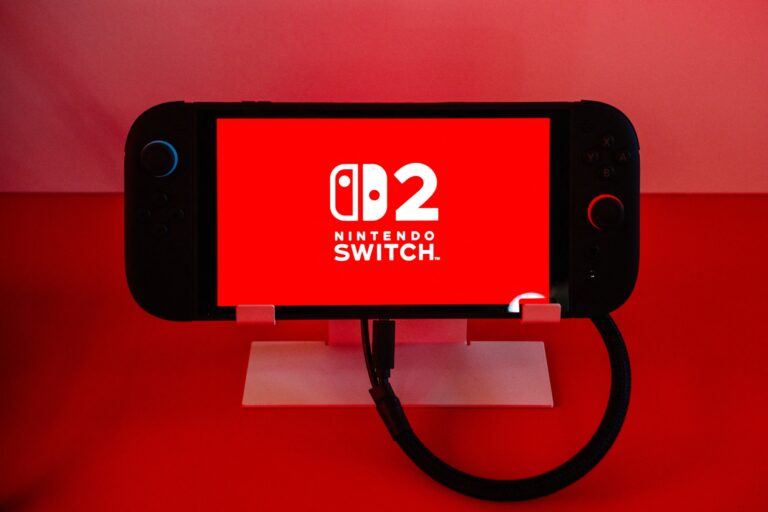
Nintendo has introduced a new version of the Nintendo Switch 2 in Europe, bringing a hardware change that could make the handheld console easier to maintain over time.
The updated model features a user-replaceable battery, allowing owners to swap out the battery themselves instead of relying entirely on professional repair services.
The change addresses a common concern with portable gaming devices: battery capacity gradually declines with repeated charging and years of use. However, a teardown comparing the original Nintendo Switch 2 with the new European model suggests that the update focuses primarily on repairability rather than gaming performance.
Although the revised console features changes to its internal components, it reportedly retains the same NVIDIA processor and 12GB of RAM.
For current owners, that means there may be little reason to upgrade, while first-time buyers could benefit from the easier battery replacement.

The most significant feature of the updated Nintendo Switch 2 model is its replaceable battery, according to Digital Trends.
Unlike handheld consoles that require extensive disassembly or specialized repair work when their batteries deteriorate, the new version is designed to make battery replacement more accessible to users.
Rechargeable batteries naturally lose capacity over time. As a result, an older handheld console may provide shorter gaming sessions even when its other components continue working properly.
A replaceable battery could help extend the useful life of the Switch 2 by allowing owners to replace a worn battery rather than replace the entire console. It may also make long-term maintenance more practical for players who use their devices frequently.
However, the available teardown information does not establish the exact replacement procedure, battery pricing, or whether Nintendo will sell replacement batteries directly to consumers in every market.
A teardown shared on X by user modyfikatorcasper compared the original Switch 2, identified as BEE-CPU-01, with the newer OSM-CPU-01 model.
The examination revealed several internal differences, including a redesigned motherboard, a different cooling fan, and a replaceable battery.
Despite these changes, the two consoles reportedly use the same NVIDIA chip and contain 12GB of RAM. The newer version sources its memory from a different supplier, but the teardown did not indicate an increase in memory capacity.
These findings suggest that Nintendo has revised the console’s internal design without substantially changing its core hardware specifications.
The updated motherboard and other components may show efforts to simplify manufacturing or make repairs easier, although the exact reasons for each redesign have not been confirmed.
Based on the reported teardown, the new Nintendo Switch 2 hardware revision does not offer an obvious performance improvement over the original model.
Both versions reportedly retain the same processor and RAM capacity. The examination also found no clear evidence of improved graphics capabilities or a more powerful cooling system.
Consequently, players should not expect the newer console to deliver higher frame rates, sharper graphics, or significantly faster loading times simply because of the revised internal components.
The different fan and motherboard do not automatically indicate better cooling or processing performance. Additional testing would be necessary to establish whether the revised hardware changes temperatures, noise levels, power consumption, or sustained performance during demanding games.
The practical difference is therefore expected to be easier battery maintenance rather than a better gaming experience.
There have also been reports suggesting that the updated Nintendo Switch 2 could feature a display manufactured by Sharp.
However, the unit examined by modyfikatorcasper reportedly retained the original display panel. The teardown therefore did not confirm that Nintendo had switched display suppliers across the updated model.
Further examinations of additional units would be needed to determine whether different display panels appear in other versions.
For buyers, this distinction matters because a change in display supplier does not necessarily mean a visible improvement in brightness, color reproduction, resolution, or power efficiency. Those characteristics would require separate testing.
The new model also appears to weigh slightly more than the original Nintendo Switch 2.
According to the reported measurements, the original console weighs approximately 400 grams without controllers and around 534 grams with the Joy-Con 2 controllers attached.
The revised model weighs approximately 410 grams without controllers. With the Joy-Con 2 attached, it is reportedly around 12 grams heavier than the original.
The difference is relatively small, although players who frequently carry their consoles or play in handheld mode may notice it when comparing both versions directly.
The available information does not establish precisely which redesigned components account for the additional weight.
For people who already own the original Nintendo Switch 2, the updated model offers limited reasons to replace a functioning console.
The reported hardware specifications remain largely unchanged, and there is no confirmed improvement in graphics or overall gaming performance. Unless easier battery replacement is particularly important to an owner, the benefits may not justify purchasing another console.
The situation is different for first-time buyers. A user-replaceable battery could make the updated model a more practical long-term purchase, particularly for players who intend to keep their handheld console for many years.
However, availability, local pricing, warranty conditions, and the actual battery replacement process should be considered before making a purchase decision.
The updated European model reportedly features a replaceable battery, a redesigned motherboard, a different fan, and a different memory supplier. It retains the same NVIDIA chip and 12GB of RAM.
The new model is designed around a user-replaceable battery. However, the exact replacement procedure and availability of official replacement batteries may vary, so buyers should consult Nintendo’s regional guidance.
There is no confirmed evidence from the reported teardown that the revised model offers improved graphics or higher gaming performance.
Yes. The revised model reportedly weighs approximately 410 grams without controllers, compared with around 400 grams for the original version.
Most existing owners have little reason to upgrade if their current console works well. The main advantage is easier battery replacement rather than a confirmed performance improvement.
The supplied information confirms sales of the updated version in Europe but does not establish its availability in other regions. Buyers should check Nintendo’s official regional listings for current availability.