HomeAuto Soderbergh Steps Into Batman Part II: His Sensor Physics Fit Gotham’s Cinema Exactly
Soderbergh Steps Into Batman Part II: His Sensor Physics Fit Gotham’s Cinema Exactly
October 17, 2026:
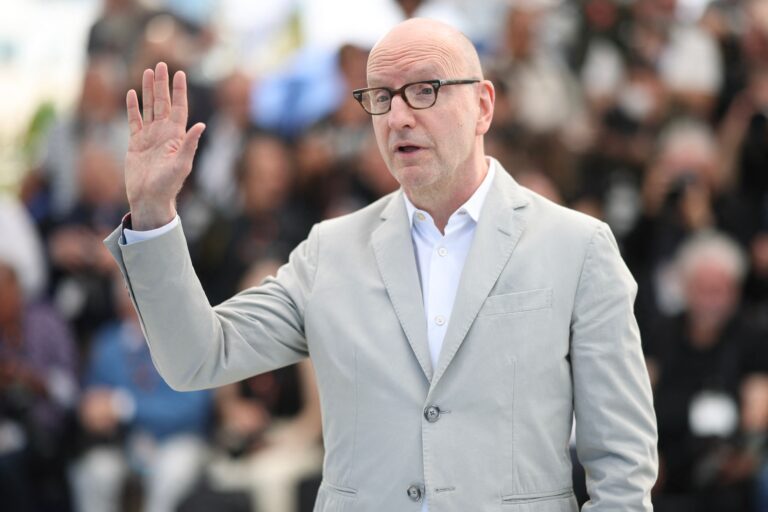
US director and screenwriter Steven Soderbergh poses during a photocall of the film “John Lennon: The Last Interview” at the 79th edition of the Cannes Film Festival in Cannes, southern France. Valery HACHE/AFP via Getty Images
When Steven Soderbergh stepped in on October 15 to complete principal photography on The Batman: Part II while director Matt Reeves attends to a family matter, Warner Bros. called it a logistical solution to keep a massive production on track. It is that — but it is also the first time in franchise history that a filmmaker with a documented, technically specific philosophy about sensor science and institutional corruption has entered the Reevesverse as a practitioner. The two directors have spent decades making work that, examined closely, has been asking the same question: what does it look like, in precise physical and social terms, when the systems meant to protect people quietly destroy them instead? The physics of how Soderbergh chooses to show that, and the physics of what Reeves built in Gotham, are a better fit than any press release will tell you.
The Batman: Part II — starring Robert Pattinson, Andy Serkis, Colin Farrell, and Sebastian Stan — remains on track for its February 18, 2028 theatrical release at Leavesden Studios in the United Kingdom, under cinematographer Erik Messerschmidt, who replaced Greig Fraser on the production. Soderbergh, credited as “Peter Andrews” on his cinematography work (Unsane, High Flying Bird), joined with, in Warner Bros.’ words, “the full support of DC Studios.” Reeves is expected to return for post-production.
The Sensor Physics Argument: Why Soderbergh’s Camera Is a Scientific Statement
Soderbergh shot Unsane (2018) and High Flying Bird (2019) entirely on an iPhone 7 Plus. In neither case was this a budget compromise or a novelty exercise. In interviews, Soderbergh articulated a specific physics argument for the choice: the iPhone’s sensor architecture — smaller, with narrower dynamic range and near-infinite depth of field at typical shooting distances — produces a different emotional register than large-format cinema, and that register was precisely what those films required.
The physics behind this are measurable and specific. The ARRI ALEXA Mini LF — the camera system used on The Batman (2022) under Greig Fraser and continued by Messerschmidt — carries a sensor measuring 36.70 × 25.54 millimeters (1.445 × 1.006 inches), with 14-plus stops of exposure latitude. That measurement — stops — represents doublings of light, and 14 stops means the camera can simultaneously capture detail in areas that are 16,384 times brighter than the darkest parts of the same frame. An iPhone 7 Plus captures approximately 10 stops by comparison, meaning the ratio between its brightest and darkest resolved areas is roughly 1,024 to one. The arithmetic difference between 1,024 and 16,384 is not a matter of megapixels or resolution. It is a description of how much of a physical space the camera can hold in a single image.
The other measurable difference is in depth of field, governed by the thin lens equation (1/f = 1/do + 1/di, where f is focal length, do is object distance, and di is image distance) and the circle of confusion — the maximum acceptable blur disc on the imaging surface. A large-format sensor requires a physically larger aperture to achieve shallow depth of field, which produces the pronounced optical bokeh (from the Japanese boke, meaning haze or blur) that defines the visual identity of The Batman (2022): the deep, chest-level focus on Pattinson’s eyes while the rain-slicked Gotham streets dissolve into overlapping rings of light behind him. A smartphone sensor, by contrast, achieves near-infinite depth of field because the lens-to-sensor distance is so short that the circle of confusion remains below the perceptual threshold across almost every shooting distance. Everything is in focus, all at once. Subjects cannot be separated from their environments by optical means. The frame collapses spatial hierarchy.
Soderbergh called this a feature. Gotham, as Reeves built it, is a city that refuses to let anyone separate themselves from their environment. Bruce Wayne cannot opt out of the city that makes him necessary. The environment is always in the frame.
Soderbergh’s Filmography as a Map of Institutional Failure
Traffic (2000) examined the drug war as an institutional system that destroys the families caught inside it while protecting the political and commercial interests that run it. Erin Brockovich (2000) traced how a corporation’s legal and regulatory apparatus was systematically used to conceal its poisoning of a community’s water supply. Contagion (2011) — perhaps the most prescient film about pandemic response made before an actual global pandemic — modeled how public health infrastructure is built in a way that optimizes for the appearance of function rather than actual protective capacity, and what happens to real people when the seams show. The Knick (2014–2015) spent two seasons inside a hospital whose institutional culture of prestige and hierarchy actively impeded the adoption of techniques that would have saved patients’ lives.
The pattern is not incidental. It is Soderbergh’s subject. The institution — the drug enforcement system, the corporation, the health department, the hospital — appears to exist to protect people. The film demonstrates, through specific physical and procedural detail, that it does not. The harm it causes is not villainous; it is structural. No one decides to hurt anyone. The system produces the outcome.
Reeves built Gotham on exactly this architecture. The corrupt officials in The Batman (2022) did not choose corruption as an ideology — they chose it as a survival mechanism inside a political structure that rewarded corruption and punished honesty. The Wayne Foundation’s philanthropy was revealed to be the laundry mechanism for the money that funded the crime it claimed to oppose. The Riddler’s targets were not chosen randomly; they were chosen as the specific nodes of institutional rot that made the city’s destruction structurally inevitable. This is not a superhero film where the villain has an evil plan. It is a systems analysis in which the “villain” is doing forensic accounting on an institution that has been failing in public view for decades.
Soderbergh has spent 35 years making films about exactly that kind of institution. His presence in Gotham is not a coincidence of scheduling.
What the Reevesverse Gets Right (and How Far It Has Left to Go)
The scientific credibility of the Reevesverse rests on a specific constraint that distinguishes it from every previous cinematic Batman iteration: Bruce Wayne is not a genius inventor operating decades ahead of real technology. He is an extraordinarily wealthy individual operating at the bleeding edge of real technology — outpacing commercially available products by perhaps 5–15 years, not 50–100.
Batman’s contact lenses in The Batman (2022) — miniaturized cameras with facial recognition, audio capture, and a belt-relay transmission system — represent exactly where real-world prototyping currently sits. XPANCEO, the leading smart contact lens company, closed a $250 million Series A funding round at a $1.35 billion valuation in July 2025, with 15 working prototypes built over 24 months. The company plans to demonstrate an integrated prototype in early 2027. Consumer availability remains a decade or more away.
The engineering reason is not mysterious. Four constraints define the gap between Batman’s fictional lenses and commercial reality:
The human eye provides essentially zero electrical energy — any embedded electronics must receive power from an external source (Batman’s belt relay is the exact architectural solution real prototypes use). The cornea is avascular, receiving oxygen from ambient air rather than blood vessels, which limits how much heat any embedded component can generate before causing corneal hypoxia. CMOS image sensors at contact-lens scale — below 0.3 square millimeters of active area — are fundamentally limited by diffraction effects at their aperture edges, requiring computational post-processing to produce useful imagery. And in any two-party-consent jurisdiction, a recording contact lens is a concealed recording device by default. Gotham’s institutional rot conveniently sidesteps this last problem; real-world deployment does not.
The Batman: Part II‘s confirmed winter setting will compound these challenges. Freezing temperatures affect battery discharge curves, polymer flexibility, and condensation on hydrophilic lens materials. A scientifically rigorous Part II could plausibly frame this as narrative tension — Batman’s surveillance capability degrading in conditions his technology was not optimized for, in a city whose relay infrastructure was already partially destroyed by the flood.
Post-Flood Gotham: What a City Actually Looks Like in Winter After a Catastrophic Breach
The second film will be set in the aftermath of the seawall destruction that ended The Batman (2022). The physics of that aftermath — in winter — are more specific than a visual aesthetic of snow and darkness.
The Riddler’s network detonated multi-point charges along Gotham’s coastal seawall, triggering a deliberate structural breach. In real coastal engineering, multi-point deliberate breach is the exact failure mode designated as a primary asymmetric threat by port security and critical infrastructure protection frameworks. When a seawall section collapses, mainland sediment drains through the gap, moves laterally, and the erosion accelerates: the physics of seawall scour and breach mechanics show how the very structure meant to protect the coast becomes an accelerant of its destruction once it begins to fail.
In a winter Gotham, the flood’s secondary effects would follow a predictable physical sequence. Water that infiltrated the city’s subterranean infrastructure during the flood — sewers, cable conduits, structural voids in masonry and concrete — would freeze and expand during winter cold snaps. Water expands approximately 9% in volume upon freezing; in confined structural voids, this generates hydraulic pressures exceeding 170 megapascals, sufficient to fracture reinforced concrete. A flooded coastal city in winter is not a city recovering from a disaster. It is a city whose disaster has gone subterranean and is continuing to unfold in silence, one freeze-thaw cycle at a time.
A 2018 study by Hussam Mahmoud and Akshat Chulahwat at Colorado State University — which used Gotham City as a literal test bed for a novel community disaster resilience model — found that the class stratification of the flood damage (uptown spared; Crown Point downtown flooded) was physically predictable, and that community recovery is not a smooth function of time and investment. Mahmoud’s model, borrowed from finite element analysis used in structural engineering, treated a community’s disaster response as a vibrating mechanical system: mass equals social vulnerability; damping equals recovery funds; stiffness equals infrastructure robustness. The study’s most counterintuitive finding: faster recovery is not always better. A community that bounces back too quickly can mask the underlying vulnerabilities that made the damage possible, creating conditions for a worse failure when the next crisis arrives.
Reeves has confirmed that Part II’s Gotham is a city in exactly this condition — formally recovering, deeply unstable, and politically unwilling to confront what the flood revealed about itself.
Bruce Wayne’s Neuroscience: Moral Injury Is Not PTSD
Matt Reeves has explicitly stated that The Batman: Part II will center on Bruce Wayne’s psychological deterioration, with Wayne attributing the flood catastrophe to his own failure to prevent it. The clinical framework that most precisely describes this is moral injury — a construct distinct from post-traumatic stress disorder in both its mechanism and its treatment implications.
Moral injury was formally defined by psychiatrist Jonathan Shay in 1994 in Achilles in Vietnam, comparing Vietnam veteran trauma to Homer’s Iliad. Shay’s definition requires three elements: a betrayal of what is morally correct, by someone with legitimate authority, in a high-stakes situation. Brett Litz and colleagues defined moral injury in 2009 as lasting psychological damage from perpetrating, witnessing, or failing to prevent actions that violate one’s deepest moral commitments.
Bruce Wayne’s situation fits the Litz formulation precisely. He did not cause the flood directly — but he failed to prevent it. The self-attribution of moral responsibility for a preventable catastrophe, in someone with a pre-existing commitment to preventing exactly that kind of catastrophe, is the clinical definition of the failure-to-prevent variant of moral injury.
The neurobiological difference from PTSD is significant. PTSD is fundamentally a threat-response disorder: hypervigilance, avoidance, arousal dysregulation — the brain’s danger-detection systems stuck in a permanent emergency state. Moral injury, by contrast, shows neural correlates distinct from PTSD: heightened activity in self-referential processing regions, particularly the precuneus, and disrupted connectivity in the circuits that moderate error-monitoring and self-evaluation. In colloquial terms: the brain’s internal tribunal becomes hyperactive while the mechanisms that would normally allow a verdict and a move forward become dysregulated. The cognitive experience is incessant self-prosecution, without the possibility of acquittal.
Treatment modalities that help PTSD — exposure therapy, EMDR — can actively worsen moral injury if applied without addressing the ethical dimension of the harm. There is no proven treatment that works by re-exposing someone to the failure they feel responsible for. What works, in clinical terms, is restoring moral agency: giving the injured person a meaningful way to act in accordance with the moral framework the failure violated.
Batman’s nightly operations are a failed attempt at this restoration. Every night out is another night in which he acts — and another night that ends without the flood being undone. The Reevesverse is depicting a moral injury loop that the treatment literature recognizes as clinically self-sustaining.
Harvey Dent and the Neuroscience of a Face Divided
Sebastian Stan is cast as Harvey Dent in The Batman: Part II. Dent’s comic-book trajectory involves catastrophic facial disfigurement and a complete personality bifurcation — the emergence of the Two-Face criminal identity coexisting with the Harvey Dent personality. Prior coverage has framed this as trauma-based dissociative identity disorder, but the clinical picture is more specific and, frankly, more disturbing.
DID is a diagnosis defined by the presence of distinct identity states with limited cross-state memory. It is real, it is clinically documented, and it almost never presents in the way popular culture depicts. What the Two-Face narrative actually describes — when stripped of the comic-book shorthand — is something the clinical literature calls identity discontinuity following acquired disfigurement: the documented failure of pre- and post-injury identity to integrate into a coherent self-narrative.
The face is the primary site of social recognition, both for its owner and for everyone they interact with. Severe disfigurement attacks simultaneously: the patient’s internal self-model, their social feedback loops, and the neurological processes by which they recognize themselves in mirrors. Face transplant psychology research documents a predictable adjustment arc: elation immediately after surgery, followed by more complex emotions at one to two years as the permanent psychological reality of the change settles in. Carla Bluhm at the College of Coastal Georgia found that recipients consistently express a desire to “blend in as humans again” — framing identity as fundamentally constructed through the recognition that faces make possible.
The fusiform face area — the temporal lobe region responsible for face processing — does not simply process faces. It participates in the self-referential processing that connects the physical face to the internal identity model. Damage to the face that is sudden, severe, and permanent attacks this self-referential circuit in a way that gradual aging does not. The Two-Face narrative is not a metaphor for disfigurement trauma — it is a compressed dramatization of what that trauma actually does to the continuity of a person’s identity.
The question for The Batman: Part II is whether Reeves has the space — and the restraint — to let that clinical reality drive the character rather than the coin-flip shorthand.
Why the Reevesverse Gets to Ask Scientific Questions Other Batman Films Cannot
The Batman (2022) earned $770 million worldwide and established a franchise on a specific scientific premise: Gotham is modeled on the composite of New York, Chicago, and New Orleans — cities with documented histories of systemic municipal corruption, stratified infrastructure investment, and politically managed neglect of low-income coastal zones. The seawall that fails at the end of the film fails because Gotham’s corrupt political class diverted the infrastructure maintenance funds for decades. This is not fiction invented to give the Riddler a target. It is the documented history of every major levee and seawall failure in American urban history, from the 1927 Mississippi flood to Hurricane Katrina.
Part II inherits this framework and extends it. The post-flood, politically destabilized, winter Gotham that the film will inhabit is not a superhero setting — it is an applied ethics problem with empirical scientific content. How does a city maintain rule of law when its physical infrastructure is failing? Can a vigilante’s impact scale against systemic collapse? Can a single human being absorb the moral weight of institutional failure, or does that weight simply migrate inward, producing the kind of self-sustaining psychological injury that makes the vigilante progressively less effective and progressively more dangerous?
Steven Soderbergh has made his career asking variants of all three of these questions. The fact that he is now on set in Gotham, holding a camera — even temporarily, even as a collaborative partner to Messerschmidt’s established visual language — is not a footnote to the film’s production history. It is the franchise’s scientific pretensions meeting a filmmaker who has spent a career proving they are not pretentious at all.
Frequently Asked Questions
Could Soderbergh’s different camera approach change how Batman Part II looks?
It depends on how much of the footage he directs survives the final cut and how Messerschmidt integrates it with the established visual language. Soderbergh’s documented philosophy — embracing smaller-sensor constraints rather than compensating for them — would produce measurably different bokeh and dynamic range characteristics than the ARRI ALEXA Mini LF system Messerschmidt has been using. Whether those differences read as a visible seam, as an intentional visual modulation (specific to certain sequences or perspectives), or as something integrated seamlessly in color correction and edit is a post-production question. Soderbergh joined with Warner Bros.’ explicit backing, suggesting the creative teams believe the footage will integrate — but the physics of two different sensor philosophies are real, and they will be in the edit room.
What is moral injury, and why does it fit Bruce Wayne’s situation better than PTSD?
Moral injury, as Brett Litz and colleagues defined it in 2009, is lasting psychological damage from perpetrating, witnessing, or failing to prevent actions that violate one’s deepest moral commitments. PTSD is fundamentally a threat-response disorder — the brain’s danger systems stuck in an emergency state. Moral injury is a disorder of meaning: the harm is not fear but guilt, shame, and incessant self-prosecution over a specific failure. Bruce Wayne’s response to the flood — attributing catastrophic civic harm to his own failure to stop it — is a clinical description of the failure-to-prevent variant of moral injury. The reason this distinction matters is treatment: what helps PTSD (exposure therapy) can worsen moral injury if it does not address the ethical dimension. Batman’s continued nightly operations are an attempt at moral restoration that the clinical literature predicts will not work without a meaningful change in what those operations can actually accomplish.
What is the real science behind the Gotham flood’s aftermath?
The seawall destruction at the end of The Batman (2022) triggered a multi-point structural breach — the same failure mode that coastal infrastructure protection frameworks designate as a primary asymmetric threat. In The Batman: Part II‘s winter setting, the flood’s secondary physics take over: water trapped in subterranean structural voids freezes, expands approximately 9%, and generates hydraulic pressures exceeding 170 megapascals in confined concrete. A 2018 Colorado State University study using Gotham City as a test bed for disaster resilience modeling found that flood damage is stratified by socioeconomic geography exactly as depicted in the film, and that fast recovery can mask rather than resolve the underlying vulnerabilities. The scientific picture of Part II’s Gotham — still collapsing, quietly, through the winter — is accurate.
What makes the Reevesverse scientifically different from other Batman films?
Every previous cinematic Batman placed Bruce Wayne 50–100 years ahead of real technology. The Reevesverse places him 5–15 years ahead. His contact lenses are architecturally identical to what XPANCEO — which raised $250 million in July 2025 to develop working prototypes — is currently building. His flood-ravaged Gotham is modeled on real cities where real infrastructure failed through documented political corruption and neglect. His psychological deterioration is described by a clinical construct — moral injury — that has specific, measurable neural correlates. This constraint, maintained rigorously through two films and a television series, is what allows the franchise’s scientific content to function as genuine conjecture rather than fantasy backdrop. When Soderbergh — a filmmaker who spent 35 years documenting exactly these kinds of institutional failures in the real world — stepped into that franchise this week, he stepped into the one comic-book film universe that has been operating on his wavelength all along.