October 14, 2026:


Valve’s still-unreleased hero-shooter Deadlock has now broken its own all-time concurrent player record four consecutive times — once for each hero released as part of the ongoing City Never Sleeps update campaign. The latest peak, 275,452 simultaneous players on Steam, was reached in the early hours of Wednesday morning UTC following Deadman Danny’s arrival on Tuesday, confirmed by GosuGamers. That pattern — a new ceiling with every scheduled drop, every time — is not coincidence: it is the observable output of an audience-growth mechanism Valve engineered directly into the update’s design.
The game still has no launch date. It remains accessible only through player invitations. There has been no paid advertising campaign. And yet Deadlock has spent the past two weeks among Steam’s top ten most-played games, drawing player counts that long-running live-service titles spend years trying to achieve.
The table below tells the story that a single headline number cannot:
| Hero | Date | Peak Concurrent Players |
|---|---|---|
|
Rat King |
October 2 |
228,208 |
|
Baba |
October 6 |
238,730 |
|
Solomon |
October 9 |
262,145 |
|
Deadman Danny |
October 13 |
275,452 |
Each row represents a Tuesday or Friday 2 PM PT hero release — and each row sets a new Deadlock all-time record. From the City Never Sleeps launch on September 29, which itself produced an initial burst of 228,086 concurrent players, to Deadman Danny’s peak fifteen days later, Deadlock has added more than 47,000 players to its ceiling without a single major announcement, promotional push, or change to its closed-beta access policy, per GosuGamers’ City Never Sleeps coverage.
The compounding record-breaking is not organic. It is the output of three interlocking mechanisms Valve built into the City Never Sleeps update.
The drop cadence creates scheduled demand spikes. Releasing heroes on Deadlock’s fixed hero release schedule means the gaming press, streaming community, and returning players all converge on the same two windows each week. Instead of distributing new-player activity across the week, the cadence concentrates it — producing a single measurable peak that feeds the next cycle of coverage, which draws the next wave of players.
The voting system creates direct investment in the outcome. Players earn votes by playing matches; the winning team’s votes count double, and first wins of the day also count double, per Deadlock’s hero voting system rules. The mechanism transforms each game session between hero drops into a vote for who arrives next — giving players a reason to stay active in the two-to-four days between releases. When each hero’s arrival is something the community collectively chose and waited for, first-day player counts are amplified by that anticipation.
The soul economy creates retention that pure hero shooters cannot match. Deadlock’s MOBA-derived resource system, in which players accumulate Souls from AI Troopers and enemy heroes, then spend them at in-match shops to build power, creates an investment loop absent from most hero shooters. Each match is a unique economic progression; no two games play identically because builds diverge from the first minutes. A losing team receives a 26% Souls comeback bonus, extending match lifespans and reducing early surrender. That depth converts curious newcomers — drawn in by the hero-drop coverage cycle — into retained players who return for the following drop.
Together these three mechanisms function as a network-effect accelerator: each hero drop raises the player count ceiling, which generates media coverage and social discussion, which draws in new players, who are retained by the soul economy until the next drop begins the cycle again. Valve designed this system. The records are its outputs.
Before Deadman Danny’s peak, Deadlock had already crossed a benchmark that seemed untouchable: Team Fortress 2’s all-time Steam concurrent player record of 253,997, set in July 2023, per GosuGamers’ Solomon TF2 coverage. Solomon’s October 9 peak of 262,145 surpassed it. A Valve game broke another Valve game’s record. And then, four days later, Deadman Danny erased that milestone too.
TF2 set its 2023 record after years of active development and a large, mature playerbase. Deadlock’s rising figures are coming from an audience that cannot even share a store page link with someone who does not already own an invitation.
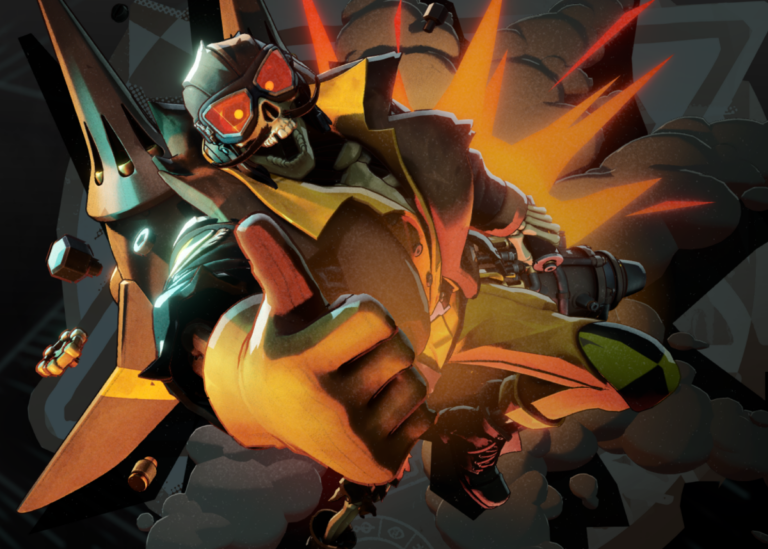
Deadman Danny is a “Reckless, High-Flying, Explosive” salesman from Fairfax Industries who arrived as the fourth of six City Never Sleeps heroes. He was the fourth-most-voted character in the community’s pregame ballot, trailing Rat King, Baba, and Solomon in the vote order determining release sequence.
His kit is built around aerial mobility and explosive ordnance at close-to-mid range. His jetpack ability, Chimera Mk1, allows sustained flight by holding the jump button — but the pack builds heat over time, and overheat sends him crashing down with area-of-effect explosive damage on impact, or a self-stun if he misses. The heat meter transforms flight from a free movement option into a managed resource; skilled play means knowing when to dive early before the gauge peaks. Strix Salvo fires a line of spirit missiles that embed in the ground and detonate on contact with enemies, with charged shots consuming accumulated marks for bonus damage and a lingering slow. Jettison Fuel sprays fuel at nearby enemies, dealing sustained weapon damage and reducing their bullet resistance — before a backblast that launches Danny himself backward, creating an escape option or repositioning tool. His ultimate, Close the Deal, grabs an enemy, rockets both skyward, and slams back down, dealing escalating spirit damage through the fall with a damage bonus against targets below 50% health.
The result is a mobile skirmisher who rewards patience with the heat gauge and punishes overextension with hard crashes — a playstyle that distinguishes him from the rest of Deadlock’s roster.
Deadman Danny is the fourth hero delivered under the City Never Sleeps framework — Valve’s largest content drop for Deadlock since the Old Gods, New Blood update in January 2026. Two heroes remain: either Violet or Nurse Harrow will arrive Friday, October 16, with the remaining character following Tuesday, October 20. Once all six are playable, the City Never Sleeps campaign will be complete, per GosuGamers hero schedule.
The update rebuilt Deadlock’s map from scratch around a haunted “Cursed Apple” theme — a reinterpretation of its existing New York-inspired setting styled as a supernatural New York — replacing previous neutral camps with nine themed Haunt encounters across four districts. A temporary merchant called the Broker was added, selling Corrupted Items with trade-off effects. The HUD was overhauled to display exact health values and ability availability, and the game migrated to Source 2 engine.
The pre-launch player numbers reframe what Deadlock’s eventual release will look like. By the time Valve assigns a launch date, Deadlock will have a playerbase that has been stress-tested through fifteen or more months of live updates, a competitive roster tuned against real player feedback across multiple meta shifts, and a community that has been growing organically since 2024.
The pattern mirrors Counter-Strike 2’s development trajectory: quiet construction, community-driven signposting through access expansion, and record-breaking figures arriving before any formal launch moment. For Deadlock, that launch will not be an introduction — it will be an acknowledgment of something that is already happening.
Whether Violet, Nurse Harrow, or October 20’s final hero extends the record streak will be visible within days.
Each hero release functions as a scheduled demand spike. The City Never Sleeps update runs on a fixed Tuesday/Friday 2 PM PT cadence, which concentrates player activity into predictable windows. Media coverage of each new character draws in returning and curious players; the soul economy retains them through the days before the next drop. The vote system gives active players a direct stake in which hero arrives next, sustaining engagement between releases. The result is a compounding cycle: each record draws coverage, coverage draws players, and the soul economy converts those players into retained participants for the following drop.
Yes — Solomon’s arrival on October 9 pushed Deadlock to 262,145 concurrent players, surpassing TF2’s all-time Steam peak of 253,997, which had stood since July 2023. Deadman Danny’s subsequent peak of 275,452 extended that advantage further. Both records were set while Deadlock remained in closed beta, accessible only by invitation.
Valve has not announced a launch date. The game’s Steam page still describes it as an early build with temporary graphics and experimental elements. Two heroes remain under the City Never Sleeps update — one arriving Friday, October 16, and the final character on Tuesday, October 20 — after which all six new heroes will be playable. Any formal launch announcement will come from Valve directly.
Deadlock’s soul economy is the resource system inherited from its MOBA DNA: players earn Souls — the game’s primary currency — by eliminating AI Troopers, neutral enemies, and opposing heroes throughout each match. Those Souls are spent at in-match shops to purchase items that change build direction and combat capabilities. Because each player’s build diverges from the first minutes, no two matches produce the same power structure, making the outcome unpredictable until the end. Losing teams receive up to a 26% Souls bonus as a comeback mechanism. This depth is the structural reason Deadlock retains players who might otherwise try one or two hero-shooter matches and move on — the soul economy creates compounding in-match investment that pure hero shooters cannot replicate.