
October 13, 2026:


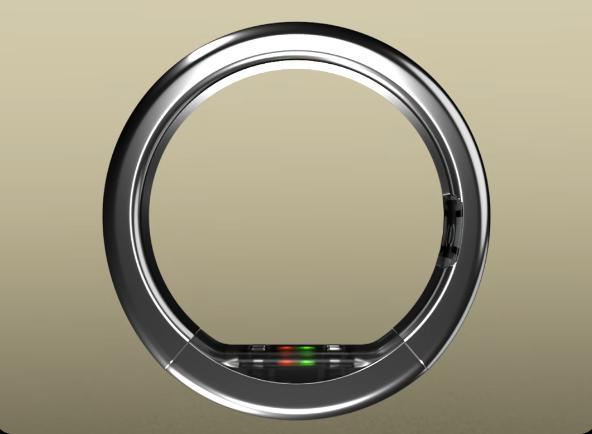
Ultrahuman is expanding into population-level preventive healthcare through a new partnership with Abu Dhabi health authorities. The smart ring maker plans to develop a biological age model that combines clinical biomarkers with wearable device data to estimate how a person’s health may be changing over time.
Announced on Monday, October 12, the two-year agreement with the Abu Dhabi Public Health Center (ADPHC) will focus on research and clinical validation. If successful, the model is intended to become accessible to people across the United Arab Emirates (UAE), potentially through government digital health platforms.
Biological age refers to an estimate of the body’s health and physiological condition, rather than the number of years a person has lived. While chronological age increases consistently over time, biological age estimates attempt to capture differences in how individuals age.
Ultrahuman’s proposed biological age model will combine information from wearable devices with clinical biomarkers to assess patterns associated with aging. These signals may include sleep quality, physical activity, cardiovascular health, and metabolism.
According to TechCrunch, the goal is to identify factors that may be associated with faster or slower biological aging. Such information could eventually help individuals better understand their health patterns and the potential value of preventive measures.
However, biological age estimates are not definitive measures of lifespan or guarantees of future health. The model will need to undergo research and clinical validation before its performance and practical value can be established.
Wearable devices collect information about physiological patterns and everyday behavior. Smart rings, wrist-worn trackers, fitness straps, and patches can capture different types of signals, depending on their sensors and capabilities.
Clinical biomarkers provide another layer of information, including measurements obtained through blood tests and other clinical assessments. Combining these sources could give researchers a broader view of the relationship between daily habits, physiological changes, and aging.
Ultrahuman says its existing model was developed using data from its users, combining chronological age with wearable signals and, for some individuals, blood-test markers. These data helped the company examine how health indicators typically change with age and identify patterns that differ from expected trends.
The model being developed with ADPHC is intended to be wearable-agnostic. This means it is not designed exclusively for Ultrahuman smart rings. Data from other compatible wearable formats could also contribute to the system.
The effectiveness of this approach will depend on data quality, the availability of suitable clinical measurements, and the model’s ability to produce reliable estimates across different population groups.
The partnership allows Ultrahuman to move beyond its existing customer base and explore health analytics at a bigger population level.
According to CEO Mohit Kumar, the company has sold approximately 800,000 smart rings globally. Its existing customers typically fall between the ages of 25 and 43, creating a relatively narrow demographic compared with an entire national population.
A potential rollout across the UAE could expose the biological age model to a wider range of ages and health profiles. This would provide an opportunity to evaluate how well the model performs beyond the population represented in Ultrahuman’s existing data.
The UAE is already one of the company’s 10 largest markets, accounting for approximately 4% to 5% of its overall revenue, according to Kumar.
Ultrahuman has operated in the country for nearly five years and reports customer retention around 25% higher than in its other markets.
The government partnership represents a different type of expansion, shifting the company’s focus from selling consumer devices toward developing health algorithms that could support broader preventive health initiatives.
Ultrahuman and ADPHC intend to make the biological age model available to people across the UAE following development and validation.
The company has identified government digital health platforms, including TAMM and Sahatna, as potential access points. These platforms could eventually allow residents to view their health age without relying solely on the company’s own consumer application.
However, the partnership remains in its research and validation phase. The companies have not provided a confirmed public rollout date, and access will depend on the project’s progress and implementation plans.
The next two years are expected to focus on testing and validating the model. A wider deployment is planned in phases, although the precise schedule has not been disclosed.
The use of wearable health data in a government-backed program raises important questions about privacy, consent, and the handling of sensitive information.
Kumar said the biological age model would not be trained on data from the UAE. Instead, Ultrahuman plans to deploy an algorithm developed using its existing data on UAE data.
He also stated that Ultrahuman would not have access to personally identifiable information through the program.
These assurances distinguish the model-development process from its planned deployment, but they do not independently establish all the privacy arrangements for the project. Details such as data governance, access controls, consent procedures, and retention policies remain important considerations as the program advances.
Clear safeguards will be essential to maintaining public trust, particularly when wearable information and clinical biomarkers are used together to assess personal health.
Ultrahuman’s biological age model is a proposed health analytics system that combines wearable device signals and clinical biomarkers to estimate patterns associated with biological aging. It is being developed and validated with the Abu Dhabi Public Health Center.
The partnership aims to research and clinically validate a biological age model that could eventually become available to people across the UAE. The project is intended to explore how health indicators, lifestyle patterns, and wearable data can help assess biological aging.
The memorandum of understanding covers two years of research and clinical validation. The companies have not announced a confirmed date for a broader public rollout.
Yes. Ultrahuman says the model is being designed to be wearable-agnostic, meaning data from compatible rings, wrist-worn devices, straps, and patches may be used alongside clinical biomarkers.
According to CEO Mohit Kumar, the model will not be trained on UAE data. Instead, an existing algorithm will be deployed on UAE data. He also stated that Ultrahuman will not have access to personally identifiable information through the program.
No. Biological age is an estimate based on selected health indicators, not a definitive prediction of lifespan. The model’s accuracy and clinical usefulness will need to be established through appropriate validation.
No. Oura has also announced a partnership with Abu Dhabi’s Department of Health. Its stated initial focus is women’s health and cardiometabolic risk, while Ultrahuman’s project specifically targets biological age estimation.