The average size of the world’s monitored wildlife populations has fallen 73% since 1970 — but the most important sentence in this week’s WWF Living Planet Report is not that number. It is a quieter one buried deeper in the text: where people have done the work, wildlife has come back.
Published October 7, the 2026 edition of WWF’s flagship biennial assessment — the 16th in its history and subtitled The Science of Hope — arrives with a deliberate reframe. The organization that has spent decades delivering alarming statistics is now pairing them with a body of documented conservation wins, arguing that the data prove reversal is possible, and that the only question is whether governments and corporations will trigger the next set of systemic changes before the window closes. That window, by WWF’s own estimate, is closing fast. COP17, the United Nations Biodiversity Conference, opens in Yerevan, Armenia, in 10 days.
What the Living Planet Index Actually Measures — and What It Does Not
The 73% figure comes from the Living Planet Index (LPI), maintained by ZSL (Zoological Society of London). This edition is the largest yet: 35,803 population trends covering 5,790 vertebrate species — mammals, birds, fish, reptiles, and amphibians — tracked from 1970 through 2022.
Understanding what the number means is essential context, because it is one of the most commonly misreported statistics in environmental coverage. The LPI does not measure the number of individual animals lost, the number of species extinct, or the number of populations in decline. It measures the geometric mean of the average proportional change across all monitored populations — functioning, as ZSL describes it, like a stock market index for wildlife health. Around half of the 35,803 populations tracked are stable or increasing; the 73% average is driven by the severity of the declining populations outweighing the gains in recovering ones.
The data’s breakdown by ecosystem type is stark: freshwater vertebrates fell 85%, terrestrial species 69%, and marine species 59%. The worst regional declines are in Latin America and the Caribbean, at -95%, followed by Africa at -80% and Asia-Pacific at -49%. North America registered -28% and Europe and Central Asia -23% — figures that partly reflect the fact that large-scale habitat transformation in those regions pre-dates 1970 and is therefore not fully captured in the index’s baseline.
Dr. Louise McRae, who leads the LPI research at ZSL’s Institute of Zoology, was direct in her reading of the findings: “This year’s Living Planet Index shows the need for rapid action to address the continued decline in biodiversity. However, behind every global statistic is evidence of wildlife populations rebounding and habitats recovering, driven by people working together to reverse biodiversity loss.”
Four Recovery Stories That Prove the System Can Work
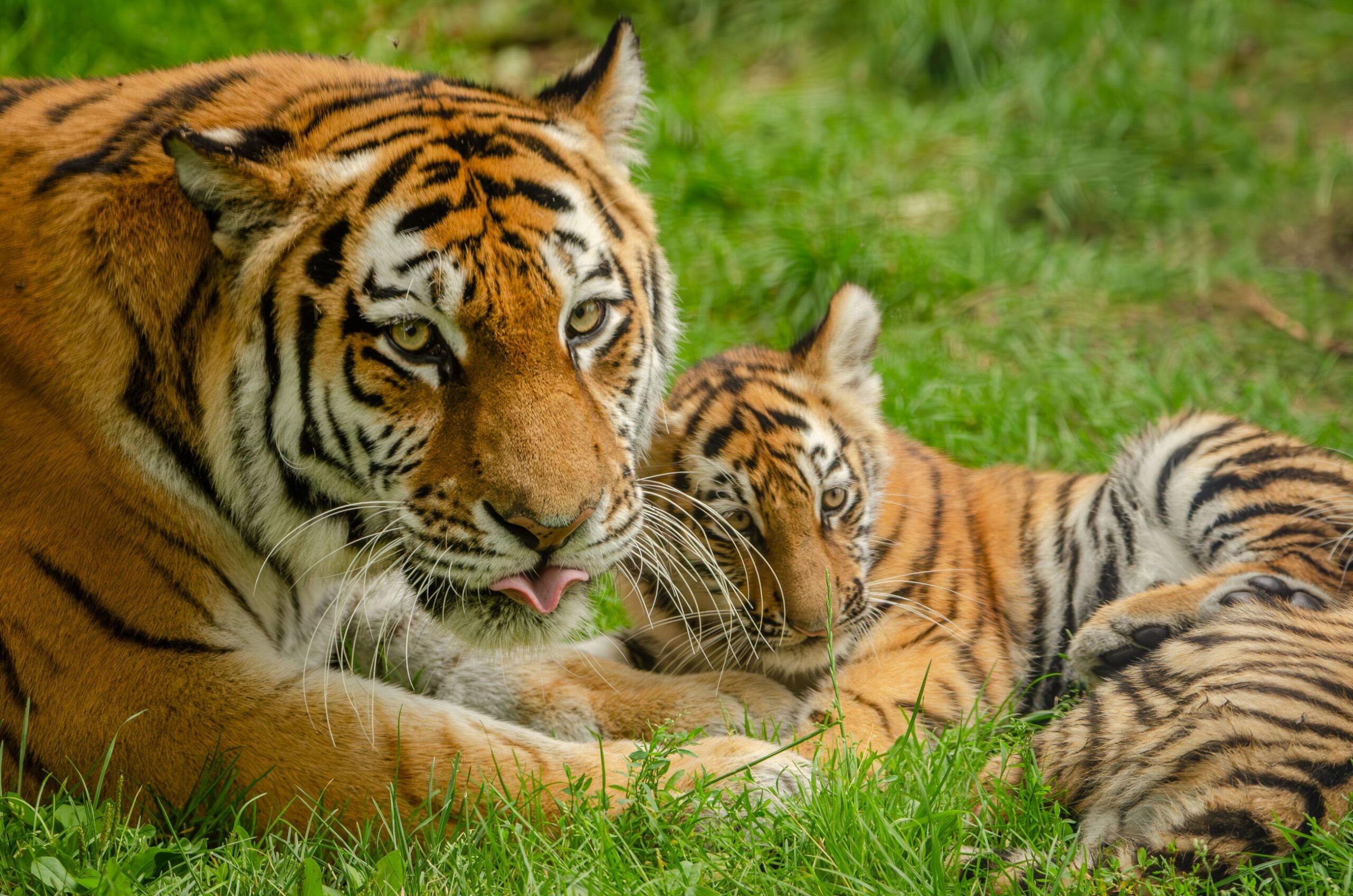
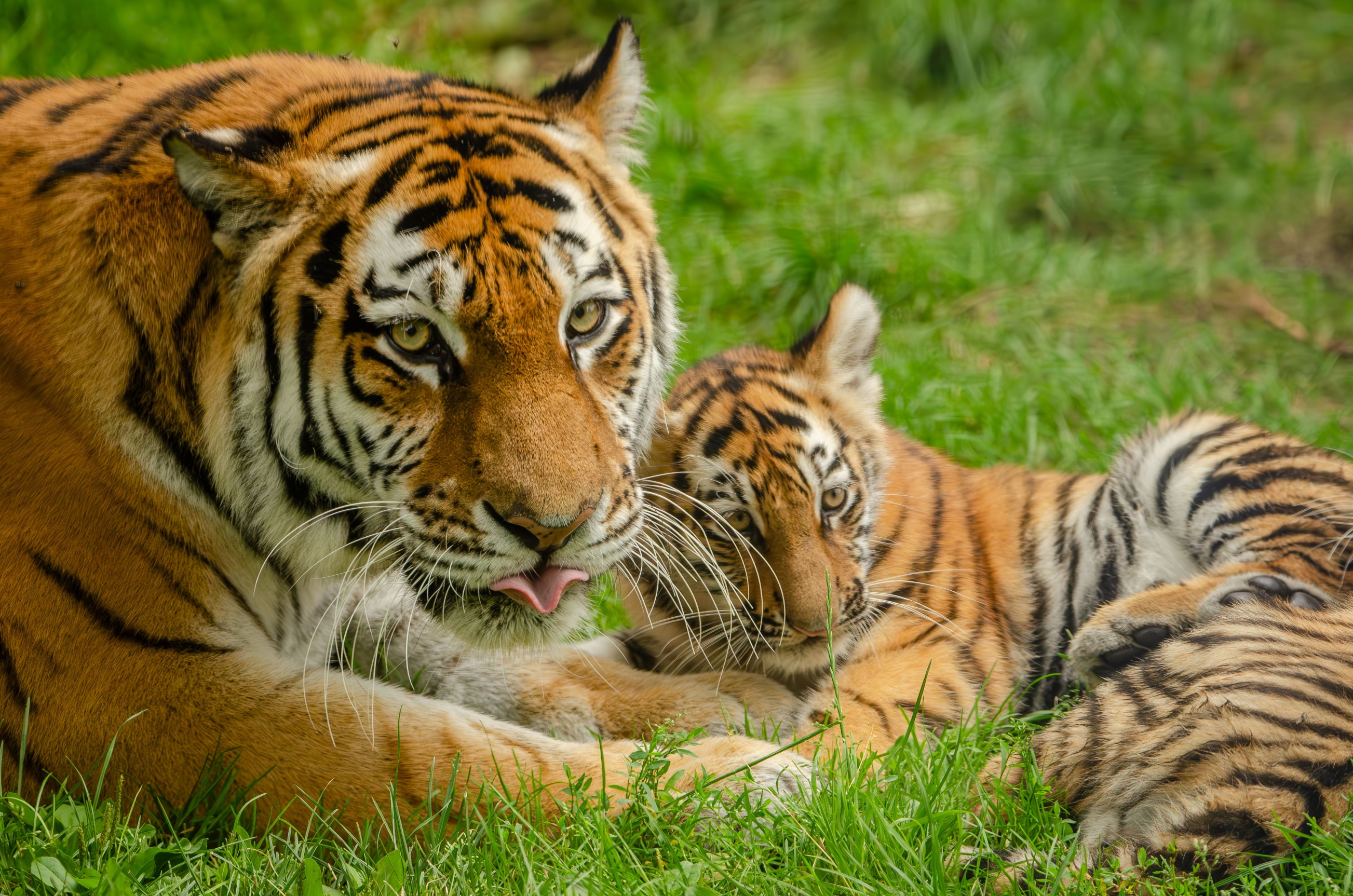
Tigers. Around 3,200 wild tigers remained in 2010 — a historic low. Coordinated international protection programs have brought that number to roughly 5,700 by 2025, a more than 70% gain in 15 years. The drivers were national tiger recovery plans, cross-border anti-trafficking enforcement, protected area expansion, professionalized ranger units, and demand reduction campaigns — a multigovernment effort without which the numbers would have continued to fall.
Green sea turtles. In October 2025, the green sea turtle (Chelonia mydas) became the first marine turtle species ever reclassified from Endangered to Least Concern on the IUCN Red List, skipping intermediate categories. The recovery reflects 50-plus years of coordinated work across roughly 80 nesting countries: protection of nesting females and eggs, beach management, regulations on coastal lighting, and turtle excluder devices in fishing gear. The reclassification is not a finish line, however. Ximena Barrera, WWF’s head of wildlife policy, cautioned that some regional populations — particularly in the Central South Pacific and North Indian Ocean — remain threatened, and that the species’ survival remains “conservation dependent”: remove the protections, and the gains reverse.
Bluefin tuna. By 2010, Atlantic bluefin tuna populations had collapsed by 80% from mid-20th-century levels, while Pacific bluefin had fallen to just 2% of unfished population levels. Science-based catch limits, international fisheries management agreements, and sustained consumer pressure for certified sustainable fish have reversed both declines. Neither Atlantic nor Pacific bluefin is now considered overfished.
Southern African elephants. African savannah elephants remain endangered globally, but in the southern African subregion — where local communities hold direct stakes in elephant stewardship through legal frameworks built around community-based natural resource management — populations are growing. The lesson is structural: who governs the land matters as much as how much land is protected.
Three Systems Driving the Losses
WWF’s authors are explicit that these wins cannot reverse the global trend on their own. Three large-scale systems bear the bulk of responsibility for the continuing decline.
Fossil fuels drive the climate change now affecting every ecosystem on Earth. Industrial agriculture is the single largest direct cause of habitat loss, operating through mechanisms that flow directly into consumer supply chains: soybeans grown in formerly wild areas of Brazil and Argentina to feed livestock, palm oil replacing tropical forest, cattle grazing converting savannah. Every product that traces back to these sources is a link in the chain. In 2023, approximately $7.3 trillion flowed into economic activities that actively harm nature, compared with only $220 billion directed toward activities that protect or restore it — a ratio of more than 30-to-1 working against biodiversity, according to UNEP’s State of Finance for Nature 2026.
“This is not just about wildlife,” said Daudi Sumba, WWF’s chief conservation officer. “It’s about the essential ecosystems that sustain human life.”
Tanya Steele, chief executive of WWF-UK, framed it in terms of economic exposure: “Nature loss is already sending us the bill through growing risks to our food security, water supplies, economy and resilience to climate shocks. The extreme weather we’ve seen this summer is a stark reminder of what’s at stake.”
What Are ‘Positive Tipping Points’ — and Is the Food System Ready to Cross One?
The report’s most analytically ambitious contribution is a section on “positive tipping points,” developed in collaboration with researchers at the University of Exeter. The concept, well-established in climate science, describes the threshold where a large, complex system shifts into a new state that becomes self-reinforcing and increasingly cheap to sustain.
Dr. Steve Smith of the University of Exeter, who led this section, pointed to solar power as proof of concept: “Just as solar power went from niche to dominant in a generation, nature’s decline is not inevitable. It’s the sum of our choices, and these choices can tip.” Electric vehicles crossed 20% of global car sales in 2024 for the first time. Both transitions were once expensive and subsidized; neither is any longer.
WWF argues that food systems and financial markets are at an earlier stage of the same transition arc. The levers are not novel — redirecting agricultural subsidies away from nature-destructive practices, enforcing moratoria on deforestation-linked commodity supply chains, shifting institutional investment portfolios away from nature-negative sectors — but the pace of change lags the energy transition by years. Kirsten Schuijt, WWF International’s director general, said the reframe from alarm to action is intentional: repeating the same dire statistics without pairing them with demonstrated solutions risks inducing paralysis. “While the window for a different future seems to be narrowing, it remains open,” Sumba said.
COP17: Yerevan Is the First Real Accountability Moment for 30×30
Twelve days after the report’s publication, government delegations will convene in Yerevan, Armenia, for COP17 — the 17th Conference of the Parties to the UN Convention on Biological Diversity, running Oct. 19–30. The conference carries the slogan “Taking Action for Nature,” and it will host the first formal global review of collective progress under the Kunming-Montreal Global Biodiversity Framework — the 2022 agreement committing 196 nations to protecting 30% of the planet’s land and ocean by 2030, the so-called “30×30” target.
WWF’s assessment is that government progress toward these targets remains “well short of what is required,” and the organization is pushing negotiators in Yerevan to move from commitments to implementation: scaling renewable energy, ending environmentally harmful subsidies, and halting deforestation. These are obligations already on paper, waiting to be honored. COP31, the climate summit, follows six weeks later, opening Nov. 9 in Antalya, Türkiye.
Does the Living Planet Index Overstate the Decline?
The 73% figure has not been without scientific challenge. A 2024 study published in Nature Communications by researchers at Charles University (Toszogyová, Smyčka, and Storch) found that the LPI’s calculation method is biased by several mathematical issues that impose an imbalance between detected increasing and decreasing trends, leading to overestimation of actual decline. A 2021 study in Nature Ecology and Evolution (Buschke et al.) found that random population fluctuations, a structural feature of how populations are monitored, biased the global LPI downward by approximately 9.6%.
These critiques have not gone unanswered: a 2022 response in Nature (Loreau et al.) argued that the re-analysis methodology was unable to detect well-established trends like global warming and continental bird abundance declines, and that downplaying biodiversity loss on the basis of methodological concerns carries serious risks.
Both ZSL and WWF have acknowledged the methodological debate, noting that the LPI is designed as a relative trend indicator rather than a census, and that the directional signal — sustained, long-term decline — is consistent across multiple independent biodiversity metrics: the IUCN Red List Index, the Biodiversity Intactness Index, and documented extinction rates running 100 times or more above the pre-human background rate. The debate about the magnitude of decline does not change the direction.
Frequently Asked Questions
What does the 73% Living Planet Index decline actually mean?
It does not mean the world has lost three-quarters of all wild animals, or that 73% of wildlife populations are in decline. The Living Planet Index measures the average proportional change in population size across 35,803 monitored populations of 5,790 species, using a geometric mean. About half of those populations are stable or increasing; the 73% average is driven by the severity of the declining populations outweighing the magnitude of gains elsewhere. Think of it as a stock market index — the average can fall sharply even when many individual stocks are up, if the ones falling are falling very hard.
If conservation worked for tigers, turtles, and tuna, why is the global index still declining?
Because successful conservation remains geographically and taxonomically concentrated. The recoveries documented by WWF are real and significant, but they cover a small fraction of the species and ecosystems experiencing pressure. The systemic drivers — industrial agriculture, fossil fuel combustion, and the 30-to-1 finance gap favoring nature-destructive investment — continue to operate at a scale that localized conservation wins cannot offset on their own. The report’s argument is not that conservation is failing, but that conservation cannot succeed in isolation from changes to the food and finance systems that drive the losses in the first place.
What is the “30×30” biodiversity target, and is the world on track to meet it?
The Kunming-Montreal Global Biodiversity Framework, agreed to by 196 nations in December 2022, commits signatory governments to protecting 30% of the world’s land and 30% of its ocean by 2030. WWF’s assessment, ahead of COP17 in Yerevan this month, is that collective government progress is “well short of what is required.” The Yerevan conference is the first formal global review of how nations are doing — expect significant pressure on governments with large remaining gaps between their stated commitments and their implemented policies.
How does the food system drive wildlife loss more than climate change?
Climate change is the dominant driver in some regions and ecosystems (coral reefs, Arctic, alpine zones), but habitat loss and degradation caused by agricultural expansion is the most frequently reported threat across the entire LPI dataset. The mechanism is direct: land that was forest, wetland, or grassland is cleared to grow food crops or graze livestock. The specific supply chains most implicated are soy (primarily for livestock feed, grown in South American forests and savannahs), palm oil (driven into Southeast Asian and West African forests), and beef (the single largest driver of Amazon and Cerrado conversion). Unlike climate change, which requires global emissions reduction to address, food-system-driven habitat loss is a supply chain problem that responds to procurement policies, subsidy reform, and consumer demand.