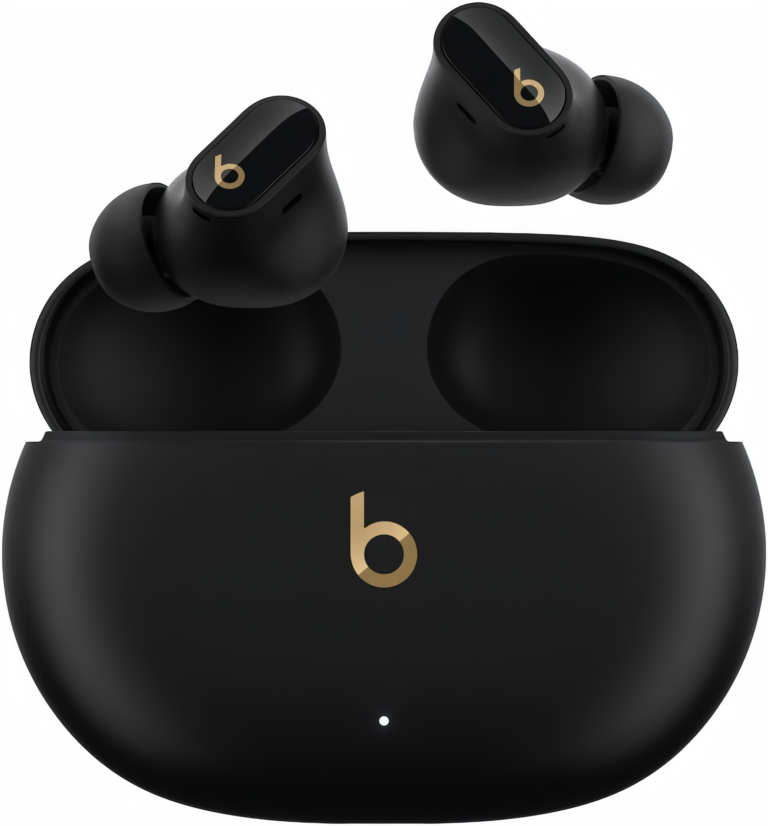
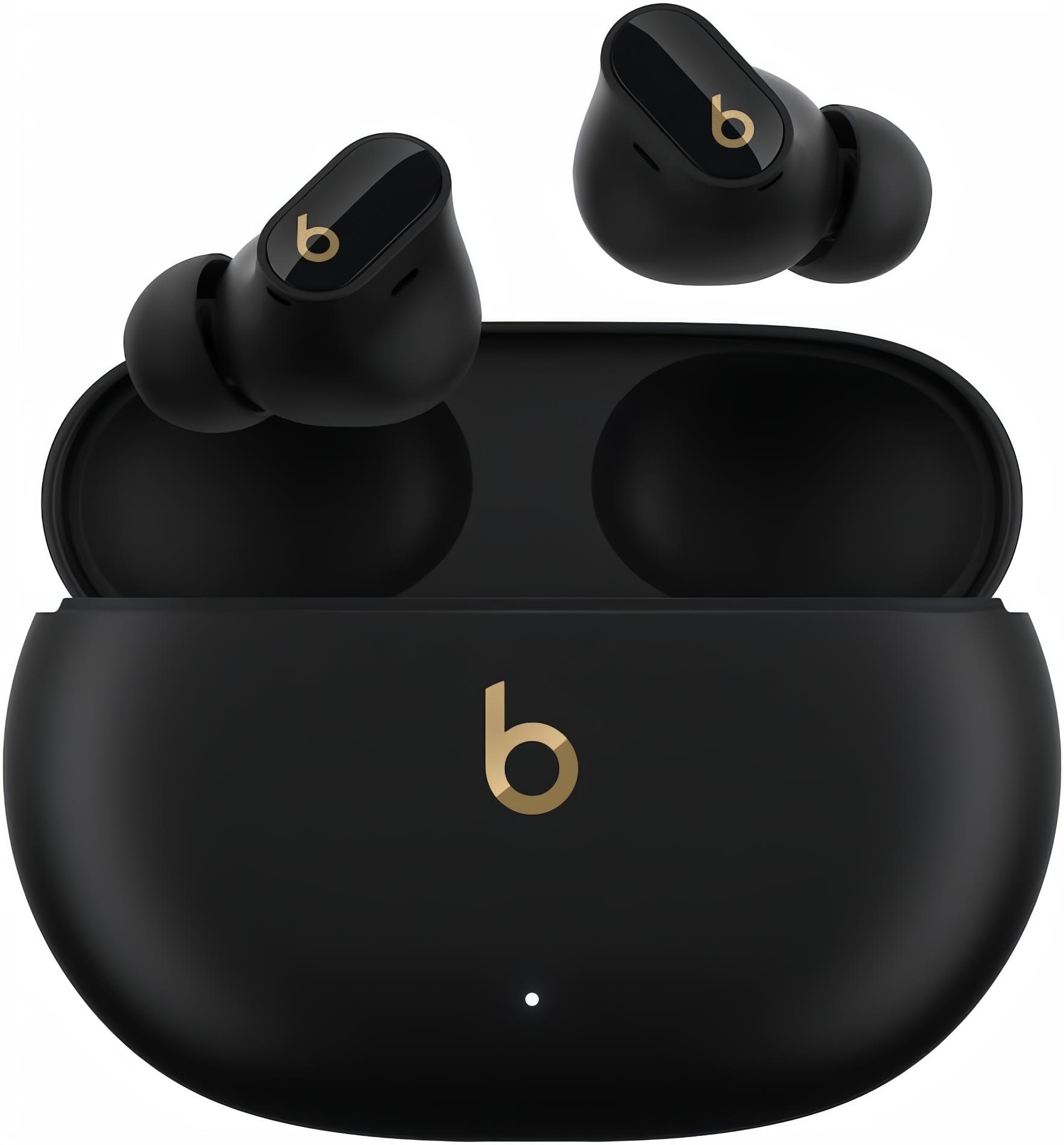
Amazon has matched the all-time low price on the Beats Studio Buds+ in Black/Gold, dropping the earbuds to $89.95 — a 47% cut from the $169.99 launch price and a figure that price-tracking tools have recorded only once before. The deal ties the product’s cheapest-ever Amazon price, set previously on July 8, 2025, and represents an $80 saving on a set of earbuds that launched with genuinely improved hardware over its predecessor. For readers deciding whether to act: the price is real, the hardware tradeoffs are specific, and understanding both matters before checkout.
Why $89.95 Is the Right Moment — and What Makes This Deal Defensible
The Beats Studio Buds+ launched at $169.99 in May 2023. At that price, reviews from What Hi-Fi?, Engadget, Expert Reviews, and Gear Patrol rated it a strong mid-tier option — competitive, well-designed, and meaningfully upgraded from the original Studio Buds, but not the outright class leader in ANC performance. At $89.95, the calculus changes. Reviewers who called the earbuds “arguably the best wireless earbuds that Beats has ever made” were saying so at $169.99; at $89.95, that verdict gets considerably easier to accept.
The price drop corresponds to where the product sits in its lifecycle: three-plus years into a single generation, with newer competitors from Sony (the WF-1000XM6) having entered the market. Consumer electronics typically follow this curve — the engineering cost is amortized, chip production is mature, and the original R&D investment is recovered. The result is a better-than-launch value, not a clearance product with hidden problems.
The deal was posted to Slickdeals on October 8, 2026, and as of publication remains active on Amazon with free shipping. Readers who want to verify the current price before purchasing should check the Amazon product listing directly, as flash sale prices can change without notice.
Inside the Hardware: What the Two-Layer Transducer Actually Does
The headline feature of the Studio Buds+, beyond its price, is the acoustic architecture that distinguishes it from both its predecessor and the generic Bluetooth earbud market.
Each earbud houses Beats’ proprietary two-layer transducer — a driver built with two distinct diaphragm layers that flex together to produce mechanical movement across a wider frequency range than a single-layer driver can manage. In practical terms, the outer layer handles lower frequencies, and the dual-layer coupling reduces intermodulation distortion — the smearing of bass frequencies into the midrange that gives cheap earbuds their muddiness. Three new acoustic vents on the Studio Buds+ housing manage air pressure inside the ear canal, reducing the stuffed-ear sensation that plagues sealed ANC designs during extended wear.
Beats pairs the transducer with a hybrid ANC system: external (feedforward) microphones capture ambient noise before it enters the ear canal, while internal (feedback) microphones measure what residual noise reaches the eardrum, allowing the processor to generate a more accurate inverted anti-noise signal. The result is the 1.6x ANC improvement over the original Studio Buds — a figure Beats claims versus its first-generation product. Expert Reviews, in hands-on testing, noted improvement was present but underwhelming: the ANC was effective enough but less transformative than the multiplier suggests. The three-times-larger microphone array compared to the original Studio Buds contributes to both ANC quality and call clarity.
The IPX4 rating is achieved under IEC standard 60529, meaning the earbuds can withstand water splashing from any direction — appropriate for workouts and light rain, but not submersion. The Class 1 Bluetooth specification produces up to 100 meters (328 feet) of theoretical range in open air — a specification that matters more for connection stability in dense RF environments than for literal cross-room use.
The Chip That Explains Everything Missing
Here is the most important technical context for any reader comparing the Studio Buds+ to AirPods Pro 2: the Studio Buds+ runs on Beats’ proprietary processing platform — not Apple’s H1 or H2 chip that powers AirPods Pro. This distinction is responsible for nearly every feature the earbuds do not have.
Apple’s H2-chip exclusive features include Adaptive Transparency, Personalized Spatial Audio, head-tracked Spatial Audio for films and games, Conversation Awareness, and Adaptive EQ — among other capabilities. Adaptive Transparency dynamically reduces loud impulse sounds in Transparency mode; Personalized Spatial Audio uses a selfie-based scan of your ears to calibrate HRTF processing; head-tracked Spatial Audio adjusts the sound field in real time as you turn your head during film or game playback; Conversation Awareness automatically lowers volume when the wearer starts speaking; Adaptive EQ continuously tunes the frequency response to the acoustic fit of the eartip. None of these are available on the Studio Buds+.
What the Studio Buds+ does provide is static Spatial Audio with Dolby Atmos — a fixed surround-sound rendering that does not respond to head movement. For music, the distinction is minor. For films and games where the spatial field should rotate with your head, the gap is noticeable. Reviewers who praised the Spatial Audio implementation were, in most cases, evaluating it as a music feature; readers who want it for immersive movie playback should factor in the limitation.
The Android Beats app is considerably more limited than the iOS experience — app functionality is location-only, with no EQ adjustment or ANC customization. Android users who want granular sound control should be aware this is not currently a feature the platform offers.
What $89.95 Buys Versus the Alternatives
vs. AirPods Pro 2 (~$199–$249): Apple’s own flagship earbuds offer H2-chip features listed above, better ANC by measurable margins in third-party testing, lossless audio support via Lightning with compatible Apple devices, and the full Apple ecosystem integration. They cost roughly twice the current Studio Buds+ price. For Android users, AirPods Pro are not a realistic alternative at all — the iOS-exclusive feature set loses most of its value outside Apple’s ecosystem.
vs. Sony WF-1000XM5 (~$200–$250 depending on current Amazon pricing): Sony’s flagship true wireless earbuds deliver class-leading ANC in the TWS form factor — broadly rated as the best ANC in earbuds by audio publications as of their launch, now partially superseded by the WF-1000XM6. The XM5 also supports LDAC codec on Android, which enables near-lossless wireless audio — a capability entirely absent from the Studio Buds+, which is locked to AAC and SBC. For Android users who prioritize audio fidelity or the best possible ANC, the XM5 or XM6 at their respective prices is the more complete package.
vs. Bose QuietComfort Earbuds II (~$199+): Bose’s TWS flagship is another ANC leader in the category. Like Sony, it delivers meaningfully better ANC than the Studio Buds+ in controlled testing conditions. The Bose design also lacks Multipoint, making the comparison on connectivity features roughly equal. Price differential from the current Studio Buds+ deal is approximately $100 or more.
The Studio Buds+ advantage: At $89.95, neither Sony nor Bose at any sale price comes within $100 of this price point. The Studio Buds+ is the only option in this comparison that delivers genuine (not marketing-grade) ANC, 36-hour total battery life, full dual-platform native feature support, and a design with consistent positive reviews — at sub-$100 pricing. For users who are not audiophiles, do not require head-tracked Spatial Audio, and are buying in a mixed Apple/Android household or as a primary Android device, the value case is genuine.
Battery, Fast Charge, and What the 36-Hour Figure Means
The 36-hour total battery life breaks down as 9 hours from the earbuds themselves and 27 hours from the USB-C charging case. The 9-hour figure applies with ANC off; with ANC active, the earbuds themselves last approximately 6 hours, reducing the total case-assisted figure. The prior-generation Studio Buds offered 24 hours total — a 50% increase in case capacity is meaningful for travelers and commuters.
The Fast Fuel feature delivers one hour more playback from just 5 minutes of charging the case. There is no wireless charging on the Studio Buds+ case — it charges via USB-C only. At $89.95 this is not surprising; at the original $169.99 it was a notable omission compared to competing earbuds at the same price. Readers who use wireless charging pads on a nightstand routine should factor this into the decision.
Cross-Platform Compatibility: What It Means in Practice
The Studio Buds+’ genuine dual-platform feature set is its clearest competitive differentiator at this price. Most earbuds at sub-$100 offer Bluetooth pairing with both iOS and Android but deliver native feature support — automatic device switching, voice assistant integration, battery percentage in the notification bar — only on one platform.
On Apple devices, the Studio Buds+ provides one-touch pairing via the Beats chip, Hey Siri support, Find My integration for locating lost earbuds, and seamless audio switching across iCloud-connected Apple devices. Firmware updates are delivered over-the-air. All Apple compatibility features are confirmed in the official Beats press release.
On Android devices, it provides Google Fast Pair for instant setup, Find My Device support — Google’s equivalent tracking system — Audio Switch for transitioning between paired Android devices and Chromebooks, and firmware updates via the Beats app. What Hi-Fi? highlighted the Android instant pairing as a standout feature in their review.
For households where both iPhone and Android devices are present — or for users who switch platforms — this native-on-both-sides feature set has real day-to-day value that most competitors at this price do not replicate.
Known Limitations at a Glance
The Studio Buds+ has specific documented limitations that reviewers across multiple outlets have flagged. Readers should weigh these against the price:
No wireless charging on the case — USB-C only. No Bluetooth Multipoint — the earbuds connect to multiple devices but cannot simultaneously maintain two active connections; Audio Switch is a manual-transition workaround. No aptX or LDAC codec support — AAC and SBC only, limiting Android audio fidelity relative to competing LDAC-capable earbuds. No head-tracked or personalized Spatial Audio — Beats’ proprietary chip platform does not support the H2-chip feature set described above. Limited Android app — no EQ, no ANC profile customization, location-only functionality beyond the basics. ANC does not reach Sony WF-1000XM5/XM6 or Bose QuietComfort levels in direct comparison testing.
For listeners whose primary use is music, podcasts, and calls during a commute or workout — rather than cinema-grade immersive audio or audiophile streaming — none of these limitations are likely to surface in daily use.
How to Get the Deal
The Beats Studio Buds+ in Black/Gold is currently at $89.95 on Amazon with free shipping. The Ivory and Transparent colorways are also available, though price-tracking data shows those have hit the $89.95 mark less frequently and the current deal focuses on the Black/Gold option. Competing retailers including Best Buy and Target have historically matched Amazon’s Beats pricing on major sale events, though verification of current pricing at those retailers is advisable before purchase.
Prices and availability are accurate as of publication (October 8, 2026) and may change without notice. TechTimes may earn a commission from qualifying purchases made through links in this article.
Frequently Asked Questions
How does the Beats Studio Buds+ compare to AirPods Pro 2?
The AirPods Pro 2 costs roughly twice the current Studio Buds+ price and delivers a meaningfully different feature set powered by Apple’s H2 chip: Adaptive EQ, Personalized Spatial Audio, head-tracked Spatial Audio for cinema and games, Adaptive Transparency, and Conversation Awareness. For iOS users who want the most complete Apple ecosystem integration and are willing to pay the premium, AirPods Pro 2 is the superior product. For Android users, the AirPods Pro ecosystem advantage largely disappears, making the Studio Buds+ the more logical choice. For mixed households or budget-prioritized buyers, the $100+ price gap in favor of the Studio Buds+ at $89.95 changes the calculus considerably.
Is the ANC on the Beats Studio Buds+ actually good?
It is good for the price, with meaningful real-world performance, but it does not reach the class-leading level of the Sony WF-1000XM5/XM6 or Bose QuietComfort Earbuds. In controlled testing, the hybrid feedforward-plus-feedback ANC system attenuates low-frequency rumble — plane engines, subway noise, HVAC hum — effectively. It handles office chatter partially but does not eliminate voices. Expert Reviews found the 1.6x ANC claim underwhelming in practice — the system was effective but less transformative than the marketing suggests. Critically, ANC effectiveness is heavily dependent on eartip fit — a poor seal will noticeably reduce attenuation, so selecting the correct eartip size matters.
Do the Beats Studio Buds+ work natively with Android devices?
Yes — and this is one of the earbuds’ genuine distinguishing features. Google Fast Pair enables one-tap setup, Find My Device provides loss-tracking, Audio Switch manages transitions between Android devices, and firmware updates are delivered through the Beats app. The significant caveat: the Android Beats app is minimal — it does not currently offer EQ adjustment or ANC profile customization. Android users who want granular control over sound tuning will find the app limiting.
What is the lowest price ever for the Beats Studio Buds+?
The $89.95 price currently available on Amazon ties the all-time recorded low for new units, first reached on July 8, 2025, according to CamelCamelCamel price tracking. The original launch price was $169.99, and the earbuds have occasionally dipped to $99.95 (41% off) at various points. At $89.95 / 47% off, this is the deepest discount the product has reached on Amazon.