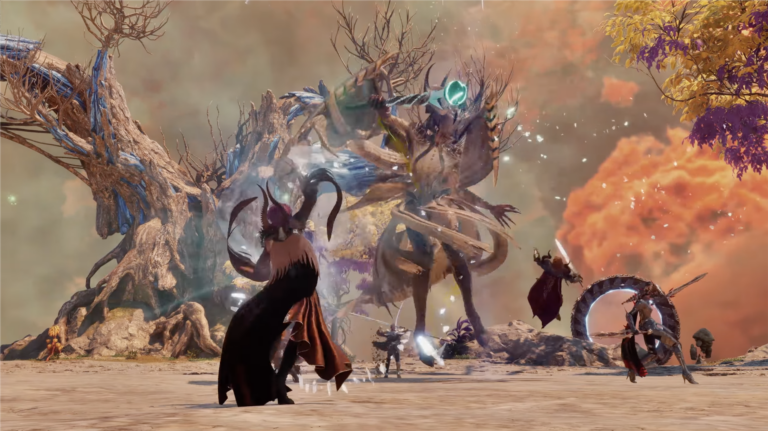
Free-to-Play AION 2 Beats NC Steam Record: 397,905 Concurrent Players Logged

October 8, 2026:

Free-to-Play AION 2 Beats NC Steam Record: 397,905 Concurrent Players Logged
Aion. Two
Nc.com

NC’s long-awaited MMORPG sequel opened to the public for free on October 5 and immediately broke the company’s own Steam concurrent-player record, reaching 397,905 simultaneous players on its launch day according to SteamDB data — a figure that surpassed Throne and Liberty’s all-time Steam peak of 336,300 by more than 61,000. More significant than the opening-weekend crowd: among players who stayed long enough to actually learn the game — those with more than ten hours logged — Steam approval reached 86 percent positive, a “Very Positive” rating that suggests NC may have finally solved the reputation problem its Korean games have carried for years.

AION 2 is available now for free on PC via Steam and NC’s PURPLE launcher, with servers in North America, South America, Europe, and Japan. No subscription is required to play.

What the Numbers Actually Mean

The 397,905 figure deserves context. It is, by any measure, a strong opening for an MMORPG — but it is not a genre-defining peak. Lost Ark set a record of 1,325,305 concurrent Steam players when Amazon Games brought it west in February 2022. AION 2’s launch lands well below that. What makes the number editorially significant is not its absolute size but what it represents relative to NC’s own track record: NC’s previous global MMORPG release, Throne and Liberty (2024), peaked at 336,300 concurrent Steam players. AION 2 exceeded that on its first free day.

The more telling data point may be the review split. During Early Access — when only players who paid for a Founder’s Pack could log in — Steam reviews sat “Mostly Positive” with about 76 percent approval. The subset of players who put in more than ten hours pushed that to 86 percent, a gap that suggests the audience who bounced left for reasons unrelated to the game itself (server queues, performance, the cost barrier of paid access), while those who stayed found something worth their time.

NC’s global rollout also cleared a momentum threshold that a rival launch faltered against. During Throne and Liberty’s paid Early Access period in 2024, daily peak concurrent Steam players reached around 50,000 before the game surged to 336,300 at full launch. AION 2’s Early Access peak on September 30 was 171,530 — nearly triple Throne and Liberty’s early-access figure — and the free launch pushed the number past 397,000.

As of this writing, AION 2 holds top positions on both Steam’s Popular New Releases and Trending Free to Play charts since its October 5 launch, and ranks in the top five of Steam’s Most Played games chart.

How NC Rebuilt Its Reputation Before the Launch

To understand why the approval numbers matter, it helps to know what NC was recovering from. When AION 2 launched in South Korea and Taiwan in November 2025, it immediately drew criticism for implementing what players described as a “double pay-to-win” system: subscriptions gated extended PvP play, and access to the in-game auction house required a separate paid subscription. NC apologized via livestream within 15 hours of the Korean launch. Season 2 battle passes generated another wave of backlash early in 2026.

Despite those controversies, the Korean market kept spending. AION 2 generated approximately ₩136.8 billion (approximately $103 million USD) in Q1 2026 alone, and ₩71.9 billion (approximately $54 million USD) in Q2 after stabilizing following post-launch monetization adjustments. NC’s operating profit for Q2 2026 surged more than 1,000 percent year-over-year, driven partly by AION 2 and partly by the separate success of Lineage Classic.

For the global version, NC made an explicit commitment: the shop would focus on cosmetics, not competitive advantage. Co-CEO of NC America Merv Lee Kwai framed the global launch in deliberately modest terms, calling the chart-topping Early Access performance “a strong start” while noting that “what matters is doing right by the AION franchise and its players while building a game that holds up over time, with steady content and earning trust with players.” The 86 percent approval from ten-plus-hour players is the first independent signal that the rebuilt model is working.

What AION 2 Actually Is

AION 2 is a direct sequel to the 2009 MMORPG AION, set 200 years after the events of the original. The original AION — developed by NCSoft (since rebranded as NC) and running on CryEngine — made its name with faction warfare between two angelic races and a then-unusual mechanic: flight as a core combat tool, not merely a travel shortcut. Technical limitations of the time constrained flight to specific zones. AION 2 removes that restriction entirely.

In the sequel’s story, the Tower of Eternity — the cosmological structure around which the original game’s world was organized — has been destroyed. Players take on the role of a Daeva, a fallen supernatural warrior belonging to either the Elyos or the Asmodian faction, navigating the aftermath of that catastrophe across a fractured world 200 years later. A third faction, the Balaur, has been newly empowered by the Tower’s fall and now poses the threat that compels both angelic factions into continued conflict. The central dramatic question the game builds toward: can these diminished Daevas reclaim their power and forge their place in a broken universe, or will the Balaur’s ascendancy define the new world order? The tone is epic fantasy with an undercurrent of loss — vast, soaring, and faction-defined — and the game consistently asks players to feel both powerful and historically outnumbered.

The game launches with eight playable classes (Gladiator, Templar, Assassin, Ranger, Chanter, Cleric, Sorcerer, and Spiritmaster) and more than 200 character customization options. PvE content spans solo dungeons, four-player dungeons, and eight-player raids. PvP ranges from 1v1 arenas to large-scale cross-server Realm vs. Realm (RvR) faction warfare and the returning Abyss from the original game.

The Technical Architecture Behind Free Flight Everywhere

What makes AION 2 technically distinct from its 2009 predecessor is not just the engine upgrade — it is what that upgrade unlocks spatially. The original AION restricted aerial movement to designated flight zones. AION 2 runs on Unreal Engine 5, which NC says it “heavily modified” for character customization and multiplayer scalability. The result is a seamless open world with no loading screens between zones, spanning more than 1,200 square kilometers — roughly 36 times the scale of the original game (approximately 463 square miles) — where players can fly from mountain peaks to ocean floors without interruption.

That seamlessness is not cosmetic. UE5’s Lumen global illumination system and Nanite virtualized geometry allow the game to render large volumes of detailed terrain simultaneously, which matters specifically for aerial combat: flying high exposes far more of the world to the renderer at once than ground-level play ever would, and NC’s development team redesigned skill ranges and hitbox planes for three-dimensional engagement. The result is aerial combat that functions differently from ground combat — attacks can approach from above, below, or any lateral angle — rather than standard tab-targeting simply moved upward. Underwater movement also functions as a full traversal dimension in AION 2, a feature absent from the original.

Server architecture uses regional servers (North America, South America, Europe, and Japan) with cross-server dungeon matching within each region. Steam and PURPLE players share the same servers. The game supports eight languages: English, French, German, Spanish, Portuguese, Japanese, Korean, and Russian.

What NC Has at Stake

For NC, the global launch is not merely a sequel debut — it is a business-model test with ₩2.5 trillion (approximately $1.87 billion USD) as the declared annual revenue target. NC has described AION 2, Lineage Classic, and its mobile casual segment as three growth pillars. The global AION 2 launch is the most visible of those.

The company handled the global rollout without an intermediary publisher — unlike Throne and Liberty, which launched in Western markets through Amazon Games. Amazon has since announced it will hand Throne and Liberty back to NC by end of Q4 2026. That direct-to-player approach gives NC full control over monetization, messaging, and the response to player feedback — the dynamic that allowed quick adjustments in Korea after the November 2025 launch backlash.

The launch-day figure of 397,905 concurrent players is exactly the kind of opening that gives that question serious momentum. Whether AION 2 holds at those player levels past the launch window — the perennial challenge for every live-service MMORPG — is the question that will define NC’s 2027 outlook.


Frequently Asked Questions

Is AION 2 pay-to-win?

The Korean and Taiwanese version that launched in November 2025 drew significant pay-to-win criticism, including subscriptions that gated competitive PvP play and auction house access. NC apologized and modified the model. For the global PC version (Steam and PURPLE), NC has publicly committed to a cosmetics-first approach. The 86 percent positive approval rating among players with more than ten hours of gameplay suggests the global monetization is landing better than the Korean launch did — but players who prioritize fair competition should monitor community discussion as the game matures and additional content seasons arrive.

How many players does AION 2 have?

On October 5, 2026 — its first day of free-to-play access — AION 2 reached 397,905 peak concurrent Steam players, according to SteamDB. That figure represents only Steam users; additional players are active through NC’s PURPLE launcher on the same shared servers. This peak surpasses the all-time Steam peak of Throne and Liberty (336,300) and ranks AION 2 among the top free-to-play MMORPG launches on Steam in recent years, though it remains well below the genre record set by Lost Ark in February 2022 (1,325,305).

What is the story of AION 2, and who is the player character?

Players take on the role of a Daeva — a fallen supernatural warrior — in a world called Atreia that has been shattered by the destruction of the Tower of Eternity, an event that occurred 200 years before the game’s present-day action. Daevas belong to one of two factions: the Elyos or the Asmodians, ancient rivals who now face a common threat in the Balaur, a third faction newly empowered by the Tower’s collapse. The story asks whether these diminished beings can reclaim their lost power and decide the shape of the world that follows. The game is rated T for Teen by the ESRB and 16+ by PEGI.

What makes AION 2 technically different from the original 2009 game?

The original AION restricted aerial movement to designated flight zones and ran on CryEngine. AION 2 runs on Unreal Engine 5, which NC modified specifically for seamless multiplayer at scale. The game’s 1,200-square-kilometer (approximately 463-square-mile) open world has no loading screens between zones, and players can fly, fight in the air, and dive underwater anywhere in the world — not just in approved flight areas. NC’s development team redesigned skill ranges and combat mechanics for three-dimensional engagement, since aerial combat means attacks can arrive from any direction rather than on a horizontal plane.

Source link