HomeAuto Canadian Smoke Delayed Songbird Nesting by 9 Days; Cornell Scientists Map Refugia
Canadian Smoke Delayed Songbird Nesting by 9 Days; Cornell Scientists Map Refugia
October 7, 2026:
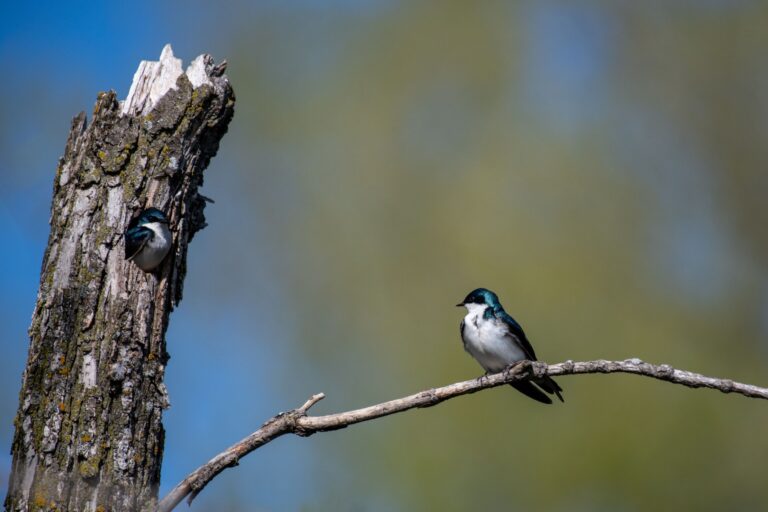
Andrew Patrick Photo/pexels.com
Wildfire smoke — not fire itself — has become a distinct and measurable threat to North American bird populations, delaying the egg-laying of common songbirds by up to nine days and disrupting the breeding of an estimated 25 million individuals across eastern forests in a single season, according to new research. A formal scientific discipline called smoke ecology is now taking shape to understand the harm and, crucially, to identify the sheltered landscapes where birds might survive a future in which smoke-filled skies are the rule rather than the exception.
Why Smoke Is a Different Problem Than Fire
For most of the history of fire ecology, smoke was an afterthought. The discipline focused on landscapes scorched by flames — what burned, what survived, how forests regenerated. Smoke moved. It dispersed. It left.
Olivia Sanderfoot, a research scientist and ornithologist at the Cornell Lab of Ornithology, realized in 2018 that smoke was no longer behaving that way. Wildfires burning in Eastern Washington had buried Seattle in a toxic yellow-gray haze. When the same thing happened again two years later, she understood that she was watching a structural change in the atmosphere over North America, not a series of anomalies.
“Smoke can blow hundreds to thousands of miles away from that burn site,” Sanderfoot has said about the scale. “That means that the footprint of a smoke event greatly exceeds that of any fire.”
That observation is what makes smoke ecology intellectually distinct: fire is spatially bounded, temporally finite, and geographically predictable within a season. Smoke is none of those things. It arrives without warning in cities hundreds of miles from any flame. It lingers for days or vanishes in hours. And it subjects wildlife that never lived near a fire to the same toxic exposure as animals in burn zones.
Sanderfoot now leads a research program at Cornell that is building the foundational science for this new field — linking atmospheric chemistry, quantitative ecology, and a vast network of citizen science monitors to answer questions that conventional field research cannot.
Why Birds Are Most Vulnerable
Among the animals in smoke’s path, birds face a specific biological disadvantage that researchers find sobering.
Birds breathe through a respiratory system that evolved primarily to support the extraordinary energy demands of flight, including migratory journeys of thousands of miles at high altitude. The system features a network of nine air sacs that act as bellows, maintaining a continuous unidirectional flow of air through rigid lungs. Unlike mammalian lungs, which pull air in and push it back out through the same passage, the avian system draws fresh air continuously over the gas-exchange surfaces of the parabronchi — where oxygen-rich air flows across blood capillaries in a cross-current pattern that extracts oxygen with exceptional efficiency.
That same efficiency is what makes birds so sensitive to air pollution. The parabronchial system does not distinguish between oxygen and particulate matter — it extracts both with equal thoroughness. When the air contains high concentrations of PM2.5 (fine particulate matter smaller than 2.5 micrometers, the primary quantitative marker of wildfire smoke), birds absorb that pollution at roughly twice the rate of mammals breathing the same air.
“It’s not just about what they’re inhaling, which is inevitably bad for them,” Sanderfoot has explained. “It’s also about how the cues that they use to navigate their world are upended when it gets smoky outside.”
Wildfire smoke is, in Sanderfoot’s description, a “toxic soup of substances” — particulate matter, carbon monoxide, volatile organic compounds, and other chemicals that disrupt sensory cues birds use to navigate, find food, and communicate. Research has documented that birds fall silent under heavy smoke, reduce their flight distances, and in some cases shift their behavior dramatically enough to produce measurable changes in breeding outcomes.
New Research: Scale of the Breeding Disruption
The most direct evidence of wildfire smoke’s reproductive impact came from a study published this August by Hayley Spina, Sanderfoot, Morgan Tingley of UCLA, and colleagues. Drawing on eight years of nest monitoring data (2018–2025) collected through Cornell’s NestWatch and the Purple Martin Conservation Association’s Project MartinWatch, the researchers analyzed 70,979 individual nesting attempts by four common cavity-nesting songbirds — the eastern bluebird, northern house wren, purple martin, and tree swallow — at 9,619 monitoring sites.
The findings were unambiguous. Smoke exposure during the pre-laying period delayed egg-laying in all four species, with eastern bluebirds delaying by up to 9.3 days when exposed to sustained smoke at or above the World Health Organization’s recommended PM2.5 limit for humans (15 micrograms per cubic meter). Smoke during incubation extended hatching time in three of the four species and reduced the probability of a purple martin egg hatching by approximately 4.5 percentage points. Fledging success declined for purple martins when nestlings were exposed to smoke.
Scaling those effects across the species’ ranges, the researchers estimated that in June 2023 alone — when record-breaking Canadian wildfires sent smoke cascading across eastern North America — more than 25 million individual birds in the study region were exposed to smoke concentrations exceeding the WHO guideline. That number spans 98% of house wren abundance distributions, 92% of tree swallows, 57% of eastern bluebirds, and 32% of purple martins present in the region.
The study builds on a 2024 paper by the same research group — co-authored with Katie LaBarbera of the San Francisco Bay Bird Observatory — that used two decades of bird-banding data from the Bay Area to establish that birds lose body mass after repeated smoke exposure, an outcome with direct consequences for migration survival and reproductive success in subsequent seasons.
Smoke Adds a Second Weight to an Already-Burdened Clock
The breeding delay that smoke causes is not just a setback in isolation. It lands on top of a problem that ornithologists have been documenting for decades: phenological mismatch.
Many temperate songbirds time their breeding season to peak at precisely the moment when caterpillars and other insects — the primary food source for nestlings — are most abundant. As springs arrive earlier due to climate warming, that insect peak shifts forward. Birds that fail to breed earlier fall out of synchrony with their food supply, producing fewer viable chicks even when they arrive healthy on the breeding grounds.
Smoke now imposes the opposite pressure. By delaying egg-laying, it pushes bird breeding later into the season — away from that insect peak — while warming simultaneously pulls the peak earlier. The Spina et al. preprint raises this compounding effect explicitly: delayed first broods may reduce the probability of second clutch production in double-brooded species, and phenological delays could “desynchronize breeding activity” from seasonal pulses in lower trophic levels, which are already shifting earlier at a faster rate than birds can match.
This double dislocation — warming pulling the food supply forward, smoke pushing breeding backward — arrives at a moment of structural fragility. North America has lost approximately three billion birds since 1970, a 30% reduction in total breeding bird abundance documented across 529 species, according to research published in Science by Ken Rosenberg of Cornell Lab and colleagues. Grassland birds have lost 53% of their population. Smoke does not operate on a stable baseline; it intensifies a crisis already underway.
A separate 2026 study by environmental economist Sarah Meier of ETH Zurich and Eric Strobl of the University of Bern, analyzing 2,800 bird survey routes across the US over 15 years, found a 3% decline in bird species diversity in the breeding season following years with heavy wildfire smoke exposure. Meier has noted that even a small decline, applied broadly enough, can destabilize an ecosystem — and that this type of harm is rarely captured in post-wildfire damage assessments.
How the Science Gets Done Without Experiments
There is a fundamental problem with studying wildfire smoke and wildlife: you cannot run the experiment. You cannot expose wild bird populations to controlled smoke doses. You cannot predict where smoke will arrive before it does. You cannot station field crews in every landscape that might be affected.
“It’s extremely hard to predict and highly variable,” Tingley, one of the field’s key researchers, has explained. “It can be there one day, one hour, and gone the next. Which means that it’s hard to disentangle its impacts because you can’t really control it.”
The solution smoke ecologists have arrived at is to work with the citizen science infrastructure that was already quietly running before the field had a name. eBird, operated by Cornell Lab, has accumulated more than two billion bird observations from amateur birders around the world. NestWatch, also Cornell-run, holds more than 860,000 nest records across all species, updated continuously by volunteers who check nesting boxes and natural nest sites on regular schedules. Project Phoenix — founded by Sanderfoot and now in its fourth year — asks birders in California, Oregon, and Washington to conduct 10-minute weekly point counts at consistent locations from July through November, when fire season overlaps with late breeding and early migration.
The Spina et al. study is a direct product of this infrastructure. It could not exist without NestWatch — without the thousands of volunteers who walked the same transects, week after week, across years in which some years were smoky and others were not, generating the kind of controlled natural variation that makes statistical inference possible.
“There’s really no other way to study how birds are responding to wildfire smoke other than community science,” said Allison Shultz, an ornithologist at the Natural History Museum of Los Angeles County and program director of Project Phoenix.
That reliance has costs. Citizen science data carries known biases: birders tend to concentrate in greener, wealthier areas, creating data deserts in under-monitored regions. Novice observers make identification errors. Birders may head out in larger numbers on smoky days out of concern for wildlife, artificially inflating smoke-period observation rates. The research community is actively working to quantify and correct for these biases — but they remain real constraints on what the data can show.
The NOAA-developed HRRR-Smoke atmospheric model, which provides hourly near-surface PM2.5 estimates at 3-kilometer resolution across the continental US, has become an essential complement to the biological data — allowing researchers to reconstruct exactly what smoke concentrations a given nest site experienced on a given day, retroactively, going back years. The combination of HRRR-Smoke data and NestWatch nest records is what made the Spina et al. analysis possible.
Drumlin Farm and the Canaries
On a hillside at Mass Audubon’s Drumlin Farm Wildlife Sanctuary in Lincoln, Massachusetts, Pam Sowizral has been checking nesting boxes three times a week throughout spring and summer for nearly two decades. She counts nests, eggs, and fledglings. Her monitoring crew does this in good weather and poor. They kept doing it when smoke from Canadian wildfires settled over Massachusetts this past summer.
Drumlin Farm participates in Cornell’s NestWatch program, and Sowizral’s records are part of the continuous data stream that researchers like Sanderfoot can overlay with atmospheric models to reconstruct what birds experienced during smoke events. The consistency is what makes the science possible: a monitoring program that pauses for smoke cannot tell you what smoke does.
Birds have long served as ecological sentinels — the phrase “canary in the coal mine” refers literally to a practice of using the same respiratory vulnerability that makes birds sensitive to wildfire smoke to detect toxic gases in underground environments. Sanderfoot’s research extends that sentinel function to the atmosphere above us. What smoke does to birds’ reproductive timing, body weight, and vocal behavior may offer early signals about what sustained PM2.5 exposure means for other animals — including humans — in a world that is getting smokier year by year.
Do Birds Have Safe Places to Go?
Among Sanderfoot’s most urgent current research questions is whether smoke refugia exist — specific landscapes where topography, vegetation density, proximity to water, or other factors create measurable reductions in local smoke exposure when the surrounding region is blanketed in haze. The concept is borrowed from fire ecology, where fire refugia — areas that escape high-severity burning — have been documented as critical population refuges and high-priority conservation targets.
“I want to know what resources they’re seeking out, and what we could provide to help them during a risky time,” Sanderfoot has said.
If smoke refugia can be identified and their locations mapped — using citizen science sightings layered against atmospheric models — they could become targets for land protection and habitat management. Dense riparian corridors, narrow valleys, or areas with particular vegetation structure might filter enough smoke to give wildlife meaningful relief during regional smoke events. Those landscapes could then be prioritized for protection before fire seasons begin, rather than only assessed after damage is done.
“I would like to be able to give people something they can do to help,” Sanderfoot has said.
Until the refugia map exists, readers can take several practical steps during smoke events: keeping feeders, water, and nest protection in place — energy-strapped birds that have reduced foraging under smoke need accessible food, fresh water sources are important, and avoiding disturbance near nesting sites matters significantly. Sanderfoot and Tingley have both recommended these actions as meaningful short-term support.
What Smoke Does to Birdsong, and Why That Matters
A 2026 paper in Biological Conservation by Trifosa Simamora, Timothy Boycott, and colleagues at Cornell and the USGS documented a specific behavioral consequence of smoke that has implications beyond individual birds. Using passive acoustic monitoring across grasslands in New York State during the June 2023 Canadian wildfire smoke event, the researchers found a significant overall decline in vocal activity of grassland birds — with Eastern meadowlarks and bobolinks among the most affected species.
Grassland birds are already among the most imperiled groups in North America — the bobolink has lost more than half its population in 50 years. The study’s authors noted that reduced vocalization during breeding season is not merely an annoyance; birdsong is the communication infrastructure of avian reproduction, used for mate attraction, territory defense, and coordinating parental behavior. A smoke event that silences birds during the breeding season introduces a reproductive penalty that adds to every other stressor grassland species already face.
“These are all things that will help birds now and make bird populations more resilient, so that when they are faced with something like wildfire smoke, they are better poised to thrive through that,” Sanderfoot has said.
Collaborative Science Across Old Silos
Smoke ecology’s core technical challenge is that it sits at the intersection of fields that rarely talk to each other. Understanding what birds inhale requires knowing the precise chemical composition of smoke moving through three-dimensional atmospheric space — information that lives in the domain of atmospheric chemists, not ecologists.
Tracey Holloway, an atmospheric chemist at the University of Wisconsin-Madison and lead of NASA’s Health and Air Quality Applied Sciences Team, is a key collaborator in the growing network around smoke ecology. Her team’s work connecting air quality data to health outcomes — work primarily designed for human public health applications — turns out to produce exactly the kind of atmospheric data that wildlife researchers need.
“Real-world problems don’t map cleanly onto the same academic silos that have been set up for decades,” Holloway has said. “We need to be tackling new problems with new partnerships.”
That cross-disciplinary pressure may be one of smoke ecology’s most transferable contributions. The infrastructure being assembled — atmospheric models, citizen science networks, nest monitoring programs, body condition databases — represents a template for how ecological science can operate in a world where the threatening variables are too diffuse, too unpredictable, and too geographically vast to study through traditional field methods alone.
Sanderfoot, who was forced to evacuate her Los Angeles home during the devastating January 2025 fires and who now watches smoke roll over Ithaca, New York, does not describe her work in narrowly ornithological terms. Birds, she has suggested, may teach us something about how all living things — including humans — adapt to an atmosphere that carries more smoke each year.
“Let’s put it this way,” she has said. “We can expect that the future will be smokier.”
Frequently Asked Questions
How does wildfire smoke affect birds differently than it affects humans?
Birds have a fundamentally different respiratory system than mammals. Their lungs are rigid and surrounded by a network of nine air sacs that maintain a continuous, one-directional airflow — a system that evolved to support the extreme oxygen demands of migratory flight. This efficiency means birds continuously draw air across gas-exchange surfaces with almost no “dead air” buffering. When that air contains wildfire smoke’s fine particulate matter (PM2.5), birds absorb it at roughly twice the rate of equivalently sized mammals. They also cannot go indoors, wear masks, or reduce their exposure voluntarily — every breath during a smoke event is unfiltered. Research has now documented measurable consequences: weight loss that impairs migration, delayed breeding by up to nine days, reduced hatching success, and suppressed birdsong during critical reproductive periods.
What is smoke ecology, and why is it a new field?
Smoke ecology is the systematic scientific study of how wildfire smoke — as distinct from fire itself — affects wildlife, their behavior, and their ecosystems. It is new because smoke was long treated as a secondary effect of fire rather than an independent ecological disturbance. The key difference is geographic: fire burns within a defined perimeter, but smoke travels hundreds to thousands of miles, exposing birds and other animals far outside any burn zone to toxic air. The field is formally emerging now partly because wildfire seasons have lengthened and intensified enough to make smoke a regular feature of the atmosphere across wide regions that historically would never have experienced it, and partly because the atmospheric models and citizen science data platforms needed to study unpredictable smoke events at scale have only recently matured.
What can I do to help birds during wildfire smoke events?
Researchers have identified several practical steps. Keep bird feeders full and stocked with high-calorie seeds during smoke events — birds that are reducing foraging activity under haze need accessible food sources with minimal effort. Ensure fresh water is available, as birds use it for bathing and drinking. Avoid disturbing active nests during smoke periods, when adult birds may already be limiting their movements. Participating in citizen science programs like NestWatch or Project Phoenix — which ask volunteers to make consistent, standardized observations during fire season — directly contributes to the research that will eventually identify smoke refugia and protective conservation strategies. Sanderfoot and Tingley have both named feeder maintenance as a meaningful, immediate action.
Could smoke exposure eventually push already-declining bird species toward collapse?
The concern is serious and documented. North America has already lost approximately three billion birds since 1970 — a 30% decline in total breeding bird abundance. Grassland birds, already among the most imperiled, have lost more than half their population over that period. Smoke adds new compounding pressures: it delays breeding by days, at a moment when warming has already shifted the insect peak that breeding must synchronize with. It reduces hatching success and body condition. A 2026 study found a consistent 3% decline in bird species diversity in the breeding season following years with heavy wildfire smoke exposure, measured across 2,800 bird survey routes over 15 years. Individually, these effects may seem modest. Across a continent of declining bird populations, with smoke seasons projected to intensify, researchers describe them as an additive stressor that could push vulnerable species past their recovery threshold.