Pressure Mounts on Cornell to Explain Its Handling of Sexual Assault Allegations

October 7, 2026:

Pressure Mounts on Cornell to Explain Its Handling of Sexual Assault Allegations

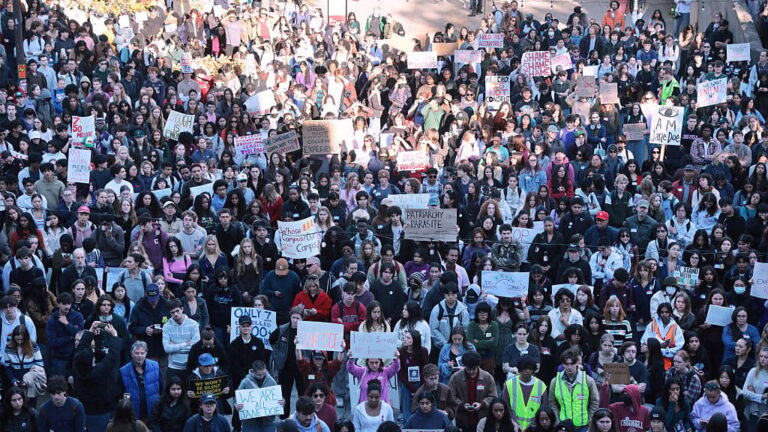
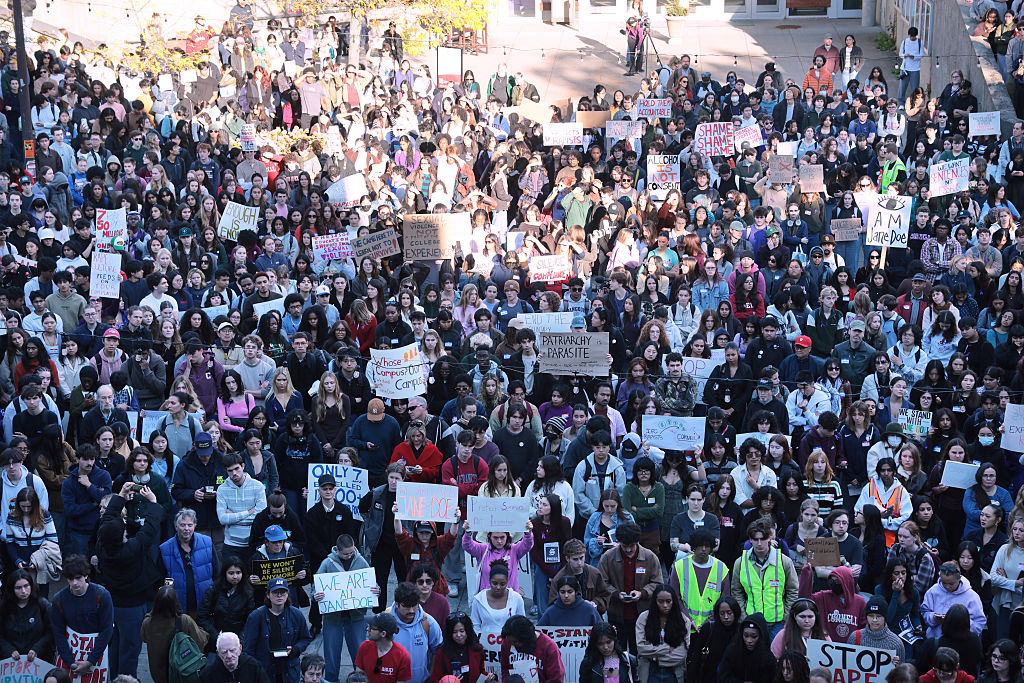
Hundreds of Cornell students participate in a rally against the university’s actions after a student was sexually assaulted at a campus fraternity in 2024, on Oct. 5, 2026, in Ithaca, New York. —Spencer Platt—Getty Images

Students and faculty at Cornell University are demonstrating mounting displeasure with the school’s administration over its handling of the alleged gang rape by fraternity members that occurred in 2024, calling for greater accountability and an overhaul of investigatory procedure.

Hundreds of students, faculty members, and other supporters gathered Monday in front of the school’s student center under the banner of “Justice for Survivors.” Attendees wore purple ribbons and held signs that asked questions such as “Cornell, can you hear us now?” and “When will we start protecting survivors?”

The peaceful protest was led by dozens of student organizations, including Students for a Democratic Cornell (SDC).

“We found it incredible,” Soham Bera, the vice-chair of SDC, tells TIME. “This was a moment where you had hundreds, if not thousands, of students coming together—despite the fact this administration has been known for cracking down on protesting and still deciding this is our moment.”

Read More: The System That Failed Cornell’s Jane Doe

The groups also presented Cornell’s leadership with demands for disciplinary action and changes to how the university handles sexual assault complaints.

Among the chants from demonstrators were calls for Cornell President Michael Kotlikoff to resign and chants of “Ban the frats!”

Athena Holloway, the former president of Cornell’s Black Students United and president of Cornell NAACP, was one of the speakers at the student-led event. She noted the long history of students using their voices to demand change on campus, including the Afro-American Society Willard Straight Hall Takeover of 1969.

“Cornell has changed before, and we can change it again,” she said. 

Why the Cornell sexual assault case is drawing new outrage

It comes as a response to the civil lawsuit filed Sept. 14 by a former Cornell student, who is identified in the complaint as Jane Doe. Doe not only alleges in the lawsuit that she was sexually assaulted by seven members of the school’s Chi Phi fraternity but also claims that Cornell was negligent in its response and violated New York law.

Cornell’s response to the incident—and its broader approach to handling sexual assault reports on campus—came under scrutiny after Doe’s lawsuit alleged negligence, breach of contract, and violations of New York law.

“We need to speak up. This miscarriage of justice cannot continue to go on,” Bera says.

Bera and other protesters point to what they consider insufficient punishments from Cornell University after it conducted its Title IX investigation, which began in January 2025. Doe’s attorney, Thomas Giuffra, has said that Cornell expelled two of the seven accused students and that it required some of the other fraternity members to write essays. 

Cornell has confirmed that its disciplinary process resulted in expulsions and suspensions, but it has not disclosed individual outcomes. It also clarified last week that “none of the individuals charged were offered the opportunity to write essays as a sole consequence of their involvement.”

Giuffra also claims that Doe was denied her request for a tuition refund when she sought to leave Cornell. He says that she eventually withdrew from the university, citing a lack of institutional support.

Cornell subsequently gave a response to Inside Higher Ed saying that it regularly works with students seeking leave and has in the past refunded payments, but it did not respond directly to the accusation related to Doe. 

Giuffra added this week that the consequences against Doe have persisted, telling People that she has been receiving threats since filing her lawsuit against her alleged attackers and against Cornell.

“There are people out there trying to track her down,” he told CNN’s State of the Union. “They said, ‘We’re gonna shut you up.’”

According to Doe’s lawsuit, the alleged assault involved illegal drug use. The school’s newspaper, the Cornell Daily Sun, reported Saturday that campus police made a drug-related arrest at the Chi Phi fraternity house less than 24 hours before the alleged assault and referred an individual to Cornell’s student conduct office. Cornell did not tell the Sun when that office learned of the referral.

Dissatisfaction was also expressed early Monday when the school’s main administration building was splashed with graffiti and had its doors damaged. 

In a statement, school spokesperson Kyle Kimball said, “We understand the frustration and strong emotions being expressed across our community. Those concerns deserve to be heard, but damaging property is not the answer. We are investigating the vandalism at Day Hall and will address it in accordance with University policy and applicable law.”

As the students continue to assert their frustration with the university, so too does the faculty. 

Faculty Senate member Paul Ortiz, a professor of labor history, sponsored a no-confidence resolution—which is an official statement demonstrating that the faculty no longer trusts or approves of the school’s leadership. It was introduced Monday for review by the University Faculty Committee. 

“The faculty Senate has no confidence in the ability of the central administration to effectively address the ongoing crisis of sexual assault at Cornell University,” the resolution states, according to The New York Times.

The resolution is not legally binding, and faculty governing boards are not required to replace administrators because of a no-confidence resolution. The measure is expected to be put to a vote when the faculty Senate meets Oct. 14.

TIME has reached out to Ortiz for further comment from the Senate.

Frustration is also mounting beyond Cornell, as the case draws an outpouring of anger and solidarity on social media. An “I am Jane Doe” online support campaign has gained traction by inviting others to share similar incidents that they experienced, with one TikTok video garnering over 4 million views. 

Alumni also launched an online petition that has collected over 61,000 signatures pledging to withhold financial and other means of support until the university demonstrates accountability, transparency, remedy, and prevention. TIME cannot independently confirm that all of the signees were formerly enrolled at Cornell.

What Cornell students and faculty want to see changed 

Ahead of Monday’s protest, the organizing groups called on Cornell to expel or revoke the degrees of students they say were involved in the alleged assault; establish independent hearings and minimum sanctions for sexual assault; require prevention training for students and trauma-informed training for campus police; and commission an external review of Cornell’s handling of the case.

Bera says the groups also want to restore a university judicial system independent of the administration.

“What Cornell needs is a judicial system that is independent of an administration that uses it to protect the university’s image and the opinions of donors and trustees at the expense of the student body,” Bera says.

She points to 2020, when the school approved a new Student Code of Conduct, placing disciplinary authority in the administration’s hands. SDC and its collaborators believe that this independent judicial system needs to be re-implemented “as soon as possible,” Bera says.

Kate Manne, a Cornell philosophy professor, also urged accountability in a Substack post. She advocated banning fraternities across campus, describing them as “a hotbed of misogyny” with “no valid role in the modern university.” Cornell says the Chi Phi chapter closed in 2024 and remains barred from campus.

What happens next for Cornell? 

The pressure on Cornell is now moving on several fronts: an independent review, a state investigation, a faculty vote and further protests.

Over the weekend, Kotlikoff recorded a video for students promising more transparency and accountability—pledging, without specificity, to “do better.”

“What happened to Jane Doe in 2024 is deeply disturbing and will weigh heavily on our community for years to come,” he said.

On Tuesday, Cornell University’s Board of Trustees named Sally Yates, a former acting U.S. attorney general and career federal prosecutor, to lead an independent review of the university’s handling of the case.

“The review will examine Cornell’s policies, practices and resources across the full range of prevention and response, including how reports are received and investigated; how students are supported; how hearings, disciplinary decisions and appeals are handled … and policies and oversight involving fraternities, sororities, and other student organizations,” according to the accompanying statement. 

It also said that Yates will investigate the Cornell Board of Trustees’ oversight on the issues.

TIME has reached out to Cornell for comment.

Outside of the school’s contested internal investigation, parallel lines of inquiry are continuing through a criminal investigation overseen by the state. 

The criminal investigation was reopened Sept. 28 by Tompkins District Attorney Matthew Van Houten.

New York Gov. Kathy Hochul, however, has criticized Van Houten’s handling of the case. The DA had reviewed the original complaint filed by Jane Doe in 2024 and declined to prosecute at the time. She appointed State Attorney General Letitia James on Oct. 1 as the special prosecutor on the case.

“Think about that—in what world would the police learn from a victim that she’d been literally gang raped while intoxicated by five men in a fraternity house and not elevate those allegations to the District Attorney?” Hochul said in a press conference on Oct. 2. “In what world does the District Attorney not even interview her or anyone else involved—or even request the full transcript?”

Bera says that the independent review by Cornell is a good first step—but SDC and other organizations plan to continue holding protests until the rest of their demands have been met. 

Next is a sit-in protest “in solidarity with Jane Doe and all survivors of sexual assault and sexual violence,” she says. That takes place Wednesday.

External advocates are also rallying around Jane Doe, with an independent protest organized by groups unaffiliated with Cornell scheduled for Oct. 13.

“Cornell Administration supports known rapists,” the organizers’ post said. “We demand answers.”

Source link