HomeAuto Czech Republic Logs Third-Driest Year Since 1961, Exposing AI Infrastructure Water Risk
Czech Republic Logs Third-Driest Year Since 1961, Exposing AI Infrastructure Water Risk
October 6, 2026:
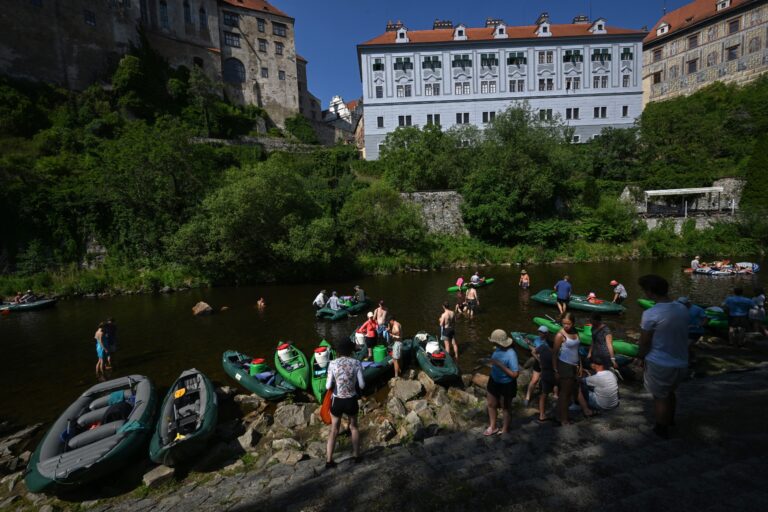
Michal Cizek/gettyimages.com
The Czech Republic closed its first nine months of 2026 as the third-driest since 1961, the Czech Hydrometeorological Institute (ČHMÚ) confirmed in its October bulletin — and the Vltava River in Prague had already fallen below the official hydrological drought threshold as of October 2, with 48 river profiles below drought levels across the country. The finding delivers a precise scientific reckoning for a year of cascading water crises: evaporated reservoirs, hydroelectric output down as much as 50 percent, rivers running at their lowest early-August flows since 1921, and a farming sector that required CZK 3.8 billion (approximately $181 million) in government compensation. It also lands at an awkward moment for Prime Minister Andrej Babiš, whose government approved a bid to become home to a CZK 100 billion (approximately $4.76 billion) AI Gigafactory — one of Europe’s largest planned AI data center campuses — in the same year the country recorded its worst nine-month precipitation deficit in over six decades.
How Dry Was 2026? Putting the Numbers in Context
According to ČHMÚ preliminary data, just 395 millimeters (15.6 inches) of precipitation fell across Czech territory between January 1 and September 30, equivalent to only 73 percent of the 1991–2020 average. The country sat roughly 150 liters per square meter (approximately 3.7 gallons per square foot) below normal for the year to date. Only 2003 and 2015 recorded less rainfall over the same nine-month window since nationwide areal measurements began in 1961.
The deficit was neither uniform nor merely statistical. South Moravia, the country’s southernmost agricultural heartland, received barely 300 millimeters (11.8 inches) on average through September — the lowest of any Czech region and well below what farmers, rivers, and ecosystems need heading into winter. The Churáňov weather station in the traditionally wet Šumava mountains recorded 525 millimeters (20.7 inches) for the period, about 61 percent of its long-term norm and the lowest total in its measurement history stretching back to 1953. At the Blatný vrch station on the Czech-German border ridge, total precipitation reached only 60 percent of average.
The situation was also considerably worse than 2025, itself already a precipitation-poor year. The first nine months of 2025 yielded 456 millimeters (18.0 inches) — 84 percent of normal. The deficit deepened appreciably in just twelve months.
A Crisis That Built Month by Month
The 2026 drought did not arrive suddenly. It compounded across the calendar year from a dry, low-snow winter through a spring that broke its own records and a summer that overwhelmed infrastructure.
March and April combined produced just 32 millimeters (1.3 inches) of precipitation nationally — the lowest two-month total since ČHMÚ began areal calculations in 1961, far below the 83-millimeter (3.3-inch) average for those months. By early June, ČHMÚ confirmed that meteorological spring as a whole was the driest on record since 1961 at only 89 millimeters (3.5 inches), equivalent to 57 percent of average, surpassing the previous record set in 1993.
By mid-July, the InterSucho drought-monitoring project run by CzechGlobe — the Global Change Research Institute of the Czech Academy of Sciences — reported that extreme soil drought conditions affected nearly half the country’s territory, with around 25 percent of Czech land having fallen below 10 percent relative soil saturation, a threshold known as the wilting point at which plants can no longer extract moisture. Moravia bore the worst of the conditions.
August brought the symbolic low point. By early August, ČHMÚ confirmed Czechia had recorded its driest Jan–Aug stretch since 1961. The Orlík Reservoir, the country’s largest, was receiving less water than at any point since 1982, with its surface level roughly 10 meters (33 feet) below normal. River gauges told the same story — the Elbe running at historic lows, the Morava at Olomouc breaking its record for the lowest early-August flow ever measured, falling below even the famous drought year of 1921. Smaller rivers and streams dried up entirely across multiple regions, stranding freshwater crayfish populations and forcing villages to rely on tanker deliveries for drinking water.
How Climate Change Turned a Dry Year Into a Historic One
The 2026 Czech drought was not simply an unusual run of low rainfall — it was a drought amplified by a mechanism that climate scientists had been warning about for years: rising atmospheric “thirst.”
A July 23, 2026 study by the World Weather Attribution consortium, involving scientists from more than a dozen countries across Europe and beyond, found that human-induced warming made soil droughts across eastern Europe approximately eleven times more likely than in a pre-industrial climate. More striking was the evapotranspiration finding: exceptionally high evaporative conditions — the rate at which heat pulls moisture out of soil — are now roughly 40 times more likely in eastern Europe because of climate change. Rainfall deficits that would not previously have caused severe drought now result in much drier soils, the WWA researchers concluded.
Dominik Schumacher of ETH Zurich’s Institute of Atmospheric and Climate Sciences, who contributed to the study, noted that despite higher winter precipitation across parts of Europe, the region now shows “an enhanced tendency for unusual soil drying already in spring, before summer has even begun.” The implication is structural: the same precipitation volume that produced only moderate drought in prior decades now produces severe drought conditions because increased heat evaporates soil moisture faster than it can be replenished. This is the mechanism that turned a below-average Czech winter and spring into a historically extreme drought by midsummer.
UN Climate Change Executive Secretary Simon Stiell described Europe’s worsening climate situation as a continental emergency that required accelerated action, warning that spiraling climate-driven disasters were reaching national emergency levels and underscoring the structural costs of the planet heating rapidly.
Why a Single Autumn Rain Cannot Fix This
When forecasters announced that rain was expected to return to parts of Czechia in early October, a reasonable question followed: would it help? The short answer, according to hydrology research, is not much — at least not quickly.
ČHMÚ hydrologist Martin Pecha stated in early October that surface and groundwater levels remained significantly below the October norm, with 48 monitored river profiles at or below the hydrological drought threshold. The Vltava at the Praha-Chuchle station was flowing at only 40 cubic meters per second, less than a third of the annual norm of 134 cubic meters per second. Slapy Reservoir was losing approximately 1.5 meters (4.9 feet) of water level per week.
The reason a single rain event cannot reverse this lies in the physics of groundwater recharge. A 2021 study by University of California Riverside hydrology researchers found that groundwater averages three years to recover from drought — and that recovery time assumes no additional pumping from human extraction. For deeply depleted aquifers, the lag between the end of surface rainfall drought and the restoration of groundwater levels can stretch to fifteen years or longer. Czech wells, described by ČHMÚ researchers as in their worst condition since 1991 not only compared to other springs but compared to all months since that year, face a recovery timeline measured in years.
Winter snowpack in the Šumava, Krkonoše, and Beskydy mountain ranges will be the critical variable for spring 2027 river flows. Those ranges normally accumulate substantial snowpack that releases as spring melt, recharging rivers and shallow aquifers. The 2026 drought began early precisely because that buffer failed: a low-snow, above-average-temperature winter meant snowpack melted off the mountain ridges mostly by the end of February, and drought conditions appeared in early May rather than the typical July or August.
Energy, Agriculture, and Economic Cascades
The drought’s reach extended well beyond riverbanks and crop fields.
Czech hydroelectric output dropped sharply, with the country’s hydropower plants producing between 50 and 70 percent of their long-term average generation, according to ČEZ, the majority state-owned utility — a steeper cut than the 40 percent decline seen during the drought of 2025. Officials reported that up to 90 percent of more than 1,400 small hydropower plants had ceased operation at the peak of the drought.
Agriculture suffered acutely. Sugar beet, corn, rapeseed, potatoes, and spring cereals all showed drought stress from early in the season. Livestock farmers in some regions culled animals ahead of schedule due to fodder shortages. Fisheries harvested ponds early after oxygen-depleted low water caused fish losses. Vegetable growers reported losses approaching CZK 700 million (approximately $33 million). Czech river freight dropped by approximately one-third in Q2 2026 compared to the prior year.
In September, the Czech Ministry of Agriculture announced it would provide approximately CZK 3.8 billion (approximately $181 million) to compensate farmers for drought-related losses, with funding drawn from EU budget resources and national government allocations, and payments scheduled for the first half of 2027. Agriculture Minister Martin Šebestyán said priority would go to farms affected by a combination of drought, high production costs, and unfavorable market conditions, with special attention to intensive livestock producers and growers of drought-sensitive crops.
Prime Minister Babiš acknowledged conditions had become “exceptionally demanding” for Czech farmers, calling 2026 one of the most difficult agricultural years in recent memory. In August, the government revived the National Anti-Drought Coalition — a multi-ministerial body with regional and scientific representation originally established in 2018 — and announced a CZK 4 billion (approximately $190 million) investment plan for drought mitigation infrastructure, including three new dams, expanded pond networks, and irrigation improvements. Water, the cabinet stated, would be formally designated a matter of public interest.
The AI Data Center Problem Nobody Is Talking About
Here is what makes the 2026 Czech drought a TechTimes story rather than only a climate story: Prime Minister Babiš has been pursuing, as the centerpiece of his government’s economic strategy, one of Europe’s largest planned AI data center complexes — and he approved the bid for it in the middle of the country’s worst water crisis in six decades.
In June 2026, the Babiš government formally approved the AI Gigafactory bid to the European Commission for — a high-performance AI computing campus in Prague’s Zbraslav district operated by České Radiokomunikace. The project’s total cost is approximately CZK 100 billion (approximately $4.76 billion), with the Czech state contributing CZK 15 to 16 billion and a private investor supplying the remainder. When announcing the appointment of a dedicated government AI commissioner, Babiš described AI as the unambiguous priority of his government.
Data centers require large volumes of water for cooling. Wet cooling systems — the most thermally efficient approach for high-density AI workloads — use evaporative cooling towers that continuously consume and discharge water. Bluefield Research, in a June 2026 report, projected that water-related spending across European data centers would reach €6.8 billion (approximately $7.4 billion) by 2036, driven primarily by AI infrastructure expansion. The firm estimated that the indirect water use associated with electricity consumption at European data centers alone would increase by 30 percent through 2036.
The collision is not theoretical. In Poland, plans for 5 gigawatts of new data center capacity were already drawing criticism in August 2026 over competition with farms, power plants, and cities for water access. In Dublin, data centers have come to consume more water daily than the entire human population of the metropolitan area. When drought conditions arrive, the same rivers and aquifers that data centers draw from — directly for cooling, or indirectly through the hydropower they consume for electricity — are precisely the ones that run low first.
Czech law already addresses the priority order in emergencies: the Czech Water Act places industry behind critical infrastructure, the general population, and agriculture when water supply is constrained. A major AI data center, as an industrial facility, would be subject to that subordination during drought emergencies. The government’s own August 2026 anti-drought coalition announcement did not address how the AI Gigafactory’s water and electricity demands would be managed during future drought years — and 2026 is not an isolated event.
A Continental Crisis With a Climate Fingerprint
The Czech situation was severe in 2026 but not isolated. Copernicus Sentinel-2 satellite imagery from early August showed dramatic sandbar and gravel-bed exposures on four of Europe’s iconic rivers simultaneously: the Loire near Saumur in France, the Po near Cremona in Italy, the Rhine near Boppard in Germany, and the Danube near Paks in Hungary. The European Commission’s Joint Research Centre confirmed that all four rivers reached record-low levels. The Rhine near the Kaub gauge — a critical bottleneck for inland shipping in Germany and the Netherlands — fell to navigable depths of roughly 25 centimeters (9.8 inches), repeating the anti-record set in 2018. Along the Danube, Hungary’s nuclear power plant at Paks faced serious operational challenges as the reduced river discharge threatened cooling water supply, while Romania’s Cernavoda plant operated at only about 25 percent of capacity for similar reasons.
The European continent is warming roughly twice the global rate since the 1980s, according to the EU’s Copernicus Climate Change Service. The Czech Republic’s own data place it among the fastest-warming nations in Europe — a trend that shortens snow cover duration, reduces seasonal snowpack in the mountain ranges crucial for spring river flows, and increases the evaporative demand from soils even when precipitation volumes do not dramatically change. Czech scientists have projected that summer temperatures in the country could approach 50°C (122°F) within two decades under high-emission scenarios — a benchmark that would stress virtually every element of the country’s agricultural, energy, and technology infrastructure simultaneously.
The clustering of 2003, 2015, 2025, and now 2026 in the same table of driest years since 1961 reflects what WWA scientists called a structural shift: precipitation deficits that would have produced manageable dry spells a generation ago are now producing historically extreme droughts, because rising temperatures evaporate the same water faster, and because groundwater reserves depleted in one dry year do not fully recover before the next arrives.
Outlook: What Comes Next
ČHMÚ publishes weekly assessments of precipitation, soil moisture, groundwater, and river conditions through its official drought-monitoring portal, and noted that low precipitation alone does not automatically translate uniformly into the same level of agricultural, soil, or hydrological drought across all regions — local temperature, evaporation rates, river flows, and groundwater behavior all play distinct roles in determining actual drought severity in any given watershed.
With groundwater recharge windows shrinking and the country entering autumn with reserves far below normal, hydrologists were watching carefully. Rain is expected to return to parts of Czechia around October 9–10, but forecasters cautioned that a single autumn rainfall event would not be sufficient to meaningfully replenish depleted groundwater reserves or restore river flows to normal levels. Recovery, if it comes, is likely to be slow and partial — measured in years, not weeks.
The question of whether 2026 will ultimately rank as the third, second, or even first driest year since 1961 remains open until December 31. The answer depends on whether late autumn and winter bring substantially above-average precipitation. If 2003 and 2015 are any guide — both years when a severe drought year was followed by only partial groundwater recovery in the subsequent winter — the Czech water system may enter 2027 already depleted.
For a government simultaneously asking the EU to fund a massive AI data center that needs water to cool its servers and power from rivers that are running dry, that is not an academic question.
Frequently Asked Questions
How did the Czech Republic’s drought in 2026 become so severe?
The severity came from two compounding factors. First, Czech precipitation was below average from the start of the year, with March through April recording the lowest combined two-month total since 1961 at only 32 millimeters (1.3 inches). Second — and this is the mechanism that made a bad year historically bad — rising temperatures driven by climate change dramatically increased evapotranspiration, meaning the same precipitation deficit that would have produced a moderate drought a generation ago produced an extreme one in 2026. World Weather Attribution researchers found that such highly evaporative conditions are now roughly 40 times more likely in eastern Europe than they would be without human-caused warming.
Can a single autumn rainstorm end the drought?
No. A heavy rainstorm can temporarily raise river levels and relieve surface soil moisture, but it cannot quickly replenish the depleted groundwater and deep aquifers that supply Czech wells, villages, and industrial users. University of California Riverside research found that groundwater takes an average of three years to recover from drought, and recovery can take as long as fifteen years in severely depleted aquifer systems. The Czech Republic’s winter snowpack — which normally recharges mountain aquifers via spring snowmelt — is the critical variable. If the coming winter brings below-average snowfall, as 2025–26 did, the deficit could compound further.
What does the Czech water crisis mean for AI and data centers in Central Europe?
AI data centers are intensive water users: they require cooling systems that consume significant water, and they consume enormous amounts of electricity, much of which in Czechia is generated by Czech hydropower running at reduced output. Prime Minister Babiš’s government approved a bid in June 2026 for an AI Gigafactory project worth CZK 100 billion (approximately $4.76 billion) in Prague’s Zbraslav district — one of Europe’s largest proposed AI computing campuses. The government has not publicly addressed how a facility of that scale would manage its water and electricity demands during future drought years. Czech law already places industrial water users behind the general population, critical infrastructure, and agriculture during water emergencies. Bluefield Research projects that water spending at European data centers will reach €6.8 billion (approximately $7.4 billion) by 2036, driven largely by AI workload growth.
Is this drought part of a long-term trend or an unusual single-year event?
The data strongly suggests a structural trend. Of the driest years for Czech precipitation since 1961, four — 2003, 2015, 2025, and now 2026 — have occurred since the turn of the millennium. World Weather Attribution’s July 2026 study found that deficits now produce far worse drought than they previously would, because rising temperatures drive soil moisture loss faster than it can be replenished. Copernicus Climate Change Service data show Europe warming at roughly twice the global average rate since the 1980s. Czech scientists have projected that, under high-emission scenarios, Czech summer temperatures could approach 50°C (122°F) within two decades — a level at which water demand for agriculture, industry, and cooling systems would far exceed what the country’s rivers and groundwater can supply even in average precipitation years.