October 2, 2026:


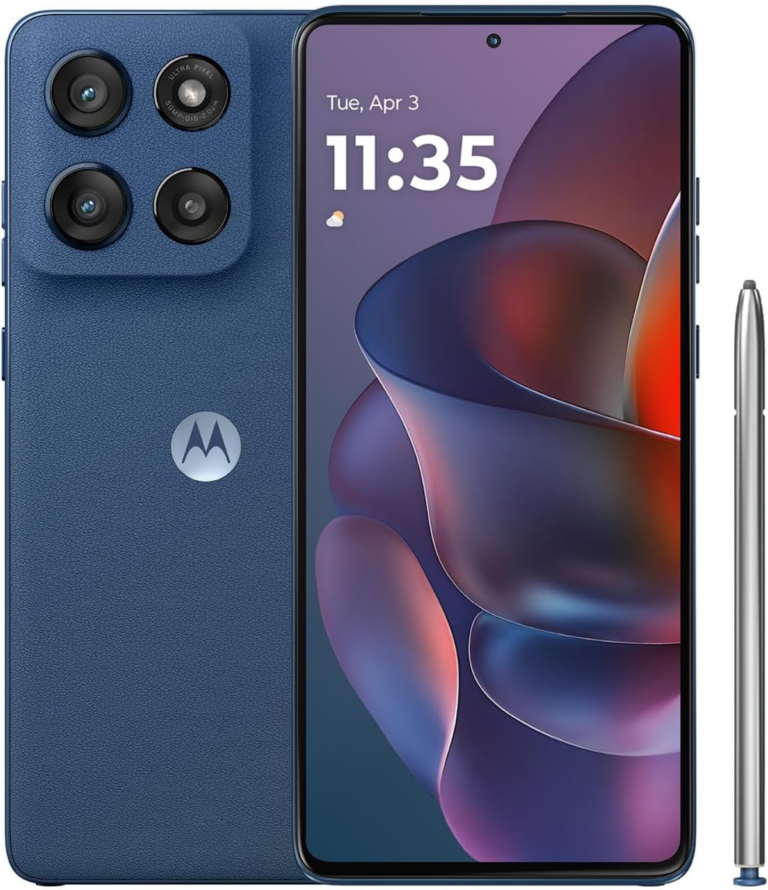
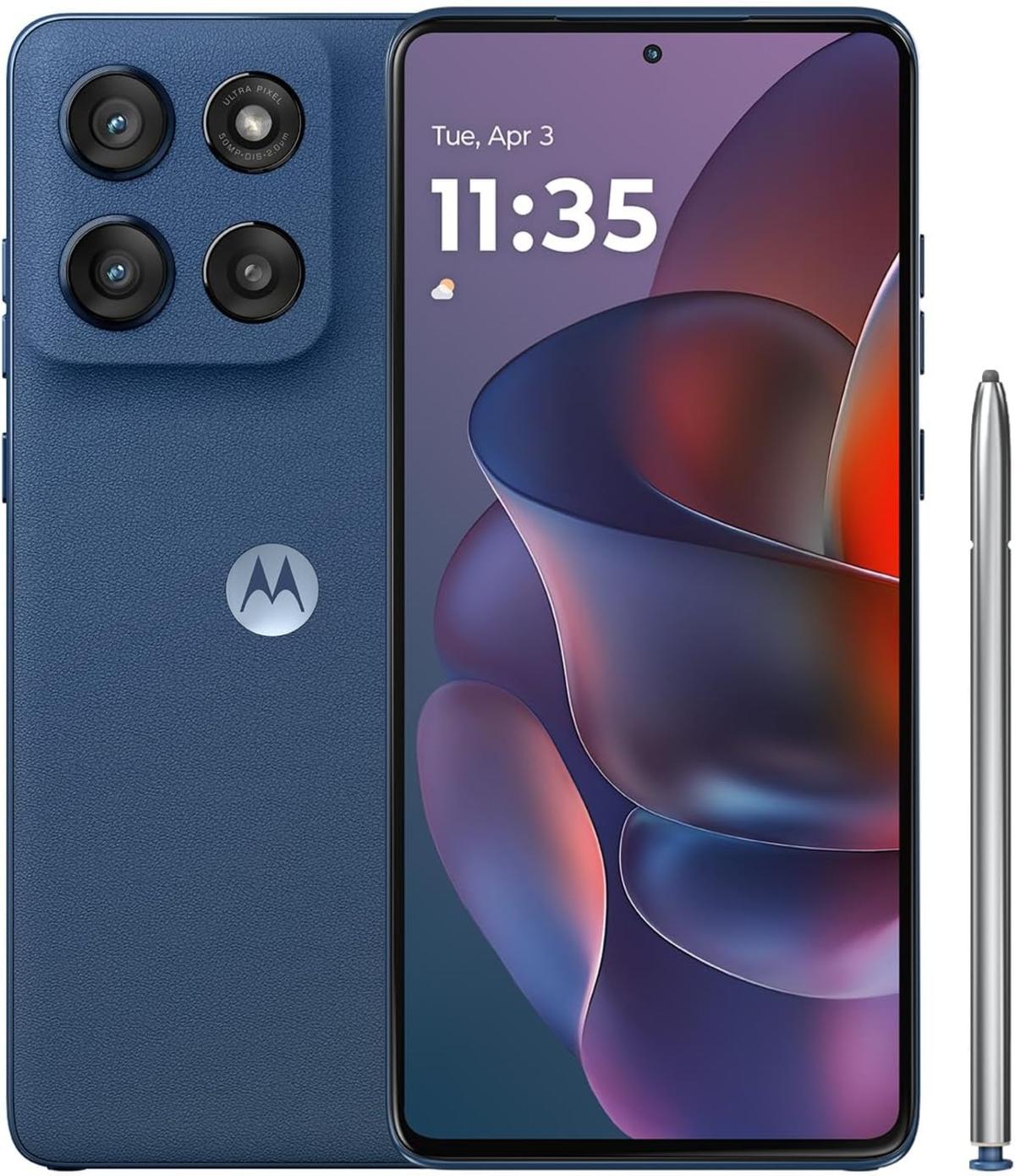
The Motorola Moto G Stylus (2025) — the only unlocked stylus phone in the US that doesn’t cost flagship money — is currently available on Amazon for approximately $279 to $300, down from its $399.99 list price. That’s a significant discount on a phone that has earned broadly positive reviews for its display, battery, and unique stylus feature set. But three things the spec sheet doesn’t mention change the math: Motorola’s industry-trailing software update policy, its parent company Lenovo’s legal obligations under Chinese national intelligence law, and the emergence of the Moto G Stylus (2026) at a very different price tier.
Before the full picture, the deal context: Amazon documented the phone at $299.99 — 25% off MSRP — multiple times throughout 2025 and 2026, including during Prime Day. In September 2026, it hit a record-low $279.99 on Amazon. Prices at Amazon fluctuate; check current pricing before purchasing. The article’s bottom line — that this phone offers genuine value at any price in the $279–$300 range — holds regardless of exactly where it lands today.
At its current discounted price, the Moto G Stylus (2025) delivers a specification package that is genuinely difficult to match for the money. The 8GB/256GB unlocked configuration works on all major US carriers.
The display is the standout: a 6.7-inch pOLED panel running at 2,712 x 1,220 resolution, 120Hz, with a peak brightness of 3,000 nits. For context, the Samsung Galaxy S25 Ultra — a $1,299 flagship — peaks at 2,600 nits. The 3,000-nit figure is peak HDR brightness, not sustained; real-world indoor brightness is lower but still competitive for the price.
The built-in stylus remains the phone’s defining feature and its clearest competitive advantage. No other unlocked US smartphone in the sub-$600 price range includes a built-in pen. Samsung’s next stylus option, the Galaxy S25 Ultra, starts at $1,299.99. Motorola says the new stylus responds 6.4 times faster than the prior generation, enabling Moto Note for handwritten notes, Sketch to Image for AI-assisted drawing, and Google’s Circle to Search.
The 50MP Sony LYT-700C main camera is the first Sony sensor in the Moto G Stylus line. The LYT-700C is a 1/1.56-inch stacked CMOS sensor with 1.0µm pixels and optical image stabilization. Sony’s LYTIA line sits in the mid-range tier of its sensor hierarchy — above the budget LYT-500 (1/2.93-inch) but well below the premium LYT-800 and LYT-900 found in flagship phones. In good light, reviewers report solid results; in low light, the smaller sensor size shows clear limitations versus larger sensors.
Battery life is a clear strength. The phone packs a 5,000mAh cell with 68W wired charging and 15W wireless charging, competitive with phones twice the price. Motorola claims a 40-hour usage life per charge; reviewers broadly confirm strong battery performance. Note that the 68W TurboPower charger is sold separately — it does not come in the box.
The IP68 rating covers submersion in up to 1.5 meters (approximately 4.9 feet) of fresh water for up to 30 minutes. This does not cover salt water, pool water, or high-pressure exposure. The MIL-STD-810H certification covers certain environmental stress tests; Motorola does not specify which of the standard’s 24-plus test methods were applied.
The Snapdragon 6 Gen 3 is the Moto G Stylus (2025)’s processor — and it’s worth understanding what that means technically, because Qualcomm’s marketing language around “Gen 3” implies more generational separation than the silicon delivers.
The Snapdragon 6 Gen 3 and the Snapdragon 6 Gen 1 (used in the 2024 Moto G Stylus) share nearly identical core architecture: the same eight ARM Cortex-A78 and Cortex-A55 cores, the same Adreno 710 GPU, and the same Samsung 4nm fabrication process. The primary difference is clock speed: Gen 3 peaks at 2.4 GHz versus Gen 1’s 2.2 GHz. Qualcomm claims 10% CPU and 30% GPU gains over Gen 1, along with more than 20% better AI performance. Independent benchmark comparisons show a more modest real-world difference: AnTuTu scores of approximately 868,311 (Gen 3) vs. 846,599 (Gen 1) — roughly a 2.6% gap. Notebookcheck’s assessment described the Gen 3 as scoring only a few percentage points above the old Snapdragon 6 Gen 1.
For everyday tasks — web browsing, social media, video streaming, note-taking with the stylus, photography — the Snapdragon 6 Gen 3 is more than adequate. Sustained gaming and graphics-intensive applications will expose its position in the lower mid-range; the chip sits well below Snapdragon 8-series flagship performance. For the use cases the Moto G Stylus is designed for, this is not a meaningful limitation.
This is where the Moto G Stylus (2025) creates the most significant long-term buyer risk. Per Motorola’s own commitments, the phone receives two major Android OS upgrades and three years of bi-monthly security patches. The phone launched on Android 15; it will receive Android 16 and Android 17.
By comparison, Samsung’s Galaxy A35 — priced similarly — provides four years of OS updates and five years of security patches. Google’s Pixel 9a delivers seven years of both OS and security updates. Android Authority has described Motorola as “still the worst at Android updates” among major Android manufacturers. In 2026, a newly launched Motorola Moto G17 shipped with zero promised OS updates — a development that prompted significant coverage of Motorola’s update practices.
The practical consequence: a Moto G Stylus (2025) purchased today will stop receiving security patches no later than approximately 2028, and will receive only two additional major Android versions. For users who hold phones for three or more years, this is a meaningful limitation compared to Samsung or Google alternatives at similar price points — though two OS upgrades represent an improvement over the one-upgrade policy of previous Moto G Stylus generations.
What readers need to know before buying this device.
Motorola is wholly owned by Lenovo Group Limited, headquartered in Beijing, China. Lenovo acquired Motorola Mobility from Google in 2014 for $2.91 billion. While Motorola operates with US headquarters and US management, its parent company operates under Chinese jurisdiction. That jurisdiction creates legal obligations that apply regardless of Motorola’s stated privacy policies, US corporate address, or the geographic location of its servers.
The applicable laws:
China’s National Intelligence Law (2017), Article 7, requires that “all organizations and citizens shall support, assist, and cooperate with state intelligence work in accordance with the law.” This obligation applies extraterritorially to Chinese companies operating overseas. China’s Cybersecurity Law (2017) and Data Security Law (2021) create additional data localization requirements and government access provisions.
These are not theoretical risks. A class-action lawsuit filed in US federal court on February 5, 2026 alleges that Lenovo transferred American consumer data to its Chinese parent company through tracking technologies on its website; Lenovo denies these allegations, stating any suggestion that it improperly shares customer data is false. The case remains active litigation in the Northern District of California. At CES 2026, members of Congress raised concerns about Lenovo’s connections to Chinese state institutions.
In 2026, researchers identified CVE-2026-5804 in Motorola’s Factory Test component, rated CVSS 8.4 (High severity), which could allow a local attacker to bypass permission checks and access protected device settings. Earlier vulnerabilities include CVE-2024-3480 (telephony data disclosure via implicit intent) and CVE-2024-3479 (local data read via improper export) — both patched in 2023–2024 security updates.
No independent third-party security audit of the Moto G Stylus (2025)’s specific data transmission behavior has been published — a gap buyers should note.
What you can do: Restrict Moto AI features and Google account sync for sensitive personal data. Use a VPN for network traffic. Review and limit app permissions. If using the device in an enterprise context, consider network segmentation. No setting or configuration fully eliminates the legal risk created by China’s National Intelligence Law — the obligation on Lenovo to cooperate with Chinese intelligence is a structural legal condition, not a risk parameter companies or users can opt out of.
The Moto G Stylus (2026) was released in 2026 at $499.99 for the 128GB model. It features an improved stylus and a significantly brighter 5,000-nit AMOLED display — a notable upgrade over the 2025 model’s 3,000-nit pOLED. At those prices, the (2025) at $279–$300 represents a significant value gap. Buyers who do not need the (2026)’s incremental improvements may find the (2025) a materially better allocation of spending.
For a complete value comparison, the Moto G Stylus (2025) at $279–$300 should also be compared to Samsung’s Galaxy A37 5G and Galaxy A57 5G, which offer longer update commitments at comparable or slightly higher price points without stylus capability.
For users who prioritize the built-in stylus above all else and are comfortable with Motorola’s update commitment and Lenovo’s data practices, the Moto G Stylus (2025) at $279–$300 is genuinely compelling. It has no competition in the stylus category at its price. Android Central praised it strongly, calling it one of the best Android phones under $400 and concluding it’s tough to find reasons not to recommend it. Battery life, display quality, and build quality stand out.
For users who plan to hold their phone for three or more years, prioritize long-term security updates, or have data sovereignty concerns, the picture is more complicated. Samsung’s Galaxy A35 (similar price, four OS upgrades) or Google’s Pixel 9a (seven years of updates, no Chinese parent company) represent meaningfully different risk profiles.
The Moto G Stylus (2025)’s value proposition is real — but it comes attached to tradeoffs a $299.99 Amazon deal page will not tell you about.
Yes, in practice. The Moto G Stylus lineup is the only mainstream US smartphone to include a built-in stylus at sub-$600 pricing. Samsung’s closest stylus options are the Galaxy S25 Ultra ($1,299.99) and Note-series predecessors. No other manufacturer currently ships an unlocked US Android phone under $600 with a built-in pen.
Lenovo, as a company headquartered in China, is legally required under China’s National Intelligence Law (2017, Article 7) to cooperate with Chinese state intelligence work when demanded. This obligation applies to Lenovo’s operations globally, regardless of where Motorola is incorporated or where its servers are physically located. No privacy policy or server location claim by Motorola changes this structural legal condition. Lenovo disputes characterizations that it improperly shares user data. Users can reduce exposure through permission management and VPN use, but cannot eliminate the legal obligation entirely.
Motorola promises two major Android OS upgrades (from Android 15 through Android 17) and three years of bi-monthly security patches for the Moto G Stylus (2025). By comparison, Samsung’s Galaxy A series offers four years of OS updates and five years of security patches; Google’s Pixel phones receive seven years of both. Buyers who hold phones for three or more years should factor this into their decision.
The Moto G Stylus (2026) launched at $499.99 for the 128GB model — a significant price increase over the $399.99 MSRP of the 2025 model. Motorola’s entire Moto G lineup received price hikes in 2026. The (2026) model adds an improved stylus and a significantly brighter 5,000-nit AMOLED display, but shares the same Snapdragon 6 Gen 3 chipset as the (2025). For most buyers, the (2025) at $100–$200 less than the (2026) MSRP represents the stronger value proposition.