HomeAuto Brazil Gambling Ban Rewrites Pix Core Rules, Blocking Bets on Three Payment Rails
Brazil Gambling Ban Rewrites Pix Core Rules, Blocking Bets on Three Payment Rails
October 1, 2026:
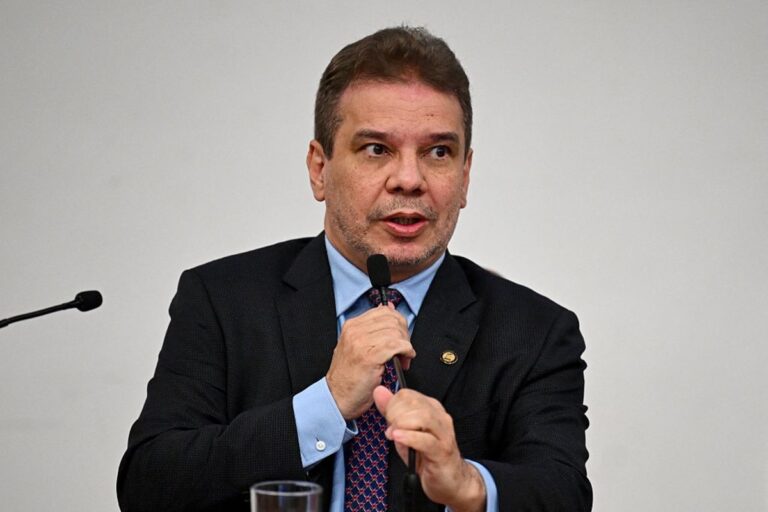
Brazil’s Justice Minister Wellington Lima e Silva speaks during a press conference to update measures following President Luiz Inacio Lula da Silva’s decision to ban online betting, in Brasília, on September 29, 2026. Evaristo SA/AFP via Getty Images
Brazil’s Central Bank published three resolutions on September 30 that wrote the government’s total gambling prohibition directly into the operating rules of the country’s three dominant payment rails — including, for the first time in the system’s six-year history, an amendment to the founding regulation of Pix itself. The move means the ban on fixed-odds betting is now a structural feature of Brazil’s payment infrastructure, not merely a policy decree — and that distinction matters for how the courts can reach it.
What a bettor, a fintech, or a payment institution needs to understand right now: gambling transactions are no longer prohibited by guidance that institutions are asked to follow. They are prohibited by the same class of regulatory document that created the payment systems in the first place. Any institution participating in the Pix, boleto, or TED arrangements that processes, settles, or facilitates a transaction bound for a betting operator is now in direct violation of the system’s own founding rules.
What Three Resolutions Did That a Provisional Measure Could Not
Medida Provisória 1394 officially published by President Luiz Inácio Lula da Silva alongside Finance Minister Dario Durigan and Justice Minister Wellington César Lima e Silva on September 25 prohibited the “exploration, offer, intermediation and advertising” of fixed-odds betting across Brazil with immediate effect. That established the legal prohibition. What it did not do — and could not do by itself — was write that prohibition into the rulebooks of the payment systems that move the money.
That gap closed five days later.
Resolution BCB nº 596 amended the boleto regulation (Resolution BCB nº 443 of 2024) to require all institutions participating in the boleto payment arrangement to block, reject, and refuse to settle any transaction destined for a fixed-odds betting operator (apostas de quota fixa), colloquially called bets. The obligation is retroactive to September 25 — the date MP 1,394 was published.
Resolution BCB nº 597 made a historically significant change: it amended Resolution BCB nº 1, of August 12, 2020 — the founding document of Pix, the regulation that created the entire instant payment system — to incorporate the same prohibition. Pix’s own constitution now bars gambling.
All three resolutions carry a narrow exception: transactions required to close out accounts and return balances to bettors remain permitted through the wind-down period — meaning players can still receive their money back during the refund timeline laid out in the provisional measure.
Why Pix’s Founding Document Is the Story
Pix payment system Wikipedia launched on November 16, 2020, and reached more than 150 million active users by 2024 — roughly 70 percent of Brazil’s population. It now processes nearly R$2.5 trillion (approximately $483 billion) per month and is used for over 90 percent of payments to betting operators, according to FEBRABAN confirms 90 percent Pix from the Brazilian Federation of Banks (FEBRABAN). A separate Central Bank survey found Brazilians were transferring approximately R$20 billion (approximately $3.9 billion) per month to betting platforms via Pix at the peak.
That dominance made Pix the functional backbone of Brazil’s gambling market — and made amending its founding regulation the most structurally consequential enforcement step the Central Bank could take.
Finsiders Brasil on BCB resolution, one of Brazil’s leading fintech publications, noted that codifying the prohibition into Pix’s underlying regulation “reduces doubts when applying the block” — meaning institutions previously had to infer their blocking obligations from the provisional measure. Now the obligation is explicit within the payment system’s own rulebook.
Early data supports this. Pix volumes directed at betting platforms had already fallen approximately 10 percent within days of the provisional measure’s signing, even before the three resolutions were published — a signal that many institutions moved quickly to restrict transfers ahead of the formal regulatory update.
How the Blocking Mechanism Works — and Where It Breaks Down
Pix operates through a two-layer infrastructure: the SPI (Sistema de Pagamentos Instantâneos), the single centralized settlement system managed exclusively by the Central Bank; and the DICT (Diretório de Identificadores de Contas Transacionais), the database that links Pix keys and aliases to transactional accounts. Both systems are documented on the Banco Central do Brasil Pix architecture page. Companies are identified in the system by their CNPJ, the Brazilian tax identification number.
Enforcement works by matching outgoing transfer destinations against a list of CNPJs belonging to known betting operators. When a match is found, the transaction is rejected in real time.
The mechanism is effective — but only against operators that have Brazilian CNPJs. It is precisely here that the architecture reveals its structural limit.
Offshore and illegal operators have no CNPJ registered in Brazil. A transaction to a clandestine offshore betting site does not trigger a CNPJ match. Brazil’s government had blocked more than 66,000 illegal betting domains at the DNS and telecommunications layer by September 2026, with ANJL data on 66,000 blocked domains confirming 66,482 addresses blocked between January 2025 and September 2026, but domain-level blocking and payment-rail-level blocking are complementary — neither is sufficient alone. The 30 million bettors displaced from the licensed market will find that the payment rails are closed to licensed platforms and the illegal market remains reachable.
The scale of this is visible in real time. Within 24 hours of President Lula’s announcement of the betting ban, nearly 300 new illegal betting sites were created, according to reporting by iGaming Business on illegal site proliferation. The illegal and clandestine market already represented between 41 and 51 percent of Brazil’s total betting market before the ban, according to studies cited by the National Association of Games and Lotteries (ANJL) and the Brazilian Institute of Responsible Gaming (IBJR) in a filing to the Supreme Federal Court.
Are the BCB Resolutions Insulated From the Courts?
This is the most consequential regulatory question the resolutions raise — and the draft provisional measure does not answer it.
MP 1,394 faces multiple constitutional challenges. ANJL and IBJR filed a “Statement on Supervening Fact” with Supreme Federal Court Minister Luiz Fux on September 29, arguing that the measure lacks the constitutional “urgency” requirement for provisional measures. Their evidence: official data from the Secretariat of Prizes and Bets (SPA) shows that the market’s financial volume fell by 42 percent between October 2025 and June 2026 — contradicting the government’s claim of an accelerating crisis requiring emergency intervention. Anseja (National Association for the Legal Security of Games and Betting) separately filed an ação direta de inconstitucionalidade citing formal flaws: absent fiscal impact assessment, classified advertising as a crime without due process, and prohibited expropriation without compensation.
The provisional measure also needs congressional ratification within 120 days — by approximately late January 2027 — to remain in force permanently. Brazil’s general elections will take place on October 4, with a potential second round on October 25, meaning the congressional composition that votes on ratification will be shaped by an electorate that votes just three days from now.
The BCB resolutions sit in a structurally different legal position. They are not the provisional measure — they are independent regulatory acts of the Central Bank, enacted under the BCB’s own statutory authority over payment-system arrangements. A court order suspending or striking down MP 1,394 would remove the underlying statutory authorization for the ban; it would not, by itself, remove the prohibition from the Pix founding regulation. To reverse Resolution BCB nº 597’s amendment to Resolution BCB nº 1, the Central Bank would need to take a separate regulatory action. This is not an immunity — courts can order the BCB to amend its regulations — but it is a higher procedural bar than simply suspending an executive decree.
What Banks and Fintechs Must Now Do
All institutions participating in the Pix, boleto, and TED arrangements are required to build and operate automated transaction-blocking systems matching outgoing transfers against known betting operator CNPJs and rejecting those transactions in real time. Some institutions — including Nubank and PicPay — had already begun voluntarily flagging or blocking payments to licensed betting CNPJs in prior months, with Nubank PicPay voluntary blocking confirmed by independent reporting. The three resolutions make this mandatory across all participants in all three arrangements.
The obligation covers every stage of a transaction’s lifecycle. The resolutions prohibit not only direct processing but also the “settling or facilitating” of betting transactions — closing off intermediary structures where an institution might argue it was not the final processor.
Operators have until October 5 to accept bettor withdrawal requests. Starting October 6, all licensed sites will be blocked. Operators must consolidate customer balances by CPF between October 7 and 8, then issue full refunds from October 9 through October 14. Where operators or banking partners encounter difficulties, Caixa Econômica Federal — the state-owned bank — will step in as a refund backstop.
Is Pix’s Architecture Now a Global Enforcement Model?
Brazil’s approach — using central bank resolutions to write gambling prohibitions directly into payment-system operating rules — goes further than most jurisdictions have. Several countries have sought to limit gambling payments through guidance, voluntary bank cooperation, or content-layer domain blocking. Brazil has made the prohibition a structural feature of its payment infrastructure’s legal foundation.
This comes at a moment when Pix’s global profile is unusually high. In July 2025, the USTR Section 301 investigation July 2025 was launched by the US Office of the United States Trade Representative into Pix, citing potential unfair advantaging of Brazilian payment services over US competitors. In the same month, Krugman praises Pix payment innovation in a Substack essay where Nobel Economics laureate Paul Krugman wrote that Brazil “may have invented the future of money” with Pix, arguing the system was achieving what cryptocurrency had promised without delivering. As of August 3, 2026, Pix had launched in eight new countries beyond Brazil.
Against that backdrop, a gambling regulator embedding a prohibition into Pix’s founding document is not only a Brazilian enforcement story. It is a demonstration — watched by regulators from Colombia to the European Central Bank — that a central-bank-operated instant payment system can be used as a direct lever of policy enforcement in ways that privately operated payment networks cannot.
Whether the strategy succeeds against the illegal market will depend on how quickly offshore operators adapt, how aggressively Brazil enforces domain-level blocking in parallel, and whether the courts leave the regulatory structure standing. The SPA reported blocking more than 66,000 illegal domains by September 2026 — and 300 new ones appeared in 24 hours after the ban.
Does Pix Have Its Own Security Risks?
The enforcement infrastructure depends on the integrity of the SPI and DICT systems — and that integrity has already been tested. In July 2025, a cyberattack on Brazilian software company C&M resulted in the theft of more than R$540 million (approximately $104 million) from the Pix ecosystem, with Brazilian police C&M cyberattack R$540 million confirmed arresting a suspect in connection with the breach. That incident did not compromise the SPI’s centralized settlement infrastructure directly, but it demonstrated that the broader Pix ecosystem — which depends on participant institutions and their software vendors — is a meaningful attack surface. Adding gambling transaction blocking to the SPI’s function increases the stakes of any successful attack on the enforcement mechanisms themselves.
How Gambling-Ban Economics Work Against Bettors
The government’s public-health rationale rests on documented harm at scale. More than 1.3 million Brazilians formally requested exclusion from betting platforms, with 51 percent citing health problems, according to Brazil’s Ministry of Justice. The annual social cost of online betting is estimated at R$38.8 billion (approximately $7.5 billion) according to the Ministry of Justice. A study by the National Committee of Finance Secretaries (Comsefaz), based on Central Bank data, found Brazilian households lost over R$62.5 billion (approximately $12.1 billion) to betting operators in 2025 alone.
Against that, the industry’s counter-argument is not about those costs — it is about what happens next. The regulated market generated R$9.95 billion (approximately $1.92 billion) in federal taxes in 2025 and R$2.5 billion (approximately $483 million) in grant contributions, according to the ANJL and IBJR filing with the Supreme Federal Court. Clandestine platforms that now absorb the 30 million displaced bettors produce none of that revenue, enforce no deposit limits, offer no self-exclusion tools, and comply with no AML requirements. The IBJR stated that the ban will “reduce consumer protection, especially for problem gamblers.”
That tension — between a documented harm from the licensed market and a documented harm from driving users to the illegal market — is what the Supreme Federal Court will eventually have to weigh, if it weighs anything at all before the congressional ratification clock expires.
Currency conversions in this article are approximate, based on exchange rates at time of publication and subject to change.
Frequently Asked Questions
Why does the Central Bank amending Pix’s rules matter separately from the gambling ban itself?
The provisional measure (MP 1,394) that banned gambling in Brazil is subject to constitutional challenge and requires congressional ratification within 120 days to stay permanently in force. The Central Bank’s amendments to Pix’s founding regulation (Resolution BCB nº 1/2020) are a separate class of regulatory act under the BCB’s independent authority. If a court suspends or strikes down the provisional measure, the betting ban would be lifted as a matter of law — but the Pix regulation would still bar gambling transactions until the Central Bank separately amended it back. In practice, a court could order the BCB to do so; but that requires a separate legal action, creating a higher procedural bar. Embedding the ban in payment-system code gives it structural durability that the executive decree alone does not have.
Can Brazilians still bet online after the ban?
Licensed operators will accept no new deposits after September 25 and will be fully blocked starting October 6. The payment rails (Pix, boleto, and TED) now prohibit transactions to licensed operator CNPJs. However, offshore and illegal operators have no Brazilian CNPJ, so CNPJ-based payment blocking cannot stop transactions reaching them. Brazil’s government has blocked more than 66,000 illegal domains at the telecom layer — but 300 new illegal sites appeared within 24 hours of the ban announcement. The practical result is that bettors who continue gambling will likely do so through illegal offshore platforms with no consumer protections, no deposit limits, no self-exclusion mechanisms, and no recourse if they are cheated.
What happens if Congress fails to ratify MP 1,394 within 120 days?
Provisional measures that do not receive congressional ratification within 120 days automatically lapse — meaning the legal prohibition on gambling would expire and the market could potentially reopen. The 120-day window runs approximately to late January 2027. Brazil’s October 4 general elections will shape the congressional composition that votes on ratification. Separately, ANJL, IBJR, and Anseja have already filed with the Supreme Federal Court asking Minister Fux to suspend the provisional measure now, before Congress votes, on constitutional grounds including lack of urgency and violation of legitimate expectations. The sector paid R$30 million (approximately $5.8 million) per license and argues its licenses were extinguished without compensation or transition period, in violation of constitutional property protections.
What does the ban mean for the companies that built the legal market?
Approximately 90 licensed operators are immediately out of business in Brazil. Flutter Entertainment — parent of FanDuel — halted Brazilian operations and disclosed nearly $70 million in foregone 2026 revenue. Bet365 called the measure unconstitutional. The sector collectively generated R$9.95 billion (approximately $1.92 billion) in federal taxes in 2025. Article 4 of MP 1,394 explicitly extinguishes all licenses after 30 days and states that operators have no right to a refund of their R$30 million (~$5.8 million) license fees — the provision most likely to produce the most aggressive constitutional litigation.