HomeAuto AI Bond Wave Drives Treasury Yields to 22-Year Highs, Lifting Mortgage Rates for All Americans
AI Bond Wave Drives Treasury Yields to 22-Year Highs, Lifting Mortgage Rates for All Americans
September 27, 2026:
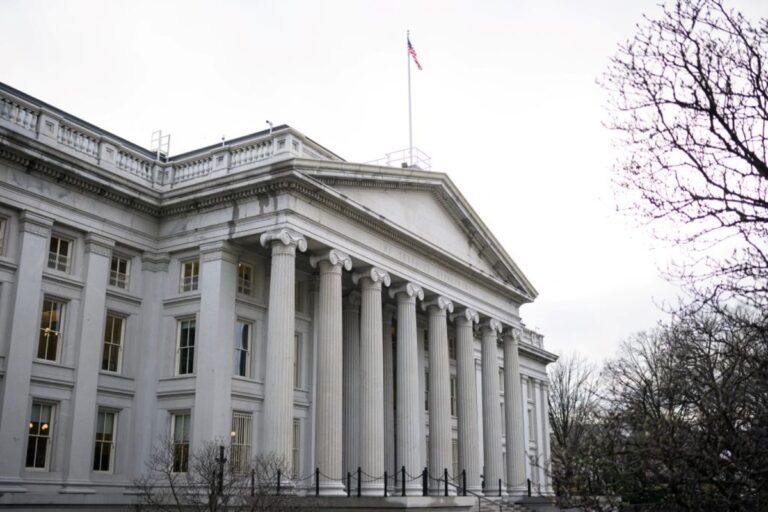
MANDEL NGAN/AFP via Getty Images
The bond market is repricing what long-term American capital costs — and the same companies building artificial intelligence infrastructure are helping push that cost higher for everyone, including themselves.
US 30-year Treasury yields held near 5.47% on Friday, extending a bruising selloff after Thursday’s session briefly drove the long bond to 5.501% — a level not touched since June 2004. The benchmark 10-year note settled near 5.17%, its highest since June 2007. For American homebuyers, the practical translation is a 30-year fixed mortgage rate near 7%, the highest in roughly two years.
The immediate trigger was the Federal Reserve’s first rate hike in more than three years. On September 16, 2026, the Federal Open Market Committee voted 12 to 0 to raise the target range for the federal funds rate by 25 basis points to 3.75%–4.00%. Fed Chairman Kevin Warsh, who had been confirmed by the Senate in May, was unsparing in his assessment at the post-meeting press conference: “Yet for more than five years, inflation has been running above target,” he said. “The plain fact is that inflation is too high and has been for too long.”
What is less widely understood is why the long end of the yield curve — the 30-year, the 10-year — has moved so much more dramatically than the Fed’s short-term policy rate alone would explain. The answer involves a structural shift in the corporate bond market that few retail investors are tracking: the artificial intelligence infrastructure buildout is flooding the market with long-duration debt on a scale that has never been seen from the technology sector before.
AI Bond Wave Is Feeding the Fire It’s Fighting
Morgan Stanley estimated that AI-linked global bond issuance will reach nearly $570 billion in 2026, with approximately $236 billion already placed as of May 31 — four times the pace of the same period in 2025. Amazon, Alphabet, Meta, Microsoft, and Oracle are the primary issuers. Hyperscaler capital expenditure — the spending on data centers, chips, networking, and power infrastructure that makes AI work at scale — now runs close to 100% of operating cash flows for the group, compared with a 40% decade average, forcing companies into bond markets to bridge the gap.
Alphabet guided its 2026 capital expenditure to $195–$205 billion, Amazon to roughly $200 billion, Microsoft to approximately $190 billion, and Meta to $115–$135 billion — a combined commitment of roughly $700 billion to $725 billion for 2026 alone, up approximately 77% from 2025’s already record-breaking pace.
The mechanism that ties this to Treasury yields is called term premium — the extra return investors demand for locking up capital in long-dated bonds rather than rolling over short-term paper. When a wave of new long-duration supply hits the market, investors need to be compensated more to absorb it. AI bonds are notably long-dated, reflecting the multi-decade useful life of data centers. Each new issue adds to the duration supply that the bond market must absorb.
Barclays analysis found the six largest technology companies now account for approximately 8.6% of duration-times-spread in the US investment-grade bond market, exceeding the six largest banks — a shift that was unimaginable five years ago. Making this systemic: approximately $4.8 trillion in target-date fund retirement assets tracks bond indexes that must proportionally absorb every new eligible AI bond, meaning a sector-specific credit event would propagate into retirement accounts without individual investors choosing the exposure.
The result is a self-reinforcing dynamic. “The economy is chugging along,” Vanguard’s fixed-income team noted, with the long end “responding to the healthy economy, and the driver is AI capex spending, which is keeping growth expectations high.” AI companies are simultaneously funding their expansion through long-term debt and, by adding to the supply of that very debt category, pushing up the term premium that determines what all long-term borrowing costs — including their own next bond issuance.
Does the Fed Chairman Know Something the Bond Market Doesn’t?
The irony at the center of this selloff is that Kevin Warsh, the Fed Chairman who just delivered the rate hike that accelerated it, has gone on record calling AI “the most productivity-enhancing wave of our lifetimes” and told the House Financial Services Committee in July that the technology represents a “huge opportunity” for the American economy, with the Fed monitoring its impact closely. He has even created AI-powered language model tools of his own to map the thinking of the last century’s greatest economists to the current environment.
Warsh’s view is that AI will eventually be disinflationary — that the productivity gains will reduce labor costs and increase output in ways that bring prices down. But that scenario plays out over years. In the interim, AI-driven capital spending is one of the forces keeping the economy “chugging along” at exactly the moment when Warsh and his colleagues need demand to soften enough to bring inflation back to the 2% target. The hike, paradoxically, is partly necessary because AI investment is so large that it is sustaining economic activity the Fed is trying to cool.
Treasury Secretary Scott Bessent has made his own bet on the AI era, doubling the government’s bond buyback program in mid-August to at least $4 billion per operation on long-term debt, with purchases running through November, in an attempt to cushion the yield surge. The effect on yields has been limited and short-lived. This week, separate from his Treasury duties, Bessent emerged as a frontrunner for President Trump’s planned “AI czar” appointment, and held a critical early dialogue with Chinese Vice Premier He Lifeng on the sidelines of the UN General Assembly about a potential US-China notification mechanism for AI incidents with national security implications. The same Treasury Secretary whose bond-market intervention could not slow the yield rise is simultaneously being positioned as the administration’s chief architect of AI governance.
What Is Driving the Long End Beyond the Fed
Analysts are careful to distinguish between what the policy-rate signal embedded in short maturities is doing and the structural forces pushing the long end to multi-decade highs.
“People are running out of superlatives for the yield on the 30-year bond,” said Ed Al-Hussainy, a portfolio manager at Columbia Threadneedle. “Investors are saying, ‘Look, if we’re going to lock up our money for 30 years, we need much higher compensation.'”
“The combination of fiscal, economic, geopolitical, and supply-side inflation pressures converging has bond markets in less familiar territory,” said Mike Sanders, head of fixed income at Madison Investments. “The recent rise in yields can no longer be attributed simply to concerns over the deficit.”
Vanguard, one of the world’s largest asset managers, has identified four structural forces reshaping fixed income simultaneously: a Federal Reserve refocused on inflation, persistent fiscal deficits, an AI-led investment cycle, and starting yields that are far more attractive than they were five years ago. The first three are all, in different ways, applying upward pressure to term premium.
On the fiscal side, Germany’s finance agency expects federal borrowing to reach a record €525.5 billion (approximately $603 billion, at the September 21, 2026 mid-market EUR/USD rate of approximately 1.148) in 2026. Japan’s 10-year JGB yield rose to its highest since August 1996. UK Gilts and German Bunds joined the selloff. The global picture is of sovereign supply outpacing demand at precisely the moment when AI corporate supply is adding to the duration burden.
The new-issue concession tells the story quantitatively: AI bond issuers have averaged premiums of approximately 12 basis points above secondary market prices to get deals done, compared with roughly 2.5 basis points for the broader investment-grade market. Despite that extra cost, deals are often four times oversubscribed — meaning demand exists, but at a price that is pushing the structural cost of long-term capital higher.
“That combination makes the current bond selloff more than a background macro story for the sector,” said Tom Tzitzouris, head of fixed income research at Baird Strategas.
What October Holds: Another Hike on the Table
The market is now pricing meaningful odds of another tightening move before year-end. CME Group’s FedWatch tool showed traders placing a probability of more than 75% on the Federal Reserve raising rates again at the October 28 meeting, driven by stronger-than-expected economic data and explicitly hawkish commentary from Fed Governor Barr, who signaled additional hikes are likely.
The Fed’s own projections back up that expectation. Sixteen of 19 FOMC members signaled via the dot plot that they expect at least one more rate hike this year, with the median year-end rate rising to 4.1% from the June estimate of 3.8%. Markets are currently pricing in one more 25-basis-point increase in 2026, followed by a continuing cycle of hikes extending into 2027.
Vanguard’s institutional outlook aligns with this consensus. With labor market data remaining firm and inflation elevated, the asset manager’s base case includes one more hike, noting that robust AI-related capital spending and stronger-than-expected corporate earnings are supporting growth and reinforcing underlying credit fundamentals.
Does an AI Bubble Risk Make the Systemic Threat Worse?
PCE inflation is projected at 3.7% for 2026, with surging fuel costs linked to the conflict in Iran providing an additional inflationary impulse. A Bank of America fund-manager survey ranked a disorderly rise in bond yields and an AI bubble as the two largest current risks to equity markets. If the 10-year sustains above 5%, AI-adjacent equity positions face a structurally different risk environment than the one in which they were built.
What Do Rising Rates Actually Cost?
The real-economy consequences of yields at these levels are already materializing. The 30-year fixed mortgage rate near 7% marks the highest level in roughly two years. For corporate treasuries and project sponsors, higher financing costs for long-term projects and more careful timing of debt issuance are now table-stakes planning items, not tail risks.
The Treasury attempted to cushion the blow. Treasury Secretary Scott Bessent in mid-August expanded the government’s bond buyback program, doubling the maximum size of buybacks on long-term debt to at least $4 billion per operation, with purchases running through November. The effect on yields has been limited.
For fixed-income investors, Vanguard’s guidance is to consider selective duration positioning in bonds: limiting exposure to the longest-maturity bonds is reasonable for those concerned about fiscal risk, while short- and intermediate-duration bonds offer attractive compensation relative to historical norms and more direct sensitivity to any eventual Fed pivot.
Why Are Treasury Yields Near Levels Not Seen Since the Mid-2000s?
The 30-year near 5.5% marks territory last reached in summer 2004, before the global financial crisis remade the relationship between governments and capital markets. The 10-year near 5.17% echoes summer 2007, on the eve of the subprime collapse.
What is different now is the convergence of forces. Sovereign borrowers are running structural deficits and issuing large quantities of government bonds. Hyperscalers are deploying hundreds of billions into AI infrastructure through the bond market. A global economy is simultaneously grappling with energy shocks and a new monetary tightening cycle. US oil prices near $90 a barrel are amplifying the inflation signal that the Fed is reading as it sets policy.
Some market participants now consider the 6% level on the 10-year the next potential threshold — one that could more broadly rattle financial markets and Corporate America if reached.
Whether the 10-year finds a floor at current levels will depend, in large part, on the trajectory of inflation data between now and the Fed’s expected October 28 meeting — and on whether the AI sector delivers enough earnings evidence to justify the debt-driven buildout that is, in part, fueling the very yields now testing it.
Frequently Asked Questions
Why are Treasury yields so high in September 2026 even though the Fed’s rate hike was only 0.25%?
The Federal Reserve’s September 16 rate hike of 25 basis points — bringing the federal funds rate to 3.75%–4.00% — directly moves short-term borrowing costs. Long-term Treasury yields respond to a different set of forces, particularly the “term premium”: the extra compensation investors demand for locking up capital in bonds for decades rather than rolling over short-term paper. In this environment, that premium is rising because of two overlapping supply pressures: governments running large deficits globally (adding to sovereign supply), and AI companies issuing long-dated corporate bonds at a pace that is four times the prior-year rate. The Fed’s hike accelerated the selloff but is not its only driver.
What does AI infrastructure debt have to do with my mortgage rate?
AI companies like Alphabet, Amazon, Meta, and Microsoft are borrowing hundreds of billions of dollars in the long-dated bond market to fund data centers, chips, and power infrastructure. This adds to the supply of long-duration debt at a time when there is already more of it than the market absorbs easily. As supply rises, yields rise — and long-term Treasury yields are the benchmark that the 30-year fixed mortgage rate tracks. The result is that AI infrastructure investment is contributing to elevated home borrowing costs, not just elevated tech valuations. Approximately $4.8 trillion in target-date fund retirement accounts also passively tracks bond indexes that must proportionally absorb every new AI bond issuance.
Should I avoid long-term Treasury bonds right now?
This article does not constitute investment advice. Vanguard’s fixed-income guidance calls for selective duration positioning: limiting exposure to the longest-maturity bonds is reasonable for investors concerned about ongoing fiscal risk, while short- and intermediate-duration bonds currently offer compensation that is attractive relative to historical averages and are more directly sensitive to any eventual Fed policy reversal. Anyone making specific investment decisions should consult a financial advisor. The next major data point is the October 28 FOMC meeting, where markets currently expect a probability of more than 75% of another 25-basis-point rate hike.
Is the AI bond bubble the next systemic risk?
Barclays found the six largest technology companies now represent approximately 8.6% of duration-weighted credit risk in the US investment-grade bond market, surpassing the top six banks — the first time the technology sector has exceeded banking in this measure. A Bank of America fund-manager survey identified a disorderly rise in bond yields and an AI asset bubble as the two largest current risks to equity markets. S&P has warned that Amazon may post negative free operating cash flow over the next two years, introducing refinancing risk for the sector. Whether these concentration risks represent a systemic threat or simply a new market reality is the central question facing fixed-income investors heading into the fourth quarter.